

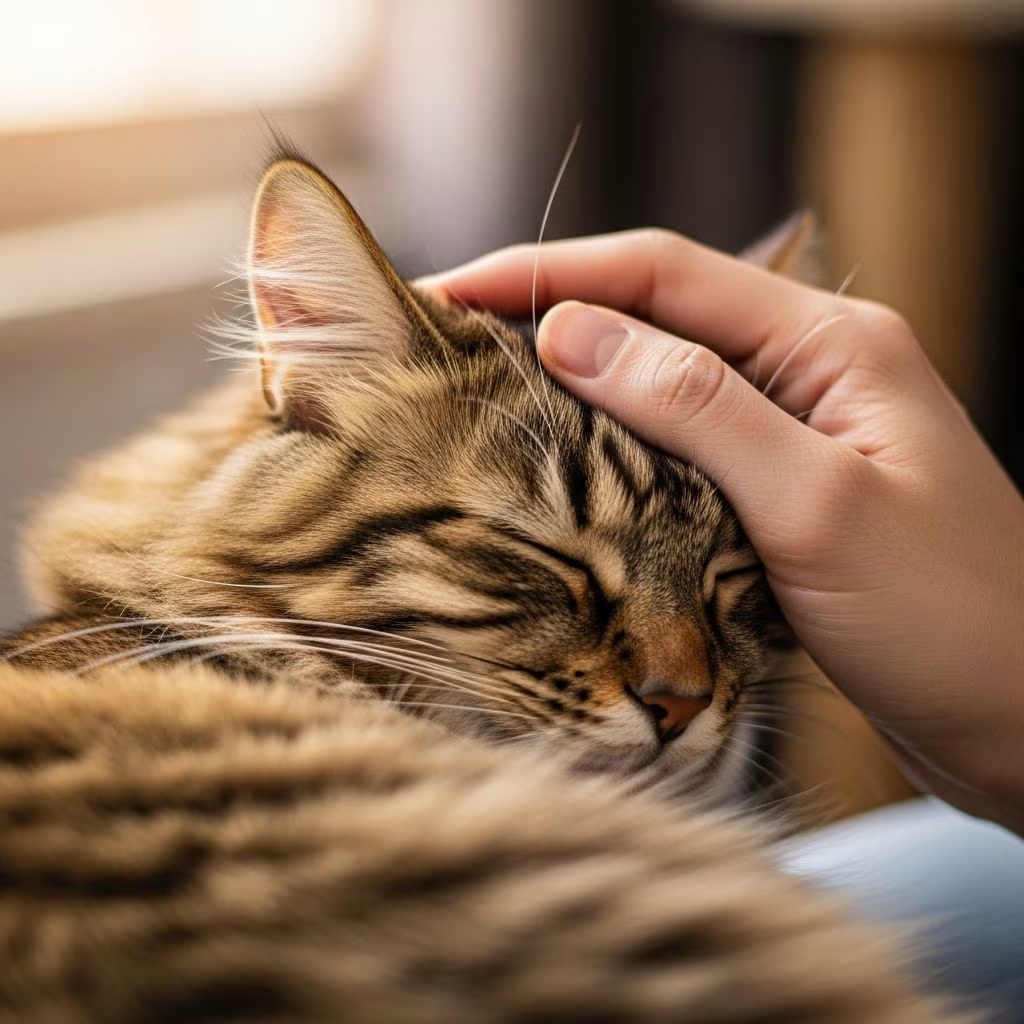
Cats often seek out physical contact from their owners, leaning into strokes and purring contentedly during petting sessions. This behavior stems from a combination of instinctual needs, sensory pleasure, and emotional bonding, fostering a deeper human-feline relationship.
The Instinctual Appeal of Petting for Cats
Felines have evolved as both solitary hunters and social creatures within colonies, making touch a key communicator. Petting mimics mutual grooming, a vital social ritual where cats reinforce bonds by licking and rubbing against each other. When you stroke your cat, it replicates this grooming, signaling acceptance and affiliation.
Research highlights how cats respond positively to specific tactile stimuli. Areas rich in scent glands, such as the cheeks and chin, become activated during petting, releasing pheromones that mark you as part of their territory. This not only feels pleasurable but also strengthens their sense of security in the home environment.
- Mutual grooming reduces tension in cat groups.
- Scent gland stimulation during petting enhances familiarity.
- Touch affirms social hierarchy and trust.
Prime Petting Zones: Where Cats Love It Most
Not all body parts are equal when it comes to feline preferences. Studies analyzing cat reactions during stroking sessions reveal clear favorites. Cats exhibit the highest positive behaviors—such as head-butting, slow blinking, and rubbing—when touched on the face, particularly cheeks, chin, and between the eyes and ears.
These regions house concentrated nerve endings and glands, making stimulation inherently rewarding. In contrast, the base of the tail elicits the most negative responses, including tail swishing, ear flicking, and even biting. Cats rarely groom this area mutually, reserving it for close kin, so human touch there can feel intrusive.
| Body Zone | Reaction Score | Common Behaviors |
|---|---|---|
| Cheeks/Chin | High Positive | Purring, rubbing, slow blinks |
| Head (Eyes/Ears) | High Positive | Head-butts, kneading |
| Back | Neutral | Mixed; tolerance varies |
| Base of Tail | High Negative | Tail swish, bites, ear flicks |
| Chest | Moderate Positive | Sniffing, leaning in |
Owners should observe their cat’s body language: upright tail, soft eyes, and vocalizations indicate enjoyment, while flattened ears or skin twitching signal discomfort.
Neurological Pleasure: How Touch Lights Up a Cat’s Brain
Petting activates specialized sensory pathways in cats. Certain nerve cells, like MRGPRB4 in the skin, respond specifically to gentle, massage-like strokes, conveying pleasure signals to the brain. This mirrors findings in other mammals, where such cells distinguish rewarding touch from mere mechanical pressure.
Cats purr during petting at frequencies between 25-150 Hz, a vibration range known to promote tissue repair in bones and muscles. This self-soothing mechanism may explain their resilience to injuries and could extend benefits to nearby humans through proximity.
Positive arousal signs include gentle tail waving and kneading paws, hallmarks of contentment derived from these neural rewards.
Health Boosts for Humans: The Science of Cat Cuddles
Interacting with cats via petting triggers profound physiological changes in owners. One study measured owners’ responses during home interactions, finding petting correlated with elevated oxytocin levels—the ‘bonding hormone’—alongside shifts in heart rate and cortisol.
Contrary to pure relaxation, petting often excites the sympathetic nervous system mildly, increasing heart rate while boosting oxytocin, which counters stress long-term. This moderate arousal in a safe setting promotes well-being, reducing anxiety and enhancing mood.
- Oxytocin surge fosters emotional regulation and attachment.
- Cortisol modulation lowers chronic stress markers.
- Heart rate changes indicate engaging, health-promoting stimulation.
College students petting cats for just 10 minutes daily saw cortisol drops, underscoring petting’s role in stress relief. Brain imaging shows cat interactions activate mood-boosting regions like the prefrontal cortex.
Mutual Benefits: A Two-Way Street of Affection
Petting benefits both parties bidirectionally. While cats gain grooming-like comfort and security, humans experience nurturing fulfillment akin to parental bonding, releasing oxytocin comparable to mother-infant touch.
This reciprocity builds nonverbal communication channels. Cats learn to associate gentle strokes with positive outcomes, encouraging more affectionate overtures over time.
Mastering the Art: Petting Techniques for Maximum Joy
To optimize sessions, start slow with facial strokes using light pressure, mimicking a cat’s tongue. Limit duration to avoid overstimulation—most cats prefer 3-5 minute bouts. Always let the cat initiate by approaching first.
- Observe baseline mood: Relaxed cats respond best.
- Use fingertips for precision on scent glands.
- Avoid belly unless explicitly invited.
- End on a high note with voluntary withdrawal.
Individual personalities vary; some cats favor back scratches, others head rubs. Consistency and respect for signals ensure petting remains a highlight.
Decoding Cat Signals During Petting
Understanding cues prevents mishaps. Positive indicators: purring, leaning in, third-eyelid exposure (relaxation). Warning signs: rippling skin, sudden freezes, dilated pupils—cease immediately to maintain trust.
- Happy: Slow blinks, upright tail tip curl.
- Overstimulated: Twitching tail base, crouching.
- Content: Kneading, rumbling purrs.
Petting in Context: Environment and Routine Matter
Home settings amplify benefits, as familiarity reduces defensiveness. Daily routines incorporating petting enhance owner-cat synchronization, fluctuating autonomic responses healthily.
Strangers should proceed cautiously; cats prefer familiar hands, showing fewer positives with experimenters.
FAQs: Common Questions on Cat Petting
Why does my cat suddenly bite during petting?
This indicates overstimulation. Petting too long or in sensitive areas triggers ‘petting-induced aggression.’ Stop at early signs like tail flicks.
Does petting reduce my stress as much as a dog’s?
Yes, studies confirm similar cortisol reductions and oxytocin boosts, though cats provide subtler, independent companionship.
Can petting help my cat’s health?
Indirectly, via reduced stress and purring-induced healing vibrations at 25-150 Hz, aiding muscle and bone recovery.
What if my cat hates being touched?
Build tolerance gradually with treats and short sessions, respecting their solitary nature. Some prefer play over petting.
Is there a best time to pet my cat?
Post-meal or evening wind-downs align with relaxed states, maximizing enjoyment for both.
Enhancing Your Bond Through Mindful Touch
Incorporating petting into daily life yields compounding benefits: stronger immunity via oxytocin, lower blood pressure risks, and profound emotional connections. Science affirms that these simple acts transcend affection, weaving health into companionship.
References
- Effects of Interactions with Cats in Domestic Environment on … – NIH — National Institutes of Health. 2023-07-01. https://pmc.ncbi.nlm.nih.gov/articles/PMC10340037/
- Where Your Cat Wants to Be Petted, According to Science — Mental Floss. 2015-11-20. https://www.mentalfloss.com/article/65730/where-your-cat-wants-be-petted-according-science
- Pet Therapy: The Science Behind Petting Animals — UCI Morning Sign Out. 2019-07-16. https://sites.uci.edu/morningsignout/2019/07/16/pet-therapy-the-science-behind-petting-animals/
- Psychological Benefits of Having a Cat — Purina. 2023-01-01. https://www.purina.com/articles/cat/getting-a-cat/how-can-cats-improve-moods-and-reduce-stress
- Science Reveals Cats Are More Awesome Than We Thought — PurrfectPost. 2022-01-01. https://www.purrfectpost.com/science-reveals-cats-are-more-awesome-than-we-thought/
- How to Stroke a Cat — BBC Science Focus. 2023-01-01. https://www.sciencefocus.com/nature/how-to-stroke-a-cat
- Benefits of Being a Cat Lover According to Science — Healthline. 2023-01-01. https://www.healthline.com/health/benefits-of-being-cat-lover



