

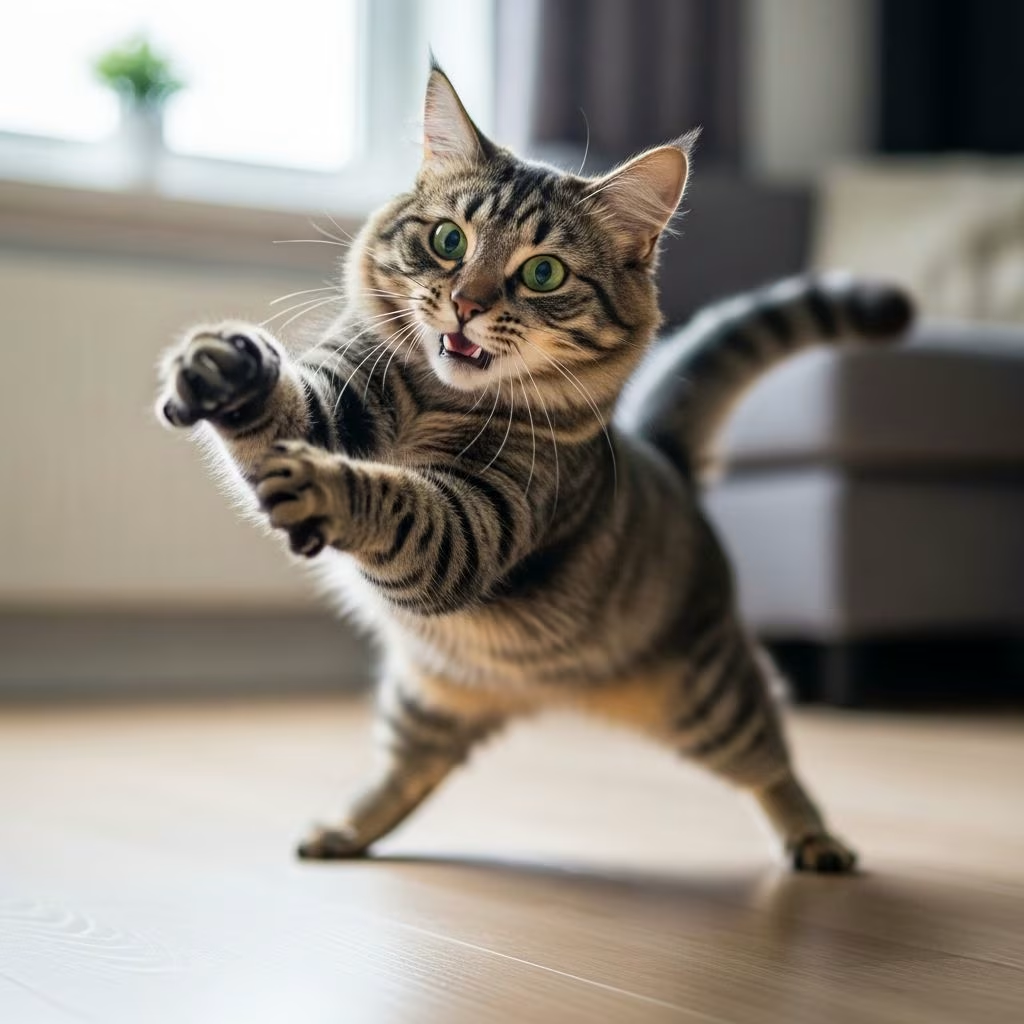
Cats have an uncanny ability to turn ordinary moments into comedy gold. Their blend of grace, curiosity, and sheer unpredictability creates endless entertainment for owners. This article delves into the behavioral traits and scientific insights that explain feline humor, showing how these pets master the art of amusement without even trying.
The Unexpected Charm of Feline Physics
Cats seem to operate under their own set of physical laws, squeezing into impossibly tiny spaces or leaping with acrobatic flair only to land in comical heaps. This defiance of expectation is a core element of their appeal. Owners often witness their cat contorting into a shoebox or cereal carton, appearing utterly content despite the laws of space suggesting otherwise.
These feats stem from a cat’s flexible skeleton and innate exploratory drive. Their spine has nearly 30 vertebrae—more than humans—allowing extreme bends and twists. Combined with a strong prey instinct, this leads to pursuits of shadows or laser dots that end in hilarious tumbles.
- Box Obsession: Cats prioritize small enclosures, possibly for security or temperature control, turning packing materials into comedy props.
- Gravity Challenges: Mid-air corrections after misjudged jumps showcase their agility while providing slapstick entertainment.
- Counter Surfing: Deliberate paw swipes at objects, often with direct eye contact, suggest a test of human reactions.
Such behaviors highlight how cats turn physics into performance art, keeping households in stitches.
Mastering the Art of the Deadpan Stare
Nothing captures a cat’s comedic timing like their signature stares. From the wide-eyed innocence post-mischief to the narrowed, judgmental glare, these expressions convey volumes. Research shows cats recognize human emotions through visual and auditory cues, potentially mirroring them for effect.
In a study on emotion recognition, cats matched facial images to corresponding sounds, spending more time on congruent angry or happy expressions. This suggests they form mental models of feelings, which might explain their perfectly timed looks of disdain or surprise.
| Cat Expression | Typical Trigger | Human Interpretation |
|---|---|---|
| Wide Eyes | Caught knocking items | “Busted!” innocence |
| Narrowed Eyes | Unwanted petting | Ultimate judgment |
| Slow Blink | Relaxed affection | Trust and contentment |
| Half-Lidded Gaze | Lazy afternoons | Supreme boredom |
These non-verbal cues mimic human sarcasm or surprise, amplifying their humorous impact. Cat behavior experts note that while not intentional comedy, the timing often feels deliberate, as cats attune to owner responses.
Curiosity as a Gateway to Chaos
The proverb about curiosity and cats exists for good reason. Felines investigate every nook, often with disastrous yet funny results. Sticking heads into bags, batting at faucets, or unraveling toilet paper rolls are daily spectacles.
This stems from their predatory heritage, where exploration hones hunting skills. Modern homes become playgrounds, with curtains as climbing walls and appliances as puzzles. The humor arises when bold investigations lead to stuck limbs or accidental activations, prompting owner rescues amid laughter.
- Novel objects draw immediate inspection, regardless of size fit.
- Pursuit of non-prey like reflections creates looping chases.
- Vertical leaps onto unstable surfaces test balance comically.
Owners cherish these moments as they reveal the cat’s fearless spirit, turning potential frustration into fond memories.
Playful Pranks and Social Teasing
Cats elevate mischief to interactive theater, seemingly pranking housemates or pets. Hiding to pounce, stealing socks, or occupying forbidden spots with smug poise feels like calculated humor. While science debates true intent, evidence points to learned cause-and-effect enjoyment.
Behaviorists like Mikel Delgado explain cats repeat actions eliciting reactions, whether chases or exclamations. Playful teasing of dogs—dangling toys just out of reach or swatting tails—builds dynamic home entertainment.
Neuroscientist Jaak Panksepp’s work on mammalian play systems supports this, linking it to joyful emotional circuits shared across species. Cats’ chirpy vocalizations during hunts mimic rat laughter, hinting at intrinsic fun-seeking.
Do Cats Actually Get the Joke?
Debate swirls on feline humor comprehension. Cats lack vocal laughter, but body language like tail flicks, play bows, and purring during antics signals engagement. They respond to human slow blinks positively, indicating social attunement.
Unlike dogs, cats prioritize independence, yet studies show emotion processing akin to pack animals. They modulate stress based on perceived threats, relaxing to happy cues while tensing at anger. This awareness suggests they thrive on playful interactions, even if not ‘getting’ jokes per se.
University of Pennsylvania experts demystify myths, affirming cats’ complex behaviors arise from evolved instincts, not malice or superior wit.
Vocal Virtuosos of Comedy
Beyond visuals, cat sounds add layers to their humor. Chirps, trills, and yowls punctuate antics, from excited hunting calls to indignant meows at closed doors. The ‘purr-hiss’ contrast mirrors emotional shifts, recognized by cats themselves.
These vocalizations, paired with exaggerated movements, create soundtracks to hilarity. A cat’s demanding chatter for treats or dramatic flop after denial rivals stand-up routines.
The Science of Why We Laugh at Cats
Laughter triggers dopamine from surprises and incongruities—cats’ specialty. Majestic hunters reduced to clumsy kittens exemplify this gap, per behavioral research. Watching compilations boosts mood, as brains link felines to positivity.
Cross-species bonds amplify this; cats reading human joy fosters mutual play, enhancing comedic exchanges.
Everyday Feline Funnies in Action
Compile your cat’s greatest hits: the midnight zoomies concert, treat-begging acrobatics, or sibling rivalries with dogs. These routines build household lore, strengthening bonds through shared chuckles.
- Zooming at 3 AM: Sudden sprints chasing dream prey.
- Sibling Shenanigans: Cats vs. dogs in toy heists.
- Grooming Fails: Overzealous licks leading to slips.
Enhancing the Comedy in Your Cat’s Life
Encourage safe antics with toys mimicking prey, elevated perches, and puzzle feeders. Rotate environments to spark curiosity without destruction. Positive reinforcement for gentle play deepens the fun-human connection.
Frequently Asked Questions
Why do cats knock things off tables?
It’s often curiosity, hunting simulation, or attention-seeking. They test stability and enjoy reactions.
Can cats sense when we’re laughing at them?
Likely yes, via emotional cues. They attune to human responses, repeating amusing behaviors.
Do all cats have funny personalities?
Personalities vary by breed and experience, but most share core playful traits from wild ancestry.
Is cat humor linked to intelligence?
Indirectly; problem-solving and social savvy enable complex, entertaining interactions.
How to capture cat comedy on video?
Use phone setups for slow-motion, natural light, and patience. Avoid staging to preserve authenticity.
References
- Why Cats Are So Funny: The Quirky Truth Behind the Laughs — Loftyloo. 2023. https://loftyloo.com/blogs/cat-talk-blogs/why-cats-are-so-funny
- Emotion Recognition in Cats — PMC – PubMed Central. 2020-07-22. https://pmc.ncbi.nlm.nih.gov/articles/PMC7401521/
- Do Cats Have a Sense of Humor? — Asheville Cat Weirdos. 2024. https://ashevillecatweirdos.org/do-cats-have-a-sense-of-humor/
- Do Cats Have a Sense of Humor? — Cats.com. 2023. https://cats.com/do-cats-have-a-sense-of-humor
- The Truth About Cat Smiles: Can Felines Really Laugh? — Petcube. 2023. https://petcube.com/blog/can-cats-smile-or-laugh/
- Demystifying Feline Behavior — Penn Today, University of Pennsylvania. 2023-10-10. https://penntoday.upenn.edu/news/demystifying-feline-behavior



