

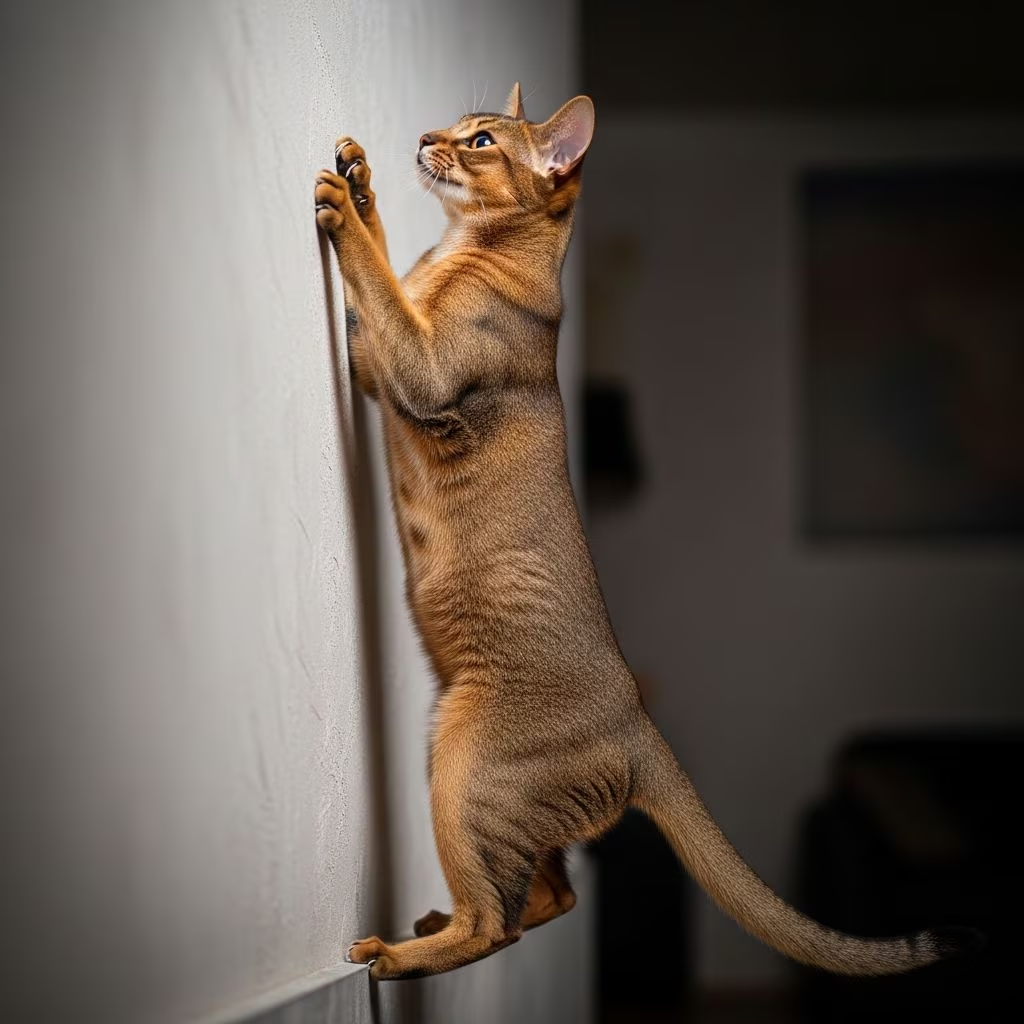
Why Does My Cat Try to Climb Walls?
If you’ve ever watched your cat scale your walls, sprint up your curtains, or attempt to reach the highest shelves in your home, you’ve witnessed one of the most fascinating aspects of feline behavior. While this behavior might seem unusual or even destructive to humans, wall climbing is a completely natural instinct for cats. Understanding why your cat engages in this behavior is the first step toward managing it effectively and providing your pet with appropriate outlets for their climbing urges.
Cats are naturally drawn to heights and elevated spaces. This inclination isn’t random or purely for entertainment—it’s rooted in their evolutionary history and biological needs. Whether your cat is a kitten exploring the world for the first time or an adult feline seeking refuge, climbing serves multiple important functions in their physical and mental well-being. By exploring the reasons behind this behavior, you’ll gain insight into what your cat needs to thrive in your home.
The 4 Reasons Why Cats Try to Climb Walls
1. To Exercise
Cats are natural climbers, and they enjoy the physical exercise that comes with climbing. Climbing is an excellent way to keep their muscles and joints in shape, which is essential for a healthy and happy cat. This is particularly important for indoor cats that don’t get as much exercise as their outdoor counterparts. Unlike outdoor cats who can roam freely and climb trees throughout the day, indoor cats must find alternative ways to meet their exercise needs within the confines of your home.
When your cat climbs walls or furniture, they’re engaging in a full-body workout that strengthens their legs, core muscles, and improves their overall cardiovascular health. The repetitive motion of climbing helps maintain muscle tone and flexibility, which becomes increasingly important as cats age. Many veterinarians recommend that cats receive at least 30 minutes of moderate exercise daily to maintain optimal health. Wall climbing can be one way your cat naturally meets this requirement, especially if they lack other forms of physical activity during the day.
The vertical nature of climbing also engages different muscle groups than horizontal movement does. When your cat climbs, they use their hind legs to push upward, their front legs to grip and pull, and their core muscles for balance and stability. This diverse physical activity helps prevent obesity and the health complications that come with sedentary behavior, such as diabetes and joint problems.
2. To Feel Safer
Cats are naturally curious creatures, and they are often attracted to heights because elevated positions make them feel safer. When your cat climbs up to a high shelf or ledge, they’re not just exploring—they’re also positioning themselves in a location where they can observe their surroundings without being threatened. This behavior stems from their primal instincts as both predators and prey animals in the wild.
From a high vantage point, your cat can see what’s happening below without being easily seen or approached by perceived threats. If your cat feels startled or overwhelmed, climbing up provides them with an escape route and a secure location away from potential danger. This is why you might notice your cat heading for the walls or high furniture when there’s unfamiliar noise, new visitors in your home, or general chaos happening at ground level.
Additionally, if your cat has done something they shouldn’t have—knocked over a plant, scratched furniture, or created some other mischief—they may climb to escape reprimands or to have time to calm down and process the situation. Being at a higher elevation gives them a sense of control and security. They can survey the area below, assess whether it’s safe to come back down, and take time away from any stressful situations occurring at ground level.
In multi-cat households, high places also serve as refuge from conflicts with other cats. If tensions are high or one cat is being overly playful or aggressive, another cat can retreat to a high shelf where the other cat cannot easily follow, maintaining their sense of safety and personal space.
3. To Reach New Places
The saying “curiosity killed the cat” exists for a reason—cats are incredibly curious creatures with a natural drive to explore and investigate their environment. Sometimes, cats climb walls simply to reach new places and satisfy their curiosity. If you’ve recently made changes to your home, such as hanging new shelves, installing new décor, or rearranging furniture, your cat may climb to investigate these additions.
When your cat encounters something new in their environment, they want to understand it completely. This includes getting as close as possible to examine it from different angles. Climbing might be the only way your cat can reach an interesting object or area they’ve spotted. A flutter of fabric, the glint of a new picture frame, or an unfamiliar smell all trigger your cat’s investigative instincts.
This exploratory climbing is a healthy expression of your cat’s intelligence and desire to understand their world. Rather than viewing all wall climbing as a problem behavior, recognize that some of it is your cat’s way of engaging with their environment and satisfying their natural need for mental stimulation. Providing safe, designated climbing spaces allows your cat to pursue this exploration without causing damage to your home.
4. To Mark Their Territory
Cats are territorial animals, and they like to mark their home with their scent from time to time. This territorial behavior helps them establish boundaries and communicate with other animals (whether real or imagined) that this space belongs to them. While much of a cat’s scent marking occurs through rubbing on furniture and beds, cats also climb walls as part of their territorial marking routine.
When cats climb, they often leave scent markers through glands located in their paws and face. These invisible chemical signals communicate ownership and provide reassurance to the cat. Cats are particularly attracted to corners and wall junctions when leaving these scent marks, as these areas naturally concentrate and amplify scent signals. By marking their territory through climbing, your cat is essentially creating a scent-based map of their domain.
In some cases, cats may also use walls to leave visual marks, known as signposts, which are thought to be a way of broadcasting their scent to a wider area. This behavior is most commonly observed in feral cat populations, but domestic cats may engage in it as well, particularly if they feel their territory is being challenged or if they want to reinforce their ownership of a particular space.
Understanding this territorial aspect of wall climbing helps explain why some cats are more inclined to climb than others, particularly in multi-cat households or homes where your cat senses other animals outside.
Natural Climbing Instincts in Cats
To fully understand why your cat tries to climb walls, it’s important to recognize that climbing is fundamentally hard-wired into cat biology. Cats are beautifully designed by nature to be climbers. Their flexible spines, sharp claws, excellent balance, and powerful hind leg muscles all make them exceptional at vertical movement. These physical adaptations didn’t evolve for climbing your living room walls—they evolved because climbing is essential to survival in the wild.
In their natural habitat, cats climb to hunt prey such as birds and small rodents, to escape predators, and to find secure resting places. Their ancestors developed climbing abilities over thousands of years because it provided a significant survival advantage. Even though your indoor cat may never face the dangers of the wild or need to hunt for survival, these instincts remain deeply embedded in their genetic makeup.
When your cat climbs, they’re tapping into millions of years of evolutionary programming. This is why you cannot train the climbing instinct out of your cat, nor should you try. Instead, the most effective approach is to channel this natural behavior in ways that benefit both your cat and your home.
How to Manage and Redirect Climbing Behavior
While wall climbing is normal and natural for cats, you understandably don’t want your cat damaging your walls or getting into precarious situations. The good news is that there are several effective strategies for managing this behavior:
- Provide vertical climbing spaces: Install cat trees, wall-mounted shelves, and climbing walls designed specifically for cats. These provide safe, appropriate outlets for your cat’s climbing urges.
- Place climbing furniture strategically: Position cat trees near windows so your cat can climb and observe the outdoor world, providing both exercise and mental enrichment.
- Increase daily playtime: Dedicate at least 30 minutes daily to interactive play sessions with your cat to burn off excess energy.
- Offer mental enrichment: Puzzle toys, interactive games, and environmental enrichment help satisfy your cat’s cognitive needs and reduce stress-related climbing.
- Create multi-level environments: Use furniture arrangement and shelving to create multiple elevated areas throughout your home, giving your cat choices for where to climb.
- Use deterrents on unwanted areas: Apply double-sided tape or commercial cat deterrents to walls or furniture you want to protect, making these areas less appealing to climb.
The Importance of Vertical Space
One of the most important things you can do to satisfy your cat’s climbing instincts is to provide ample vertical space in your home. Cats’ brains tell them that “up” means safe, and having access to high places where they can perch and observe their surroundings is crucial for their emotional well-being. Vertical spaces reduce stress and anxiety in cats by giving them personal territory and a sense of control over their environment.
In homes with multiple cats, vertical space becomes even more critical. Cats recognize hierarchy based partly on who occupies the highest positions—a cat perched on a high shelf literally has a superior vantage point. By providing multiple elevated spaces at varying heights, you allow each cat to establish their own territory and reduce conflict between feline housemates.
The benefits of vertical space extend beyond simple physical exercise. Studies of cat behavior have shown that access to elevated spaces reduces stress markers and promotes overall well-being. Cats with adequate vertical territory display fewer behavioral problems and show increased contentment with their living environment.
Exercise and Mental Enrichment Needs
Your cat’s climbing behavior is often a direct result of unmet exercise and mental stimulation needs. Without proper outlets for their energy, cats can develop “maladaptive behaviors and coping mechanisms” including excessive wall climbing, destructive behavior, and even aggression. Ensuring your cat gets adequate exercise and mental enrichment is therefore not just about preventing wall climbing—it’s about promoting overall behavioral health.
Interactive play sessions using toys like feather wands, laser pointers, and ball toys can mimic hunting behavior and provide excellent exercise. Puzzle feeders and treat-dispensing toys offer mental stimulation. Even simple enrichment like placing toys in different locations or creating obstacle courses can keep your cat mentally engaged and physically active.
The combination of adequate exercise, mental enrichment, and appropriate climbing spaces creates an environment where your cat can express their natural behaviors in healthy ways, reducing the likelihood that they’ll resort to climbing your walls.
Frequently Asked Questions
Q: Is my cat’s wall-climbing behavior normal?
A: Yes, wall climbing is completely normal cat behavior. It’s driven by natural instincts to exercise, seek safety, explore, and mark territory. The behavior becomes problematic only if it damages your home or puts your cat at risk.
Q: What is the best type of climbing furniture for indoor cats?
A: Cat trees with multiple levels, wall-mounted shelves, and dedicated climbing walls are all excellent options. Choose furniture that is stable, secure, and positioned to provide interesting views, such as near windows.
Q: How much exercise does my cat need daily?
A: Veterinarians recommend at least 30 minutes of moderate exercise daily for cats. This can be achieved through active play sessions, climbing, and interactive toys.
Q: Why does my cat climb walls instead of using the cat tree I provided?
A: Your cat may find walls more challenging or interesting than the cat tree. Try repositioning the cat tree, making it more appealing with toys or treats, or installing additional climbing options at different heights and locations.
Q: Can I train my cat to stop climbing walls?
A: You cannot eliminate the climbing instinct, as it’s natural and essential to your cat’s well-being. Instead, redirect the behavior by providing appropriate climbing spaces and addressing any underlying needs for exercise or mental stimulation.
Q: Is wall climbing a sign that my cat is bored?
A: Wall climbing can indicate boredom or excess energy, but it’s also a normal expression of climbing instincts even in well-stimulated cats. If accompanied by other problem behaviors, increased climbing might signal your cat needs more enrichment.
References
- Why Is My Indoor Cat Climbing the Walls? — PetPlace. https://www.petplace.com/article/cats/pet-behavior-training/why-is-cat-climbing-walls
- Why Does My Cat Try to Climb Walls? 4 Vet Reviewed Reasons — Catster. https://www.catster.com/cat-behavior/why-does-my-cat-try-to-climb-walls/
- Cat Climbing Wall Shelves for Happy Cats — The Refined Feline. https://www.therefinedfeline.com/how-cat-shelves-can-redirect-your-cats-climbing-instincts/
- Cat Behavior: Why Do Cats Love Climbing And High Places? — Rock the Cat Spa. https://www.rockthecatspa.com/spa-blog/cat-behavior-why-do-cats-love-climbing-and-high-places
- Why Cats Love To Climb — Doylestown Veterinary Hospital. https://www.doylestownveterinaryhospital.com/blog/why-cats-love-to-climb/
- Cat Climbing Walls — Become a Professional Dog Trainer. https://www.becomeaprofessionaldogtrainer.com/articles/training-behavior/cat-climbing-walls/



