

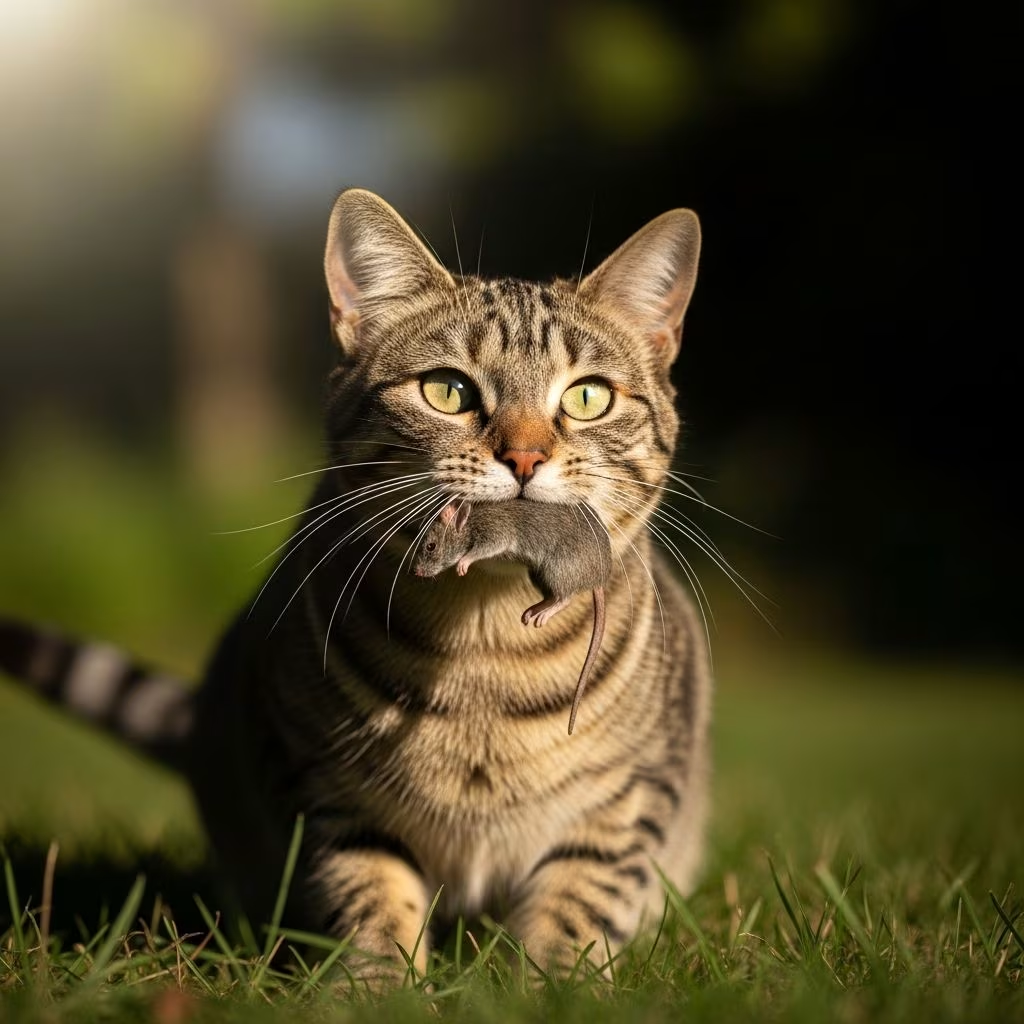
Why Cats Bring You Prey: Understanding Feline Behavior
If you’ve ever discovered a dead mouse, bird, or other small creature on your doorstep or bed, you’ve experienced one of the most perplexing aspects of cat ownership. While unsettling to humans, this behavior is deeply rooted in your cat’s natural instincts and tells us something fascinating about how your feline companion views you and your home. Understanding why cats bring you prey can transform how you perceive these ‘gifts’ and strengthen your bond with your pet.
The Role of Instinctual Behaviour in Prey Bringing
Despite approximately 12,000 years of domestication, cats retain many predatory behaviours from their wild ancestors. When cats were first domesticated, they were primarily kept as pest controllers, meaning even your pampered house cat is descended from the most adept hunters. This legacy runs deep in their biology.
Cats come equipped with specialised skills and adaptations perfectly designed for hunting:
- Sharp teeth and claws designed for catching and subduing prey
- Lightning-fast reflexes enabling quick strikes
- Excellent nighttime vision for hunting in low light
- Superior hearing to detect small movements and sounds
- Physical speed and power for successful catches
When a cat catches prey and brings it home, they are simply exhibiting their natural hunting behaviour. The fact that they live in a domestic environment and receive everything they need on a plate—literally—does not erase these instincts. Instead, it simply provides a different context in which to express them. Even well-fed domestic cats will hunt and kill prey, demonstrating that this behavior is instinctual rather than necessity-driven.
Your Home as a Safe Space
One important consideration is whether your feline companion is actually bringing you the dead animal, or if they simply happen to inhabit the space where they’ve brought it. The primary reason cats bring these ‘gifts’ home is because their home is where they feel safe and secure.
When cats catch prey, they may not want to eat it immediately or leave it where other animals could steal it from them. Instead, they bring it back to their core territory where they know they can eat it undisturbed or store it safely for later. This core territory may include your bed, even if placing it there has nothing to do with you specifically.
While this doesn’t necessarily make their kill a gift for you, it can still be considered a sign of love. The fact that your cat chooses to bring prey to your shared home demonstrates they feel safe and secure with you. This behaviour reflects trust and a sense of belonging in their family unit.
Resource Sharing and Social Bonding
In the wild, mother cats and members of social groups often share their prey with other members of their family. This behaviour strengthens social bonds and ensures that weaker or younger members of the group have enough to eat. If your cat is bringing you prey, it could be because they view you as a member of their social group.
When cats share their ‘kill’ with you, it may be because this is part of their feline culture and social hierarchy. Your cat may be extending this natural group behaviour to your household, treating you as part of their family unit. This interpretation suggests that prey-bringing is a form of social inclusion and affection, albeit expressed in a way that makes many humans uncomfortable.
Understanding this aspect of cat behaviour can help you reframe what might otherwise seem like a disturbing gift. Your cat is, in essence, trying to include you in their natural social behaviours and treating you as a valued member of their tribe.
Attention-Seeking Behaviour and Boredom Relief
Cats are known to engage in various behaviours to get their pet parents’ attention, from morning meows to sudden zoomies and nighttime antics. Bringing you a dead animal might be a way for your feisty feline to elicit a reaction from you. Your response—whether positive or negative—can reinforce this behaviour. Your cat might learn that bringing home prey leads to a significant response, thereby encouraging them to repeat it.
Additionally, some domesticated cats lack the mental and physical stimulation that their wild counterparts receive. Hunting and bringing home prey can be a way for them to relieve boredom and satisfy their natural urges. This allows them to engage in activities that are instinctually fulfilling and mentally stimulating, providing an outlet for their predatory drive that indoor living otherwise restricts.
If your cat seems to bring prey home frequently, it may be worth evaluating their enrichment levels and increasing interactive play sessions to redirect these instincts in more acceptable ways.
Common Myths About Prey-Bringing Behaviour
The Teaching Myth
In the wild, mother cats teach their kittens how to hunt by bringing them dead or injured prey. This process is crucial for the kittens’ survival, as it helps them learn the necessary skills to hunt independently. A common theory is that when a domestic cat brings dead animals to their human parent, they’re attempting to share this vital survival skill and teach you how to hunt.
However, the evidence on this theory is mixed. While some sources suggest this teaching behaviour does not apply to domestic cats and their human owners, others indicate that the desire to teach may well play into their decision to bring you prey. Unfortunately, as we cannot directly ask our cats why they do what they do, the jury remains out on whether this motivation is significant in domestic settings.
The Gift-Giving Myth
Another popular theory suggests that cats bring dead animals to their pet parents as gifts that offer recognition and appreciation for providing them with food, shelter, and care. However, current thinking from animal behaviourists is that this is not the primary motivation.
Instead, animal behaviourists propose alternative explanations: the behaviour allows cats to hone their hunting skills, practice coordination, and maintain physical fitness. It could also serve as a form of stress relief for indoor-outdoor cats who may not have as much opportunity to express their natural instincts in a traditional hunting environment.
While the sight of a dead animal brought in by your cat can be unsettling, it’s important to understand that this behaviour is rooted in natural instincts. If it makes you feel better, you can still choose to interpret it as a gift brought out of love—your cat certainly isn’t trying to upset you.
Health and Safety Considerations
While prey-bringing is natural behaviour, there are legitimate health concerns associated with it. Prey animals can carry diseases and parasites that may be transmitted to your cat or your household. It’s important to ensure your cat is regularly dewormed and vaccinated to mitigate these risks.
When responding to a deceased animal your cat has brought home, follow these safety guidelines:
- Stay calm and avoid overreacting, as this can confuse or distress your cat
- Dispose of the prey safely using gloves and place it in a sealed bag
- Disinfect any surfaces the prey may have contacted
- Check your cat for any signs of injury or illness and consult a veterinarian if necessary
Managing and Preventing Hunting Behaviour
If you want to reduce the frequency of prey-bringing incidents, several strategies can help:
- Keep cats indoors: Limiting outdoor access significantly reduces hunting opportunities
- Provide enrichment: Use toys, puzzle feeders, and interactive play to satisfy your cat’s hunting instincts in acceptable ways
- Use bells on collars: Attaching a bell to your cat’s collar can warn potential prey of their approach
- Feed regularly: Ensuring your cat is well-fed may reduce hunting behaviour, though it won’t eliminate it entirely since hunting is instinctual rather than hunger-driven
- Increase playtime: Dedicate time to interactive play sessions that simulate hunting and catching
It’s important to recognize that while these strategies can reduce hunting behaviour, they may not eliminate it completely. Your cat’s hunting drive is fundamental to who they are, and managing it is about channeling these natural instincts appropriately rather than suppressing them entirely.
Understanding Your Cat’s Perspective
From your cat’s perspective, bringing prey home makes perfect sense. They’re expressing their identity as a hunter, securing food in a safe location, maintaining their physical fitness, and potentially including their human family in their natural social behaviours. What seems disturbing to us is, for them, a completely normal and healthy expression of their nature.
Recognising this can help shift your emotional response from disgust or concern to understanding and appreciation for the complexity of your cat’s behaviour. Your cat isn’t trying to be cruel or show off—they’re simply being a cat in the most authentic way possible.
Frequently Asked Questions
Q: Is it a sign my cat loves me if they bring me prey?
A: Bringing prey to your shared home can be interpreted as a sign of trust and affection, as it shows your cat feels safe with you. However, it’s more directly related to their hunting instinct and viewing your home as a secure base than a deliberate gift of love in the way humans understand it.
Q: Should I scold my cat for bringing prey home?
A: Scolding can confuse or distress your cat and may not effectively eliminate the behaviour. Instead, focus on prevention through keeping them indoors, providing enrichment, and redirecting their hunting instincts through play.
Q: Why does my cat bring prey home at night?
A: Cats are nocturnal hunters by nature, so nighttime is their prime hunting time. This explains why many prey-bringing incidents occur during evening and night hours.
Q: Can a well-fed cat still hunt?
A: Yes. Hunting is driven by instinct rather than hunger, so even well-fed cats will continue to hunt and bring home prey if given the opportunity.
Q: How can I satisfy my indoor cat’s hunting instincts?
A: Provide interactive toys, puzzle feeders, wand toys that simulate prey movement, and regular play sessions that allow your cat to stalk, pounce, and ‘catch’ in a controlled environment.
Conclusion: Embracing Your Cat’s Nature
While the sight of a dead animal brought in by your cat can be unsettling, it’s important to understand that this behaviour is rooted in your cat’s natural instincts and is part and parcel of all the weird and wonderful aspects of being a cat parent. Your cat isn’t trying to upset you; they’re simply being true to their nature as a predator and expressing the behaviours that have defined cats for thousands of years.
By understanding the various motivations behind prey-bringing—from basic hunting instinct to social bonding and enrichment-seeking—you can respond with greater compassion and work toward managing the behaviour in ways that are safe for everyone involved. Whether you choose to see these offerings as gifts, teaching attempts, or simply natural hunting behaviour, recognizing them as an authentic expression of your cat’s identity can transform how you view this challenging aspect of cat ownership.
References
- Creepy or Cute? Discover the Truth Behind Why Cats Bring You Prey — Kinship. 2025. https://www.kinship.com/uk/cat-behaviour/why-cats-bring-you-prey
- Why Do Cats Bring Dead Animals Home? Understanding Cat Hunting Behavior — ZeroMouse. 2024. https://zeromouse.ai/blogs/overview/why-do-cats-bring-dead-animals-home-understanding-cat-hunting-behavior



