

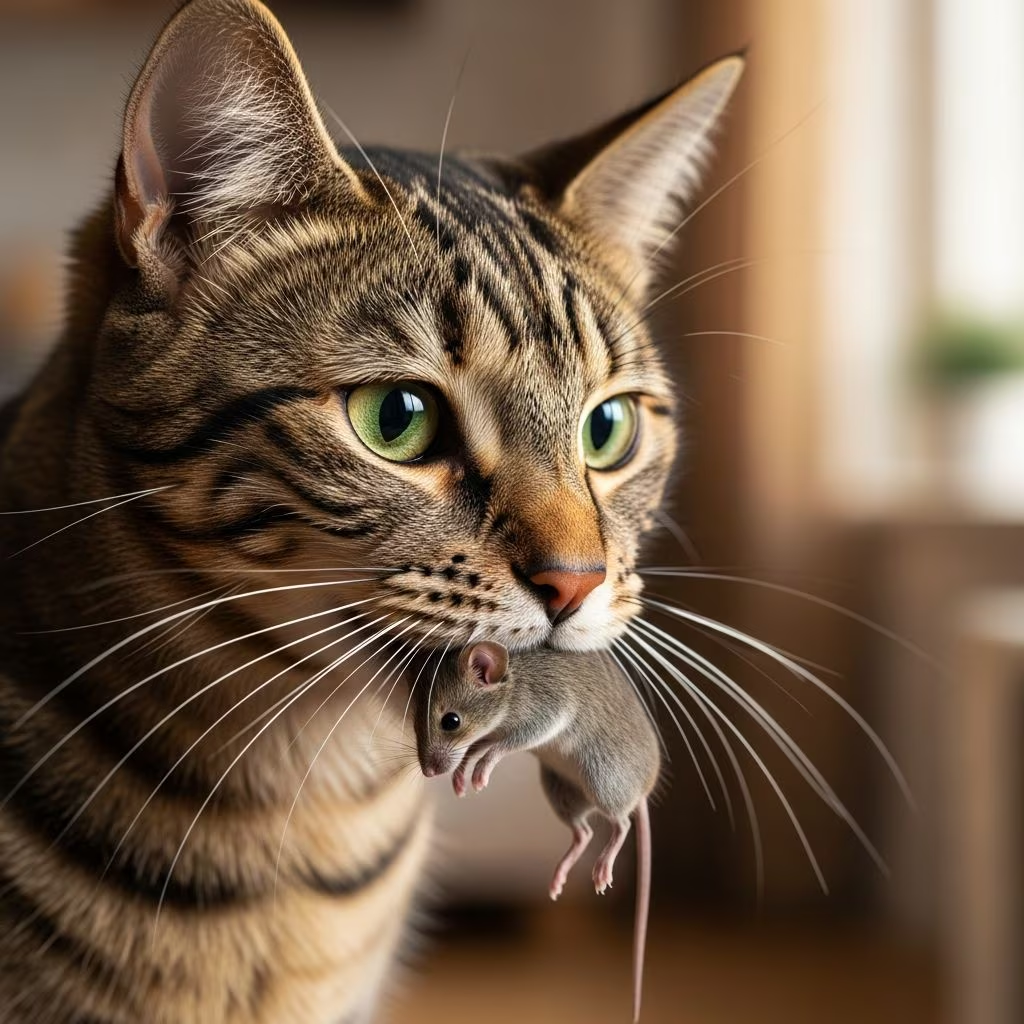
It’s a startling sight that many cat owners have encountered: a lifeless bird, mouse, or insect left on the doorstep, in the hallway, or even on your bed. While it might seem macabre or confusing, this behaviour is deeply rooted in your cat’s evolutionary history and natural instincts. Despite thousands of years of domestication, cats remain wired as skilled predators, and bringing prey home is a common expression of that drive. Understanding the motivations behind this can help you respond appropriately, reduce the frequency if desired, and appreciate it as a sign of your cat’s trust and affection.
This article delves into the primary reasons cats engage in this behaviour, debunks popular myths, offers practical advice on how to discourage it, and addresses frequently asked questions. Whether you’re grossed out or intrigued, knowing the ‘why’ transforms these ‘gifts’ from creepy surprises into insights into your feline companion’s world.
Why your cat brings you prey
Cats don’t suddenly lose their predatory nature just because they live indoors with a full food bowl. This section explores the key instinctual and environmental factors driving cats to bring prey into your home.
Instinctual behaviour
Domestic cats (Felis catus) trace their lineage back to the African wildcat (Felis silvestris lybica), domesticated around 12,000 years ago primarily for pest control on early farms. Even pampered house cats inherit specialised hunting adaptations: retractable claws for silent stalking, sharp carnassial teeth for shearing flesh, binocular vision for depth perception, heightened hearing for detecting tiny prey movements, and a tapetum lucidum layer in their eyes for superior low-light vision.
Hunting isn’t just about hunger; it’s an innate sequence of behaviours—stalk, pounce, capture, kill—that provides mental stimulation and physical exercise. Studies confirm that well-fed cats hunt regardless of nutritional needs, as these early stages of the hunt are independent of satiety. In a 2019 Chilean study of owned cats, 84.1% brought prey home, with birds (most common), mammals, and insects following, underscoring how prevalent this is even in domestic settings. Your cat’s ‘trophy’ on the floor is simply their wild ancestry playing out in a modern context.
A safe space
Cats view their home—and by extension, you—as their secure core territory. Wild cats carry kills back to safe dens to eat undisturbed or cache for later, avoiding theft by competitors. Indoor-outdoor cats do the same, depositing prey where they feel protected.
If the ‘gift’ appears on your bed or pillow, it’s not personal targeting but a testament to how safe they feel in your shared space. Cats Protection notes this as a primary reason: home is sanctuary, so that’s where valuables (like fresh kills) go. This can indirectly signal love, as trust in your presence reinforces their choice of location.
Resource sharing
In feral cat colonies or wild felid groups like lions, dominant hunters share portions of kills with family, kittens, or weaker members to strengthen social bonds and ensure group survival. Domestic cats, often solitary but social with humans, may extend this to their ‘colony’—you.
By offering you prey, your cat includes you in their social unit, treating you as kin deserving of sustenance. This maternal or communal sharing persists because cats perceive owners as inept hunters needing provisioning, mirroring how queens feed kittens.
Attention-seeking behaviour and boredom
Cats are masters of manipulation, using meows, nudges, or antics to elicit reactions. A dead animal guarantees attention—shock, squeals, or cleanup—reinforcing the behaviour via operant conditioning. Positive or negative responses alike signal success.
Boredom exacerbates this; indoor cats lack the wild’s constant stimulation, so hunting satisfies urges for play, exercise, and achievement. Factors like free outdoor access, gardens, or no litter box correlate with higher prey-bringing rates, per research. Unstimulated cats turn homes into hunting grounds.
Myths about why your cat brings you prey
Internet lore abounds with explanations, but not all hold up to behavioural science. Let’s separate fact from feline folklore.
Teaching
The romantic idea: mother cats bring disabled prey to kittens, progressing to live ones for hunting lessons. Some extend this to humans, claiming your cat teaches you survival skills.
However, experts debate this. Adult cats rarely ‘teach’ non-kittens, and domestic contexts differ from wild rearing. While possible for some, it’s not primary; instincts like territory safety dominate. The jury’s out without cat testimony.
Gifts
Many owners flatter themselves with ‘thank you for feeding me’ gifts. Current ethology leans against this; cats lack human reciprocity concepts. It’s more instinct than gratitude.
That said, reframing as sharing or safety-signalling adds warmth without mythologising.
How to discourage your cat from bringing you prey
While natural, frequent ‘gifts’ pose hygiene risks (parasites, bacteria) and ethical concerns (wildlife impact). Here’s how to curb it humanely.
- Limit outdoor access: Keep cats indoors or supervised. Research shows indoor-only cats hunt far less. Build enclosures (catios) for safe stimulation.
- Enrich the environment: Provide toys mimicking prey (feather wands, laser pointers—avoid frustration by ending on ‘catch’), puzzle feeders, and climbing trees to tire them mentally/physically.
- Ignore the behaviour: No reaction to kills; calmly dispose without fanfare to avoid reinforcement.
- Bell the cat: Collars with bells or bird scarers reduce success rates, though controversial for stifling instincts.
- Responsible ownership: Microchip, litter boxes, no free garden roaming cut odds.
| Method | Effectiveness | Pros | Cons |
|---|---|---|---|
| Indoor living | High | Safer for cat/wildlife | Requires enrichment |
| Enrichment toys | Medium | Fulfils instincts | Ongoing effort |
| Bells/scarers | Medium | Easy | May distress cat |
| No reaction | Low-Medium | Free | Slow results |
Frequently Asked Questions (FAQs)
Is it normal for my cat to bring dead animals home?
Yes, completely normal. Up to 84% of owned cats do it, driven by instincts not hunger.
Should I punish my cat for bringing prey?
No—punishment causes fear/stress without understanding. Redirect via enrichment and ignore.
Why does my cat bring prey at night?
Cats are crepuscular (dawn/dusk active), peak hunting times when prey is vulnerable.
Does feeding my cat more stop hunting?
No; hunting motivates independently of food.
What if my cat eats the prey?
Risk of parasites/disease; vet check and deworm regularly.
Can spaying/neutering reduce this?
Some evidence for less roaming/hunting, but instincts persist.
Embracing these quirks deepens the cat-human bond. Your cat’s prey deliveries affirm their wild spirit—cherish the hunter within.
References
- Creepy or Cute? Discover the Truth Behind Why Cats Bring You Prey — Kinship. 2023. https://www.kinship.com/uk/cat-behaviour/why-cats-bring-you-prey
- Why Do Cats Bring Dead Animals Home? Understanding Cat Hunting Behavior — ZeroMouse.ai. 2023. https://zeromouse.ai/blogs/overview/why-do-cats-bring-dead-animals-home-understanding-cat-hunting-behavior
- Can Responsible Ownership Practices Influence Hunting Behavior of Owned Cats in Chile? — PMC (NCBI). 2019-09-25. https://pmc.ncbi.nlm.nih.gov/articles/PMC6826938/



