

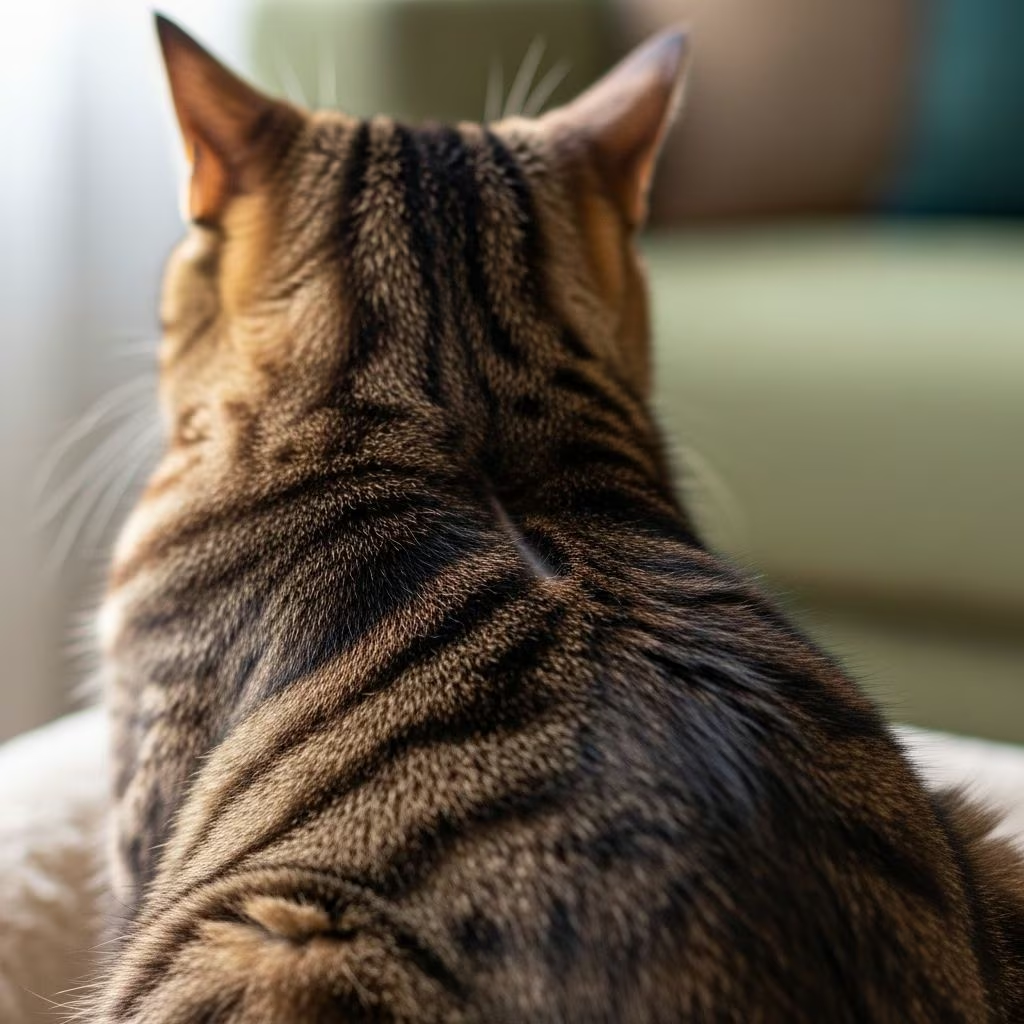
Is It Normal for a Cat’s Back to Twitch?
Cats possess a remarkable connection with their skin that allows them to communicate, respond to stimuli, and express their emotions through subtle body movements. One of the most noticeable of these movements is back twitching. If you’ve ever watched your cat’s back ripple while you pet them or seen them twitch in response to excitement, you may have wondered whether this is normal behavior or a sign of an underlying health issue.
The good news is that mild, occasional twitching along your cat’s back is often perfectly normal. Cats have a specialized layer of muscle called the cutaneous trunci muscle that runs along their spine and allows them to move the skin independently of their body. This unique anatomical feature enables cats to respond to physical sensations, communicate their feelings, and react to their environment in ways that seem almost magical to us.
However, not all back twitching is benign. More frequent or severe twitching can indicate underlying health conditions that require veterinary attention. Understanding the difference between normal behavior and potentially problematic twitching is essential for cat owners who want to keep their feline companions healthy and happy.
What Does It Look Like When a Cat’s Back Twitches?
Cat back twitching can manifest in different ways depending on the underlying cause. The appearance of these movements can range from subtle to dramatic, and recognizing what you’re seeing can help you determine whether a veterinary visit is necessary.
Sometimes, back twitching appears as a gentle ripple across your cat’s skin when you run your hand down their back. This subtle wave of movement is often accompanied by a slight muscle contraction that lasts just a moment. Other times, you might observe more pronounced muscle spasms that can last for 30 seconds or longer without any obvious external stimulation. These spasms might be localized to one area of the back or flanks, or they might involve the entire back region.
The key characteristic of these movements is the visible motion of your cat’s skin along the back area. This skin movement is the defining feature of back twitching, regardless of whether it’s a quick, subtle response or a prolonged muscle spasm. Some cats may also display accompanying behaviors such as tail twitching, skin rippling, or even attempts to bite or groom the affected area.
Reasons Why Your Cat’s Back Twitches
Understanding the specific causes of your cat’s back twitching is the first step toward addressing any potential concerns. Several distinct reasons can trigger this behavior, ranging from completely normal to requiring professional medical intervention.
1. Normal Behavior
The most common and benign reason for back twitching is simply normal feline behavior. Your cat’s cutaneous trunci muscle layer is designed to respond to various stimuli, and this response is entirely healthy and expected.
Normal back twitching typically occurs in these situations:
- When you pet your cat, especially if they’re not entirely enjoying the interaction
- When your cat becomes excited about something they see, such as a bird outside the window or a squirrel in the yard
- When your cat experiences a sudden itch and quickly tries to lick or groom the area
- During sleep, when cats may twitch as part of their dreaming
- When your cat is about to engage in play or hunting behavior
- As a form of body language communication to express their emotional state
If your cat’s back twitching occurs in response to one of these triggers and isn’t accompanied by other concerning symptoms, it’s almost certainly normal behavior that requires no intervention.
2. Pain or Discomfort
Pain is a significant potential cause of back twitching in cats. Beneath your cat’s fur and skin lies a complex network of muscles, vertebrae, and the spinal cord. Any injury or issue affecting these structures can cause discomfort that manifests as back twitching.
Conditions that can cause pain-related back twitching include:
- Arthritis affecting the spine or hips
- Muscle injuries or strains
- Intervertebral disc problems
- Spinal arthritis
- Nerve damage or neuropathy
- Abscesses or infected wounds
- Anal gland disorders
When pain is the underlying cause, you may notice additional signs beyond just back twitching. Your cat might appear stiff, reluctant to jump or climb, avoiding physical affection, or showing reduced mobility. Some cats may also display changes in their eating habits, litter box usage, or overall activity level. Importantly, cats are exceptionally skilled at hiding pain, so muscle twitching might be the only visible sign of discomfort. If you suspect pain is causing your cat’s back twitching, a veterinary examination is warranted.
3. Skin Conditions
The skin is one of your cat’s most important organs, serving multiple critical functions including protection, temperature regulation, and sensory detection. When skin conditions develop, they can cause discomfort that triggers muscle twitching.
Skin conditions that may lead to back twitching include:
- Parasitic infections (fleas, mites, lice)
- Bacterial or fungal infections
- Dry, itchy skin
- Allergic reactions and food hypersensitivity
- Flea allergy dermatitis (FAD)
- Rashes and inflammatory conditions
- Immune-system-related skin diseases
These conditions create tingling, itching, or burning sensations that can manifest as muscle twitching. You’ll typically notice accompanying signs such as excessive licking and scratching, overgrooming, hair loss, visible rashes, scabs, or sore lesions on the skin. Flea allergy dermatitis is particularly common, causing intense itching across the back and around the tail base. Skin conditions can deteriorate quickly, so prompt veterinary evaluation is important.
4. Mild Seizures
While less common than other causes, seizures can trigger back twitching in cats. Seizure activity might be subtle, appearing as muscle spasms or twitching rather than the dramatic convulsions typically associated with severe seizures. Neurological conditions affecting the brain can cause these episodes.
If your cat experiences seizure-related back twitching, you may also observe:
- Stiffness or rigidity in the muscles
- Loss of consciousness or awareness
- Involuntary muscle contractions throughout the body
- Drooling or changes in breathing patterns
- Confusion or disorientation after the episode
Any suspected seizure activity requires immediate veterinary evaluation to determine the underlying cause and establish appropriate treatment.
5. Hyperthyroidism
The thyroid gland, though small, plays a crucial role in regulating your cat’s metabolism. When this gland becomes overactive and produces excessive thyroid hormone, the condition is known as hyperthyroidism. This metabolic disorder can cause various symptoms, including muscle twitching along the back.
Cats with hyperthyroidism typically display multiple symptoms:
- Unexplained weight loss despite increased appetite
- Excessive hunger and eating
- Hyperactivity and restlessness
- Increased vocalization
- Muscle tremors and twitching
- Behavioral changes
Hyperthyroidism is treatable, but it requires proper diagnosis through blood work and veterinary examination. If you notice a combination of these symptoms in your cat, especially weight loss despite good appetite, a veterinary visit is essential.
6. Feline Hyperesthesia Syndrome
Feline hyperesthesia syndrome (FHS), sometimes called “twitchy cat syndrome,” is a rare but distinctive neurological condition that causes heightened skin sensitivity and characteristic behavioral changes. While the exact cause remains not fully understood, FHS is believed to involve neurological, genetic, and environmental factors, with stress and skin conditions potentially playing triggering roles.
Certain breeds show increased predisposition to FHS, including Abyssinian, Burmese, Persian, and Siamese cats. The condition also appears more frequently in younger cats. Possible underlying triggers include dermatological diseases like flea allergy dermatitis, neurological disease, toxin exposures, or psychological conditions such as obsessive-compulsive disorder.
Classic signs of feline hyperesthesia syndrome include:
- Rippling or rolling of the skin along the back
- Extreme sensitivity to touch, with cats often biting when petted
- Excessive biting and licking at the back, flanks, and limbs
- Erratic jumping and racing around without apparent reason
- Tail chasing and obsessive behaviors
- Behavioral changes including anxiety and excessive vocalization
- Dilated pupils
- Rare seizure-like episodes
The Difference Between Normal Back Twitching and Feline Hyperesthesia
Distinguishing between normal, healthy back twitching and feline hyperesthesia syndrome is crucial for determining whether your cat needs veterinary care. The key difference lies in the severity, frequency, and accompanying behaviors.
Normal back twitching is characterized by:
- Occasional, gentle muscle movements
- Responses to identifiable triggers such as petting or visual stimulation
- No signs of distress or behavioral changes
- Absence of excessive grooming or self-directed aggression
Feline hyperesthesia syndrome, by contrast, involves:
- Overreactions to touch or stimuli
- More than gentle twitches; instead, pronounced skin rippling
- Accompanying vocalizations and attempts to bite or chase the tail
- Frequent twitching episodes, not just occasional responses
- Signs of anxiety and behavioral disturbance
If your cat overreacts to being touched, exhibits skin rippling that seems excessive, or displays the characteristic behavioral changes associated with FHS, a veterinary evaluation is necessary for proper diagnosis and treatment planning.
When to See a Veterinarian
While occasional, mild back twitching is normal, certain situations warrant professional veterinary evaluation. You should contact your veterinarian if:
- Your cat’s back twitching suddenly becomes more frequent than usual
- The twitching is accompanied by other concerning signs such as pain behavior, behavioral changes, or mobility issues
- Your cat displays signs of distress, excessive grooming, or self-injury
- You notice weight loss, appetite changes, or other systemic symptoms
- The twitching occurs without any obvious external trigger
- Your cat seems uncomfortable or shows signs of anxiety
- The twitching persists for extended periods or increases in intensity
Bottom Line: Why Your Cat’s Back Is Twitching
Cats are expressive animals that communicate through their bodies, and back twitching is one way they express themselves. In most cases, occasional back twitching is completely normal and reflects your cat’s healthy neurological and muscular anatomy. However, excessive or frequent back twitching, especially when accompanied by behavioral changes, signs of pain, or other symptoms, can indicate underlying health issues that deserve professional attention.
The best approach is to observe your cat’s twitching patterns and overall health status. If the twitching is mild, occasional, and occurs in response to identifiable triggers, there’s likely no cause for concern. However, if your cat’s back twitching is suddenly more frequent or accompanied by other signs of illness or distress, speaking with your veterinarian is the appropriate next step. Early evaluation and treatment can prevent minor issues from developing into more serious conditions and ensure your feline companion remains healthy and comfortable.
Frequently Asked Questions
Q: Is it normal for my cat’s back to twitch when I pet them?
A: Yes, it’s completely normal for your cat’s back to twitch when petted. This response is due to the cutaneous trunci muscle layer that allows cats to react to touch. However, if your cat overreacts by trying to bite or showing signs of discomfort, this could indicate an issue like feline hyperesthesia syndrome.
Q: What is the cutaneous trunci muscle?
A: The cutaneous trunci is a thin layer of muscle that runs along your cat’s back and allows them to move their skin independently. This muscle responds to physical stimuli, emotions, and helps cats communicate through body language.
Q: Can back twitching indicate my cat is in pain?
A: Yes, back twitching can be a sign of pain from conditions like arthritis, spinal problems, or injuries. If your cat shows other signs of discomfort such as stiffness, reluctance to jump, or behavioral changes, consult your veterinarian.
Q: What is feline hyperesthesia syndrome?
A: Feline hyperesthesia syndrome is a rare neurological condition causing heightened skin sensitivity. Cats with FHS experience characteristic skin rippling, extreme touch sensitivity, excessive grooming, and erratic behavior. Certain breeds like Siamese and Persians are more predisposed to this condition.
Q: How can I tell if my cat’s back twitching is serious?
A: Occasional, gentle twitching in response to petting or excitement is normal. Concerning signs include frequent twitching without triggers, accompanying pain behaviors, excessive grooming, overreactions to touch, behavioral changes, or other systemic symptoms. Contact your veterinarian if you notice these signs.
Q: Can skin conditions cause back twitching in cats?
A: Yes, skin conditions like parasites, allergies, infections, and flea allergy dermatitis can cause itching and discomfort that manifests as back twitching. You’ll typically notice accompanying signs like excessive scratching, hair loss, or visible lesions.
Q: Does hyperthyroidism cause back twitching?
A: Yes, hyperthyroidism can cause muscle twitching along with other symptoms like weight loss, increased appetite, and hyperactivity. If you notice these combined symptoms, your veterinarian can perform blood tests to diagnose this treatable condition.
References
- Why Your Cat’s Back Is Twitching—and What It Means — Kinship. 2025. https://www.kinship.com/cat-behavior/why-does-my-cats-back-twitch
- Why Is My Cat’s Back Twitching? When to Worry — Cats.com. 2025. https://cats.com/why-is-my-cats-back-twitching
- Feline Hyperesthesia Syndrome (Twitchy Cat Syndrome) — PetMD. 2025. https://www.petmd.com/cat/conditions/skin/feline-hyperesthesia-syndrome
- Understanding and Treating Feline Hyperesthesia — Shawsheen Animal Hospital. 2025. https://shawsheenanimalhospital.com/blog/understanding-and-treating-feline-hyperesthesia/
- Feline Hyperesthesia Syndrome: Causes, and Treatment Options — Arch Creek Animal Clinic. 2025. https://archcreekanimalclinic.com/feline-hyperesthesia-syndrome/



