

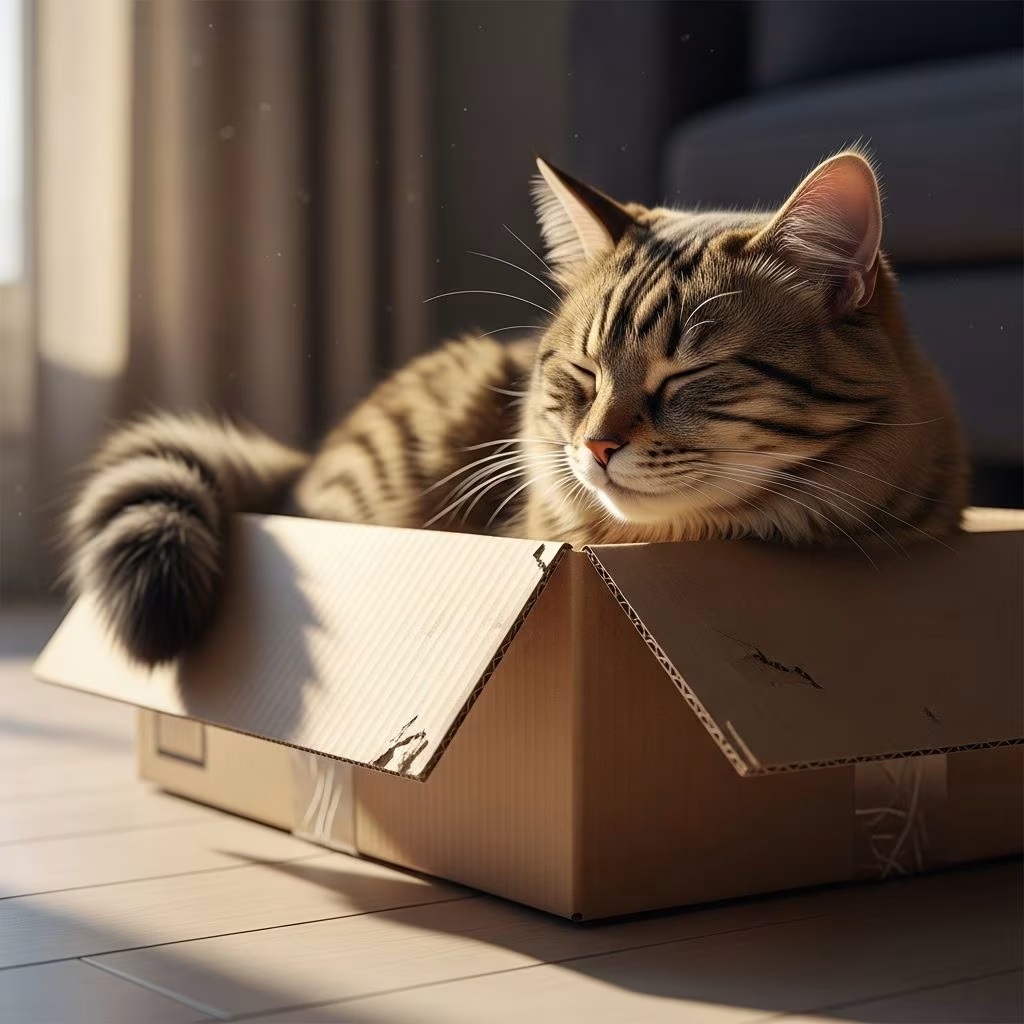
Cats’ fascination with boxes stems from deep-rooted instincts for security, warmth, and play, providing essential psychological comfort and environmental enrichment.
The Evolutionary Roots of Box Appeal
In the wild, cats’ ancestors sought confined spaces like dens or burrows to evade predators and raise young. Domestic cats retain this preference, viewing boxes as modern equivalents that shield their vulnerable backs while allowing observation of surroundings—a concept known as “protected surveillance.” This behavior reflects survival strategies honed over generations, where enclosed spots minimized exposure to threats.
Research supports this: a study by ethologist Claudia Vinke at Utrecht University found shelter cats with access to boxes showed significantly lower stress levels, adapting faster to new environments and interacting more with humans. Such findings highlight boxes as more than toys—they fulfill primal needs for safety.
Security and Stress Relief in Enclosed Spaces
Boxes offer cats a sense of control in unpredictable homes. The enclosed walls create boundaries, reducing anxiety by limiting visual threats from behind. For newly adopted or anxious cats, a box serves as a sanctuary, enabling gradual acclimation without feeling overwhelmed.
In veterinary and shelter settings, boxes demonstrably decrease stress. At the Animal Medical Center, providing boxes in kennels lowers hospital-induced anxiety, while shelters note faster recovery in cats with hiding options. A Dutch study quantified this: cats without boxes exhibited higher stress scores compared to those with them.
- Key Benefits: Reduced cortisol levels, quicker environmental adjustment, and increased confidence.
- New cats often claim a box immediately, using it to decompress amid changes.
- Multi-cat homes benefit too, as individual boxes prevent territorial conflicts.
Predatory Instincts and Playful Ambush
As natural hunters, cats use boxes for stalking and pouncing, mimicking wild pursuits. The confined space heightens excitement, turning everyday objects into prey traps. Owners often witness dilated pupils and tensed muscles as cats prepare surprise attacks on toys or feet.
This play provides physical exercise and mental stimulation, crucial for indoor cats prone to boredom. Boxes transform passive lounging into active engagement, satisfying hunting drives without real danger.
| Box Play Behavior | Instinct Linked | Benefits |
|---|---|---|
| Hiding and waiting | Stalking | Mental sharpness, exercise |
| Sudden pounces | Hunting strike | Stress release, fun |
| Exploring flaps | Curiosity | Enrichment, bonding |
Temperature Regulation and Comfort
Cats prefer warmth, and cardboard boxes insulate effectively, retaining body heat. Their slightly flattened posture in boxes maximizes contact with sides, enhancing coziness—ideal for curling up. This is especially appealing in cooler rooms or for thin-furred breeds.
Texture matters too: cardboard’s softness suits sensitive paws, unlike slick surfaces. Combined with security, this makes boxes preferred over open beds.
Sensory Experiences That Captivate
Beyond structure, boxes engage multiple senses. Cardboard absorbs scents, creating an olfactory haven from external smells or the cat’s own markers. Textures invite rubbing and scratching, while acoustics—muffled sounds inside—amplify intrigue.
Visual play from light filtering through openings triggers peeking and batting. Even illusory squares taped on floors attract cats, as shown in a Kanizsa illusion study where felines treated 2D outlines like real enclosures. This reveals sophisticated visual perception.
Boxes in Multi-Cat Dynamics
In shared homes, boxes mitigate tension by offering personal territories. Each cat claims one, reducing fights over space. Providing multiples—one per cat plus extras—promotes harmony, as observed in shelters.
The “Goldilocks” size—just snug enough—enhances appeal, simulating ideal dens.
Practical Ways to Harness Box Love
Rotate boxes to spark curiosity; cut holes for tunnels or towers. Avoid scented or taped ones initially to prevent aversion. Use for vet trips by pre-scenting carriers with familiar boxes.
- Safe Materials: Plain cardboard, no staples or ink.
- Enrichment Ideas: Stack for climbing, hide treats inside.
- Health Check: Excessive hiding may signal illness—consult vets.
Common Myths About Cats and Boxes
Myth: Cats like any square. Fact: Illusions work, but real enclosures preferred for depth.
Myth: It’s just silliness. Fact: Vital for welfare, backed by research.
Frequently Asked Questions
Why does my cat ignore boxes sometimes?
Individual preferences vary; stress, novelty fatigue, or size mismatches play roles. Try different types.
Do all cats love boxes?
Most do due to instincts, but confident or playful cats may prefer open spaces occasionally.
Is it okay to let my cat chew boxes?
Moderate chewing is fine, but supervise to avoid ingestion; provide alternatives.
Why squares on the floor?
Cats perceive illusory contours as boundaries, seeking security even in 2D.
Boxes for senior cats?
Yes—low-sided ones aid arthritis, offering warmth and calm.
Enhancing Your Cat’s World with Boxes
Incorporate boxes daily for happier, healthier cats. From kittens to seniors, they bridge wild instincts and domestic life, reducing shelter stress and boosting play. Science confirms: boxes are feline superstars.
References
- Thinking Inside the Box: New Research into Cats’ Love of Boxes — Animal Medical Center. 2021-06-23. https://www.amcny.org/blog/2021/06/23/thinking-inside-the-box-new-research-into-cats-love-of-boxes/
- Why Cats Love Boxes: Exploring Feline Fascination and Behavior — Elspet. N/A. https://www.elspet.com/blogs/all/why-cats-love-boxes
- The Science Behind Cats’ Love for Boxes — Vital Essentials. N/A. https://www.vitalessentials.com/raw-guide/the-science-behind-cats-love-for-boxes-and-how-to-incorporate-it-into-their-daily-life
- Why Do Cats Like Boxes? Expert Insights — The Cat Behavior Clinic. N/A. https://www.thecatbehaviorclinic.com/my-cat-loves-boxes-is-this-normal/
- Why Do Cats Like Boxes So Much? Top 7 Reasons — Cats.com. N/A. https://cats.com/why-do-cats-like-boxes
- Cat Box Behavior Reveals Pet’s Deepest Fears — Lundy Projects. N/A. https://lundy-projects.co.uk/cat-boxes-behavior-reveals-disturbing-pet-deepest-fears/



