

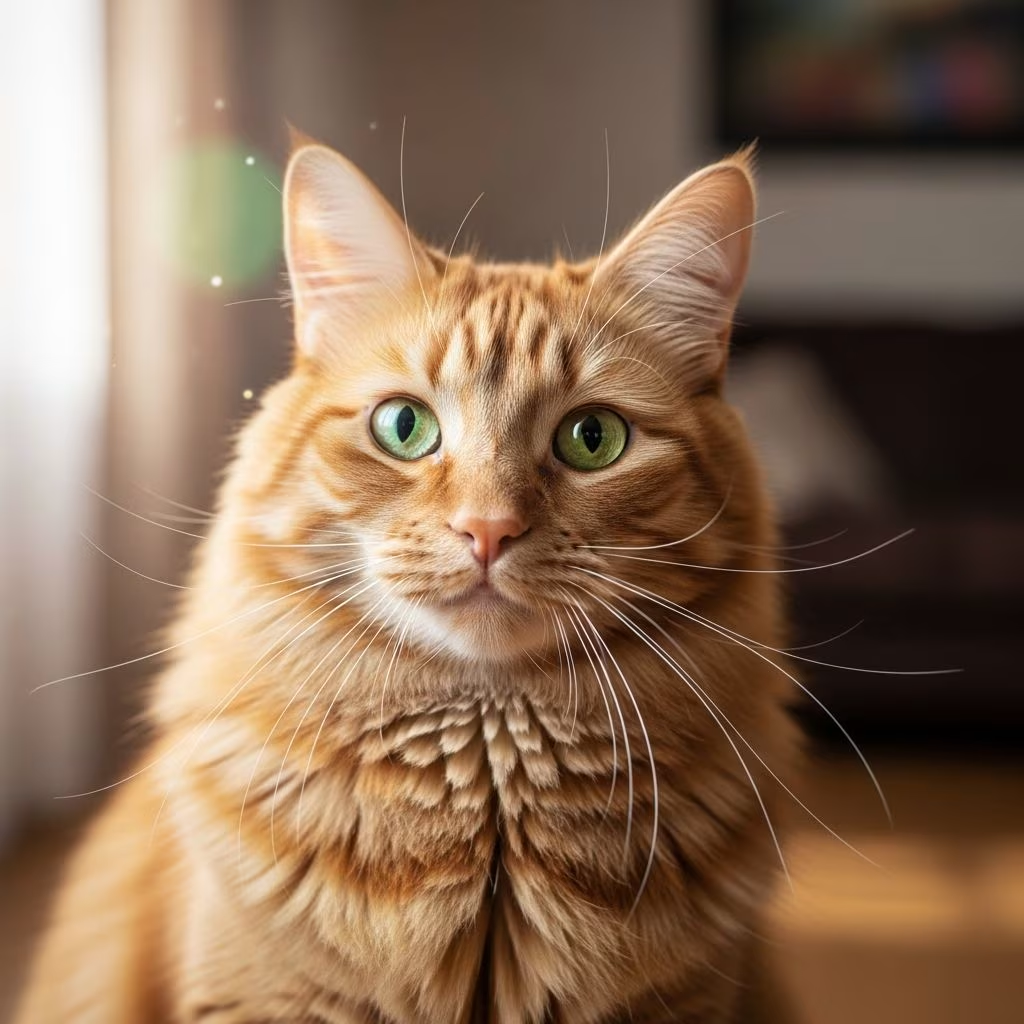
Cats have long captivated humans with their independent charm, mysterious personalities, and unwavering loyalty. But beyond the stereotypes of aloof loners, modern research and cat parent testimonials reveal a deeper truth: cats form profound emotional bonds that often surpass human relationships, challenge gender norms in pet parenting, and thrive on socialisation just like any family member. This article delves into the science, stories, and statistics behind why cats are more than pets—they’re family.
Nearly Half of Cat Parents Would Choose Their Pet Over People
In a striking revelation, nearly half (49%) of UK cat parents admit to valuing their feline companions more than people, highlighting the unparalleled depth of the human-cat bond. A study underscores this devotion: 18% of cat parents describe their cat as their ‘reason for being,’ a sentiment that underscores how cats provide purpose and emotional anchor in daily life. This isn’t mere affection; it’s a profound connection where cats offer unconditional understanding that humans often fail to match.
Two-thirds (65%) of cat parents report that friends and family ‘don’t get’ this special relationship, while 41% openly prioritise their cat over human interactions. Over a third (35%) even find cats easier to understand than people, speaking to felines’ intuitive nature amid human complexities. Annie Argyle, European Brand Director at Whiskas, notes, ‘The relationship between cats and their humans is deeply personal and often misunderstood by others.’
Dr Tammie King, cat behaviourist at the Waltham Petcare Science Institute, attributes this to cats’ unique personalities: ‘Every cat is unique; different things make different cats happy.’ This individuality fosters devotion, evident in acts like 49% of parents buying custom furniture—thrones and heated sofas—for their pets, rejecting standard human furnishings. Cats aren’t just companions; they’re integral family members delivering emotional support rivaling human ties.
I’m a Cat Dad – and It’s the Best Decision I’ve Ever Made
The rise of cat dads is reshaping pet stereotypes, with men increasingly embracing feline parenthood for its mental health benefits and appeal. A Mars Petcare study shows the gender gap narrowing: 24% of women and 23% of men now parent cats, debunking the ‘single cat lady’ trope. Among men, 61% report daily relaxation from their cats, and 53% find real comfort, turning lonely evenings into purring solace.
Cat dads are seen as ‘caring,’ ‘responsible,’ ‘sensitive,’ and ’emotionally intelligent.’ Two in five Gen Z (41%) and millennials (40%) view men with cats as more attractive, with 30% calling it a ‘green flag.’ Notably, 36% of male cat parents say their dating life improved, linking feline companionship to enhanced empathy. Dr Scott McGrane of the Waltham Petcare Science Institute confirms: ‘78% of men with cats say their feline helps quiet their minds and stop overthinking.’
Personal stories amplify this: cat dad Adam England credits his cats Bunny and Dougie for well-being during dark winters or solo weekends. Cats offer low-pressure companionship—no conversation demanded, just presence. They embody self-reliance and independence, traits aligning with ‘masculine’ ideals, while teaching emotional intelligence. As Dwayne notes, ‘Having this animal that shows affection on their terms helps you become more emotionally intelligent’.
Cats Aren’t Loners, After All
The myth of cats as inherently aloof loners persists, but experts like behaviourist Kristiina Wilson assert they require socialisation for happy lives, much like dogs. Without it, kittens risk ‘single kitten syndrome’—biting, excessive dependence, and fearfulness. The peak socialisation window is 2-8 weeks, exposing them to people, hoovers, and household stimuli for confident adulthood.
Wilson recommends adopting at least two kittens (or one with an existing pet) unless the cat prefers solitude. While some cats are naturally antisocial—like introverted humans—most benefit from companionship and enrichment to prevent boredom or depression. Scientific studies support this: free-ranging cats form social groups influenced by familiarity, kinship, and rank. Females avoid mating with close kin, and dominant males sire more kittens, though 78% of litters have multiple paternities, showing complex social dynamics.
Affiliative behaviours thrive among familiar cats, fostering ‘preferred associates.’ Genetic changes from domestication ease human socialisation, enabling tolerance, trust, and independence. Cats integrate into human lives, forming intersubjective friendships and joint meaning-making.
The Science of Human-Cat Kinship
Human-cat kinship evolves from niche expansion, where cats insert into human projects for mutual benefit. They develop tolerance and trust while retaining autonomy, mirroring wild social structures adapted to homes. Free-ranging cats’ social lives reveal group membership impacts reproduction, with body size, rank, and kinship key. Higher-ranking males achieve greater success without monopolising access.
Domestication enhances sociability: cats avoid close-kin mating, prioritise familiarity for affiliations, and form bonds providing emotional support. Pet parenting varies—indoor vs. outdoor debates shape guardian roles, balancing freedom and safety. These insights affirm cats as social beings needing thoughtful care.
Cat Parenting Tips for Stronger Bonds
- Socialise Early: From 2-8 weeks, introduce varied stimuli for confident cats.
- Provide Companionship: Consider multi-cat homes to combat single kitten syndrome.
- Enrich Environment: Custom furniture, toys, and heated beds cater to unique personalities.
- Mental Health Boost: Leverage purring for relaxation; 78% of cat dads report reduced overthinking.
- Challenge Stereotypes: Celebrate cat dads’ empathy gains and dating perks.
Indoor vs. Outdoor: Pet Parenting Styles
| Style | Pros | Cons | Best For |
|---|---|---|---|
| Indoor | Safer from traffic/disease; longer lifespan | Needs more enrichment to prevent boredom | Urban homes, timid cats |
| Outdoor | Natural hunting, exercise | Risks: predators, fights, toxins | Rural areas, confident cats |
| Mixed (Supervised) | Balance of freedom/safety | Requires time commitment | Secure gardens |
Guardians weigh these based on location and cat personality.
Frequently Asked Questions (FAQs)
Q: Do cat parents really prefer cats over people?
A: Yes, 41% value cats more than people, with 49% buying custom furniture like thrones.
Q: Are cat dads more attractive?
A: 41% of Gen Z and 40% of millennials think so; 36% report better dating lives.
Q: Do cats need socialisation like dogs?
A: Absolutely; early exposure (2-8 weeks) prevents behavioural issues.
Q: Can single cats be happy?
A: Some prefer solitude with ample enrichment, but most benefit from companions.
Q: What’s the science behind cat social groups?
A: Familiarity, kinship, and rank influence bonds and reproduction in free-ranging cats.
Embracing the Feline Family
From life-giving bonds to stereotype-shattering cat dads and social truths, cats enrich lives profoundly. Invest in socialisation, enrichment, and understanding to nurture these kinship ties. Your cat isn’t just a pet—they’re your reason for being.
References
- Nearly Half of Cat Parents Would Choose Their Pet Over People — Kinship. 2023. https://www.kinship.com/uk/news/cat-bonds-stronger-than-human-relationships-study
- I’m a Cat Dad – and It’s the Best Decision I’ve Ever Made — Kinship. 2023. https://www.kinship.com/uk/cat-lifestyle/rise-of-cat-dads
- Cats Aren’t Loners, After All — Kinship. 2023. https://www.kinship.com/uk/cat-behaviour/cat-socialisation
- The Social Lives of Free-Ranging Cats — PMC – PubMed Central. 2022-01-12. https://pmc.ncbi.nlm.nih.gov/articles/PMC8749887/
- Niche Expansion and the Natural History of Human-Cat Kinship — University of Chicago Press Journals. 2024. https://www.journals.uchicago.edu/doi/10.1086/737151



