

Why Is My Cat Spraying in the House and How Do I Stop It?
Cat spraying can be one of the most frustrating behavioral challenges for pet owners. If you’re asking yourself, “Why is my cat spraying in my house?” you’re not alone. Understanding the reasons behind this behavior is the first step toward resolving it. Unlike regular litter box accidents, spraying is a normal feline behavior that serves important communication purposes. However, when it happens indoors on your furniture, walls, and belongings, it becomes a problem that needs to be addressed.
The good news is that cat spraying is manageable with patience, understanding, and the right approach. This comprehensive guide will help you understand why your cat is spraying and provide you with practical, evidence-based strategies to stop this unwanted behavior.
Understanding Cat Spraying: What It Is and Why Cats Do It
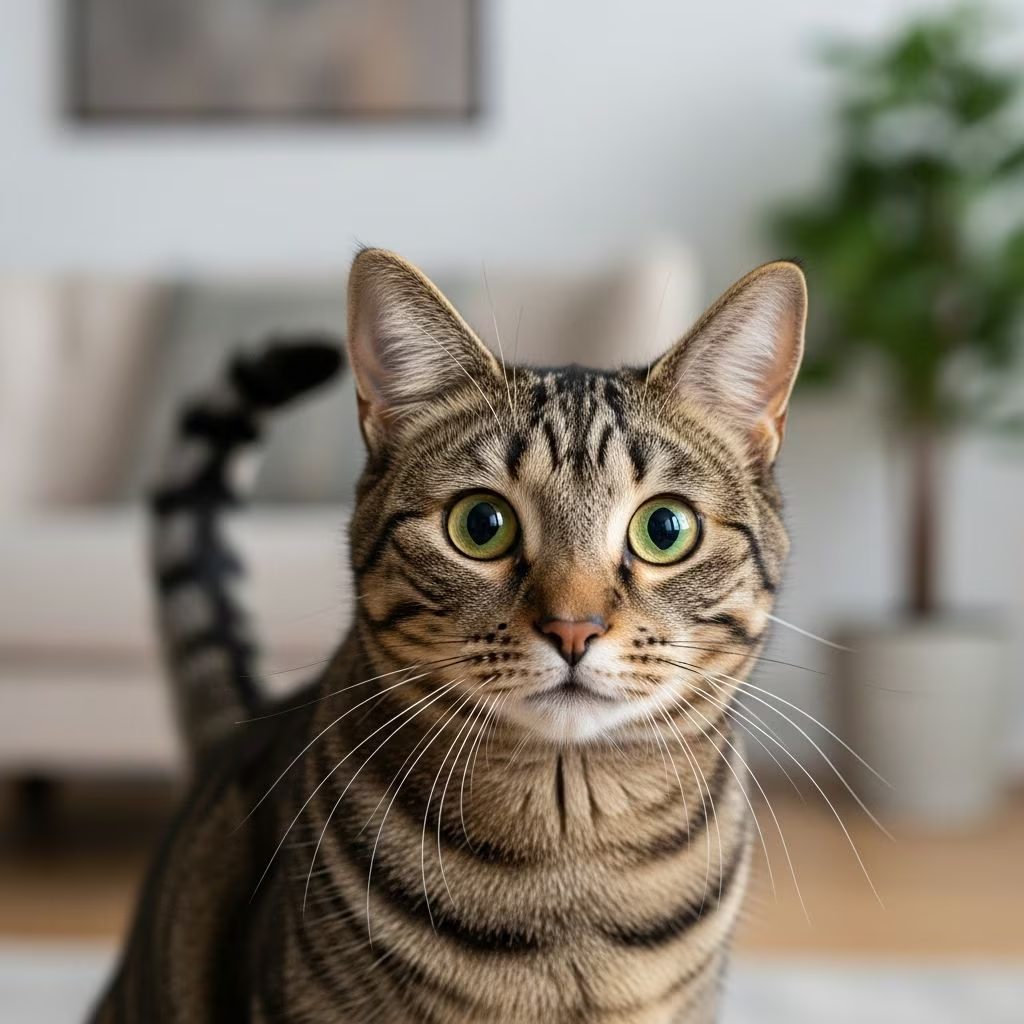
Before tackling solutions, it’s important to understand what cat spraying actually is and why cats engage in this behavior. Spraying is not the same as inappropriate urination or litter box avoidance. When a cat sprays, they typically back up to a vertical surface—such as a wall, furniture, or doorframe—and release a small amount of urine while their tail quivers. This is a deliberate communication method, not an accident.
The Purpose of Spraying
Cats spray for several important reasons related to their natural instincts and emotional needs: Urine marking is fundamentally a communication tool that allows cats to leave messages for other cats. Through spraying, cats communicate their presence and territorial boundaries. Additionally, spraying helps cats manage stress by creating a sense of security in their environment. In multi-cat households or when outdoor cats are visible, spraying becomes a way for your cat to establish and maintain their territory. For intact cats (those not spayed or neutered), spraying can also be related to mating behaviors and hormonal drives.
Common Causes of Cat Spraying
Understanding the underlying causes of spraying is crucial for addressing the behavior effectively. While each cat is unique, certain triggers are commonly responsible for indoor spraying incidents.
Stress and Anxiety
Stress is one of the most significant contributors to cat spraying. Cats are creatures of habit, and changes in their environment or routine can trigger anxiety-driven spraying. Common stressors include:
- Changes in household routine or feeding schedules
- Introduction of new family members, including babies or new people moving in
- Home renovations, redecorating, or furniture rearrangement
- Construction noise or other loud disturbances
- Changes in the cat’s daily schedule, such as owners being away on vacation
Multi-Cat Household Conflicts
When multiple cats share a home, tension and competition for resources can lead to spraying behaviors. This is particularly common when:
- A new cat is introduced without proper gradual acclimation
- Cats compete for litter boxes, food bowls, or elevated resting areas
- Territorial disputes arise between resident cats
- There is visible aggression or conflict between household cats
External Threats and Neighborhood Cats
Outdoor cats visible through windows or neighborhood cats entering the yard can trigger indoor spraying in your cat. Your cat may spray to establish boundaries and warn off potential invaders. If you notice your cat staring out the window frequently before spraying incidents, external cats are likely a contributing factor.
Medical and Hormonal Issues
Before assuming behavioral causes, it’s essential to rule out medical conditions. Intact (unneutered or unspayed) cats are significantly more prone to spraying due to hormonal influences. Additionally, certain medical conditions affecting the urinary system can contribute to spraying behavior.
Step-by-Step Solutions to Stop Your Cat from Spraying
Visit Your Veterinarian First
Your first step should always be a veterinary examination. Your veterinarian will conduct blood work and urinalysis to rule out medical conditions such as urinary tract infections, bladder inflammation, or other health issues. Once medical causes are excluded, you can focus on behavioral interventions with confidence.
Spay or Neuter Your Cat
If your cat is intact, spaying or neutering should be a priority. Hormones play a significant role in spraying behavior. Neutering or spaying will substantially reduce the hormonal influence driving this behavior. Many cats show improvement in spraying behavior shortly after the procedure.
Identify and Eliminate Stressors
Take time to identify what’s stressing your cat and work to eliminate or minimize these triggers. This may involve:
- Maintaining consistent daily routines for feeding and playtime
- Gradually introducing changes to the home environment rather than making sudden alterations
- Providing advance notice before bringing new people or pets into the household
- Keeping your cat away from areas undergoing renovation until new scents fade and integrate with familiar household odors
Optimize Litter Box Placement and Quantity
Litter boxes are fundamental to preventing spraying behavior. Follow these guidelines:
- Place litter boxes on different levels of your home and at both ends of the house
- Maintain one more litter box than the number of cats you have (for example, three boxes for two cats)
- Keep litter boxes clean and well-scooped daily
- Use tall-sided boxes in areas where spraying has occurred
- Ensure litter boxes are easily accessible and in quiet locations away from food and water bowls
Create a Secure Environment
Making your cat feel secure and in control of their environment can significantly reduce spraying:
- Limit your cat’s access to patrol multiple rooms if they feel overwhelmed; restricting them to one or two familiar rooms can increase their sense of security
- Provide high shelves and hiding spots where your cat can retreat when feeling stressed
- Ensure your cat has personal spaces where family members won’t disturb them
- Provide daily play and cuddle time to strengthen your bond and reduce stress
- Consider providing 1-2 hours of dedicated “me time” each day for your cat
Manage Windows and External Cat Visibility
If outside cats are visible through windows, this can trigger indoor spraying.
- Cover windows with blinds, curtains, or window film to block your cat’s view of outdoor cats
- Use motion-activated sprinklers in your yard to deter neighborhood cats
- Install microchip or magnet-operated cat doors to prevent outdoor cats from entering your home
- Avoid feeding or giving attention to neighborhood cats, as this encourages them to visit
Thoroughly Clean Sprayed Areas
Proper cleaning is essential to prevent your cat from re-spraying in the same spots.
Use the following cleaning approach:
- Use a black light (UV light) to identify all sprayed areas that may not be visible to the naked eye
- Clean affected areas with a solution of biological or enzymatic washing liquid or powder
- Spray the area with surgical spirit using a plant mister
- Scrub thoroughly and allow to dry completely
- Apply odor neutralizers to ensure all scent markers are removed
Use Synthetic Pheromone Products
Feliway is a synthetic pheromone product that mimics the scent of cat cheek gland secretions. When applied to household surfaces where your cat has sprayed, many cats will not re-spray on areas with this scent. This can be an effective tool in your overall strategy to stop spraying.
Make Previously Soiled Areas Unattractive
Transform areas where your cat has sprayed into spaces your cat doesn’t want to use:
- Place food bowls and treats in previously soiled areas, as cats prefer to eat and eliminate in separate locations
- Use plastic sheets, newspaper, or sandpaper to create an uncomfortable surface
- Try electronic mats that deliver harmless, mild shocks
- Place a carpet runner with nubs facing up in the area
- Play with your cat in the space and leave toys there to change the significance of the area
Address Multi-Cat Household Issues
If you have multiple cats, ensure each has adequate resources:
- Provide multiple litter boxes, food bowls, and elevated resting areas
- Introduce new cats gradually over several weeks to allow adjustment
- If physical fights occur, consult your veterinarian for prescribed medications or behavioral intervention
- Ensure each cat feels their needs are being met and they have personal space
Keep a Log of Spraying Incidents
Documenting when and where spraying occurs can reveal patterns and help you identify triggers. Record:
- The date and time of each spraying incident
- The location where spraying occurred
- Any observable triggers or events preceding the incident
- The steps you’ve taken to address the behavior
- Changes in frequency over time
What NOT to Do When Your Cat Is Spraying
Never Punish Your Cat
Punishment will not reduce spraying behavior. Instead, it will create negative outcomes, including making your cat fearful of you and increasing their stress levels. Since stress triggers spraying, punishment actually makes the problem worse. Respond to spraying with patience and understanding, focusing on addressing underlying causes rather than the symptom.
Can Medications Help Stop Cat Spraying?
Anti-anxiety medications may be helpful in some cases, but they are not a standalone solution. Anti-anxiety drugs are more likely to prevent spraying behavior than other types of house soiling. However, medication must always be used in conjunction with environmental changes and behavioral interventions. Additionally, medications can have potentially damaging side effects, and not all cats are good candidates. Any cat on long-term medication must be monitored closely by a veterinarian.
How Long Does It Take to Stop Cat Spraying?
The timeline for stopping cat spraying varies depending on the underlying cause and how consistently you implement solutions. Some cats respond within a few weeks, while others may take several months. Consistency is key—maintain your environmental modifications, continue stress-reduction strategies, and be patient as your cat adjusts to changes.
When to Seek Professional Help
If spraying continues despite your best efforts, consider consulting with a feline behaviorist or your veterinarian. They can provide personalized recommendations, help identify hidden stressors, and potentially prescribe medications if appropriate. Some cats may benefit from working with a professional who specializes in feline behavior modification.
Frequently Asked Questions About Cat Spraying
Q: Is cat spraying the same as inappropriate urination?
A: No, they are different behaviors. Spraying involves backing up to vertical surfaces and releasing small amounts of urine with a quivering tail. Inappropriate urination refers to cats eliminating in the litter box location or simply urinating in the wrong places. Both can occur in the same cat but require slightly different approaches.
Q: How can I tell if my cat is spraying or just having accidents?
A: Spraying typically occurs on vertical surfaces with small amounts of urine, while accidents usually involve larger puddles on horizontal surfaces like floors or bedding. Cats that are spraying often continue using their litter box normally for regular elimination.
Q: Will spaying or neutering completely stop spraying?
A: Spaying or neutering significantly reduces the likelihood of spraying, especially if done early. However, some cats continue spraying due to behavioral or environmental factors rather than hormonal influences. The procedure is still recommended as an important first step.
Q: Can stress cause sudden onset of spraying in an older cat?
A: Yes, stress can trigger spraying at any age. Even minor changes in routine or environment can cause stress in cats. If your older cat suddenly starts spraying, examine recent changes in your household and work to eliminate triggers.
Q: How often should I clean litter boxes?
A: Litter boxes should be scooped daily, and completely emptied and cleaned weekly with mild soap, rinsed thoroughly, and dried. Clean litter boxes reduce the likelihood of spraying and other behavioral issues.
Q: Is Feliway safe for all cats?
A: Yes, Feliway is a synthetic pheromone product that is safe for all cats. It mimics natural cat pheromones and has no harmful side effects, making it an excellent addition to your spraying prevention strategy.
References
- Feline Behavior Problems: House Soiling — Cornell University College of Veterinary Medicine. 2024. https://www.vet.cornell.edu/departments-centers-and-institutes/cornell-feline-health-center/health-information/feline-health-topics/feline-behavior-problems-house-soiling
- Stop Your Cat Spraying or Soiling in the House — Blue Cross. 2025. https://www.bluecross.org.uk/advice/cat/behaviour-and-training/stop-your-cat-spraying-and-soiling-in-the-house
- Cat Spraying: Why Cats Do It and How to Stop It — PetMD. 2024. https://www.petmd.com/cat/general-health/cat-spraying-why-cats-do-it-and-how-to-stop-it
- Urine Marking in Cats — ASPCA. 2025. https://www.aspca.org/pet-care/cat-care/common-cat-behavior-issues/urine-marking-cats
- Feline House-Soiling — American Association of Feline Practitioners. 2025. https://catvets.com/wp-content/uploads/2025/02/FelineVMA-House-Soiling_Web.pdf
- Cat Spraying/Marking — Wisconsin Humane Society. 2025. https://www.wihumane.org/cat-spraying



