

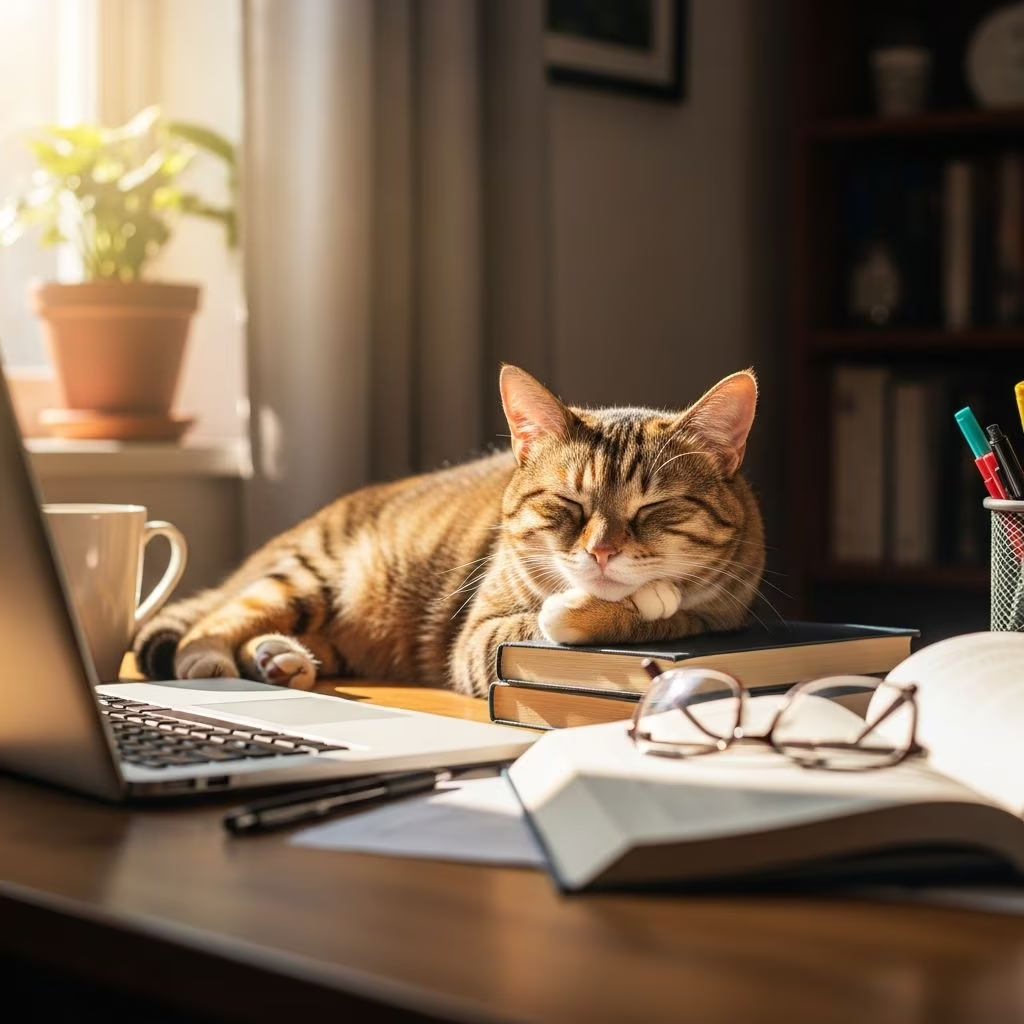
If you’ve ever found yourself working at your computer only to have your cat leap onto your desk and settle in for an undisturbed nap right on top of your keyboard, you’re experiencing one of the most common and endearing (yet sometimes frustrating) cat behaviors. This phenomenon, often called “desk cat nesting,” is far more intentional than many cat owners realize. Understanding the motivations behind this behavior can help you create a more harmonious work environment while strengthening your bond with your feline companion.
The Main Reasons Cats Sleep on Your Desk
Cat behaviorist Amanda Caron notes that cats sit and sleep on keyboards and desks for several interconnected reasons, including proximity to their owners, attention-seeking, curiosity, and warmth. Each of these factors plays a role in your cat’s decision to make your workspace their personal napping spot.
Seeking Comfort and Companionship
One of the primary reasons your cat chooses your desk as a sleeping location is the comfort and companionship it provides. Cats are drawn to warm, cozy spots for rest, and your desk often fits this description perfectly. When you’re sitting at your desk working, you become a source of warmth and security for your feline friend. The desk itself may also be warmed by your laptop or computer equipment, making it an attractive napping spot.
Beyond physical comfort, your presence during work hours provides psychological security. Cats naturally seek out their favorite humans, and if you spend extended periods at your desk—the average person spends 3 hours and 28 minutes daily on their computer—your cat views this as prime bonding time. Your cat may be expressing contentment by choosing to rest near you, much like how they curl up in your lap while watching television.
Seeking Attention and Affection
Another significant motivation for desk sleeping is attention-seeking behavior. Some cats choose to sleep on your desk as a way to seek attention and ensure they remain the center of your focus. By positioning themselves directly on your workspace, cats increase the likelihood of catching your eye and receiving petting or playtime throughout the day.
This behavior can be particularly pronounced in cats that experience separation anxiety or boredom during work hours. If your cat follows you around the home, vocalizes frequently, and consistently seeks your attention while jumping on your desk, these may be signs of anxiety-related attention-seeking rather than simple companionship-seeking.
Marking Territory and Ownership
Cats are highly territorial creatures, and sleeping on your desk serves as a way to claim ownership and establish security in their environment. When cats rub against objects or rest on specific surfaces, they deposit their scent glands’ secretions, essentially marking that space as their own.
According to research on feline behavior, cats are motivated to deposit their scent and supplant human scent on frequently-used objects. When your cat sits on your desk—particularly on items you frequently touch like keyboards and laptops—they’re effectively communicating ownership and dominance. This isn’t a sign of affection as many assume; rather, it’s a territorial assertion that says “I own you.” It’s important to remember that while dogs have been selectively bred to become human companions, cats remain relatively independent and territorial animals, driven by instincts to control their environment.
The Warmth Factor
While heat from your laptop or computer certainly contributes to the appeal of your desk, research suggests warmth is not the sole attraction. Cats love warm spots for sleeping, and electronic devices emit consistent heat that makes them attractive napping locations. However, if warmth were the primary factor, cats would be equally content sitting by a radiator or in a sunny window—yet many specifically prefer their owners’ workspaces.
This suggests that while warmth is a contributing factor, the combination of warmth plus your presence and scent makes your desk particularly attractive to your feline friend.
Curiosity and Engagement
Some cats are simply drawn to the activity and stimulation that your desk provides. Cats may enjoy watching your hands type, observing the mouse cursor move, or watching content change on your screen. This visual engagement, combined with the familiar sounds of keyboard clicks and typing, creates an enriching environment for cats that might otherwise feel bored during the workday.
Understanding Your Cat’s Scent Communication
To fully understand why cats target desks, it’s essential to recognize how crucial scent is to feline communication. Cats’ world revolves around scent rather than sight, as their eyesight is adapted for night-time hunting, making their sense of smell extraordinarily important. Your cat can detect your scent all over your keyboard and desk—scent that’s invisible and undetectable to human noses.
This scent connection explains why cats are so attracted to the specific items we use regularly. Your keyboard, mouse, desk surface, and chair all carry concentrated deposits of your scent. Rather than simply enjoying your presence, your cat may be actively attempting to overwrite your scent with their own, reinforcing their territorial claim on both you and your workspace.
Creating a Desk Cat Nest: Solutions for Harmony
If your cat’s desk-sleeping habits are interfering with your work productivity, there are several practical strategies to encourage them toward alternative resting spots while still honoring their needs for closeness and comfort.
Designate a Specific Sleeping Area
Providing a designated “desk cat nest” with soft blankets or pillows can help redirect your cat away from your work surface. This approach acknowledges your cat’s desire to be near you while creating boundaries around your actual work area. The key is making the alternative spot more attractive than your desk itself.
Consider these options:
- A cat bed or cushion placed directly beside your desk at the same height as your work surface
- A cozy blanket draped over a chair positioned next to your workspace
- A heated cat bed placed nearby to provide the warmth your cat seeks from electronics
- A cat tree or elevated perch positioned where your cat can observe you while maintaining distance from your keyboard
Provide Environmental Enrichment
If your cat is seeking attention or stimulation, increasing enrichment opportunities can reduce desk-sleeping behavior. Interactive toys, puzzle feeders, or even a window perch overlooking outdoor activity can provide the engagement your cat craves. Rotating toys regularly maintains novelty and interest.
Use Deterrents Strategically
While not recommended as a primary solution, strategic deterrents can discourage desk-sleeping while you’re actively working. Double-sided tape, aluminum foil, or commercial cat deterrent sprays applied to your desk surface can make the area less appealing. However, these work best as temporary measures while you establish better habits.
Establish a Routine
Cats thrive on routine. Establishing specific play sessions before and after your work hours can help satisfy your cat’s need for attention and energy expenditure, potentially reducing their motivation to interrupt your desk time.
Is It Harmful for Cats to Sleep on Desks?
Physically, sleeping on desks and laptops is generally harmless for cats. However, the behavior can cause practical problems: closed documents without saving, accidental emails to colleagues, or disrupted workflows. From a behavioral perspective, the main concern is if your cat’s desk behavior coincides with other signs of anxiety, such as excessive vocalization or constant following throughout the home.
If you notice these accompanying behaviors, consultation with a veterinarian or certified cat behaviorist may help address underlying anxiety issues.
The Bottom Line: What Your Cat’s Behavior Reveals
Ultimately, your cat sleeping on your desk is a sign of their trust and love for you as their owner. While the behavior is sometimes driven by territorial instincts rather than pure affection, it represents a cat choosing to spend their rest time—a vulnerable state—in close proximity to you. This demonstrates confidence in your relationship and their sense of security in your presence.
By understanding the motivations behind desk-sleeping and providing appropriate alternatives, you can create an environment where both you and your feline companion are content. A designated desk cat nest, combined with enrichment activities and scheduled attention, allows your cat to maintain their bond with you while respecting your work needs.
Frequently Asked Questions
Q: Why does my cat specifically sleep on my keyboard rather than just beside my desk?
A: Your keyboard carries concentrated deposits of your scent from frequent use. Your cat is both attracted to your scent and motivated to deposit their own scent over it, asserting territorial ownership. Additionally, keyboards often emit warmth and the activity around them provides visual stimulation.
Q: Will creating a desk cat nest completely stop my cat from sleeping on my desk?
A: While a designated cat bed provides a comfortable alternative, it may not completely prevent your cat from occasionally napping on your desk. However, a well-positioned, comfortable desk cat nest can significantly redirect the behavior and reduce disruptions, especially if the nest is elevated to provide your cat with a view of your activities.
Q: Is my cat sleeping on my desk a sign of dominance or affection?
A: Both factors are likely at play. Your cat is expressing territorial dominance by depositing their scent on your workspace, but they’re also seeking the comfort and security that comes from being near you. Rather than viewing these as contradictory, understand that cats can simultaneously assert independence while demonstrating trust and affection.
Q: Should I be concerned if my cat won’t leave my desk?
A: Occasional desk sleeping is normal, but constant presence combined with excessive vocalization or following you throughout the house may indicate anxiety. Consider consulting with a veterinarian or certified cat behaviorist to rule out underlying stress or health issues.
Q: Can I use a fake laptop to redirect my cat away from my real one?
A: A fake or spare laptop can be a helpful redirection tool, particularly if combined with other strategies like a heated bed nearby. This approach gives your cat an approved surface to rest on while you work on your actual devices.
References
- Why Does My Cat Sleep on My Desk While I Work? — Desk Cat Nest. 2024. https://deskcatnest.com/blogs/blog/why-does-my-cat-sleep-on-my-desk-while-i-work
- The (not so cute) reason your cat loves sitting on your laptop — Science Focus. 2024. https://www.sciencefocus.com/news/the-real-reason-your-cat-sits-on-your-laptop-to-assert-dominance
- Cats & Keyboards: Why They Love Them & What to Do — Rover. 2024. https://www.rover.com/blog/cats-on-keyboards/



