

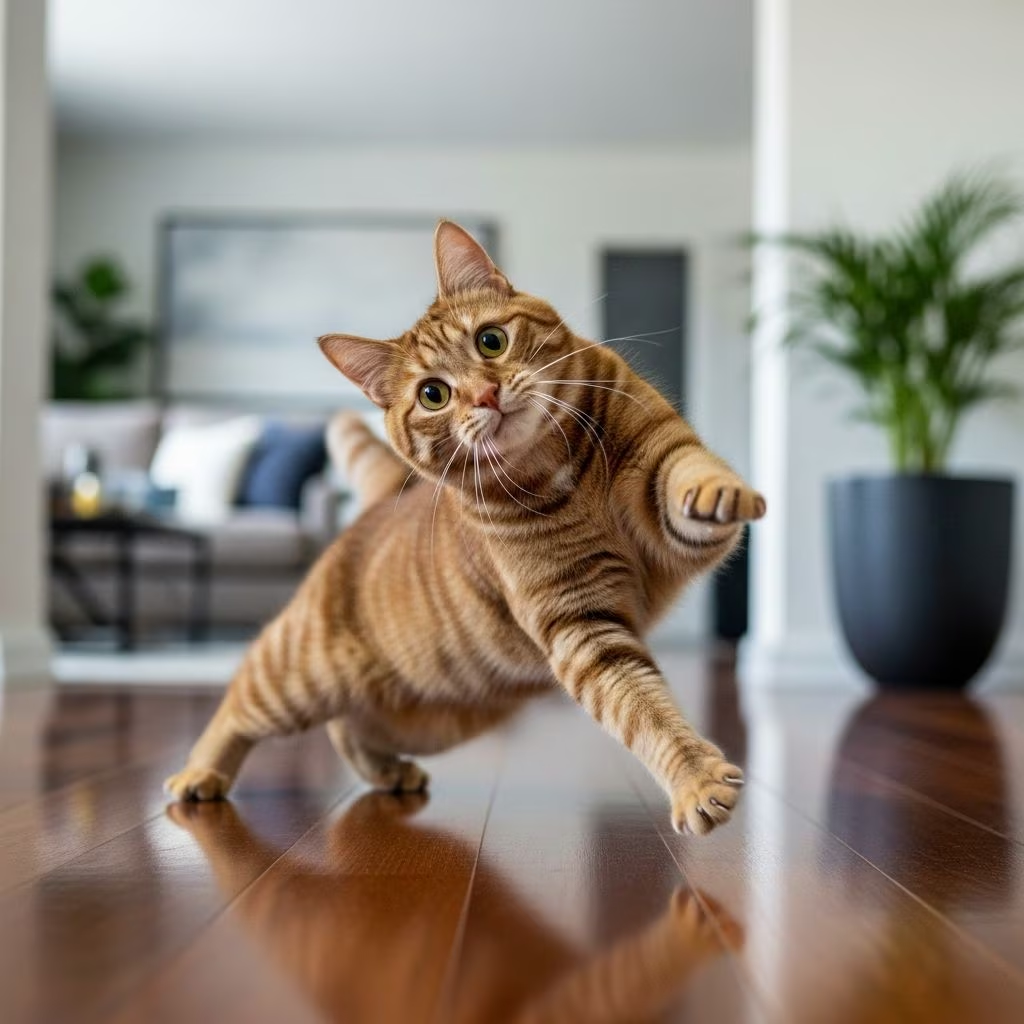
Why Is My Cat Running Sideways? Understanding Feline Crab Walking
Cats are endlessly fascinating creatures, and every movement they make tells a story about their emotional state, health, and intentions. One peculiar behavior that cat owners frequently observe is when their feline companions move sideways in a movement often referred to as “crab walking.” This distinctive behavior, where cats stiffen their legs, arch their backs, and fluff up their tails before hopping or skipping to the side, can mean different things depending on the context and your cat’s individual personality. Understanding what drives this behavior is crucial for cat owners who want to better comprehend their pets’ needs and well-being. Whether your cat is engaging in playful antics, expressing fear, or experiencing a medical issue, the sideways movement is a form of communication that deserves closer examination.
What Does Crab Walking Look Like?
Before diving into the reasons why cats run sideways, it’s important to understand what this behavior actually looks like. The typical crab walk posture involves several distinct physical characteristics that most cat owners will recognize immediately. When a cat assumes this position, they straighten their legs almost as if they are standing on their tiptoes, creating an elevated stance that makes them appear taller. Simultaneously, they flex their backs upward into an arch, and raise their tail up over their backs while puffing out the fur to make themselves appear larger and more imposing. This combination of physical elements creates the distinctive sideways movement that gives this behavior its “crab walking” nickname. Some cats may circle an object of interest while maintaining this posture, while others might dart in at various angles. It’s worth noting that the appearance can vary depending on whether the cat is playing, frightened, or experiencing a medical issue.
The 7 Reasons Why Your Cat Is Running Sideways
1. Having Fun and Playful Engagement
Perhaps the most common and delightful reason for sideways running is pure playfulness. Young cats and kittens, being naturally developing animals, exhibit considerable playful energy and curiosity about their surroundings. When a kitten spots something that captures their interest—whether it’s a person, another cat or dog, a toy, or even a moving object—they often adopt the crab walking stance as they approach it. This playful behavior serves multiple purposes: it allows them to get closer to their target while maintaining the ability to quickly dart away, and it demonstrates their excitement and engagement with their environment. The sideways approach is a calculated method of getting near something without committing to a direct line of movement, giving them the flexibility to change direction quickly if needed. Watching your cat engage in this playful behavior is one of the joys of cat ownership, as it showcases their natural hunting instincts and curiosity in a harmless and entertaining way.
2. Excessive Energy and the “Zoomies”
Kittens and young cats sometimes accumulate an abundance of energy that simply must be released. This surplus of physical vitality, often colloquially referred to as “the zoomies,” manifests as seemingly random bursts of activity where cats race around rooms, bounce off walls, and engage in chaotic play with no apparent purpose or plan. During these episodes of excess energy, cats may incorporate sideways running as part of their overall athletic display. Think of it as similar to winding up a spinning top and releasing it to randomly careen around your home—the energy needs an outlet, and sideways running is one expression of this exuberance. This type of behavior is entirely normal and healthy, as it helps cats maintain their physical fitness and work through their natural instincts. If your cat displays this behavior frequently, especially if they’re young, providing adequate play opportunities and interactive toys can help channel this energy constructively.
3. Attention Seeking
Cats are paradoxical creatures when it comes to human interaction. Sometimes they crave attention and want to be near their owners constantly, while at other times they prefer solitude and resent being disturbed. One way cats communicate their desire for attention is through a slow, deliberate sideways walk that typically occurs when they’re already close to you. If you’ve previously responded to such displays with attention—petting, talking, or playing—your cat may repeat this behavior as a way to solicit more interaction. Unlike the energetic, playful sideways running of younger cats, attention-seeking crab walking is usually more measured and intentional, moving gradually closer to their human while maintaining the characteristic sideways posture. This behavior demonstrates the learned nature of feline communication; cats are remarkably intelligent and quickly understand which behaviors elicit positive responses from their owners.
4. Fear and Defensive Posturing
Interestingly, the same body language that signals playfulness can also indicate fear and threat perception in cats. When a cat feels threatened, insecure, or frightened, they often react with a variation of sideways movement that serves a defensive purpose. The primary goal in this context is to discourage potential threats by presenting themselves as a formidable adversary. Cats accomplish this by making themselves appear as large and intimidating as possible—arching their backs dramatically, extending their legs, and fluffing their fur to increase their apparent size. This is an evolutionary strategy designed to convince potential predators or threats that the cat is larger and more dangerous than they actually are. The sideways positioning also allows the cat to keep their eyes on the threat while maintaining the ability to escape quickly. If your cat displays this behavior in response to a specific stimulus, it’s important to identify and address the source of their fear to help them feel more secure in their environment.
5. Wariness of Strangers
When cats encounter unfamiliar people, particularly in their own homes, they often display cautious behavior as they assess the potential threat level of the stranger. The body language triggered by wariness of strangers is less extreme than the posture of a genuinely fearful cat, but still incorporates the characteristic sideways movement. In this situation, your cat may adopt their preparatory stance and slowly move sideways, making themselves appear larger while simultaneously positioning themselves to escape quickly if needed. This wariness serves as a protective mechanism that allows cats to evaluate whether the stranger is a potential threat before committing to either approach or avoidance. Without a direct threat, your cat probably won’t maintain this stance for an extended period; once they’ve determined the person is not dangerous, they may approach or ignore the stranger entirely. Understanding this behavior can help cat owners better predict their cat’s reactions to visitors and potentially work on gradually increasing their cat’s comfort with new people through positive exposure.
6. Anger and Threat Display
In addition to fear-based sideways movement, cats also employ crab walking as a display of anger or aggression. When a cat feels provoked or territorial, the sideways stance allows them to present their broadside to the perceived threat, making them appear larger and more intimidating. This behavior is often accompanied by other signs of anger such as a puffed tail, flattened ears, and hissing or growling sounds. The sideways positioning is strategic—it keeps the cat’s vital organs protected while allowing them to strike quickly if necessary, and it gives them the option to move laterally away from danger. Unlike fear-based crab walking, anger-driven sideways movement often appears more aggressive and confrontational, with the cat actively approaching rather than retreating from the source of their irritation.
7. Neurological Issues and Medical Conditions
While the majority of sideways running in cats is behavioral, neurological issues and medical conditions can also result in abnormal gaits that resemble crab walking. In these cases, the sideways movement is not associated with the deliberate body language displays mentioned above; rather, the cat is struggling to walk normally due to an underlying health problem. Cerebellar hypoplasia, a neurological condition affecting the part of the brain responsible for coordination and balance, can cause cats to take wonky, uncoordinated steps that may appear as sideways movement. Other potential medical causes include vestibular disease, which affects the cat’s balance and equilibrium, often accompanied by a head tilt, ear infections, spinal or brain trauma, toxin ingestion, or various infections. If your cat’s sideways walk appears bizarre and happens for no apparent reason—particularly if it seems involuntary or uncoordinated—it’s crucial to have them examined by a veterinarian promptly. Early detection of neurological issues can be important for treatment and management.
Behavioral vs. Medical Sideways Movement: How to Tell the Difference
Understanding whether your cat’s sideways running is behavioral or medically motivated is essential for determining the appropriate response. Behavioral crab walking typically occurs in response to specific triggers—an object of interest, a person, or an emotional state—and your cat generally maintains good coordination and balance. The movement is deliberate and purposeful, with the cat clearly in control of their body. Medical-related sideways movement, by contrast, often lacks coordination and purpose. Cats experiencing neurological issues may walk in circles, appear wobbly, lose their balance, or fall over unexpectedly. The behavior occurs regardless of environmental triggers and may be accompanied by other symptoms such as head tilting, poor appetite, vomiting, or general weakness. If you observe your cat exhibiting sideways movement accompanied by any of these concerning signs, contact your veterinarian immediately for a professional evaluation.
When to Be Concerned About Your Cat’s Sideways Running
While most instances of crab walking are harmless and entertaining, certain situations warrant veterinary attention. You should contact your veterinarian if your cat’s sideways movement appears uncoordinated or involuntary, if it’s accompanied by other symptoms such as head tilting, balance problems, or behavioral changes, if your cat has been exposed to toxins that could affect their nervous system, or if the behavior develops suddenly in an adult cat without obvious environmental triggers. Additionally, if your cat appears to be in distress or if the sideways movement is accompanied by signs of pain, seeking immediate veterinary care is important. Your veterinarian can perform a thorough examination and run diagnostic tests if necessary to rule out underlying medical conditions.
Frequently Asked Questions
Q: Is crab walking normal behavior in cats?
A: Yes, crab walking is a completely normal behavioral pattern in cats and is often seen during play, when seeking attention, or when displaying fear or wariness. It becomes a concern only when accompanied by signs of poor coordination or other medical symptoms.
Q: Why does my kitten crab walk more than my adult cat?
A: Kittens typically crab walk more frequently than adult cats because they have excess energy, are still developing their motor skills, and are more playful. As cats mature, this behavior may become less frequent but typically remains part of their behavioral repertoire.
Q: Can sideways running indicate that my cat is sick?
A: While crab walking is usually not a sign of illness, certain medical conditions such as cerebellar hypoplasia, vestibular disease, ear infections, or neurological disorders can cause uncoordinated sideways movement. If the movement appears involuntary or uncoordinated, consult your veterinarian.
Q: How can I encourage my cat to crab walk safely?
A: You can encourage playful crab walking by providing interactive toys, engaging in play sessions, and offering environmental enrichment. Ensure your cat has adequate space to move around safely without obstacles that could cause injury.
Q: Should I be worried if my cat crab walks when strangers visit?
A: Sideways movement in response to visitors is typically a normal wariness response and not cause for concern. Your cat is assessing whether the stranger poses a threat. With positive exposure over time, many cats become more comfortable with regular visitors.
Understanding Your Cat’s Communication
Cats communicate through a complex system of body language, vocalizations, and behavioral displays, and crab walking is just one piece of this communication puzzle. By paying attention to the context in which your cat runs sideways—what’s in their immediate environment, their overall demeanor, and whether other behavioral signs accompany the movement—you can better understand what your cat is trying to tell you. If your cat is having a good time and displaying playful crab walking, you can simply sit back and enjoy the moment. However, if your cat appears frightened or angry, consider whether you should intervene to help them feel safer or remove the source of their distress. And if your cat displays bizarre, uncoordinated sideways movement with no apparent trigger, a veterinary examination is warranted to ensure there are no underlying health concerns.
Conclusion
Sideways running, or crab walking, is a fascinating and multifaceted behavior that reflects your cat’s emotional state, energy levels, and sometimes their health status. Whether your cat is engaging in playful antics with kittens, burning off excess energy during the zoomies, seeking your attention, displaying fear or wariness, or even experiencing a medical issue, this distinctive movement pattern provides valuable insight into your feline companion’s inner world. By understanding the seven primary reasons cats run sideways and learning to distinguish between normal behavioral crab walking and potentially concerning neurological symptoms, you’ll be better equipped to respond appropriately to your cat’s needs. Pay close attention to how your cat moves and what triggers their sideways running; this awareness will deepen your bond with your pet and help ensure their physical and emotional well-being. If you ever suspect that your cat’s sideways movement is caused by something other than playfulness or normal emotion, don’t hesitate to consult your veterinarian for professional guidance and peace of mind.
References
- Why Is My Cat Running Sideways? 7 Vet-Reviewed Reasons — Catster. 2025. https://www.catster.com/cat-behavior/why-is-my-cat-running-sideways/
- What to do if your cat is walking sideways — Vetster. 2025. https://vetster.com/en/wellness/what-to-do-if-your-cat-is-walking-sideways
- Why Do Cats Crab Walk: Here’s What It Means — Cats.com. 2025. https://cats.com/why-do-cats-crab-walk



