

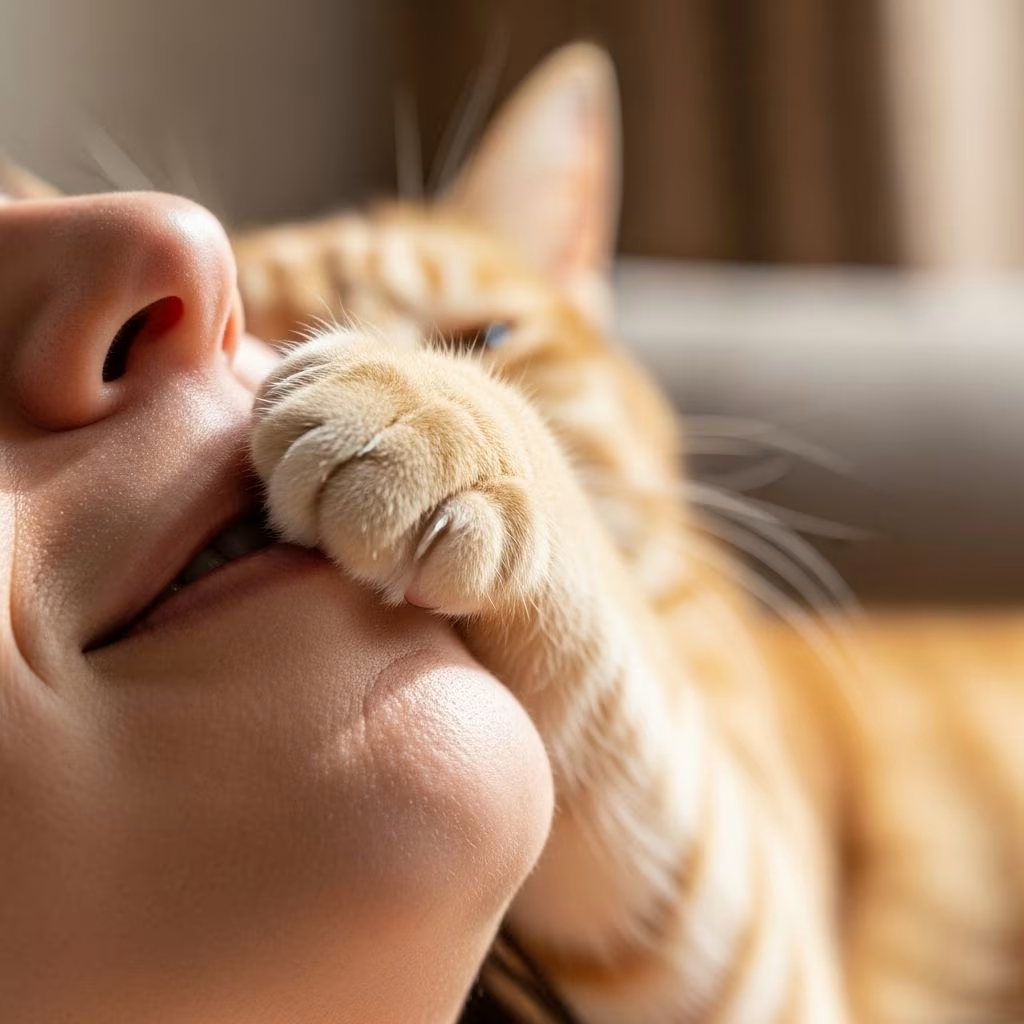
Why Does My Cat Put His Paw on My Mouth?
If you’ve ever had your cat place a soft paw directly on your mouth, you’ve experienced one of the most endearing yet puzzling behaviors in the feline world. This intimate gesture can mean several different things, depending on your cat’s personality, body language, and the context of the moment. Understanding why your cat engages in this behavior can deepen your appreciation for your furry companion and strengthen your bond with them.
The Different Reasons Your Cat Places Her Paw on Your Mouth
Affection and Bonding
One of the most common reasons your cat puts her paw on your mouth is simply to show affection. Cats have their own unique ways of expressing love, and placing a paw on your face—especially your mouth—is a tender gesture that demonstrates closeness. Your cat is essentially trying to get as near to you as possible, and faces and chests are particularly favored spots for feline affection. Since you use your mouth when talking to your cat, she may view this area as especially significant. By placing her paw there, she’s offering her seal of approval in cat-speak, a gesture that says “all paws up” in acknowledgment of your importance to her.
Seeking Attention
If your cat isn’t receiving sufficient attention from you, she may strategically place her paw on your mouth as a way of silently requesting that you listen to her. This behavior is particularly effective because it demands your immediate notice. When a cat discovers that putting her paw on your mouth results in positive attention—whether you respond by playing with her, refilling her food bowl, or cuddling with her—she’ll remember this successful communication method and repeat it. Your cat is essentially saying, “Pay attention to me now,” in the most direct way she knows how.
Seeking Comfort
When your kitty companion nestles cozily against your chest or sits on your lap and places her paw on your mouth while purring contentedly, you’re witnessing a deeply comforting moment for her. This combination of actions—the close proximity, the paw placement, and especially the purring—signals that your cat feels safe, secure, and completely at ease in your presence. These moments are particularly precious because they show just how much your cat values being near you.
Playfulness and Entertainment
Sometimes, especially when your cat is feeling particularly frisky, she may crawl up on you and place her paw on your mouth as an invitation to play. You can identify this playful mood by observing her body language: dilated eyes, a tail whipping around rapidly, and her body tensing in preparation for action. When you see these signs, it’s time to engage with her favorite toys—a wand toy, feather teaser, or laser pointer can help her burn off excess energy in a constructive way.
Trust and Intimacy
Placing her paw on your mouth is an extraordinarily intimate action that demonstrates the profound trust and adoration your cat has for you. This behavior shows that your cat feels completely secure with you and trusts you enough to be in such a vulnerable position. The mouth is a sensitive area, and the fact that your cat is willing to place her paw there reveals the depth of her emotional connection to you.
Getting You to Stop Talking or Moving
In some cases, your cat may place her paw on your mouth as a gentle way of asking you to stop talking or moving so much. This often happens when you’re holding her while sitting on the sofa, cuddling her while she’s resting on your chest, and then you begin talking or laughing with others. Your movements can be unsettling for a cat who wants a stable, comfortable position, and she may use this paw-on-mouth gesture to shush you. When you comply and quiet down, she’ll often purr contentedly while keeping her paw gently in place.
Stopping Kissing or Affection
Conversely, your cat might place her paw on your mouth to politely request that you stop kissing her or showing her excessive physical affection. Even cats who enjoy being kissed have their limits, and this paw gesture can be their way of saying, “That’s enough for now, thank you.” It’s important to respect this boundary and give your cat space when she communicates this need.
Requesting Something Specific
Your cat may also use the paw-on-mouth gesture to communicate that she wants something from you right now. This could include feeding her breakfast in the morning, refilling her water bowl, cleaning her litter box, grooming her, or even just engaging in playtime. If your cat is booping your mouth in the morning, she’s likely communicating her breakfast demands. Pay attention to the time of day and other contextual clues to understand what she might be requesting.
Decoding Your Cat’s Body Language
To understand exactly what your cat means when she places her paw on your mouth, you need to observe her overall body language. Here are the key signals to watch for:
- Purring: If your cat is purring while her paw is on your mouth, she’s experiencing contentment and comfort.
- Dilated pupils: Wide eyes combined with paw-on-mouth behavior typically indicates playfulness and excitement.
- Tail position: A tail held high and moving slowly suggests contentment, while a whipping or thrashing tail indicates play mode or agitation.
- Body tension: A relaxed body means your cat is comfortable and affectionate, while a tense body might indicate she’s ready to play or is stressed.
- Ear position: Forward-facing ears show interest and affection, while flattened ears may indicate stress or irritation.
- Vocal communication: Meowing, chirping, or trilling combined with paw placement can indicate she’s trying to get your attention for a specific reason.
The Health Consideration: Hygiene and Safety
While the paw-on-mouth gesture is undoubtedly adorable and meaningful, it’s important to be aware of the hygiene implications of this behavior. Your mouth is an entryway to your digestive system and has connections to your respiratory system, making it a pathway for bacteria, fungi, and viruses to enter your body. Despite appearing clean, your cat’s paw comes into contact with her litter box, where she encounters her own urine and feces. When your cat places her paw on your mouth, she may be transferring bacteria such as E. coli, parasites, and salmonella—all of which can potentially infect you.
To protect yourself while maintaining your bond with your cat, consider the following precautions:
- Keep your cat on a routine parasite prevention program as recommended by your veterinarian.
- Wash your hands frequently, especially after playing with your cat.
- Gently redirect your cat’s paw away from your mouth when she places it there, offering her an alternative way to show affection.
- Maintain your cat’s litter box hygiene by cleaning it daily.
- Ensure your cat is up-to-date on all vaccinations and health screenings.
- Avoid allowing your cat to lick your face or mouth directly.
How to Respond to This Behavior
If your cat puts her paw on your mouth, you have several options for responding, depending on your comfort level and the situation:
- Acknowledge her affection: If you’re comfortable with the behavior, gently stroke her and return her affection to reinforce your bond.
- Redirect her paw: Gently move her paw to your cheek or chin instead, where hygiene is less of a concern.
- Offer an alternative: If she wants attention, engage with her through play, petting on safer areas of your body, or cuddling.
- Respect her boundaries: If she’s using this gesture to communicate that she’s had enough affection, give her space and allow her to retreat.
- Investigate her needs: If she seems to want something specific, check if her food bowl is full, her water is fresh, or if she needs to use the litter box.
Understanding the Scent Glands Factor
Cats have scent glands in their paws, which means when your cat touches you with her paw, she’s doing more than just seeking affection—she’s also marking you as part of her family. This is a form of territory claiming and bonding that’s completely natural feline behavior. By placing her scent on you, she’s essentially saying, “You’re mine, and I’m claiming you as part of my family unit.” This is one of the reasons paw-on-mouth behavior feels so intimate and meaningful.
Frequently Asked Questions About Cat Paw-on-Mouth Behavior
Q: Is it safe to let my cat put her paw on my mouth?
A: While the behavior itself is harmless in terms of injury, there are hygiene concerns. Your cat’s paw can carry bacteria and parasites, so it’s best to gently redirect her paw to another area of your face or body. Ensure your cat is on parasite prevention and practice good hand hygiene.
Q: Does paw-on-mouth behavior mean my cat loves me?
A: Often yes! This behavior frequently indicates affection, comfort, and trust. However, it can also mean your cat wants attention, needs something from you, or is asking you to stop a particular behavior. Consider the context and your cat’s body language for accurate interpretation.
Q: Why does my cat only put her paw on my mouth sometimes?
A: Cats vary in their communication styles and behavioral patterns. Some cats may use this gesture frequently, while others rarely employ it. It depends on your individual cat’s personality, past experiences with you, and her current emotional state or needs.
Q: Can I train my cat to stop this behavior?
A: Yes, you can gently redirect the behavior by moving her paw to another area when she does it, rewarding her for that alternative behavior with treats or attention. However, since this is often a sign of affection and trust, consider whether you truly want to eliminate it entirely.
Q: What’s the difference between paw-on-mouth and other paw touches?
A: Paw-on-mouth is more intimate than a simple paw tap and similar to a cat booping your nose. It shows a deeper level of trust and affection. Other paw touches, like tapping your leg, might be requesting something specific like food or attention.
Q: Should I be concerned if my cat never puts her paw on my mouth?
A: Not at all! Every cat has a unique personality and communication style. Some cats are more reserved while others are more physically affectionate. Your cat may show love in other ways, such as slow blinks, head bumps, or simply choosing to sit near you.
References
- Why Cats Put Their Paw on Your Mouth? — North Toronto Cat Rescue. https://www.northtorontocatrescue.com/cat-put-paw-in-my-mouth/
- Why Does My Cat Put His Paw on My Mouth? 2 Cats I’ve Had Do This! — Kitty Clysm. https://kittyclysm.com/cat-puts-paw-on-my-mouth/
- 7 Reasons Why Cats Tap You With Their Paws — Kinship. https://www.kinship.com/cat-behavior/why-cats-tap-you-with-paw



