

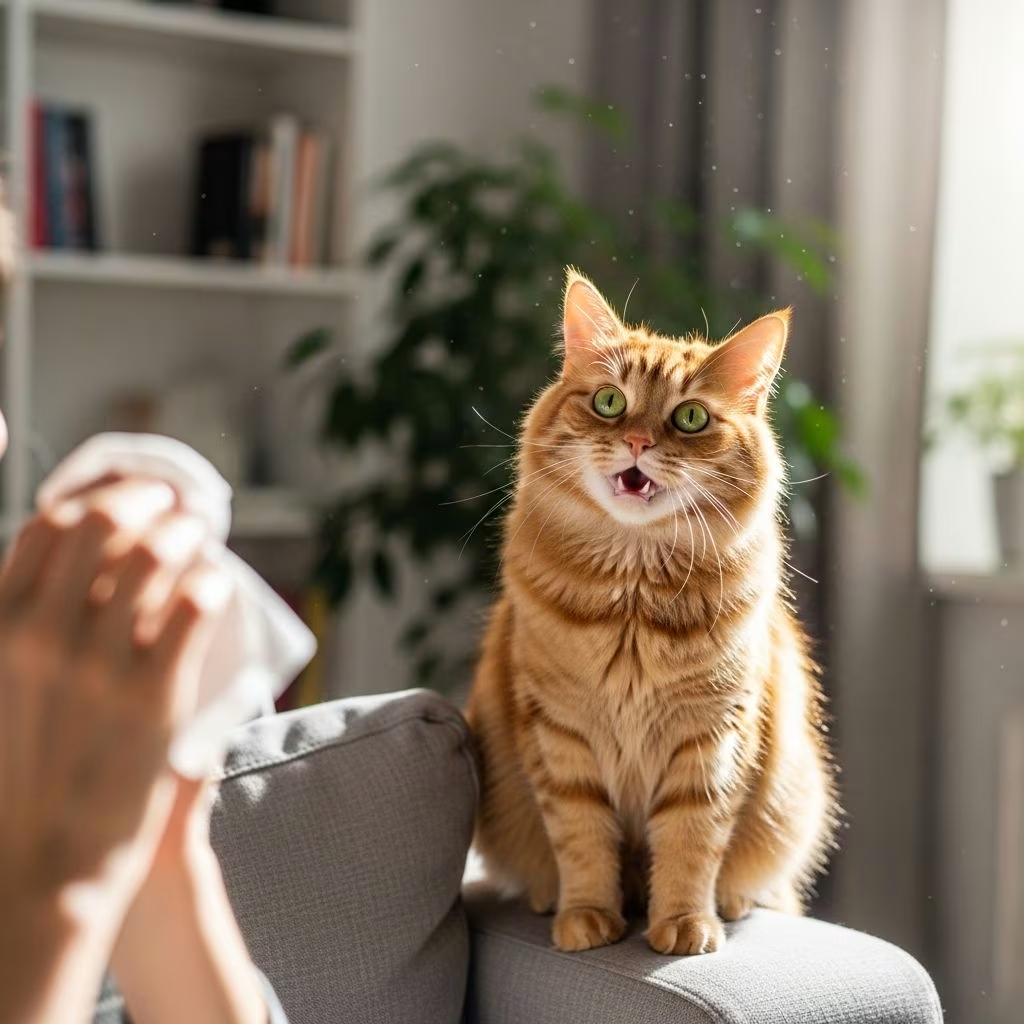
Why Does My Cat Meow When I Sneeze? 4 Vet-Approved Reasons
If you’ve ever sneezed around a cat, you’ve likely witnessed an unusual response. Some cats hiss, others run away at full speed, but most commonly, cats meow when their owners sneeze, particularly if the cat feels comfortable around you. This peculiar behavior has left many cat owners wondering what their feline companions are trying to communicate.
Though it’s impossible to determine precisely why cats respond the way they do without speaking, cat experts and veterinarians have developed several convincing explanations for these reactions. Understanding these reasons can help you better interpret your cat’s behavior and strengthen your bond with your furry friend. In this comprehensive guide, we’ll explore four main reasons why your cat meows when you sneeze and what these reactions reveal about your relationship with your pet.
Understanding Your Cat’s Sensitive Hearing
Before diving into the specific reasons, it’s important to understand how sneezes affect your cat. Cats possess remarkably sensitive ears and a specialized auditory system designed to detect even the faintest sounds. When you sneeze, the sudden loud noise triggers a physical response in your cat’s ears.
Because of cats’ sensitive ears and their predisposition to run away in frightening situations, sneezes represent quite an experience for your kitty. Whenever you sneeze, the muscles in your cat’s middle ear contract automatically. This contraction lessens the sound emissions to protect their inner ear from damage. Many cats perceive this phenomenon differently. Some get excited, while others get scared. As a result, there are quite a few responses that a cat can give whenever you sneeze. Even though some reactions are positive, most are negative because sneezes are often loud and sudden, scaring most cats.
1. They Are Startled
The most common reason your cat meows when you sneeze is that they’re simply startled. Whenever you get startled by something, you may shout or jump back. Cats experience the same physiological response to sudden loud noises.
When they get scared, cats meow in response, much like how humans might gasp involuntarily. The chances are that your cat isn’t really scared of you—they’re just surprised to hear you sneeze. You have probably been startled a time or two by an extra loud sneeze yourself. The meow is simply your cat’s way of expressing that they didn’t see your sneeze coming and weren’t prepared for such a loud noise.
This response is more likely to occur if your cat is sleeping nearby and all is quiet. A sudden loud sneeze will startle your cat, resulting in a meow. This reaction is even more likely to happen if your cat is naturally anxious or shy. Nervous cats tend to be more reactive to unexpected sounds, so they may meow more frequently in response to your sneezes compared to confident and laid-back felines.
2. They Are Annoyed
Cats are especially known for their sassy behavior. Whether you are petting them the wrong way, disrupting their nap, or not feeding them enough snacks, cats are quick to show you that they are displeased and annoyed with your behavior. Much like anger in humans, annoyance in cats is often expressed through specific vocalizations and sounds of disapproval.
Cats meow whenever they are annoyed or frustrated. The sounds are likely distinguishable to other cats, but to the human ear, meows often sound similar regardless of their emotional meaning. When you sneeze, you may disrupt the cat’s nap or relaxation time. Instead of getting startled, they become annoyed by the loud, disruptive noise. This causes them to meow their disapproval for the annoying interruption you’ve caused.
If your cat was peacefully resting in a sunny spot and your sudden sneeze jolted them awake, expect a pointed meow expressing their frustration. Your cat is essentially saying, “How dare you!” This type of meow is your cat’s way of communicating that you’ve interrupted something important to them and they want you to know about their displeasure.
3. They Mistake Your Sneeze for a Hiss
Perhaps your cat mistakes your sneeze for a hiss. This explanation depends entirely on how you personally sneeze, as sneezes are quite unique to each individual. Many sneezes tend to end with an almost hissing sound, which can easily be misinterpreted by your cat as a threatening display.
When cats hear what they think is a hiss, they meow or hiss back in response. They likely don’t understand why you were hissing in the first place. So, they meow after your sneeze to figure out what’s wrong and why you would express such a grievance with them. Your cat is essentially responding to what they perceive as a challenge or expression of annoyance from you.
This misunderstanding can create an interesting dynamic where your cat is trying to communicate back with what they think is aggressive body language. Understanding that this is a possibility can help you recognize when your cat’s reaction might be defensive rather than fearful. If you notice this pattern, you might consider modifying your sneeze if possible, though this is admittedly difficult to control.
4. They Are Imitating You
One of the most endearing reasons your cat might meow after you sneeze is that they’re simply imitating you. Interestingly, there are numerous studies showing that cats like to imitate human behavior. They will observe human habits and essentially “cat-ify” them, adapting them to suit their feline nature.
This is an exciting phenomenon that many types of domesticated animals display with their owners, and cats are no exception. Your cat may be imitating you whenever they meow after a sneeze. The meow could be their version of sneezing, or they could be imitating how people say “bless you” or “gesundheit” after a sneeze. Since cats cannot speak human languages, they respond verbally in their own way, similar to how your children, partner, or friend might respond after you sneeze.
A 2020 study found that some cats tend to copy their owners, suggesting that cats are more attuned to human behavior than many people realize. This mimicry demonstrates a level of bonding and awareness that shows your cat is paying close attention to your actions and behaviors. If your cat is imitating your sneeze, it’s actually a sign of a strong connection between you and your feline companion.
What About Cats That Run Away?
While many cats meow when their owners sneeze, some cats exhibit a different response: they run away. This reaction is relatively self-explanatory but worth understanding. Many cats run away whenever you sneeze because the sneeze startled them, and they fled as a natural response.
As mentioned earlier, cats don’t like loud noises. Sneezes, especially very loud ones, can scare cats significantly. Even if the cat is familiar with you and typically comfortable in your presence, the sound may startle them and trigger a flight response. This is a survival instinct rooted in their predatory nature. While cats are hunters, they are also relatively small animals that can easily become prey, so they’ve evolved to respond quickly to unexpected loud noises by fleeing to safety.
If your cat tends to be generally nervous, running away from your sneeze is an understandable and normal response. This reaction doesn’t indicate a problem with your relationship with your cat—it’s simply their natural way of protecting themselves from what they perceive as a potential threat.
Understanding the Broader Context of Cat Vocalizations
To better understand why your cat meows when you sneeze, it’s helpful to know more about cat vocalizations in general. Cats meow primarily at humans, not at other cats. This is an important distinction because it means your cat is specifically trying to communicate with you when they meow.
More negatively, meows can show that your cat is lonely or ill. Older cats meow more when they get confused or anxious. Similarly, young and old cats can meow to their human owner to show annoyance or that they’re startled, which is likely the case when your cat meows after a sneeze. Understanding these different contexts helps you interpret what your cat is trying to tell you.
Key Takeaways: Why Cats React to Sneezes
- Startling: Loud, sudden sneeze sounds scare cats due to their sensitive hearing
- Annoyance: Cats meow to express disapproval when their rest is disrupted
- Mistaken hissing: The hissing sound at the end of a sneeze may be perceived as a threat
- Imitation: Cats may be mimicking your behavior as a form of bonding and communication
- Flight response: Some cats run away instead of meowing, which is also a normal reaction
Tips for Managing Your Cat’s Sneeze Reactions
If your cat meows every time you sneeze, there are several strategies you can try to help your feline friend feel more comfortable:
- Use treats: Reward your cat with treats after you sneeze to create a positive association with the sound
- Adjust your positioning: Try sneezing when your cat isn’t in close proximity, especially if they’re sleeping peacefully
- Modify your sneeze: If possible, try using a quieter “private” sneeze indoors. Interestingly, about 45% of people have both a public sneeze and a private sneeze, so you may have more control over this than you think
- Provide reassurance: After sneezing, check in with your cat and offer calm, reassuring interaction
- Create safe spaces: Ensure your cat has quiet, safe spaces where they can retreat if startled
The Deeper Meaning Behind Your Cat’s Response
Even the most well-adjusted cats can occasionally be startled by a sneeze. The important thing to remember is what your cat’s response actually means about your relationship. If your cat meows after you sneeze, it’s likely because they’re either startled, annoyed, mistaking a sneeze as a hiss, or imitating you.
No matter the exact reason, the fact that your cat stays in the room says a whole lot about their trust for you. Since sneezes can be such a scary experience for a cat, any cat willing to stay in the room and meow as a response shows that they trust you and know that you would never hurt them. A cat that runs away entirely and refuses to return for extended periods may be indicating higher anxiety, but a cat that meows and remains present is demonstrating confidence in your safety.
Frequently Asked Questions (FAQs)
Q: Is it normal for my cat to meow when I sneeze?
A: Yes, this is completely normal cat behavior. Most cats react to sneezes in some way, whether by meowing, hissing, or running away. These reactions are typically due to being startled, annoyed, or confused by the sudden loud noise.
Q: Should I be concerned if my cat runs away every time I sneeze?
A: Running away is a natural flight response to loud, startling noises. It’s not necessarily a sign of a problem, though it may indicate your cat is more anxious than average. Provide safe spaces for your cat and gradually help them acclimate to unexpected sounds through positive reinforcement.
Q: Can I train my cat to not react to my sneeze?
A: While you can’t completely eliminate your cat’s startle response to loud noises, you can help them become more comfortable. Use treats, positive reinforcement, and gradual desensitization to help your cat associate sneezes with good things rather than threats.
Q: Why does my cat hiss back at me when I sneeze?
A: Your cat may be interpreting the hissing sound at the end of your sneeze as an actual hiss from you. Your cat hisses back defensively, thinking you’ve initiated a confrontation. This is a misunderstanding on your cat’s part, not aggression toward you.
Q: Does my cat’s meow after I sneeze mean something specific?
A: Your cat’s meow could indicate several things: they were startled, they’re annoyed at the disruption, they’re imitating you, or they’re confused by the sound. The context—such as whether your cat was sleeping or relaxed—can help you determine which reason applies.
Q: Why are cats so sensitive to sneezing sounds?
A: Cats have highly sensitive hearing designed to detect subtle sounds for hunting purposes. A sudden sneeze is much louder and more unexpected to them than it is to humans, triggering their startle response and protective instincts.
References
- Why Does My Cat Meow When I Sneeze? 4 Vet-Approved Reasons — Catster. 2024. https://www.catster.com/cat-behavior/why-does-my-cat-meow-when-i-sneeze/
- Why Does My Cat Meow When I Sneeze? 5 Common Reasons — Hepper. 2024. https://articles.hepper.com/why-does-cat-meow-when-i-sneeze/
- Cat Meows When I Sneeze: Understanding Feline Reactions — Desk Cat Nest. 2024. https://deskcatnest.com/blogs/blog/cat-meows-when-i-sneeze



