

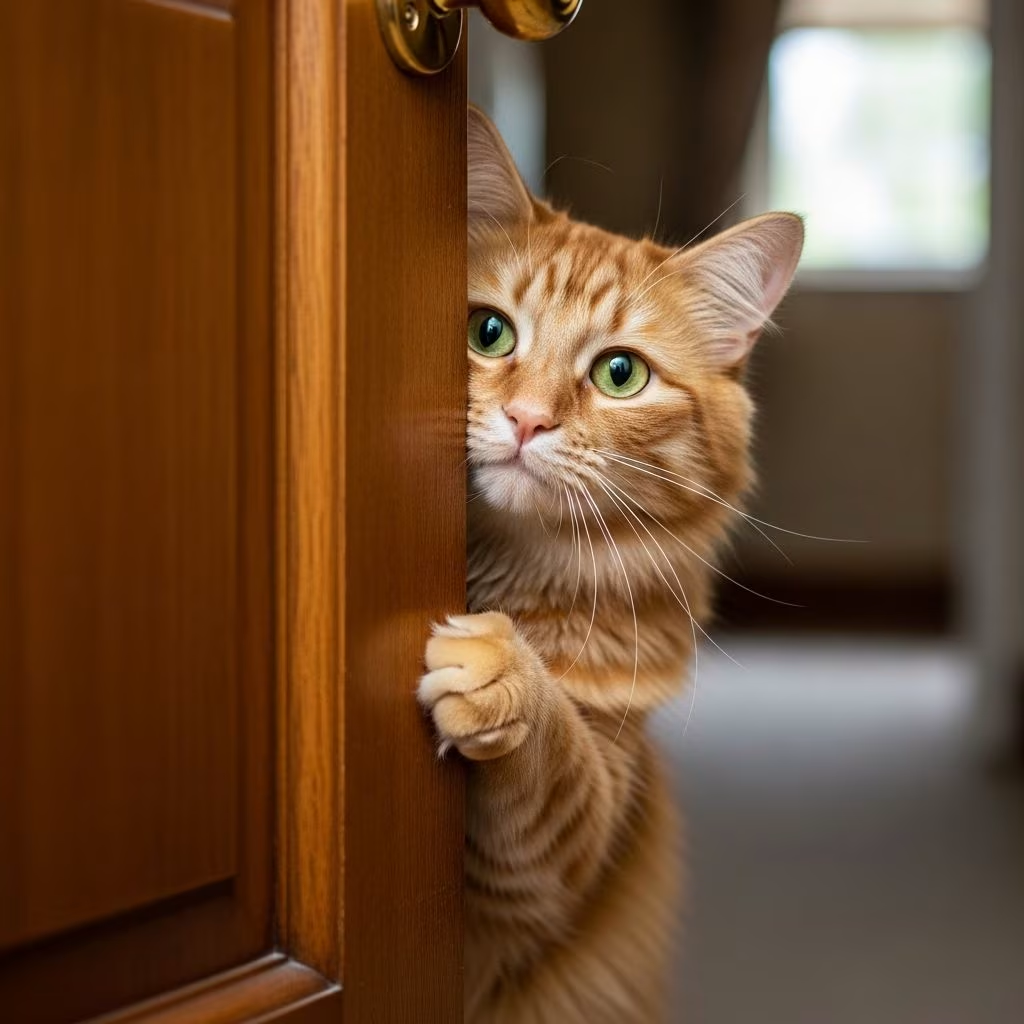
Cats have an uncanny ability to detect when a door is about to close, often appearing out of nowhere to block it with their body or paw. This behaviour isn’t mere mischief; it’s rooted in deep-seated instincts that make closed doors a source of profound frustration for felines. Whether it’s the bathroom, bedroom, or office door, your cat’s persistent meowing, pawing, and scratching reveal a complex interplay of territorial needs, curiosity, survival drives, social bonds, and a desire for control. Understanding these motivations can transform your home from a battleground of feline protests into a peaceful sanctuary for both you and your pet.
In this comprehensive guide, we’ll delve into the primary reasons cats despise closed doors, drawing from feline psychology and behaviour experts. We’ll also provide actionable strategies to manage this behaviour, ensuring your cat feels secure without compromising your need for privacy. By the end, you’ll have the tools to foster a stronger bond with your furry companion while respecting their natural inclinations.
Why Do Cats Hate Closed Doors? 5 Key Reasons
At the heart of a cat’s aversion to closed doors lies their evolutionary wiring. Domesticated cats retain the instincts of their wild ancestors, who roamed vast territories without barriers. A simple closed door disrupts this primal worldview, triggering a cascade of emotional responses. Here are the five core reasons, explained in detail:
1. Territorial Instincts: The Domain Must Be Accessible
Cats view their home as their territory, a domain they must patrol and claim. Closing a door creates an inaccessible zone, challenging their sense of ownership and control. This perceived barrier provokes frustration, leading to clawing, meowing, or pushing to reassert dominance. In the wild, unrestricted access ensured survival; today, it translates to your cat’s need to survey every room.
Experts note that cats rely on scent-marking and visual patrols to maintain territory. A closed door prevents this, heightening anxiety. For instance, if the door leads to a favoured lounging spot or litter area, the exclusion feels like a territorial invasion. Certified trainers emphasize that this isn’t defiance but a fundamental feline drive for security.
2. Burning Curiosity: What’s Behind the Barrier?
A cat’s curiosity is legendary, amplified by their acute senses of hearing and smell. Noises, scents, or even silence from behind a door ignite an irresistible urge to investigate. This inquisitiveness peaks if you’re on the other side, as cats associate humans with intrigue and rewards. Even mundane activities like showering draw them in, drawn by running water sounds.
Behaviourists explain that cats lose interest in perpetually closed doors with no rewards beyond, but a usually open one sparks persistence. Sudden interest in a neglected door warrants checking for intruders like rodents, as your cat’s senses detect what yours miss. This curiosity isn’t whimsy; it’s an adaptive trait for spotting food or threats.
3. Survival Instincts: Monitoring for Safety
Wild cats must constantly scan for predators and prey. Closed doors limit environmental monitoring, inducing vulnerability. Unable to see, hear, or smell beyond, your cat feels exposed, prompting frantic efforts to access the space. This unease stems from instincts where unexplored areas signal danger.
Domestic life doesn’t erase this; cats need to confirm safety in all corners. A closed door leaves part of their ‘domain’ unchecked, breeding distress. Research supports that enriching environments respecting these needs reduces stress-related behaviours.
4. Social Bonds and Separation Anxiety
Contrary to their independent image, many cats form deep attachments to owners, preferring human interaction over food or toys per a 2017 study. A closed door severs this bond, feeling like rejection, especially for social or anxious cats. They follow you room-to-room; exclusion confuses and upsets them.
Bathroom doors are hotspots—cats crave involvement in your routines, associating you with safety. Meowing seeks reassurance, not entry alone. Separation anxiety amplifies this, making open doors a signal of inclusivity.
5. Independence vs. Control: The Need for Choice
Cats cherish autonomy and predictability. A closed door strips choice, even if they don’t enter, frustrating their control-oriented nature. It’s less about the room and more about option denial, clashing with their self-reliant ethos.
This control maintains routine; disruptions provoke agitation. Allowing choice reinforces their independence, benefiting welfare.
Problems Closed Doors Cause for Cats
Beyond annoyance, closed doors trigger issues like stress, destructive scratching, vocalizing, and escalated ‘extinction bursts’ where behaviour worsens before improving. Trapped feelings exacerbate anxiety, particularly during reintroductions or multi-cat homes. Long-term, it erodes trust and heightens vulnerability.
- Stress and Anxiety: Exclusion fosters helplessness.
- Scratching/Meowing: Frustration outlets damaging doors.
- Relationship Strain: Repeated conflicts build resentment.
Practical Solutions: Keeping Doors Open or Training Acceptance
Balancing privacy and cat needs is key. Prioritize open doors where possible, but train for closures using positive methods. Here’s a step-by-step guide:
Option 1: Keep Doors Open When Feasible
Maintaining access slashes stress, reinforcing control and preventing habits like scratching. It signals trust, curbing separation woes.
- Install baby gates for partial privacy.
- Create cat-friendly zones with perches.
Option 2: Gradual Desensitization Training
Teach tolerance systematically:
- Close door briefly (seconds), reward calm with treats.
- Extend durations gradually.
- Use distractions like toys or lick mats.
- Practice consistently for boundaries.
Ignore extinction bursts; they fade. Patience prevents fear.
Top 10 Benefits of Keeping Doors Open for Your Cat
Opting for openness yields multifaceted gains:
- Stress Reduction: Free movement bolsters security.
- Better Monitoring: Full territory access calms instincts.
- Stronger Bonds: Togetherness nurtures attachment.
- Fewer Bad Habits: No scratching incentives.
- Healthier Routine: Predictability aids well-being.
- Curiosity Satisfied: Investigation curbs fixation.
- Increased Play: Access to toys everywhere.
- Less Vocalizing: No protest meows.
- Empowered Independence: Choice fosters confidence.
- Overall Happiness: Instinct-aligned life.
Frequently Asked Questions (FAQs)
Why does my cat meow at closed doors?
Meowing protests exclusion, driven by curiosity, territory, or desire for your company. Investigate changes signaling issues.
Is it okay to keep my cat out of certain rooms?
Yes, with gradual training and alternatives like vertical spaces. Ensure they don’t feel trapped.
How can I stop door scratching?
Redirect with scratch posts, use deterrents, train with rewards. Address root causes.
Do all cats hate closed doors?
Most do due to instincts, but secure, less curious cats tolerate better.
What if my cat has separation anxiety?
Use pheromone diffusers, consistent routines, and consult vets for aids.
Conclusion: Embrace Your Cat’s Door Obsession
Your cat’s door fixation reflects their rich inner world. By accommodating instincts through open access or empathetic training, you create harmony. Respecting these needs deepens your bond, ensuring a joyful home.
References
- Why Cats HATE Closed Doors: Understanding Feline Territory — YouTube (Class Act Cats channel implied). 2023-10-15. https://www.youtube.com/watch?v=JbnpEfFlCm0
- Why Do Cats Hate Closed Doors? — Mental Floss. 2023-08-22. https://www.mentalfloss.com/animals/cats/why-cats-hate-closed-doors
- Getting Your Cat Used To Closed Doors — Class Act Cats. 2024-05-10. https://classactcats.com/blog/getting-your-cat-used-to-closed-doors/
- Why Do Cats Hate Closed Doors? A Kitty’s Point of View! — Feliway US. 2023-11-05. https://us.feliway.com/blogs/news/why-do-cats-hate-closed-doors-a-kittys-point-of-view



