

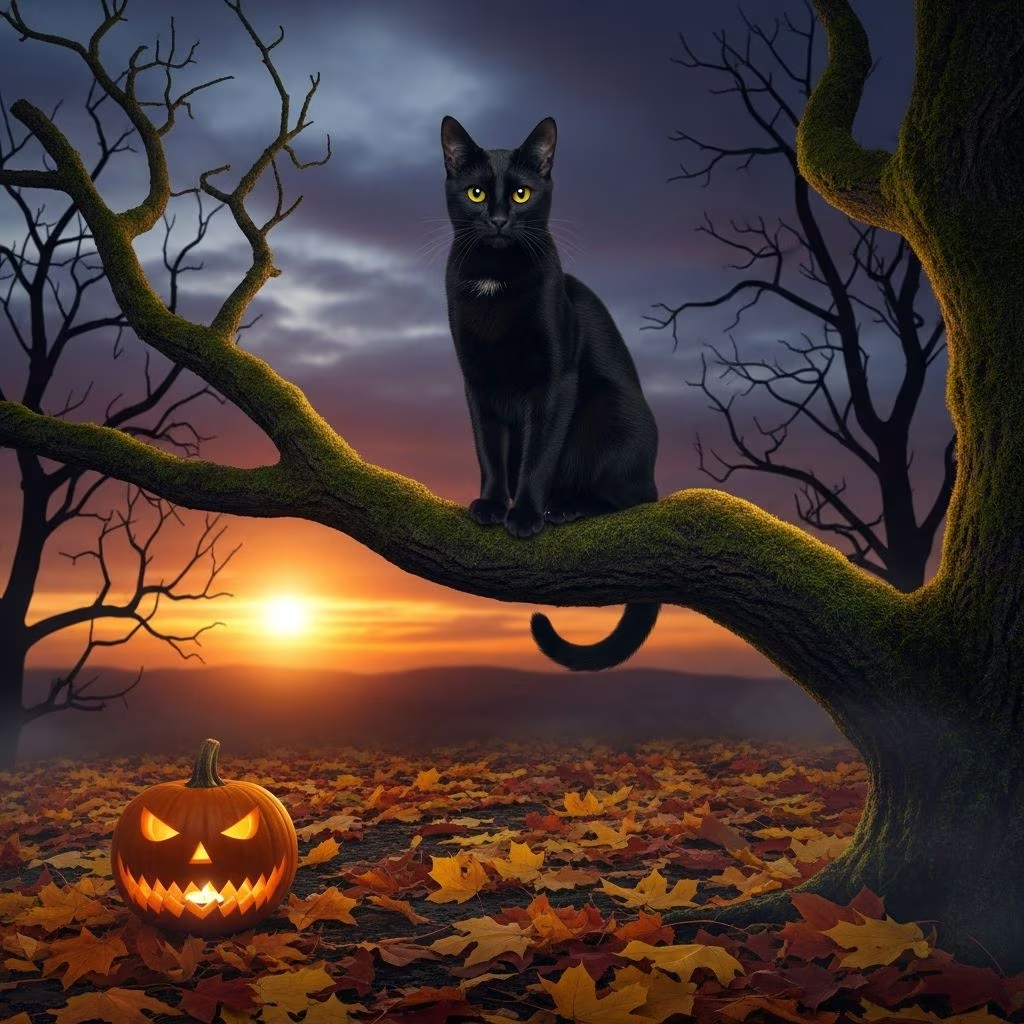
Why Black Cats Are Associated with Halloween
Black cats have become quintessential symbols of Halloween, adorning decorations, costumes, and holiday imagery each October. Yet this modern association belies a complex and often tragic history spanning thousands of years. Understanding why black cats are linked to Halloween requires examining ancient traditions, medieval superstitions, religious persecution, and how these dark chapters eventually transformed into the spooky-but-playful symbolism we recognize today.
Ancient Reverence: Before the Darkness
The relationship between humans and black cats was not always characterized by fear. In ancient civilizations, cats—particularly black cats—were held in the highest esteem. Ancient Egyptians revered cats and even worshiped feline deities. Black cats were viewed as mortal symbols of Bastet, a goddess depicted as a woman with a black cat’s head, who protected households from harmful creatures like snakes and scorpions.
Similarly, in ancient Greece, cats were associated with Hecate, the goddess of magic, sorcery, the moon, and witchcraft. Rather than being feared, these associations initially reflected respect for cats’ mysterious nature and their role in spiritual beliefs. As the Roman Empire expanded and Christianity gained dominance, attitudes toward these pagan-associated creatures began to shift, though cats were largely tolerated during the early medieval period.
Samhain: The Ancient Festival That Became Halloween
The most direct connection between black cats and Halloween originates in the ancient Celtic festival of Samhain. Celebrated between sunset on October 31 and sunset on November 1, Samhain marked the end of the harvest season and was believed to be a time when the boundary between the living and the dead grew thin.
During Samhain, Celtic people wore costumes to ward off malevolent spirits that might cross into the living world. Importantly, the Cat Sìth—a Celtic fairy creature resembling a large black cat with a white spot on its chest—played a central role in Samhain traditions. Households would leave saucers of milk for the Cat Sìth, believing that doing so would result in blessings, while failure to leave milk would invite curses.
In the 9th century, the Western Christian Church strategically shifted the date of All Saints’ Day to November 1, directly overlapping with Samhain. Over centuries, these two celebrations merged, eventually becoming the modern Halloween. The Cat Sìth’s association with Samhain likely transferred directly to Halloween traditions, cementing black cats’ connection to the holiday.
The Dark Turn: Medieval Superstitions and Witchcraft
The reverence and neutrality that characterized earlier attitudes toward black cats gave way to profound darkness during the European Middle Ages. Medieval superstitions linked black cats to witchcraft, with people believing witches could shape-shift into black cats to carry out nefarious deeds. Black cats were thought to be witches’ “familiars”—spiritual helpers or supernatural entities that assisted witches in their practices.
A cat’s inherent nature—independent, indifferent, and often nocturnal—lent itself perfectly to these dark beliefs. The secretive behavior and mysterious demeanor of cats seemed to confirm fears about their supernatural connections. If a black cat crossed your path, it was believed to bring bad luck, a superstition that persists in some cultures even today.
Papal Persecution and Vox in Rama
The Church’s official condemnation of black cats marked a turning point in their history. In 1233, Pope Gregory IX issued Vox in Rama, a papal decree condemning a German heresy called Luciferianism. This document identified one of the “devils” worshipped by this satanic cult as a diabolical black cat, declaring cats to be “the devil’s servants”.
Vox in Rama proved catastrophic for felines across Europe. As historical records indicate, this papal decree marked “the beginning of the wholesale persecution of felines in continental Europe, resulting in the deaths of millions of cats over the next 300 years”. The Church’s authority gave religious legitimacy to killing cats, transforming them from tolerated animals into targets for systematic elimination.
The situation worsened in 1484 when Pope Innocent VIII declared the cat to be the “devil’s favorite animal and idol of all witches”. This pronouncement intensified persecution and established the ideological foundation for the witch hunts that would devastate Europe and colonial America.
Witch Hunts and the Familiar Connection
During the witch hunts and trials of the 16th and 17th centuries, black cats became inextricably linked to accusations of witchcraft. Any cat seen in the company of women was automatically considered a familiar—a supernatural entity assisting the accused witch—and both cat and woman faced execution.
Witness testimonies from recorded witch trials frequently mentioned cats—particularly black cats—allegedly doing the bidding of the accused witch or “consorting with” them. Some historians speculate that black cats may have been preferred by those practicing folk magic or herbalism simply because their dark fur made them better nighttime hunters, but this practical advantage became reinterpreted as evidence of demonic connection.
The irony of this mass persecution was profound. As French feminist author Mona Chollet noted, the extermination of cats contributed to the growth of rat populations, which subsequently aggravated disease outbreaks—the very epidemics that were blamed on witches themselves. The persecution thus became self-reinforcing: cats killed to prevent witchcraft-related illness, yet their absence enabled the very plagues that fueled witch hunt hysteria.
Colonial America and Black Cat Persecution
The fear of black cats did not remain confined to Europe. Black cats’ persecution arrived on the shores of New England with the first settlers, and by the time of the Salem witch hunts, the belief that witches could shape-shift into black cats was firmly established.
Puritan colonists were particularly severe in their treatment of black cats. They began the practice of burning black cats on Shrove Tuesday (Fat Tuesday), before Lent, believing this would protect their homes from fire and evil. This ritualized violence reflected the deep-rooted fear that black cats represented witchcraft and demonic presence in their communities.
The Modern Transformation: From Evil Omen to Halloween Icon
The 20th century brought a dramatic shift in how black cats were perceived. By the 1930s, black cats began appearing in horror films as integral characters, establishing them as spooky symbols—but now as elements of entertainment rather than genuine supernatural threats.
The transformation accelerated during World War II and the rise of trick-or-treating as a Halloween tradition. Rather than symbols of evil, black cats became viewed as symbols of good luck, with many believing that a black cat near your house on Halloween protected it from evil spirits.
This reclamation of black cats as benevolent Halloween symbols represented a fundamental cultural shift. The centuries of persecution gave way to playful spookiness. Black cats became beloved Halloween icons—featured on decorations, greeting cards, and costumes—retaining their mysterious and magical associations while shedding the deadly superstitions that once surrounded them.
Why Black Cats Remain Halloween Symbols Today
Black cats persist as Halloween icons for several interconnected reasons:
- Historical Continuity: Their association with Samhain, witches, and the supernatural has remained unbroken for over a thousand years, creating deep cultural roots.
- Aesthetic Appeal: The color black itself symbolizes mystery, darkness, and the unknown—qualities that align perfectly with Halloween’s themes.
- Literary and Artistic Tradition: From Edgar Allan Poe’s “The Black Cat” (published 1843) through modern horror cinema, black cats have maintained prominent roles in spooky storytelling.
- Magical Associations: Their historical connection to magic and witchcraft—even when reframed positively—maintains their supernatural appeal.
- Modern Reclamation: Contemporary celebrations emphasize black cats as protective and lucky rather than evil, allowing them to retain mystique without genuine fear.
The Impact on Black Cats Today
Despite their modern popularity, black cats still face challenges. Adoption rates for black cats remain lower than for other colors, and some superstitions persist in certain communities. Halloween season, while celebrating black cats culturally, has also seen documented increases in animal abuse and abandonment during October in some regions.
Understanding the history of black cat persecution provides important context for modern animal welfare efforts. Recognizing that centuries of superstition caused immense suffering to these animals encourages more thoughtful, compassionate treatment of black cats year-round.
Frequently Asked Questions
Q: Why specifically black cats and not other colored cats?
A: Black cats were singled out due to their dark color, which symbolized darkness, night, and the unknown—qualities aligned with witchcraft and supernatural beliefs. Their superior nighttime visibility and hunting ability may have also contributed to their association with nocturnal witch activities.
Q: Is the superstition about black cats crossing your path real?
A: No. This is a centuries-old superstition with no factual basis. The belief originated during the Middle Ages when black cats were associated with witchcraft and devil worship.
Q: Did black cats actually have any connection to witchcraft?
A: No historical evidence supports that black cats possessed supernatural powers or aided witches. The association was entirely based on superstition, prejudice, and misunderstanding of cats’ natural behaviors.
Q: Are black cats considered lucky or unlucky?
A: This varies by culture. In modern Western Halloween contexts, black cats are often considered lucky protectors of homes. However, in some older traditions and certain regions, the superstition that they bring bad luck persists.
Q: How did black cats become associated with Halloween specifically?
A: The connection stems from the Celtic festival of Samhain, celebrated on October 31, which featured the Cat Sìth in its traditions. When Christianity merged Samhain with All Saints’ Day to create Halloween, the black cat association transferred to the modern holiday.
A Revised Understanding
The history of black cats and Halloween reveals how superstition, religious authority, and cultural fear can create devastating consequences for innocent animals. What began as reverence in ancient Egypt and Greece transformed through medieval paranoia into systematic persecution that killed millions of cats. Yet this dark history also demonstrates humanity’s capacity for cultural evolution—we have largely overcome these superstitions to celebrate black cats as beloved Halloween symbols and cherished household pets.
Today, recognizing this history allows us to appreciate black cats not as omens or supernatural entities, but as intelligent, affectionate animals deserving of respect and protection year-round.
References
- The History of Black Cats and Halloween: From Superstition to Symbolism — Casual Cat. https://casualcat.com/the-history-of-black-cats-and-halloween-from-superstition-to-symbolism-framing-shop-near-me/
- Why Are Black Cats Associated with Halloween? — Litter-Robot. https://www.litter-robot.com/blog/how-did-black-cats-become-halloween-symbols/
- Black Cats and Halloween — Echoes of Nature: Live Animals. https://www.echoesofnature.org/blog/black-cats-and-halloween
- The Power of Black Cats: Legends That Haunt Them, Responsible Ownership — Mount Saint Joseph University. 2024-02-01. https://www.msj.edu/news/2024/02/the-power-of-black-cats.html



