

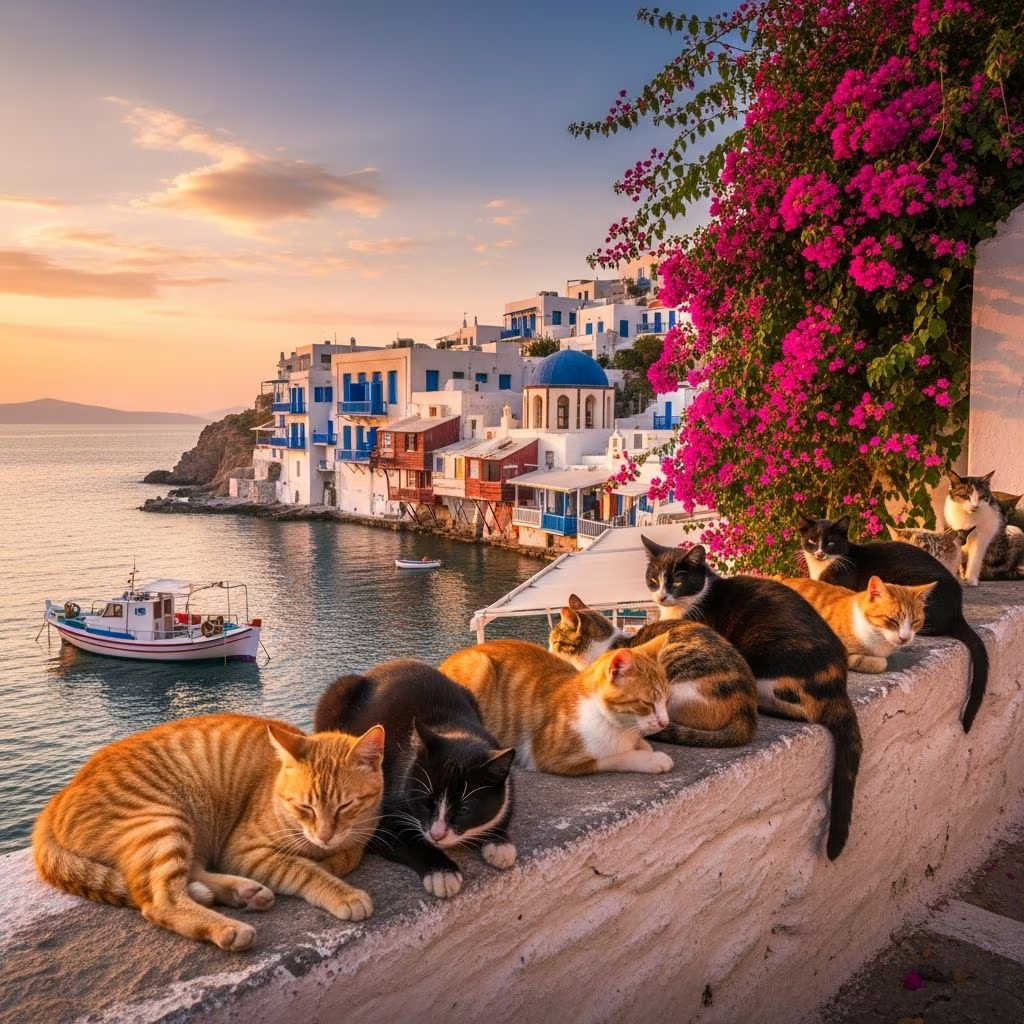
Travelers to Greece often marvel at the sheer number of cats lounging on ancient ruins, sunbathing on whitewashed walls, and weaving through bustling tavernas. From the Acropolis in Athens to the blue-domed churches of Santorini, these felines are ubiquitous. But why does Greece have such a prolific stray cat population? This article delves into the historical, cultural, social, and practical reasons behind this endearing phenomenon, backed by statistics and insights into ongoing management efforts.
A Historical Reverence for Cats
Cats have held a special place in Greek society for millennia, tracing back to ancient civilizations. In ancient Egypt, which influenced Greek culture through trade and conquest, cats were sacred beings associated with the goddess Bastet. Greeks adopted this reverence, viewing cats as protectors against pests like rodents that threatened grain stores and homes.
Archaeological evidence from sites like Delos reveals cat bones dating back over 2,000 years, suggesting early domestication or semi-feral populations. During the Byzantine era, cats were valued for controlling vermin in monasteries and urban centers. This long-standing respect laid the foundation for today’s tolerance of stray cats, unlike in countries with stricter animal control policies.
Today, this history manifests in how Greeks interact with street cats—not as nuisances, but as communal companions. Estimates suggest Athens alone hosts around 2 million stray cats and dogs, with cats dominating due to their adaptability.
Cultural Attitudes: Cats as Community Members
In Greece, stray cats are not seen as strays in the pejorative sense but as integral parts of neighborhoods. Locals refer to them as alania (street cats), feeding them daily from makeshift stations stocked with kibble, fresh fish, and water bowls. These “cat service stations” dot alleyways, markets, and tourist spots, often equipped with shelters and toys.
Greeks favor cats over dogs for practical reasons: they are clean, quiet (no barking), independent, and effective rodent hunters. As one local shopkeeper noted, “Cats keep the rats away without causing trouble.” This communal care fosters a cycle where healthy, well-fed cats thrive and reproduce prolifically.
Statistics underscore this dynamic. While pet cat ownership is low—only 13% of households own cats, the lowest in the EU—stray populations fill the gap. Greece’s cat density stands at 4.61 cats per km², low compared to Malta’s 316.46, but urban areas like Athens burst with felines due to abundant food sources from tourism and locals.
Practical Reasons for Proliferation
Several factors contribute to the booming cat numbers:
- Climate and Lifestyle: Greece’s Mediterranean climate suits cats perfectly—mild winters, abundant sun, and fish-rich diets from tavernas. Feral cats scavenge scraps, reducing starvation risks.
- Urbanization and Tourism: Coastal cities and islands attract millions of tourists yearly, providing inadvertent feeding. Harsh summers cull some populations, but survivors rebound quickly.
- Limited Spay/Neuter Programs: Until recently, widespread neutering was rare due to costs and cultural norms. Uncontrolled breeding leads to exponential growth—one unspayed female can produce hundreds of kittens in her lifetime.
- Low Pet Ownership Barriers: With pet cats numbering around 1.6 million in 2026, many Greeks prefer feeding strays over formal adoption, sustaining outdoor populations.
Pet cat numbers have remained stable, growing modestly from 2010-2023 by about 11,000, excluding strays. Overall pet population hovers at 3.63 million, with cats second to dogs.
Cats as Tourist Attractions
Stray cats enhance Greece’s allure, drawing cat-loving tourists. Islands like Mykonos and Hydra are feline paradises, where cats pose for photos amid scenic backdrops. Social media amplifies this—hashtags like #CatsOfGreece garner millions of views, boosting visits.
In Athens’ Plaka district, cats nap on marble steps; in Santorini, they overlook calderas. Travelers report well-fed, ear-tipped (neutered) cats, indicating partial trap-neuter-release (TNR) success. Blogs praise Greece as “the place for cat lovers,” with furry friends everywhere.
Challenges and Conservation Efforts
Despite the charm, overpopulation strains resources. Kittens overwhelm feeding stations, and diseases spread in dense colonies. Harsh winters and predators take a toll, but unchecked breeding persists.
Progress is underway:
- TNR Programs: Volunteer groups like We Live Together (welivetogether.gr) trap, neuter, and release cats, clipping ears for identification. Athens shows higher compliance, with many ear-tipped felines.
- Local Initiatives: Municipalities in tourist towns fund vets; EU grants support sterilization.
- International Aid: Animal welfare orgs ship supplies, while vets offer free services.
Challenges remain: Economic woes post-crisis limit funding, and rural areas lag. Experts call for national policies to curb growth humanely.
Cat Population Statistics: Greece vs. Europe
Here’s a comparison of cat densities and ownership:
| Country | Cats/km² | % Households Owning Cats |
|---|---|---|
| Greece | 4.61 | 13 |
| Malta | 316.46 | 25.4 |
| Belgium | 81.89 | 33 |
| Poland | 22.71 | 41 |
| Romania | 18.46 | 48 |
Greece ranks low in formal ownership but high in strays, contrasting stricter EU policies elsewhere.
Frequently Asked Questions (FAQs)
Are Greece’s stray cats dangerous?
No, most are docile and well-socialized. They rarely bite or scratch tourists, focusing on scavenging.
Is it okay to feed stray cats in Greece?
Yes, it’s encouraged and part of the culture. Use dry food or fish scraps; avoid milk as adult cats are often lactose intolerant.
How can I help with cat welfare in Greece?
Donate to TNR groups like We Live Together, volunteer during visits, or advocate for spay/neuter. Avoid taking cats home without permits.
Why aren’t all cats neutered?
Cost, logistics, and traditions hinder full coverage, but programs are expanding, especially in cities.
Do stray cats in Greece have diseases?
Some risk exists (fleas, worms), but TNR-vaccinated cats are healthier. Pet them cautiously and wash hands.
Conclusion: A Feline Legacy
Greece’s cat abundance blends history, culture, and practicality into a living tapestry. While challenges persist, community love and growing efforts ensure these cats endure as symbols of Greek hospitality. Next visit, share a morsel with a local feline—you’re continuing a 2,000-year tradition.
(Word count: 1624)
References
- Number of cats in Greece 2010-2023 — Statista. 2024. https://www.statista.com/statistics/515992/cat-population-europe-greece/
- The Most Cat-Dense Countries in the EU — Go-Voyager. 2024. https://go-voyager.com/the-most-cat-dense-countries-in-the-eu/
- Why Are There So Many Stray Cats in Greece? — For Love of Writers. 2023. https://www.forloveofwriters.com/why-are-there-so-many-stray-cats-in-greece/
- An Ode to the Cats of Greece — Rick Steves’ Travel Blog. 2024-10. https://blog.ricksteves.com/cameron/2024/10/cats-greece
- Cat Population by Country 2026 — World Population Review. 2026. https://worldpopulationreview.com/country-rankings/cat-population-by-country



