

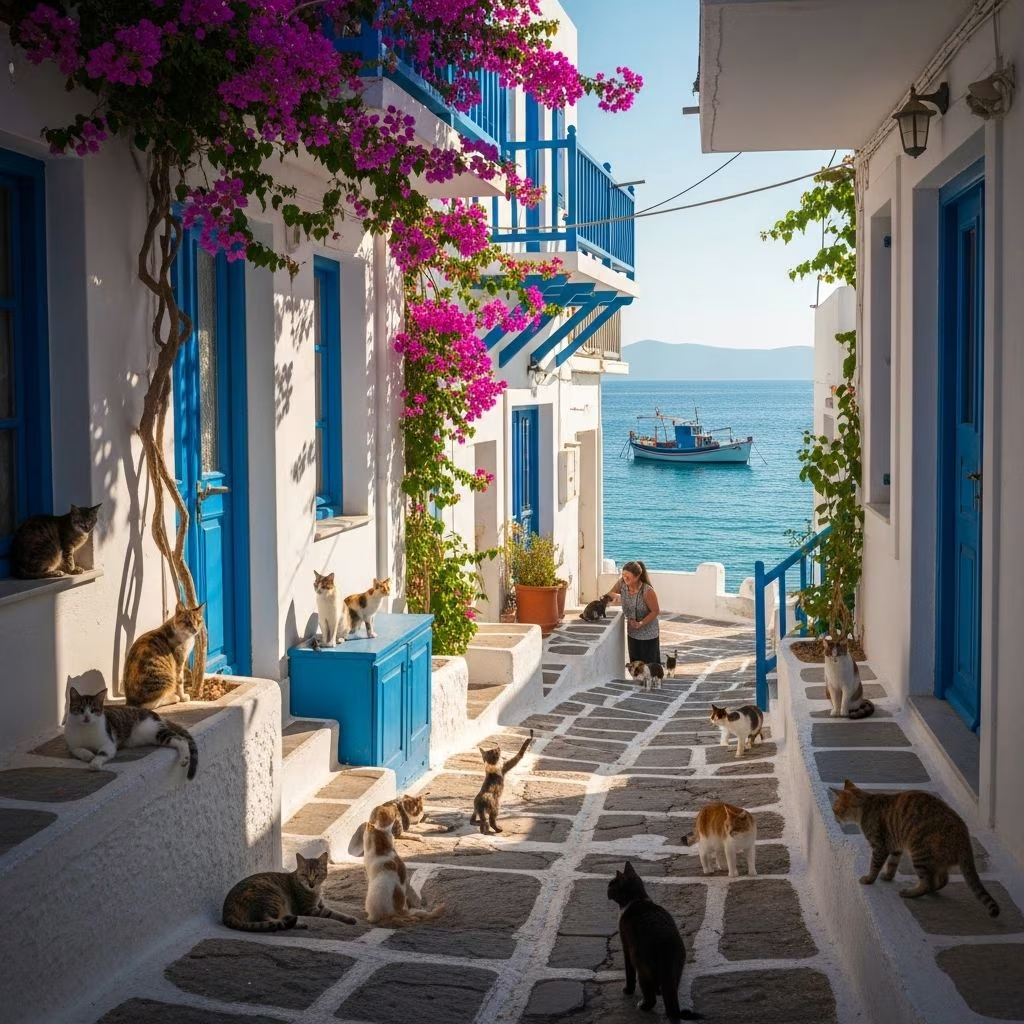
Greece is renowned for its stunning landscapes, ancient ruins, and Mediterranean cuisine, but it’s also famous for its ubiquitous stray cats. From the bustling streets of Athens to the sun-drenched islands like Santorini and Mykonos, cats roam freely, lounging on whitewashed walls, begging for scraps at tavernas, and charming tourists worldwide. Estimates suggest millions of stray cats across the country, with Athens alone hosting around 2 million stray cats and dogs combined. This feline abundance raises a common question: why are there so many cats in Greece?
The phenomenon stems from a unique blend of cultural attitudes, historical reverence, economic factors, and practical community roles. Greeks have a deep affection for cats, viewing them as integral community members that control pests and provide companionship. Unlike pet ownership statistics that show only 13% of Greek households owning cats, the stray population thrives due to widespread feeding and tolerance. Between 2010 and 2023, the registered pet cat population grew modestly by about 11,000, remaining stable around 1.6 million, but this excludes the vast number of strays, which some estimates say exceed owned pets.
The Historical Roots of Cats in Greece
Cats have deep historical ties to Greece, dating back to ancient times. In ancient Egyptian culture, cats were sacred, and this reverence spread through trade and conquests to the Mediterranean, including Greece. By the time of the Byzantine Empire and Ottoman rule, cats were valued for protecting food stores from rodents in homes, markets, and ships.
During the Ottoman occupation of Greece (1453–1821), cats played a crucial role on maritime vessels, preventing rat infestations that could destroy grain and spread disease. Greek sailors and islanders adopted this practice, releasing cats on islands where they multiplied naturally. This maritime history explains the high cat densities on the 6,000+ Greek islands, many of which remain sparsely populated by humans but teeming with felines.
Ancient myths also contributed. The goddess Artemis, protector of wildlife, was sometimes associated with cats, reinforcing their symbolic importance. Today, this legacy persists in folklore where cats are seen as guardians against evil spirits, lounging near homes and shrines without fear.
Cultural Attitudes: Cats as Community Members
Greeks adore cats, often referring to them as psipsines (little souls) or treating them like extended family. Unlike dogs, which are less common as strays due to barking and size, cats are quiet, clean, and independent—perfect urban and island companions. A local in a historic town might say, “Yes, we Greeks love cats! They are truly part of the community. You get to know specific ones and enjoy seeing them in the streets.”
- Cleanliness and Quietness: Cats groom themselves meticulously and don’t bark, making them ideal for dense neighborhoods and tourist areas.
- Pest Control: They naturally hunt rodents and insects, protecting tavernas, homes, and ruins from infestations.
- Affection Without Demands: Strays accept food scraps but roam freely, fitting the Greek lifestyle of communal living.
Despite low formal ownership (13% of households), feeding strays is a daily ritual. Grandmothers (yiayias) leave bowls of milk, fish scraps, or kibble outside homes, sustaining colonies. Tourists often participate, sharing meals, which boosts visibility and perpetuates the cycle.
The Island Paradox: Feline Havens Amid Challenges
Greece’s 227 inhabited islands host disproportionate cat populations. Santorini’s caldera views are as iconic as its cats perched on blue-domed churches. Mykonos alleys crawl with furry residents, and Hydra mandates no motorized vehicles partly due to roaming cats.
Why islands? Limited predators, abundant summer food from tourists, and seasonal human influx create ideal breeding grounds. Harsh winters cull numbers, but survivors rebound in spring. Estimates place stray numbers exceeding 600,000 owned cats nationwide, with islands bearing the brunt.
| Island | Estimated Stray Cats | Key Factors |
|---|---|---|
| Santorini | Thousands | Tourist scraps, volcanic terrain for hiding |
| Mykonos | High density | Party scene provides food, mild climate |
| Hydra | Colonies everywhere | No cars, pedestrian-friendly for cats |
| Crete | Over 100,000 | Largest island, rural/urban mix |
However, challenges persist. Post-tourist season, malnutrition and disease spike. Some view cats as nuisances, leading to illegal poisonings, especially by older generations on remote islands. Advocates note, “Large-scale poisonings and clubbing take place far from the eyes of tourists.”
Tourism’s Double-Edged Sword
Tourism amplifies the cat population. Greece welcomes over 30 million visitors yearly, many cat enthusiasts. Travelers feed strays, post viral photos (#CatsOfGreece), and donate to rescuers, inadvertently encouraging breeding.
Positive impacts include funding for Trap-Neuter-Return (TNR) programs. Visitors buy food for feeders, sponsor sterilizations, and adopt cats home. Yet, extra food supports more kittens, straining resources. Density metrics show Greece at 4.61 cats per km², low due to land area but high in urban/island pockets.
Trap-Neuter-Return (TNR): Stabilizing Populations
TNR is Greece’s primary management strategy. Volunteers trap cats, neuter/spay them (ear-tipping for identification), vaccinate, and release. Programs like We Live Together (welivetogether.gr) coordinate nationwide efforts.
Success stories abound: Athens’ ear-clipped cats indicate progress; islands like Syros see stabilized colonies. Challenges include funding shortages, volunteer burnout, and resistance from some locals. Still, TNR reduces kitten births by 66% per colony, per global studies adapted locally.
- Benefits: Humane, cost-effective, maintains natural pest control.
- Key Players: Local vets, expats, orgs like Network for Animals.
- Progress: Many cats now sterilized, preventing explosive growth.
Government involvement is minimal, but EU funds support some initiatives. Experts urge national spay/neuter campaigns to curb overpopulation humanely.
Challenges Facing Greek Strays
Despite love, strays face hardships:
- Winter Survival: Hundreds die from starvation, cold, and disease post-tourism.
- Abuse: Poisonings and cruelty, rarely prosecuted.
- Health Issues: FIV, FeLV, injuries from cars/fights.
- Overpopulation: Without universal TNR, cycles continue.
Advocates push education, especially targeting older islanders who see cats as vermin. Feeding stations with sterilization info help shift mindsets.
How You Can Help Greek Cats
Visitors and supporters can contribute:
- Feed Responsibly: Support established feeders; avoid creating new colonies.
- Donate: To TNR groups like We Live Together or Network for Animals.
- Adopt: Many cats seek forever homes abroad.
- Spread Awareness: Share responsible tourism tips.
- Volunteer: Join trapping sessions during visits.
By supporting TNR, you ensure Greece’s cats remain a beloved, sustainable part of its charm.
Frequently Asked Questions (FAQs)
Are Greek stray cats friendly?
Yes, most are socialized by human feeding, approaching tourists for pets and food without aggression.
Is it safe to pet stray cats in Greece?
Generally yes, but watch for ear-tips (sterilized) and avoid sick-looking cats to prevent scratches or diseases.
Why don’t Greeks adopt all the strays?
Cultural preference for independence; many view strays as communal rather than personal pets.
How effective is TNR in Greece?
Very effective where implemented, reducing populations by preventing births while preserving cats’ roles.
What’s the cat population in Greece?
Pet cats ~1.6M; strays estimated over 2M, especially in Athens and islands.
References
- Number of cats in Greece 2010-2023 — Statista. 2024. https://www.statista.com/statistics/515992/cat-population-europe-greece/
- The Most Cat-Dense Countries in the EU — Go-Voyager. 2024. https://go-voyager.com/the-most-cat-dense-countries-in-the-eu/
- Cats In Survival Mode On Idyllic Greek Islands — Network for Animals. N/A. https://networkforanimals.org/cats-in-survival-mode-on-idyllic-greek-islands/
- Why Are There So Many Stray Cats in Greece? — For Love of Writers. N/A. https://www.forloveofwriters.com/why-are-there-so-many-stray-cats-in-greece/
- An Ode to the Cats of Greece — Rick Steves’ Travel Blog. 2024-10. https://blog.ricksteves.com/cameron/2024/10/cats-greece



