

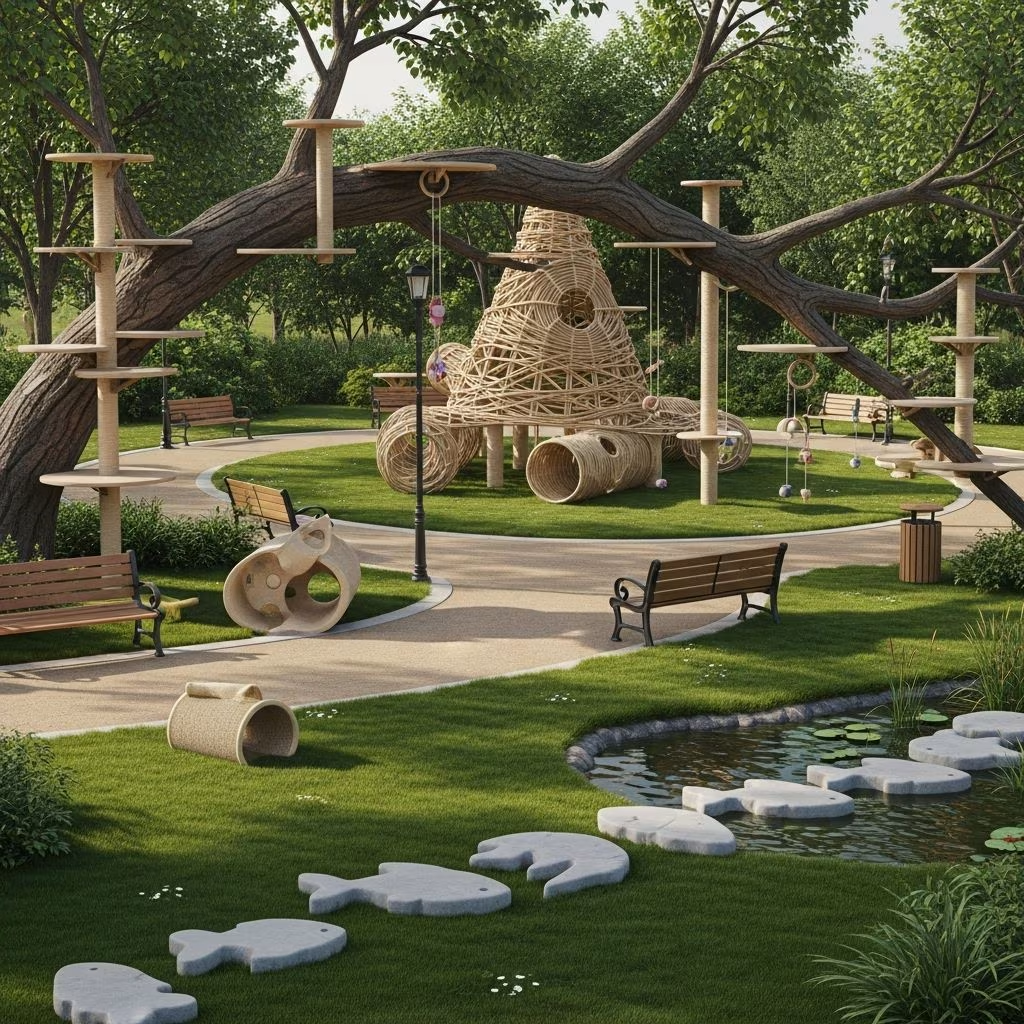
Cats, unlike dogs, do not have dedicated public parks designed for their recreation and socialization. This absence stems from fundamental differences in feline behavior, health concerns, environmental impacts, and logistical challenges that make cat parks impractical.
Why Aren’t There Cat Parks Like Dog Parks?
Dog parks thrive because dogs are inherently social pack animals that enjoy interacting with unfamiliar canines in open spaces. Cats, however, are solitary hunters by nature, preferring their own territory and avoiding unknown felines to prevent conflict. Forcing cats into shared public spaces would likely cause stress, aggression, and territorial disputes rather than enjoyment.
Additionally, cats lack the stamina for prolonged outdoor exertion that dogs possess. While dogs can romp for hours, cats tire quickly and prefer short bursts of high-intensity play followed by rest. Public parks would need constant supervision to prevent fights, escapes, or injuries, rendering them operationally complex and costly.
Cats Are Territorial and Solitary Creatures
Feline behavior is rooted in their evolutionary history as ambush predators. Domestic cats retain strong territorial instincts, marking spaces with scent glands and urine to claim ownership. Introducing a cat to a public park filled with strangers would trigger defensive responses, including hissing, swatting, or fleeing.
Indoor cats, accustomed to controlled environments, become overwhelmed by novel scents and sounds outdoors. Veterinary behaviorists note that most cats view the outside world as a potential threat zone rather than a playground. This solitary preference explains why cat “parks” manifest as private home setups rather than communal facilities.
Cats Aren’t Built for Dog Park Activities
Physically, cats excel in vertical climbing, stealthy stalking, and explosive sprints, not sustained running or group play. Dog parks feature open fields for fetching and chasing, activities misaligned with feline capabilities. Cats overheat easily during exertion and require shaded, elevated perches for observation—features absent in typical dog park designs.
Mental stimulation for cats involves puzzle-solving, hunting simulations, and scent exploration, not ball-throwing marathons. Public spaces cannot replicate the controlled, multi-level environments cats crave for acrobatic play without risking exhaustion or injury.
Health and Disease Risks Make Cat Parks Problematic
Concentrating cats in one area amplifies disease transmission risks. Feline leukemia, FIV, upper respiratory infections, and parasites spread rapidly through casual contact, scratches, or shared litter areas. Unlike vaccinated dogs at regulated parks, cats’ stress in unfamiliar settings weakens immune responses, heightening vulnerability.
Public health concerns extend to humans via toxoplasmosis, ringworm, and scratches carrying bacteria. State park regulations explicitly prohibit feeding feral cats due to these issues, underscoring why managed cat parks face similar barriers.
Environmental Impact: Cats as Predators in Natural Spaces
Free-roaming cats devastate local wildlife, killing billions of birds, small mammals, reptiles, and amphibians annually. Studies indicate a typical outdoor housecat dispatches over 50 prey items per year, with feral cats far exceeding this. Parks designed for cats would inadvertently create hunting grounds, disrupting ecosystems.
California State Parks document how feral cat colonies attract predators, spread disease, and compete with native species. Feeding stations draw more cats, perpetuating cycles of abandonment and overpopulation. These ecological damages make public land agencies oppose cat-friendly public spaces.
Litter Box Logistics and Hygiene Nightmares
Elimination poses insurmountable challenges. Cats require clean, private litter boxes; shared public facilities would become contaminated quickly, causing avoidance or spraying. Unlike dogs that eliminate on grass, cats bury waste, demanding substrate that’s impractical to maintain across large areas.
Cleanup crews would face overwhelming sanitation demands, with odors, fly infestations, and health code violations inevitable. These practical hurdles alone deter municipalities from investing in cat infrastructure.
Legal Liability and Safety Concerns
Cat parks invite lawsuits from bites, scratches, escapes onto roads, or allergen exposures. Escaped cats could become feral, exacerbating wildlife issues. Insurance costs for such high-risk venues exceed those for dog parks, where behaviors are more predictable.
Enforcing rules like vaccination proof, leash laws for transport, and capacity limits adds administrative burdens. Many cities prioritize dog facilities due to proven demand and lower liability.
What Exists Instead? Catios and Indoor Playgrounds
While public cat parks remain elusive, innovative alternatives flourish. “Catio” enclosures—secure outdoor patios for cats—provide fresh air, climbing structures, and bird-watching without escape risks. These custom builds use mesh fencing, shelves, and tunnels for safe exploration.
Indoor cat playgrounds transform homes into feline amusement parks. Vertical space utilization via wall-mounted shelves, cat trees, and hammocks satisfies climbing instincts while preserving human living space.
How to Create an Indoor Cat Playground
Building a cat playground starts with assessing your space and cat’s preferences. Younger cats favor tall structures for acrobatics; seniors prefer low ramps and cozy nooks.
- Vertical Shelving: Install staggered shelves using IKEA hacks or ready-made kits. Ensure secure mounting to prevent falls.
- Scratching Stations: Place multi-level trees with sisal posts to redirect clawing from furniture.
- Interactive Toys: Add motion-activated lasers, feather wands, and glow-in-dark chase toys for solo play.
- Tunnels and Hideouts: Cardboard mazes or fabric tunnels mimic burrows for stalking practice.
- Perches by Windows: Bird feeders outside stimulate natural hunting gazes.
Dedicate a room or corner stocked with essentials. Upcycle items like old t-shirts into pompom toys or hang stable platforms for jumping.
High-Tech Enrichment for Modern Cats
Technology enhances play: app-controlled laser pointers, camera-equipped feeders, and automated toys engage cats remotely. These reduce separation anxiety for busy owners while providing endless stimulation.
Motion-sensor mats light up for nighttime hunting, aligning with crepuscular activity peaks. Such innovations keep indoor cats mentally sharp without outdoor exposure.
Family Playtime: Strengthening the Human-Cat Bond
Daily interactive sessions with wand toys or treat puzzles build trust and relieve stress for both parties. Cats adapt schedules to family routines, prioritizing quality time over solo adventures.
Observe preferences: some cats love chase games, others puzzle feeders. Tailor setups to ensure happiness and prevent destructive boredom.
Do Any Cat Parks Exist?
Rare exceptions appear in cat cafes or supervised adoption centers with enclosed playrooms, but true public parks are negligible. Some communities experiment with small catios in multi-family housing, yet scalability limits widespread adoption.
Feral cat colonies in trailer parks or urban fringes occur organically but lack safety or enrichment. These highlight natural feline independence rather than organized recreation.
Frequently Asked Questions (FAQs)
Why don’t cats like public parks?
Cats are territorial and stress easily around strangers, preferring familiar spaces for play.
Can I take my cat to a dog park?
No—risks include dog aggression, cat escape, and overwhelming stimulation unsuitable for felines.
What’s the best alternative to a cat park?
Build an indoor playground with shelves, toys, and catios for safe, enriching activity.
Do feral cats create natural parks?
No, colonies harm wildlife and health; parks prohibit feeding to protect ecosystems.
How do I enrich my indoor cat’s life?
Use vertical spaces, interactive toys, and daily play sessions tailored to their age.
References
- Creating a Cat Playground — 2 Paws Up Inc. 2019-12-14. https://2pawsupinc.com/2019/12/14/creating-a-cat-playground/
- Housecats in Our Parks — California State Parks. 2005. https://www.parks.ca.gov/pages/23071/files/housecatsforweb.pdf
- Why Is There No Cat Park? — PAWAii. N/A. https://www.pawaii.com/blogs/blog/why-there-is-no-cat-park
- Why Are There No Cat Parks? Reasons & Alternatives — Catster. N/A. https://www.catster.com/lifestyle/why-are-there-no-cat-parks/
- Exploring the Stray Cat Community in Trailer Parks — Lemon8-app. 2024. https://www.lemon8-app.com/@jocelynsch0/7405190985862578693?region=us



