

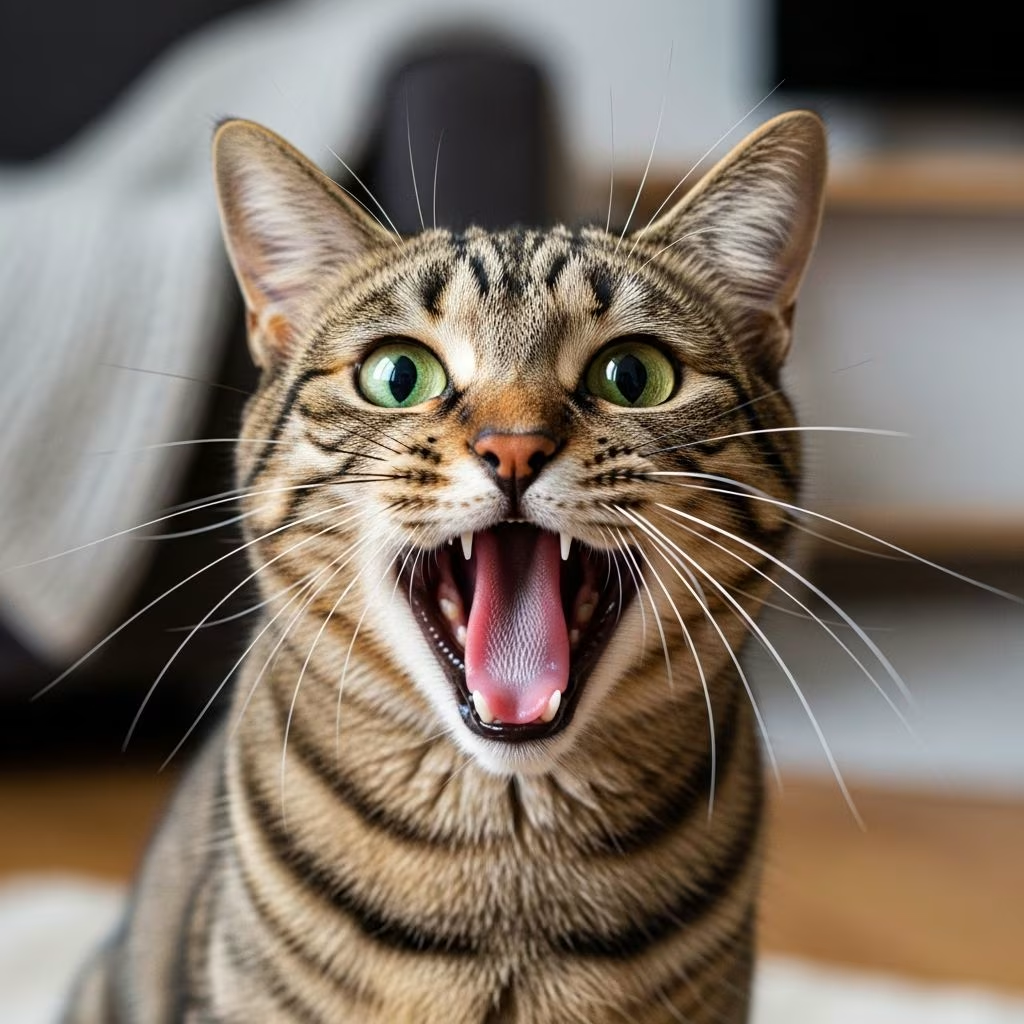
Tabby cats are known for their striking patterns and bold personalities, but one trait stands out: their vocal nature. These cats often fill homes with meows, chirps, and yowls, communicating in ways that captivate owners. While all cats vocalize, tabbies seem particularly chatty, using sound to express everything from joy to distress. Understanding these behaviors helps strengthen the bond with your pet and ensures their well-being.
This article delves into the **10 key reasons** why tabby cats are so vocal, drawing from veterinary insights and feline behavior studies. Whether your tabby greets you enthusiastically or cries at night, these explanations provide clarity and actionable advice.
The 10 Reasons Why Your Tabby Cat Is So Vocal
1. They’re Friendly
Tabby cats often meow excessively because they are inherently **friendly and affectionate**. When you return home, even after a short absence, your tabby may greet you with a chorus of meows while rubbing against your legs. This behavior stems from their social nature, where vocalization serves as a welcoming ritual.
Responding positively reinforces this bond. Pet their head, speak softly, and engage in gentle play. Though humans and cats don’t share a language, mutual greetings build trust and reduce unwanted meowing over time. Tabbies thrive on interaction, making them ideal companions for attentive owners.
2. They’re Expressing Their Emotions
**Emotional expression** drives much of a tabby cat’s vocalization. These cats wear their feelings openly: a sharp meow if you step on their tail, excited chirps during play, or contented purrs when petted. Tabbies vocalize joy, annoyance, fear, or surprise, making them expressive pets.
Observe body language alongside sounds. Dilated pupils and arched backs signal irritation, while relaxed tails indicate happiness. By tuning into these cues, owners can address emotions promptly, fostering a harmonious environment.
3. They Want Your Attention
Attention-seeking is a hallmark of vocal tabby cats. They may weave between your feet or meow persistently until you engage. While independent at times—like napping in sunlight—tabbies crave social connection and exercise.
Combat this with interactive toys such as feather wands, strings, or balls. Daily play sessions of 15-20 minutes satisfy their needs, reducing demands for attention. Puzzle feeders also provide mental stimulation, keeping boredom at bay.
4. They’re Greeting You
Beyond general friendliness, tabbies use meows as a specific **greeting mechanism**. This vocal hello reinforces pack bonds, mimicking kitten-mother interactions. It’s most common at doors or during reunions, signaling relief and excitement.
Acknowledge these greetings verbally or with pets to affirm security. Consistent responses teach boundaries while maintaining the positive ritual.
5. They’re Hungry
Hunger prompts loud, insistent meowing in tabby cats. Their internal clocks trigger vocal reminders at mealtimes, especially if portions are delayed. Kittens and active adults are particularly vocal about food.
Establish a feeding schedule with measured portions to manage expectations. Automatic feeders prevent premature wake-ups, promoting better sleep for all.
6. They Need to Use the Litter Box
**Litter box issues** lead to vocal protests. Tabbies meow when the box is dirty, inaccessible, or uncomfortable. Blockages or urinary problems amplify this into distressed yowls.
- Scoop daily and provide one box per cat plus one extra.
- Use unscented, clumping litter in spacious boxes.
- Monitor for straining or blood, seeking vet care immediately for urinary concerns.
7. They’re Hunting Instincts
Tabbies chirp and chatter at windows when spotting birds or insects, channeling **hunting instincts**. Frustration mounts if prey is unreachable, leading to excited vocalizations.
They also “present” catches—alive or toys—with triumphant meows, sharing their success. Indoor enrichment like window perches and hunting toys redirects this energy.
8. They’re In Pain
**Pain or illness** causes unusual vocalization. Yowls signal injuries, dental disease, or internal issues like urinary blockages. Cats hide discomfort, so increased meowing is a red flag.
Check for limping, appetite loss, or hiding. Conditions like hyperthyroidism or hypertension in seniors heighten nighttime cries. Veterinary exams, including bloodwork, are essential.
9. They’re In Heat
Unspayed tabbies yowl loudly during **heat cycles**, seeking mates. Males also vocalize territorially. Spaying/neutering eliminates this, reducing roaming and noise.
Schedule surgery early; it curbs hormone-driven behaviors effectively.
10. They’re Elderly or Confused
Senior tabbies vocalize due to **cognitive dysfunction**, hearing/vision loss, or disorientation. Nighttime wandering and irritability increase as dementia progresses.
Support with routines, night lights, and supplements. Talking reassures hearing-impaired cats. No cure exists, but management improves quality of life.
Understanding Different Types of Cat Vocalizations
Meowing
Meows are primarily for human communication, varying in pitch for needs like food or affection. Tabbies use a wide range.
Yowling
**Yowling** indicates distress, territory warnings, or mating. It’s louder and prolonged than meows.
Chirping
Chirps express excitement, often at prey. They’re bird-like and attention-grabbing.
Purring
While soothing, purring can occur in pain. Context matters.
How to Reduce Excessive Vocalization in Tabby Cats
Address root causes:
- Enrich environment: Toys, perches, scratching posts.
- Rule out health issues: Annual vet checkups.
- Maintain routines: Consistent feeding, play, litter.
- Spay/neuter: Prevents heat-related noise.
| Trigger | Solution |
|---|---|
| Attention-seeking | Scheduled playtime |
| Hunger | Fixed feeding schedule |
| Pain | Vet visit |
| Boredom | Interactive toys |
Frequently Asked Questions (FAQs)
Why is my tabby cat meowing more than usual?
Sudden increases often signal pain, stress, hunger, or illness. Monitor and consult a vet if persistent.
Are tabby cats naturally more vocal?
Tabbies are pattern-based, not a breed, but many exhibit chatty personalities due to mixed genetics.
When should I worry about my cat’s yowling?
If accompanied by lethargy, appetite changes, or straining, seek immediate care.
Can diet affect vocalization?
Yes, nutritional imbalances or hyperthyroidism links cause restlessness.
How do I stop nighttime meowing?
Enforce daytime play, ignore at night, check for medical issues.
Conclusion
Tabby cats’ vocal nature reflects their expressive spirits, using meows, chirps, and yowls to navigate their world. By decoding these sounds alongside body language, owners can meet needs effectively—whether for food, play, or health care. Responsive care turns vocalizations into meaningful dialogue, enhancing life for both cat and human.
References
- Why Are Tabby Cats So Vocal? 10 Vet Reviewed Reasons — Catster. 2023-10-15. https://www.catster.com/cat-behavior/why-are-tabby-cats-so-vocal/
- Why Is My Cat Meowing So Much? Exploring Excessive Vocalization in Cats — Advanced Veterinary Medical Center. 2024-05-20. https://advancedvmc.net/why-is-my-cat-meowing-so-much-exploring-excessive-vocalization-in-cats/
- Excessive Cat Meowing: Vet Tips for Metairie Cats — Metairie Vets. 2025-08-15. https://metairievets.com/2025/08/15/excessive-cat-meowing-metairie/



