

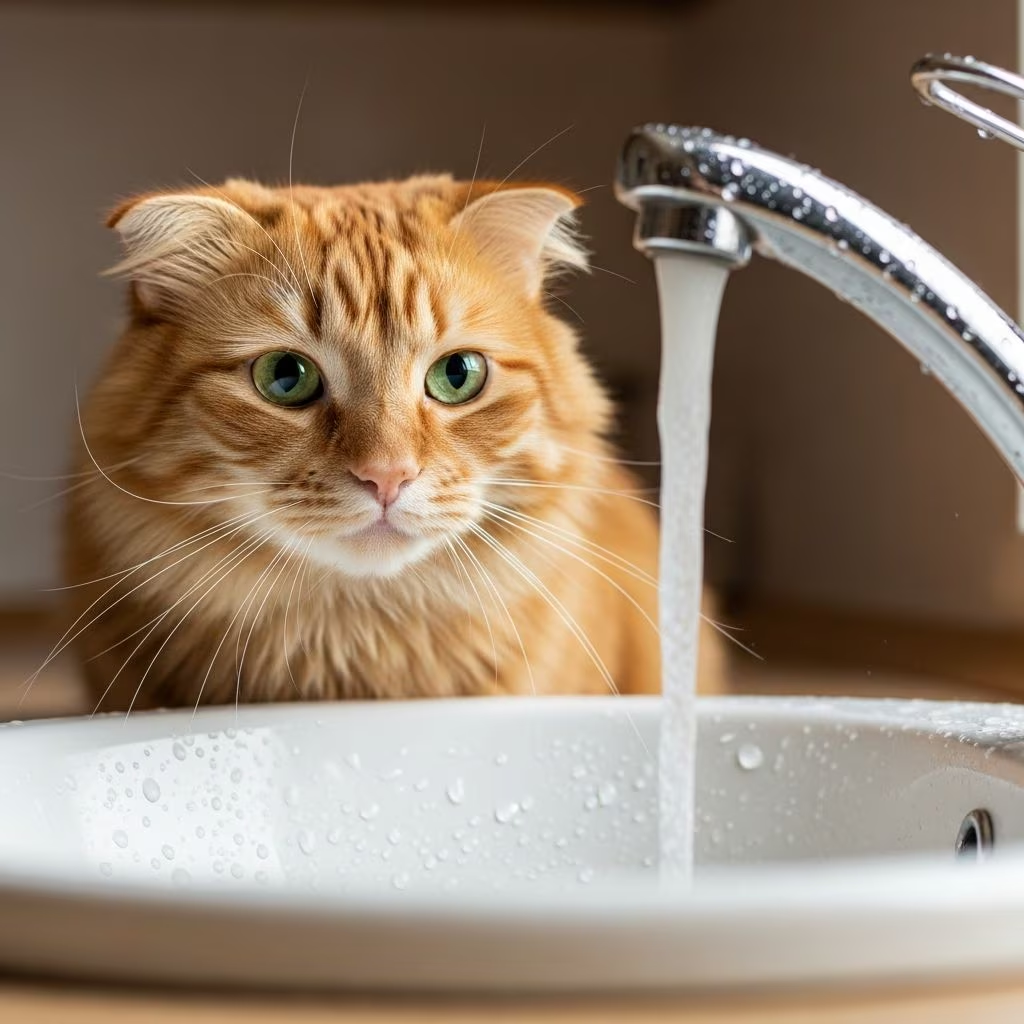
Why Are Cats Weird About Water? 5 Reasons Why Their Behavior Is Unusual
Cats have a complicated and often mysterious relationship with water. While some felines enjoy splashing in water bowls or playing with running water from faucets, many cats seem to have an inexplicable aversion to getting wet. This peculiar behavior leaves many cat owners puzzled and wondering why their beloved pets react so negatively to water. Understanding the reasons behind this behavior can help you better care for your feline companion and encourage them to stay properly hydrated.
1. Evolutionary History and Ancestral Behavior
One of the primary reasons cats are so finicky about water stems from their evolutionary past. Domestic cats descended from Arabian wild cats that lived in desert regions with very few large bodies of water. These ancestral felines never needed to learn how to swim or adapt to aquatic environments because water sources were scarce in their native habitats. Over thousands of years, this lack of exposure to water became ingrained in their genetic makeup and behavioral instincts.
Unlike dogs, which have a history of water-based hunting and retrieving, cats evolved as solitary hunters in arid environments. This evolutionary background means that modern domestic cats retain these ancient instincts. Their discomfort around water isn’t a personal preference or quirk—it’s hardwired into their DNA as a survival mechanism passed down through countless generations.
Even indoor cats living in modern homes still carry these ancestral fears and aversions. The instinctual drive to avoid water remains strong, even though their environment has changed dramatically from the deserts of their ancestors. This explains why many cats seem almost phobically opposed to water, despite the fact that they have no logical reason to fear it in a safe, controlled home environment.
2. Wet Fur Feels Uncomfortable
Beyond evolutionary factors, the physical sensation of being wet is genuinely uncomfortable for cats. Cat fur is designed to absorb water rather than repel it, which creates multiple problems for felines when they get wet. When a cat’s coat becomes saturated, it becomes significantly heavier than normal, restricting their movement and making them feel sluggish and clumsy.
This discomfort manifests in several ways:
- Loss of agility: Cats are naturally nimble and quick, relying on their agility for both hunting and evading predators. Wet fur weighs them down and makes their movements slower and less coordinated.
- Temperature regulation issues: A wet coat can lower a cat’s body temperature significantly, making them feel cold and uncomfortable. Cats are heat-seekers by nature and actively avoid situations that cool them down.
- Extended drying time: Unlike water-resistant animal coats, cat fur takes an exceptionally long time to dry completely. This prolonged period of discomfort can trigger stress and anxiety.
- Loss of control: The unfamiliar sensation of wet fur can make cats feel out of control and vulnerable, triggering a stress response.
Interestingly, many cats don’t mind water itself—they may happily play with water dripping from a faucet or bat at water in their bowl. The problem arises when they actually become wet. This is why you might notice your cat enjoying water play one moment and then freaking out the next when they realize they’ve gotten too wet.
3. Heightened Sensory Sensitivity
Cats possess remarkably acute senses, particularly their sense of smell and taste, which play a significant role in their water aversion. Cats are extremely sensitive to odors in water, including chlorine and other chemical additives found in tap water. What might be undetectable to humans can be overwhelmingly strong to a cat’s sensitive nose.
This sensory sensitivity extends to the taste of water as well. Some cats become selective about their water sources because they can detect subtle differences in taste and composition that humans cannot. Many cat owners have observed that their pets prefer filtered water, bottled water, or flowing water over regular tap water—a preference that likely stems from the cat’s superior ability to detect impurities and chemical odors.
Additionally, when a cat gets wet, their own scent changes dramatically. Cats use scent as a primary way to understand and interact with their environment. A sudden alteration in their scent can trigger confusion and stress, similar to the anxiety a cat experiences when another cat returns home smelling like a veterinary clinic. This disruption to their olfactory identity can make the experience of getting wet especially distressing.
4. Past Negative Experiences
Trauma from negative past experiences is one of the primary reasons cats develop water aversion. If a cat has had an unpleasant encounter with water—such as accidentally falling into a bathtub, being forced into a bath, or getting sprayed unexpectedly—they may develop a lasting fear of water that persists throughout their life.
Kittens have a critical socialization period during which they form associations with their environment and experiences. If a young cat is not exposed to water in positive ways during this period, they are more likely to develop an aversion that becomes difficult to overcome later. Conversely, cats that have positive early experiences with water are significantly more likely to be comfortable with it as adults.
Even seemingly minor incidents can have lasting effects. A unexpected shower, a splash from a water gun, or an unpleasant bathing experience can be traumatic enough to condition a cat to avoid water for years. This is why forcing a cat into water or using water as a punishment can severely worsen their anxiety and should be avoided at all costs.
5. Instinctual Survival Mechanisms
From an evolutionary standpoint, getting wet poses genuine survival risks for wild felines. Wet fur reduces a cat’s ability to hunt effectively and makes them vulnerable to predators. When a cat’s coat is soaked, they become less agile, slower, and more noticeable to both prey and predators. In the wild, this could mean the difference between a successful hunt and starvation, or between escape and becoming prey themselves.
Water-logged environments like bathtubs or creek beds are also inherently slippery, making it difficult for cats to maintain their footing and make a hasty exit if needed. This loss of control and inability to escape quickly triggers an instinctive fear response in cats, even domesticated ones living safely indoors.
While modern indoor cats don’t face these genuine survival threats, their instinctual programming hasn’t evolved to recognize this. They still respond to water as if it represents a real danger, which explains why even the most pampered house cat can panic at the prospect of getting wet.
Understanding Environmental Factors
Beyond the inherent reasons cats dislike water, environmental factors also influence their behavior around water sources. The type of water bowl you use, its location in your home, and how water is presented to your cat can all affect their willingness to drink.
Many cats prefer running water to stagnant water in bowls. This preference likely stems from their instinctual knowledge that moving water in nature is less likely to be contaminated with parasites or harmful bacteria. This is why many cat owners find that investing in a cat water fountain significantly increases their pet’s water consumption.
How to Help Your Cat Feel More Comfortable With Water
Understanding why your cat is weird about water is the first step toward helping them. Here are some practical strategies:
- Start early with kittens: If you have a young cat, introduce them to water in positive, controlled ways to build positive associations.
- Provide water fountains: Many cats prefer running water, so a cat water fountain may encourage better hydration.
- Use filtered water: If your cat seems sensitive to tap water, try offering filtered or bottled water instead.
- Never force water exposure: Forcing a cat into water can worsen their anxiety and create long-lasting negative associations.
- Consider “bathless baths”: If your cat needs cleaning, waterless shampoos or grooming wipes can be effective alternatives to traditional baths.
- Respect their preferences: Allow your cat to interact with water on their own terms and at their own pace.
Frequently Asked Questions (FAQs)
Q: Do all cats hate water?
A: No, not all cats dislike water equally. While most domestic cats have an aversion to getting wet, some cats genuinely enjoy water and may even seek it out. Positive early experiences and individual temperament play significant roles in determining a cat’s relationship with water.
Q: Can I teach my adult cat to like water?
A: It’s more challenging with adult cats, but not impossible. Introducing water gradually in positive contexts, using treats and praise, and never forcing exposure can help. However, if your cat has had traumatic water experiences, professional help from an animal behaviorist may be necessary.
Q: Why does my cat love playing with water but hate baths?
A: There’s a significant difference between playing with water and becoming fully wet. Your cat can enjoy the sensation of water droplets or splashing without wanting their entire coat saturated. The discomfort comes from being soaked, not from water itself.
Q: Is my cat’s water aversion a sign of a health problem?
A: Generally, no. Water aversion is a normal behavioral trait in most cats. However, if your cat is suddenly avoiding water they previously enjoyed, or if they’re not drinking enough water, consult your veterinarian to rule out underlying health issues.
Q: What’s the best way to bathe a cat if absolutely necessary?
A: If bathing is medically necessary, use warm (not hot) water, work quickly, and keep the experience as stress-free as possible. Have all supplies ready beforehand, use treats and gentle praise, and consider consulting your veterinarian about alternative cleaning methods.
Q: Do big cats like tigers enjoy water more than domestic cats?
A: Yes, many wild cat species, including tigers, leopards, and jaguars, are excellent swimmers and actually enjoy water. Domestic cats’ aversion to water is partly a result of their specific evolutionary lineage from desert-dwelling Arabian wildcats.
References
- The Cat Behavior Clinic — Expert Insights on Feline Water Aversion. Available at https://www.thecatbehaviorclinic.com/why-are-cats-fussy-about-water/
- Rutherford Veterinary Hospital — “Why Do Cats Dislike Water?” Available at https://rutherfordvet.com/cats-dislike-water/
- Zoetis Petcare — “Why Do Cats Hate Water?” Available at https://www.zoetispetcare.com/blog/article/why-cats-hate-water
- Mental Floss — “Why Are Cats Afraid of Water?” Available at https://www.mentalfloss.com/article/72660/why-are-cats-afraid-water
- Catster — “Why Are Cats Weird About Water? 5 Reasons Why Their Behavior Is Unusual.” Available at https://www.catster.com/cat-behavior/why-are-cats-weird-about-water/
- PetMD — “Why Do Some Cats Hate Water?” Available at https://www.petmd.com/cat/general-health/why-do-some-cats-hate-water
- Popular Science — “Why do cats hate water? An expert explains.” Available at https://www.popsci.com/science/why-cats-hate-water/



