

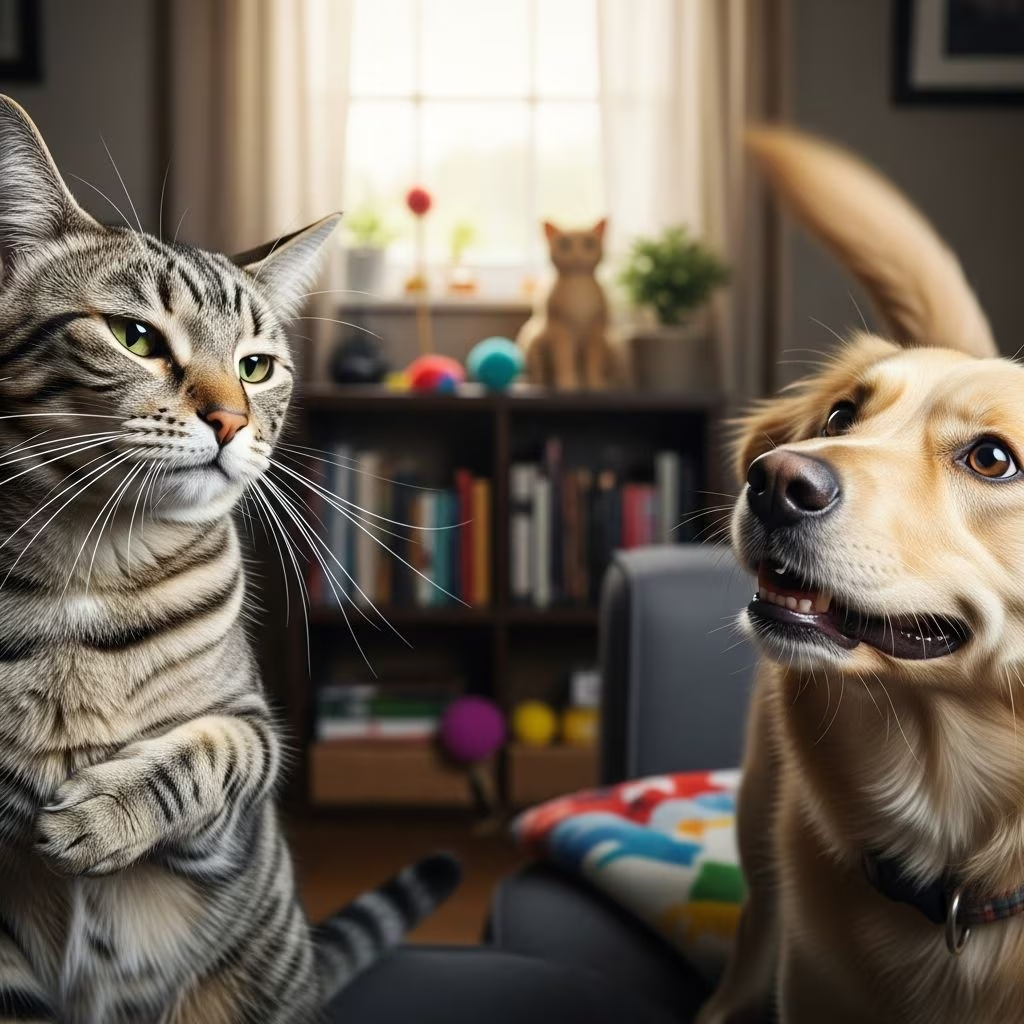
Cats often appear sassier than dogs due to their independent nature, subtle communication styles, and evolutionary history as solitary hunters, contrasting with dogs’ pack-oriented loyalty and overt expressiveness.
This perceived sassiness stems from cats’ self-reliant behaviors, selective affection, and nuanced body language that can seem aloof or judgmental to humans accustomed to dogs’ enthusiastic companionship.
What Does ‘Sassy’ Mean for Cats?
In pet terms, ‘sassy’ describes cats’ confident, independent, sometimes aloof demeanor—think the slow blink of disdain, the swishing tail of mild annoyance, or walking away mid-pet. Dogs, by contrast, rarely exhibit this; they bound over eagerly, tails wagging furiously, embodying unwavering eagerness.
Cats’ sass reflects their evolutionary roots as solitary predators, prioritizing autonomy over constant social bonding, unlike dogs domesticated from pack wolves for human partnership.
Evolutionary Roots: Solitary Hunters vs. Pack Animals
Cats descended from African wildcats, lone hunters who thrived independently, leading to modern cats’ preference for solitude and self-entertainment. Dogs evolved from wolves in social packs, fostering loyalty, cooperation, and dependence on group dynamics.
- Cats assess situations cautiously before engaging, warming up slowly to humans or other animals.
- Dogs flourish in social settings, quickly forming bonds and seeking interaction.
- This solitude in cats translates to ‘sass’—they dictate terms of affection, ignoring summons if uninterested.
Research shows cat owners perceive lower relationship costs with cats, involving less responsibility and restrictions compared to dogs, reinforcing cats’ low-maintenance allure.
Independence: Cats Do It Alone, Dogs Need Their Pack
Cats embody independence, entertaining themselves with solo play like chasing toys or climbing, thriving without constant attention. They adapt to small spaces, needing no walks, just bursts of activity.
Dogs crave companionship, requiring daily walks, play, and emotional support to avoid distress. This contrast makes cats seem sassier—they saunter off unbothered, while dogs pine at the door.
| Trait | Dogs | Cats |
|---|---|---|
| Attention Needs | High – daily interaction essential | Low – self-reliant, affection on their terms |
| Exercise | Structured walks and play | Indoor bursts, climbing |
| Social Structure | Pack-oriented, loyal | Solitary, autonomous |
Body Language Breakdown: Tail Wags and Slow Blinks
Dogs’ body language is overt: tail wags signal joy, open mouths show playfulness. Cats invert this—a swishing or wagging tail indicates irritation, potentially leading to scratches.
Cats communicate subtly: slow blinks convey trust, ear twitches show mood shifts, purring signals contentment or solicitation. Misreading these can amplify perceptions of sass, as cats ‘judge’ from afar.
- Dogs: Wagging tail = happy; flattened ears = fear/submission.
- Cats: Twitching tail = agitated; slow blink = affection/trust.
- Dogs chase playfully; cats flee, escalating misunderstandings.
Affection on Their Terms: Selective Cuddlers
Cats offer affection subtly—rubbing legs, purring nearby—but retreat when done, seeming dismissive. Dogs provide unconditional snuggles, following owners devotedly.
Owners report greater emotional closeness with dogs for companionship, but cats score higher for low-cost interactions like brief stroking sessions. This selectivity fuels the sassy stereotype.
Play Styles: Zoomies vs. Fetch
Cats play in nocturnal bursts, pouncing imaginatively on toys or shadows, ignoring off-schedule invitations. Dogs engage anytime in structured games like fetch, herding, or walks.
Cats’ ‘zoomies’ at night mimic hunting, independent and chaotic; dogs’ play reinforces bonds. Cats’ refusal to play on command underscores their autonomy.
Care and Maintenance: Low-Effort Felines vs. High-Commitment Canines
Cats self-groom meticulously, bury waste fastidiously, and suit apartments—no walks needed. Dogs demand grooming, training, exercise, and space, circling back to cats’ seemingly superior, sassy efficiency.
| Factor | Dogs | Cats |
|---|---|---|
| Grooming | Regular baths/brushing | Self-grooming |
| Space | Larger areas/outdoors | Small spaces fine |
| Training | Consistent effort | Selective response |
Intelligence Showdown: Practical Hunters vs. Emotional Companions
Cats excel in practical intelligence—hunting prowess, problem-solving alone. Dogs shine in emotional intelligence, reading human cues adeptly.
Cats’ sly navigation of environments (knocking vases ‘playfully’) seems mischievous; dogs’ overt learning appears earnest.
Why the Sass Perception Persists
Sassiness is anthropomorphic—cats’ independence reads as attitude to dog-loving humans expecting fawning loyalty. Both enrich lives differently: cats offer quiet companionship, dogs exuberant partnership.
Frequently Asked Questions (FAQs)
Why do cats seem sassier than dogs?
Cats’ independence, subtle body language, and selective affection create a sassy aura, unlike dogs’ overt enthusiasm.
Are cats truly more independent?
Yes, evolved as solitary hunters, cats thrive alone, needing less attention than pack dogs.
How do cats and dogs communicate differently?
Dogs use broad gestures like tail wags for joy; cats employ nuanced signals like tail twitches for annoyance.
Do cats form bonds like dogs?
Cats bond subtly via rubbing and purring but on their terms, with lower perceived ownership costs.
Which needs more exercise?
Dogs require daily structured activity; cats suffice with indoor play bursts.
References
- Mythbusting: Cat and Dog Behavior — AvoDerm Natural. 2023. https://avodermnatural.com/blog/mythbusting-cat-dog-behavior/
- The Dog and Cat Differences Guide — All About Pets Provo. 2024. https://www.allaboutpetsprovo.com/cats-vs-dogs.html
- Cats vs. Dogs: Behavior, Intelligence, and Care Comparison — Kinship. 2024. https://www.kinship.com/pet-behavior/cats-vs-dogs
- What are the differences between dog and cat behavior patterns? — One WooF Daycare. 2023. https://onewoofdaycare.com/blog/differences-between-dog-cat-behavior/
- Pet–Human Relationships: Dogs versus Cats — PMC – NIH. 2021-09-29. https://pmc.ncbi.nlm.nih.gov/articles/PMC8470704/



