

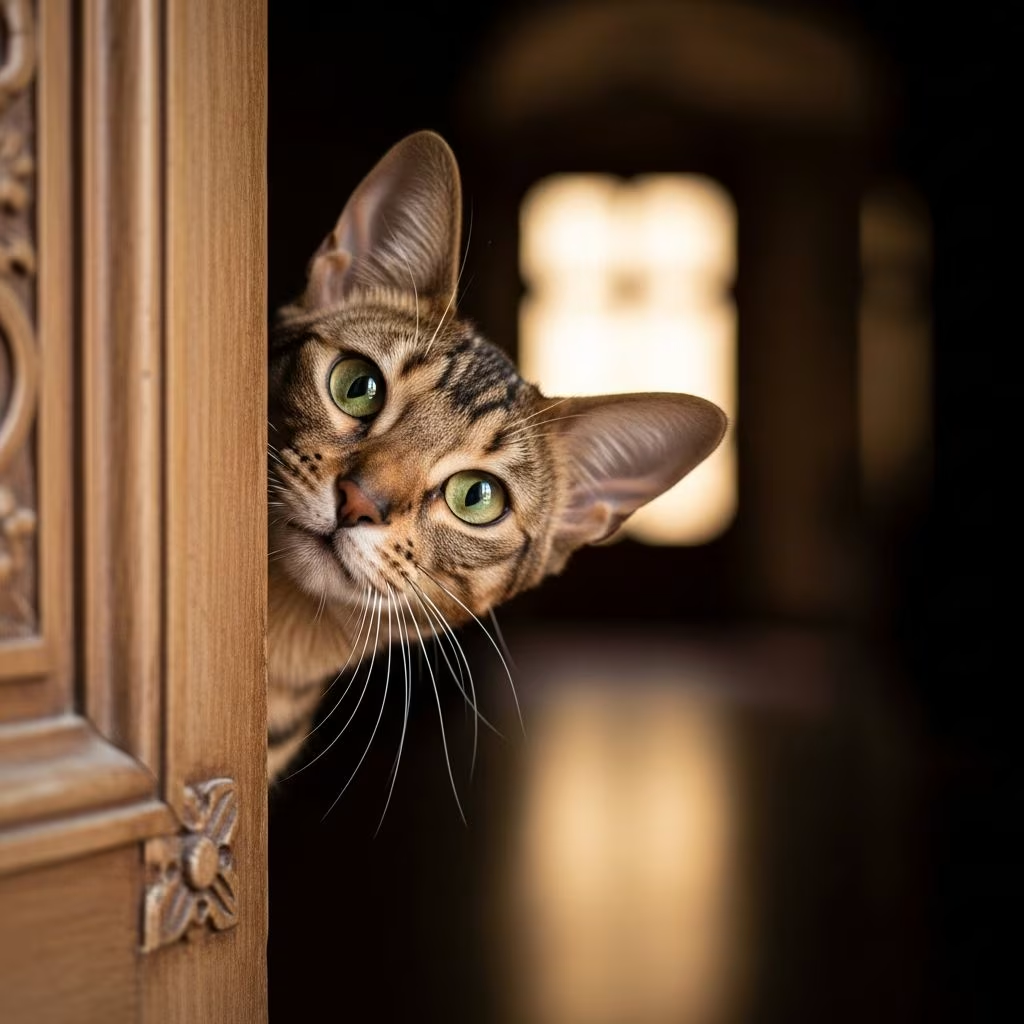
Cats have long captivated humans with their inquisitive nature, poking their noses into every nook and cranny, batting at unfamiliar objects, and staring intently at the world around them. This boundless curiosity is not mere whimsy but a deeply rooted trait essential to their survival and well-being. Understanding why cats are so curious reveals much about their evolutionary history, sensory capabilities, and cognitive prowess. In this comprehensive guide, we delve into the scientific reasons behind feline curiosity, drawing from expert analyses and studies on cat behavior.
The Evolutionary Roots of Cat Curiosity
At the heart of a cat’s curiosity lies their ancestry as both predators and prey in the wild. Domestic cats descend from feral felines like the African wildcat, which relied on constant vigilance to hunt successfully and evade threats. Mikel Delgado, Ph.D., a certified cat behavior expert, explains that cats are mesopredators—middle-tier hunters in the food chain—who must perpetually scan their environment for opportunities and dangers. This dual role demands an innate drive to investigate, ensuring they never miss a meal or overlook a predator.
Curiosity manifests as a survival tool: a rustling bush might hide prey or peril, so the cat approaches cautiously, using all senses to assess. In modern homes, this translates to behaviors like knocking items off counters or squeezing into tight spaces—echoes of ancestral exploration. Studies confirm that this prey drive persists, with cats chattering at birds or laser pointers, expressing excitement mixed with frustration at unreachable targets.
Superior Senses Fuel Feline Fascination
Cats perceive the world far more vividly than humans, amplifying their curiosity. Their inner ears detect subtle air pressure changes, alerting them to storms long before we notice. With 40 times more olfactory receptors in their noses and six to eight times more rod cells in their eyes for low-light vision, cats live in a sensory-rich universe brimming with stimuli. A faint scent trail, a distant flicker, or an ultrasonic sound compels investigation—what seems mundane to us is a symphony of intrigue to them.
This heightened perception ties directly to curiosity. For instance, perching in high places offers a bird’s-eye view for spotting prey while providing predator protection. Breeds like Persians may prefer ground level, but most cats seek elevated vantage points to survey and explore. Such adaptations ensure curiosity is not random but purposeful, honing skills passed down through generations.
Intelligence and the Curious Mind
Curiosity and intelligence are inextricably linked in cats. As researcher Stephen Grand, Ph.D., noted, lively minds are inherently curious, leading felines into scrapes like tree climbs or trash can dives—not from folly, but from a drive to learn. Cats’ problem-solving abilities shine in puzzles, where they manipulate objects to access treats, demonstrating cognitive flexibility.
Evidence from behavioral studies supports this: indoor cats often display more object interaction than outdoor ones, possibly compensating for less stimulating environments. Owners rate indoor cats as more curious, suggesting environment shapes expression of innate smarts. Cats’ ability to recognize owners’ names via photos and voices further underscores their sharp, curious intellect.
Kittenhood: The Peak of Curiosity
Curiosity peaks during kittenhood, a critical learning phase from two to nine weeks, when felines form lifelong associations. Kittens tentatively watch, approach, sniff, and taste novel items to deem them safe or threatening. This sensitive period shapes adult behavior; post-nine weeks, new experiences may elicit wariness rather than bold exploration.
Adult cats retain curiosity but temper it with caution, especially toward unfamiliar stimuli. Playful ‘zoomies’ or box-sitting mimic kittenish discovery, keeping their minds agile. Secure attachment studies show cats exhibit calm, exploratory behaviors around trusted humans, akin to dogs.
Curiosity Beyond Hunger: The Eternal Search
Countertop raids post-mealtime puzzle owners, but cats forage instinctively, not just from hunger. International Cat Care notes this scavenging mirrors wild hunting patterns, where food opportunities are sporadic. Even sated, a novel smell or sight triggers investigation, blending survival with play.
This drive keeps cats alert, ready to pounce or flee. In new environments, bold cats probe for resources—food, water, litter—while timid ones scout hiding spots.
Bonding Through Exploration
Curiosity fosters human-cat bonds. Researcher R.A. Butler posited that in satiated modern settings, curiosity stems from social needs like love and belonging. Cats head-butt, bring ‘gifts’ like half-dead mice, or mirror owners’ emotions—becoming more curious with enthusiasm, cautious with negativity.
A 2015 study revealed cats look to owners for cues, mimicking emotions 79% of the time, enhancing emotional transmission. Temporal behavior patterns vary by personality, sex, age, and cohabitation, deepening companionship.
Common Ways Cats Express Curiosity
- Zoomies: Sudden sprints signal excitement and environmental assessment.
- Box Sitting: Confined spaces offer security for observation.
- Chattering: Teeth-clacking at prey vents frustration and mimics killing bite.
- High Perches: Elevated spots for surveillance.
- Head-Butting: Scent-marking to claim and explore social bonds.
Is Feline Curiosity Always Positive?
While beneficial, unchecked curiosity leads to mishaps—stuck in walls or quilled by hedgehogs. A Sussex study found cats prefer predictable toys, looking longer when expectations match, suggesting curiosity has limits; they avoid unnecessary risks. Indoor curiosity may spike due to boredom, warranting enrichment.
How to Safely Channel Your Cat’s Curiosity
Harness this trait for welfare:
- Provide puzzle feeders and interactive toys to satisfy hunting instincts.
- Offer vertical spaces like cat trees for perching.
- Rotate toys to mimic novelty.
- Secure hazards: close cabinets, hide cords.
- Enrich indoors with scratching posts, tunnels, window perches.
| Curiosity Trigger | Safe Outlet | Benefits |
|---|---|---|
| Prey Drive | Wand toys, lasers | Exercise, mental stimulation |
| Exploration | Cardboard boxes, tunnels | Stress relief, security |
| Social Bonding | Play sessions with owner | Stronger attachment |
Frequently Asked Questions (FAQs)
What makes cats more curious than dogs?
Cats’ solitary wild ancestry emphasizes independent exploration, unlike pack-oriented dogs.
Do all cats stay curious as they age?
Yes, but older cats may be more selective, prioritizing familiar stimuli.
Can indoor cats be as curious as outdoor ones?
Often more so, compensating for limited stimuli with object interaction.
Why do cats knock things over?
To test stability, sounds, or movements—pawing mimics hunting.
Is curiosity a sign of intelligence?
Directly linked; curious cats learn faster through investigation.
References
- 8 Reasons Cats Are Curious & How They Show It — Rover.com. 2023-05-15. https://www.rover.com/blog/why-are-cats-so-curious/
- Cats and Science: Three Studies to Explain Their Behaviour — Oasy. 2022-11-10. https://www.oasy.com/en/pet-news/useful-tips/studies-to-understand-cats-behaviour
- Curious Cat Behaviors Explained — Wisdom Panel. 2024-03-20. https://www.wisdompanel.com/en-us/blog/curious-cat-behaviors-explained
- The Link Between Cats, Your Brain and Your Behaviour — Australian Academy of Science (Curious). 2023-08-05. https://www.science.org.au/curious/people-medicine/link-between-cats-your-brain-and-your-behaviour
- Unanswered Questions and Hypotheses about Domestic Cat (Felis silvestris catus) Maternal Style — PMC (NIH). 2021-10-15. https://pmc.ncbi.nlm.nih.gov/articles/PMC8532687/
- 8 (Very Very Cute) Facts About Cats, According to Science — BBC Science Focus. 2023-09-12. https://www.sciencefocus.com/nature/cat-facts-science
- Not So Curious After All: New Study Finds Cats Prefer Predictability — University of Sussex. 2022-06-22. https://www.sussex.ac.uk/broadcast/read/68547



