

Why Are Cats Scared of Cucumbers: Understanding Your Feline’s Fear Response
The internet is filled with entertaining videos of cats jumping, running, or seemingly overreacting to cucumbers. These viral clips have spawned countless memes and inspired pet owners worldwide to test the phenomenon on their own feline companions. However, what appears to be harmless entertainment can actually cause serious psychological harm to your cat. Understanding the science behind why cats react so dramatically to cucumbers is essential for any responsible pet owner who wants to maintain their cat’s emotional well-being and trust.
The Cucumber Prank: How It Started
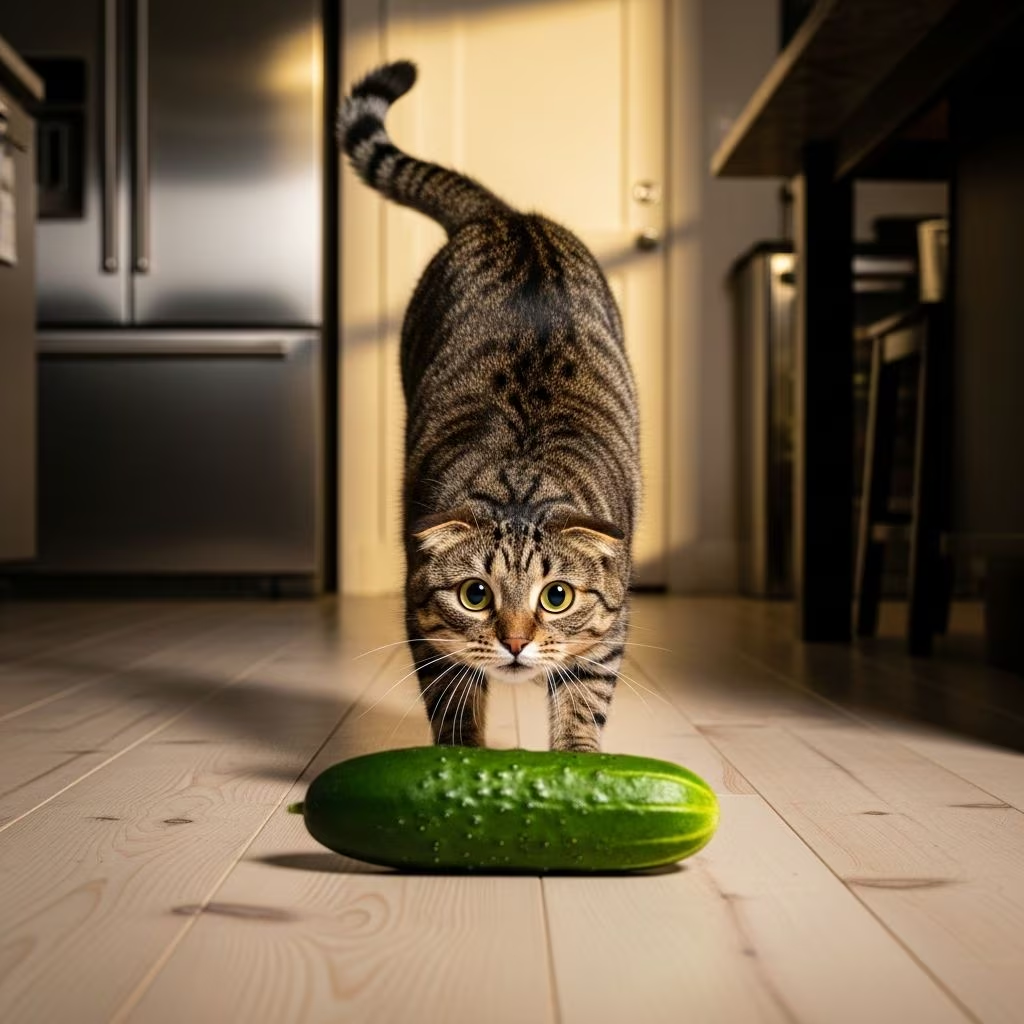
The cucumber prank typically follows a predictable pattern that has been repeated thousands of times across social media platforms. A pet owner quietly places a cucumber behind their unsuspecting cat while the animal is focused on eating from their food bowl or engaged in another activity. When the cat finally turns around and notices the unexpected green object, the reaction is often dramatic and immediate. The cat may jump vertically into the air with an arched back, fur standing on end, and sometimes flee from the area at high speed.
While these videos are amusing to viewers, they represent a moment of genuine fear and distress for the cat. The prank exploits a cat’s natural vulnerabilities during moments when they are most relaxed and unprepared to respond to threats. Understanding what triggers such extreme reactions requires examining the deeper aspects of feline psychology and evolutionary instincts.
Why Cats React to Cucumbers: The Science Behind the Startle
The Element of Surprise
The primary reason cats react so dramatically to cucumbers isn’t necessarily because they are afraid of the vegetable itself, but rather because of the unexpected manner in which it appears. Cat behavior specialists emphasize that cats are naturally cautious animals that prefer predictability in their environment. When placed suddenly in their immediate vicinity without warning, virtually any unusual object could trigger a similar response. The cucumber prank is particularly effective because cats are deliberately placed behind them while their guard is down, typically during feeding time when their senses are less alert.
Cats are creatures of habit who thrive on routine and control over their environment. The sudden introduction of an unfamiliar object violates their sense of security and triggers an immediate defense mechanism. This startle response is a primal survival instinct, similar to how humans might jump when startled by an unexpected sound or movement.
The Snake Theory
One widely discussed theory is that cats mistake cucumbers for snakes, which are natural predators that could pose a genuine threat in the wild. The long, slender, green shape of a cucumber bears some resemblance to a snake, and cats possess an evolutionary instinct to fear reptilian predators. This theory suggests that even domesticated cats retain ancestral memories of danger from their primitive ancestors, who may have encountered venomous snakes. While this explanation seems plausible on the surface, not all experts agree that snake resemblance is the primary factor. Research suggests that cats’ reactions would be similar regardless of whether the object looked like a snake, as long as it appeared suddenly in their space.
Predatory and Prey Instincts
Cats occupy a unique position in the animal kingdom—they are predators, but they are also prey. Domestication has not completely erased the deep-seated instinct to remain vigilant for potential threats. Even indoor cats retain behavioral patterns and fear responses that would have been essential for survival in the wild. A cat’s nervous system is finely tuned to detect rapid movements, unusual objects, and unexpected changes in their environment. When a cucumber suddenly appears, it triggers the cat’s threat-detection system, activating their fight-or-flight response.
This hypervigilance is actually a survival adaptation that has served cats well for thousands of years. However, in the context of the modern home where there are no genuine predatory threats, this heightened reactivity can work against cats, causing unnecessary stress and anxiety.
Understanding Cat Stress Responses
Physical Signs of Fear
When a cat experiences the cucumber prank, their body language tells the story of genuine fear and distress. The classic defensive posture includes an arched back, puffed-up fur designed to make the cat appear larger and more intimidating, dilated pupils, and rapid movements away from the perceived threat. These are not signs of playfulness or curiosity—they are authentic fear responses that indicate the cat believes they are in danger. A cat’s body prepares for flight from a predator, redirecting energy away from digestion and other normal functions toward escape.
The Stress Response System
When startled by a cucumber, a cat’s nervous system activates a cascade of physiological responses. Their amygdala, the brain region responsible for processing fear and emotion, becomes activated. Stress hormones such as adrenaline and cortisol flood the cat’s system, preparing their body to either fight or flee from the perceived threat. This response is identical to how a cat would react if they genuinely encountered a dangerous predator, except in the case of the cucumber prank, the threat is completely fabricated.
Why This Prank Can Harm Your Cat
Psychological Trauma and Lasting Effects
Veterinary behaviorists warn that repeated exposure to sudden startle events can create lasting psychological damage in cats. If a single exposure to the cucumber prank is intense enough, the cat’s brain forms a lasting memory of fear associated with the specific context in which the incident occurred. A cat may subsequently become anxious when approaching their food bowl, in the kitchen, or in any location where a previous cucumber encounter happened. This psychological conditioning can persist long after the initial incident, affecting the cat’s quality of life and their relationship with their owner.
Beyond the immediate startle, cats can develop generalized anxiety about their feeding areas or other parts of the home. This conditioning can be particularly damaging because cats rely on their food bowl as a place of safety and sustenance. If a cat becomes anxious about eating in that location, they may lose their appetite, which can lead to serious health consequences.
Loss of Trust and Environmental Security
One of the most significant consequences of playing the cucumber prank is the erosion of trust between you and your cat. Cats form attachments to their owners based on the expectation that their home environment is safe and predictable. When an owner deliberately creates a frightening situation, it disrupts this fundamental sense of security. A cat may begin to view their owner as a source of potential threat rather than comfort and protection. This damaged relationship can take considerable time and effort to rebuild, and the cat may never fully regain the same level of trust.
Behavioral Problems and Health Issues
Prolonged stress from repeated startle incidents can trigger a range of behavioral and health problems in cats. Cats experiencing anxiety may exhibit aggressive behavior, become overly clingy, or conversely, hide and avoid contact entirely. Some cats develop inappropriate litter box habits as a stress response. Additionally, cats under chronic stress may engage in compulsive grooming behaviors that result in hair loss, a condition called psychogenic alopecia. More alarmingly, cats who lose their appetite due to stress can develop hepatic lipidosis, or fatty liver disease, which is a potentially life-threatening condition that requires immediate veterinary intervention.
Alternatives to the Cucumber Prank
Enrichment Activities
Instead of subjecting your cat to unnecessary stress, consider implementing positive enrichment activities that enhance your cat’s mental stimulation and physical well-being. Interactive play sessions with feather wands, laser pointers, or ball toys provide healthy outlets for your cat’s predatory instincts. These activities strengthen your bond while keeping your cat mentally and physically active.
Environmental Modifications
Create an enriched environment with vertical spaces such as cat trees and shelves where your cat can climb and survey their territory. Provide puzzle feeders and food-dispensing toys that engage your cat’s problem-solving abilities. These modifications satisfy your cat’s natural instincts without causing stress or fear.
Training and Positive Reinforcement
If you want to entertain yourself with your cat, focus on training exercises that use positive reinforcement. Many cats can learn to sit, come when called, or perform tricks using treats and praise. These activities create positive associations with you and build confidence rather than eroding it.
Recognizing Stress in Your Cat
Behavioral Changes to Watch For
After a startling event like the cucumber prank, monitor your cat for signs of ongoing stress. Changes in eating habits, increased vocalization, aggression toward family members or other pets, or withdrawal from social interaction may indicate that your cat is experiencing anxiety. Some cats may become clingy and demand constant attention, while others may hide for extended periods. These behavioral shifts are your cat’s way of communicating that they are distressed.
When to Consult a Veterinarian
If you notice persistent behavioral changes in your cat following a startling event, consult your veterinarian. A veterinary behaviorist can assess your cat’s stress levels and recommend appropriate interventions. In some cases, cats may benefit from anti-anxiety medication or behavioral therapy to recover from traumatic experiences. Early intervention can prevent minor stress from developing into chronic anxiety disorders.
The Importance of Building Cat Trust
Your cat’s trust is built gradually through consistent, predictable, and positive interactions. Unlike dogs, cats are less forgiving of violations of their sense of control and autonomy. A single frightening experience orchestrated by their owner can undermine months or years of relationship building. The temporary entertainment value of a viral prank is never worth the potential damage to your cat’s psychological well-being and your relationship with them.
By respecting your cat’s need for predictability and safety, you create an environment where your cat can thrive emotionally and physically. Cats who feel secure in their homes exhibit fewer behavioral problems, maintain better health, and provide more affectionate companionship to their owners.
Frequently Asked Questions About Cats and Cucumbers
Q: Why do cats react so dramatically to cucumbers?
A: Cats react dramatically to cucumbers primarily because of the sudden, unexpected appearance of an unusual object while their guard is down. The startle response is a natural survival instinct, possibly combined with the cucumber’s snake-like appearance. However, the sudden appearance element is the primary trigger, not the cucumber itself.
Q: Can the cucumber prank cause lasting damage to my cat?
A: Yes, repeated or even single intense startle events can cause lasting psychological damage. Cats may develop anxiety in the location where the incident occurred, lose appetite, exhibit behavioral problems, or experience a loss of trust in their owner. In severe cases, this can lead to health issues like fatty liver disease.
Q: Is the cucumber prank considered animal abuse?
A: While the cucumber prank may not be technically classified as abuse in all jurisdictions, animal behaviorists and veterinarians agree that deliberately frightening your pet for entertainment purposes is harmful and unethical. It causes genuine psychological distress to the animal.
Q: What should I do if I’ve already pranked my cat with a cucumber?
A: If you’ve already done this, avoid repeating the behavior. Monitor your cat for signs of stress or behavioral changes. Engage in positive interactions, maintain a consistent routine, and provide extra reassurance. If your cat shows signs of persistent anxiety, consult with a veterinary behaviorist.
Q: Are all cats equally afraid of cucumbers?
A: No, not all cats react the same way. Some cats may barely notice a cucumber, while others show dramatic fear responses. Individual cats have different temperaments and sensitivities. Some cats may have experienced previous startling events that make them more reactive, while others have naturally calmer dispositions.
Q: Why do cats prefer routine and predictability?
A: Cats are solitary animals who rely on understanding and controlling their environment for survival. Predictability allows them to feel secure and manage their stress levels. Changes and surprises that violate their expectations create anxiety and activate their threat-response systems.
Conclusion: Prioritizing Your Cat’s Well-Being
While the cucumber prank videos may provide momentary entertainment, the evidence is clear that this trend carries significant risks to your cat’s emotional and physical health. Cats are sensitive, intelligent animals who deserve to feel safe and secure in their own homes. The trust you build with your cat through consistent, predictable, and positive interactions is far more valuable than any viral video moment.
Instead of pranks that exploit your cat’s natural vulnerabilities, invest your time and energy into activities that enrich your cat’s life and strengthen your bond. Play interactive games, provide environmental enrichment, and maintain a stable, predictable routine. Your cat will reward you with better behavior, improved health, and a deeper, more meaningful relationship. Remember that your role as a pet owner is to protect and care for your cat, not to test the limits of their emotional resilience for entertainment purposes.
References
- Why Are Cats Scared of Cucumbers and Why You Shouldn’t Prank Your Pet — Business Insider. Accessed 2025. https://www.businessinsider.com/reference/why-are-cats-scared-of-cucumbers
- That’s Why Cats Are Afraid of Cucumbers — YouTube. Accessed 2025. https://www.youtube.com/watch?v=jQdBsRWy2WQ
- Why are cats scared of cucumbers? — BBC Science Focus Magazine. Accessed 2025. https://www.sciencefocus.com/nature/why-are-cats-scared-of-cucumbers
- Are cats really afraid of cucumbers? We asked the experts — Popular Science. Accessed 2025. https://www.popsci.com/environment/are-cats-really-afraid-of-cucumbers-experts/
- Why Are Cats So Insanely Afraid Of Cucumbers? — IFLScience. Accessed 2025. https://www.iflscience.com/cats-are-completely-terrified-cucumbers-why-32030
- Cats Scared By Cucumbers: Knowing the Facts Behind the Viral Prank — BehaviorDoctor. Accessed 2025. https://behaviordogtor.com
- Why Are Cats Scared of Cucumbers: The Mystery Solved — Purina UK. Accessed 2025. https://www.purina.co.uk/articles/cats/behaviour/common-questions/why-are-cats-scared-of-cucumbers



