

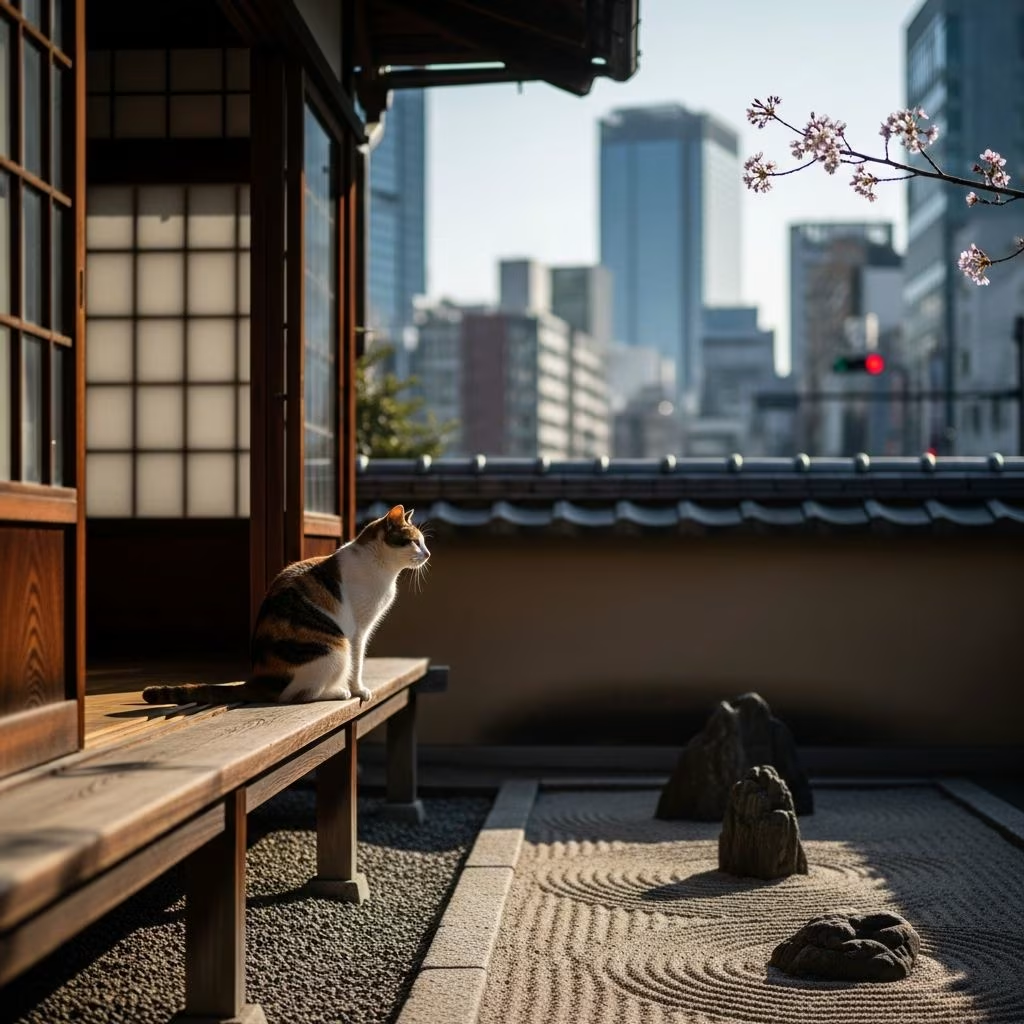
In Japan, cats have edged out dogs as the preferred pet, driven by cultural history, practical lifestyle factors, and demographic changes. While global trends often favor dogs, Japan’s unique urban environment and folklore elevate felines.
Japanese Cat Lore
Japan’s relationship with cats is deeply woven into its history and folklore, evolving from reverence to supernatural intrigue. Cats first appeared in historical records around 889 C.E., when Emperor Uda expressed his fondness for them in a poem, noting their role as treasured gifts among nobility.
By the 12th century, cats had proliferated across Japan, inspiring folklore. The earliest supernatural feline was the nekomata, depicted as a massive, two-tailed creature that devoured humans—likely inspired by tiger myths. These tales faded, but during the Edo period (1603–1868), a cultural renaissance brought cats back into the spotlight.
The Edo era saw booming arts like kabuki theater, ukiyo-e prints, and widespread printing presses, fueling public fascination with yokai (supernatural beings). This birthed the bakeneko, a cat that gained magical powers after reaching old age or tail length. Bakeneko could shapeshift into humans, walk on hind legs, control fire, and summon spirits. Stories varied: some portrayed them as vengeful killers who impersonated owners, while others showed mischievous revelers enjoying nocturnal parties with gambling and sake.
Even darker was the kasha, a fiery demon cat obsessed with stealing corpses from funerals. Possessing necromancy, it reanimated the dead as puppets. This legend persists; traditionally, cats are excluded from Japanese wakes to ward off the kasha.
Japan’s feline folklore includes benevolent figures too, like the maneki-neko (beckoning cat), a symbol of good fortune with its paw raised to invite prosperity. Temples like Gotokuji in Tokyo honor this icon, covered in thousands of maneki-neko statues. Overall, cats embody duality—protective yet perilous—shaping a complex cultural affinity.
Pet Ownership Trends: Cats Overtake Dogs
Modern statistics reveal cats surpassing dogs in Japan. The Japan Pet Food Association’s 2017 survey reported 9.53 million pet cats, up 217,000 year-over-year, versus 8.92 million dogs, down 436,000. Cats have stabilized around 9 million, while dog numbers continue declining.
Recent surveys show nuance: a 2024 Rakuten Insight poll found dogs at 51% and cats at 41% of pet-owning households, but cats are closing the gap amid stray adoptions. Stray cats abound in urban areas, making acquisition effortless—simply rescue one—while dogs require breeders or stores.
Compare this to the U.S., where 70% of pet-owning households have dogs (69 million) versus 45.3 million with cats. Japan’s inversion stems from lifestyle fit.
| Most Popular Dogs in Japan (Japan Pet Food Association) | Most Popular Cats in Japan |
|---|---|
| 1. Mixed breed (13.2%) | 1. Mixed breed (77.7%) |
| 2. Miniature dachshund (13.0%) | 2. American Shorthair (4.0%) |
| 3. Chihuahua (12.8%) | 3. Scottish Fold (3.0%) |
| 4. Toy Poodle (11.7%) | 4. Munchkin (1.6%) |
| 5. Shiba Inu (10.1%) | 5. Russian Blue (1.5%) |
Dog preferences skew tiny (under 5kg), like Chihuahuas, suiting minimal exercise. Large breeds like Labradors are rare (<5%). Cats, mostly mixes, dominate without such constraints.
Why Are Cats So Popular in Japan?
Several factors explain cats’ rise, blending practicality, demographics, and culture.
Low Maintenance: No Daily Walks
Cats’ independence trumps dogs’ demands. Cats self-toilet via litter boxes and don’t require walks, ideal for Japan’s busy urbanites. Rising dual-income households, singles, and low birth rates limit time for high-maintenance pets.
Surveys highlight generational gaps: 40%+ of 70s dog owners walk daily, versus <20% of 20s/30s owners; 30% of young owners walk <3 times weekly. Elderly owners average 30+ minute walks (59.5%), but 65% of 20s owners do <30 minutes, risking inadequate exercise.
Younger Japanese prioritize convenience, favoring cats or mini-dogs over active breeds.
Abundance of Stray Cats
Japan’s stray cat population simplifies ownership—no purchase needed. Urban strays are adoptable on sight, unlike dogs routed through costly channels. This accessibility boosts cat numbers amid stray control challenges.
Aging Population and Declining Birth Rates
Japan’s demographics favor cats: over-65s outnumber youth, with fertility at 1.3 births/woman. Elderly prefer low-effort pets; cats suit mobility-limited seniors without walk demands.
Urban apartments (average 60sqm) restrict large dogs, amplifying cats’ appeal in space-constrained cities like Tokyo.
Cultural and Kawaii Influence
Cats tap Japan’s kawaii (cuteness) culture. Maneki-neko and anime cats (e.g., Chi’s Sweet Home) romanticize felines. Pet fashion, cafes, and wellness services thrive, mirroring dog trends but with less commitment.
Challenges and Future Trends
Despite popularity, issues persist: stray overpopulation strains municipalities; many cats remain unneutered. Dog ownership declines, but mini-breeds hold steady. As urbanization grows and birth rates fall, cats may solidify dominance.
Pet market booms: cat food/supplies rival dogs’. Cafes like Calico Cat Cafe draw tourists, embedding cats in pop culture.
Final Thoughts
From Emperor Uda’s joy to bakeneko haunts, cats’ journey in Japan culminates in modern supremacy. Easier care, stray ease, and demographic shifts ensure felines reign. Watch for evolving trends as lifestyles adapt.
Frequently Asked Questions (FAQs)
What is the history of cats in Japanese folklore?
Cats entered records in 889 C.E. via Emperor Uda. Edo-period yokai like bakeneko (shapeshifters) and kasha (corpse-stealers) mix fear and fascination, alongside lucky maneki-neko.
Do more Japanese own cats or dogs?
Yes, per 2017 data: 9.53M cats vs. 8.92M dogs. Recent polls show dogs slightly ahead (51% vs. 41%), but cats gain via strays.
Why don’t Japanese walk dogs as much?
Young owners (20s/30s) cite time shortages: <20% walk daily, many <30 mins. Elderly prioritize more.
Are stray cats common in Japan?
Yes, facilitating easy adoptions. Strays boost cat ownership versus purchased dogs.
How does Japan’s aging population affect pet choices?
Seniors favor low-maintenance cats over exercise-needing dogs.
References
- Why Are Cats More Popular Pets in Japan Than Dogs? — Catster. 2023 (approx., based on content). https://www.catster.com/lifestyle/why-are-cats-more-popular-pets-in-japan-than-dogs/
- Busy Japanese Pet Owners Turn Away from High-Maintenance Dogs — Nippon.com. 2018-12-20. https://www.nippon.com/en/features/h00311/
- Most Popular Pets in Japan 2025 — Statista. 2024. https://www.statista.com/statistics/941746/japan-pet-ownership-distribution-by-species/



