

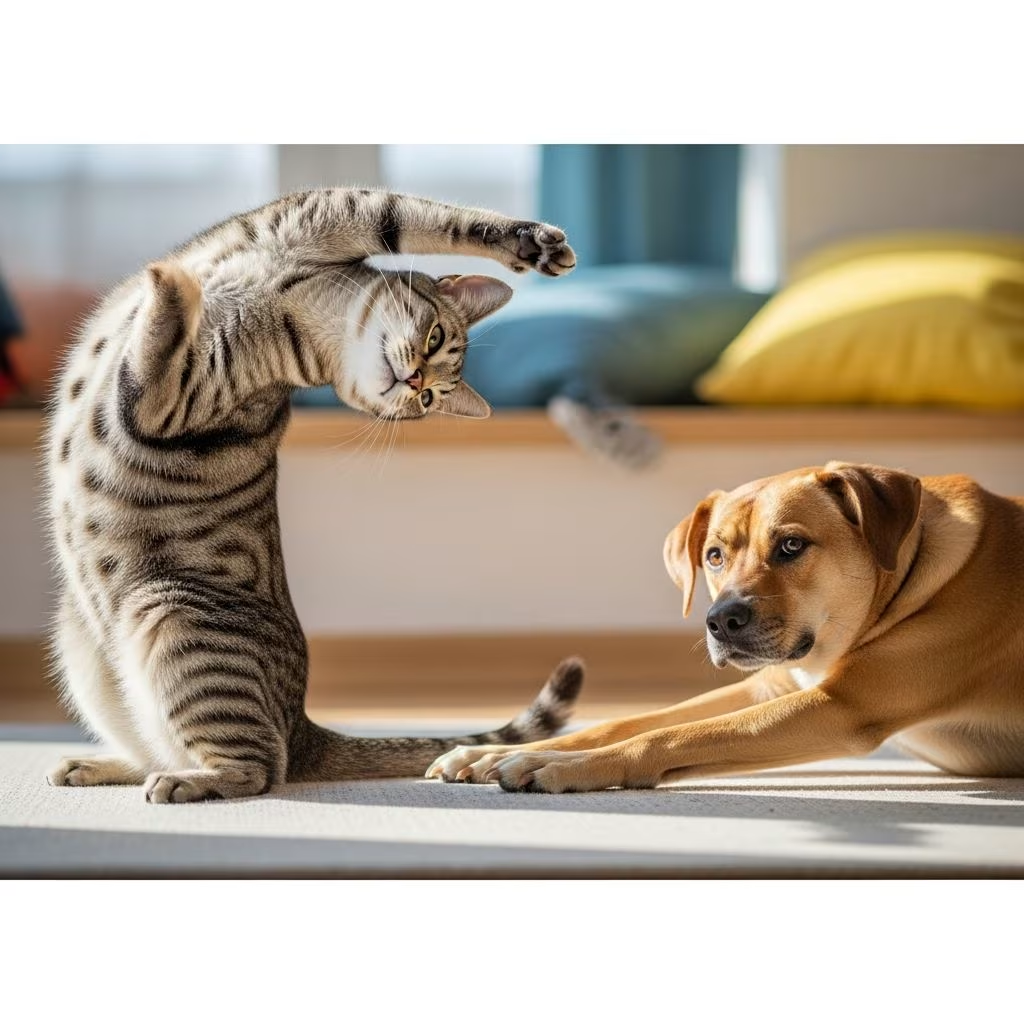
by Sarah Wooten, DVM
Cats and dogs showcase remarkable athletic differences rooted in their evolutionary adaptations for hunting. Cats possess superior flexibility due to their highly elastic spines, loosely attached pelvis and shoulders, and free-floating collarbones, enabling explosive movements and mid-air twists. Dogs, in contrast, have more rigid structures optimized for endurance running, supported by features like the nuchal ligament.
How Cats Are So Flexible
Cats evolved as solitary hunters relying on stealth, sudden bursts of power, and exceptional flexibility rather than pack pursuits or exhausting chases. This anatomy allows a cat to leap up to nine times its height from a crouch and execute rapid directional changes or spinal twists mid-fall to land on all fours—a phenomenon known as the righting reflex.
The core of a cat’s flexibility lies in its spine. Cats have 230-250 bones, more than dogs, with smaller, interlocking vertebrae providing greater range of motion. The intervertebral discs exhibit increased elasticity compared to dogs, reducing back problems and allowing extreme bending. A cat’s vertebrae are less tightly connected, and their pelvis and shoulders attach more loosely to the backbone, enhancing overall agility.
Additional factors include free-floating collarbones not rigidly attached to the sternum or shoulder blades, permitting independent front leg movement. Cats also boast specialized muscle fibers optimized for quick, agile contractions, ideal for pouncing and squeezing into tight spaces during hunts.
- Spinal elasticity: More flexible discs and looser vertebral connections prevent the rigidity seen in dogs.
- Shoulder and pelvis freedom: Looser attachments allow wider ranges of motion.
- Collarbone structure: Free-floating for independent limb action.
- Muscle arrangement: Dense fibers for explosive power.
This combination makes cats nimble predators, capable of sharp turns and high jumps that dogs cannot match.
A Big Physical Difference
Dogs’ anatomy prioritizes endurance over flexibility, reflecting their pack-hunting history where they tracked prey over long distances using scent. A key adaptation is the nuchal ligament, a fibrous band connecting the head to the spine, similar to that in horses and humans. This ligament stabilizes the head during extended runs, conserving muscle energy by maintaining a ‘nose-to-the-ground’ posture without constant muscular support.
Dogs evolved longer legs, extended noses, and necks to follow scent trails for miles. While they lost dexterity in front limbs and solo prey-taking strength, group hunting compensated. Cats lack this ligament entirely, as their close-range hunting via sight and hearing demands no such endurance feature.
| Feature | Cats | Dogs |
|---|---|---|
| Nuchal Ligament | Absent | Present (energy-saving for long runs) |
| Hunting Style | Solitary, stealth & sprint | Pack, endurance chase |
| Spine Rigidity | Highly flexible | More rigid for stability |
| Sensory Reliance | Hearing & vision | Olfaction (scent trails) |
These differences underscore why dogs excel in marathons while cats dominate sprints.
Are Dogs Or Cats Faster?
Speed comparisons highlight their specializations. Cats achieve top speeds of 30 mph using flexible spines for strides three times their body length, powerful muscles, and retractable claws for traction like spikes. However, this anaerobic sprinting lasts only short bursts, suiting ambush tactics—cheetahs exemplify this at higher speeds but with similar limits.
Dogs vary by breed: Greyhounds hit 45 mph briefly, but most reach 15-20 mph sustainably over distances. Their aerobic capacity supports jogging for miles, unlike cats who avoid prolonged exertion. Watch your pets run: cats elongate and twist dynamically; dogs maintain steady gaits.
- Cat sprint: 30 mph max, short duration, stride = 3x body length.
- Dog average: 15-20 mph sustained, endurance-focused.
- Elite dog: Greyhound 45 mph, brief.
- Claw advantage: Cats’ retractable for grip; dogs’ dull from wear.
Both benefit from exercise, healthy weight, and joint supplements to maintain mobility.
Frequently Asked Questions (FAQs)
Q: Why do cats always land on their feet?
A: Cats’ flexible spines and righting reflex allow mid-air rotation of the front body, followed by the hindquarters, ensuring four-paw landings. Longer falls give more time for this instinct.
Q: Do cats have back problems like dogs?
A: Rarely, due to elastic intervertebral discs and looser vertebrae connections that provide superior shock absorption compared to dogs’ rigid spines.
Q: Can dogs be as flexible as cats?
A: No, their rigid spines and nuchal ligament prioritize stability for running, not twisting or extreme bending.
Q: How does flexibility affect hunting?
A: Cats use it for stealth pounces and tight maneuvers; dogs rely on pack endurance and scent tracking over distances.
Q: What exercises improve pet flexibility?
A: Daily play, agility training, and joint supplements; tailor to species—sprints for cats, jogs for dogs.
Health Tips for Flexible Pets
Maintain your cat’s agility with climbing trees, laser pointers, and puzzle feeders encouraging twists and jumps. For dogs, incorporate long walks, fetch, and swimming to build endurance without straining joints. Monitor weight to prevent flexibility loss; obesity stiffens both species. High-quality diets with glucosamine support spinal health.
Evolutionary legacies shape these traits: felines as agile ambushers, canines as persistent pursuers. Understanding them enhances care—provide environments matching their natural athleticism for happier, healthier pets.
References
- Why Are Cats More Flexible Than Dogs? — Kinship (Sarah Wooten, DVM). 2023. https://www.kinship.com/pet-behavior/why-are-cats-more-flexible-than-dogs
- Why Are Cats More Flexible Than Dogs? (Video Transcript) — PetGuide360. 2024-10-13. https://www.youtube.com/watch?v=q5keBC1SOkw
- Dogs and Cats Couldn’t Be More Different — Bark & Whiskers. 2017-05-04. https://www.barkandwhiskers.com/2017-05-04-nl-differences-between-dogs-cats/
- Why Cats’ Joints Are More Flexible Than Dogs’ — Nutreats NZ. Accessed 2026. https://nutreats.co.nz/blogs/nutreats-dog-hub/why-cats-joints-are-more-flexible-than-dogs



