

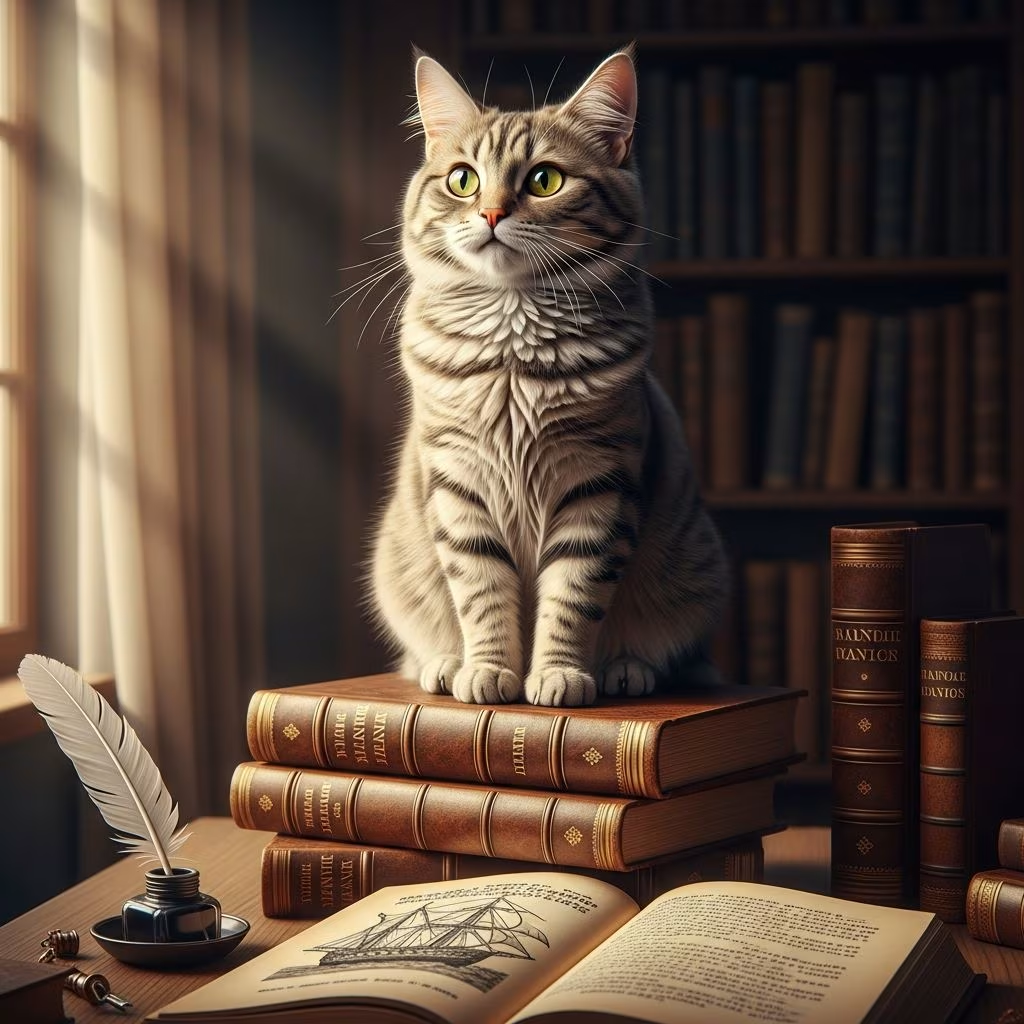
The term “pussycat” has a rich and multifaceted history that spans centuries, evolving from a simple descriptor for felines to a slang term for women, a pop culture phenomenon, and even a reference to other soft-furred creatures. While modern usage has largely distanced itself from calling cats “pussycats,” the word’s journey reflects how language adapts, borrows, and transforms over time. This article delves into the origins, slang applications, cultural impacts, and surprising extensions of the term, providing a complete picture of its enduring legacy.
Pussycat in Reference to Four-Legged Feline Friends
The foundation of “pussycat” lies firmly in its association with cats. Dating back to the 1500s, the word “puss” was a common noun specifically meaning “cat.” This usage was widespread in English-speaking regions and carried no negative connotations at the time. Linguists trace “puss” to a Germanic root word directly translating to “cat,” making it a straightforward and literal term for our beloved feline companions.
Language evolution is unpredictable, and the shift from “puss” to “pussycat” remains somewhat mysterious. It likely emerged as an affectionate diminutive, similar to how “doggy” softens “dog.” By the 16th century, “pussycat” had become a endearing way to refer to cats, evoking images of playful, soft-furred pets. Interestingly, early dictionaries like Webster’s Revised Unabridged Dictionary from 1913 speculated alternative origins, suggesting “pussy” might derive from “pursy,” an old term meaning “short-winded” or “fat.” However, traditional etymology firmly establishes cats as the originators, dismissing these as folk theories.
Throughout history, cats have been integral to human society, from ancient Egyptian worship to medieval pest controllers. Terms like “pussycat” humanized these independent creatures, fostering affection. In literature and folklore, pussycats appeared in tales like Edward Lear’s The Owl and the Pussycat (1871), where the pussycat sails in a “beautiful pea-green boat,” symbolizing whimsy and adventure. This poetic usage reinforced the term’s gentle, endearing quality for felines.
Today, while “pussycat” is less common for cats—replaced by direct terms like “kitty” or breed names—its historical roots remind us of the deep linguistic bond between humans and cats. Understanding this etymology enhances our appreciation for how everyday words carry centuries of cultural baggage.
Pussycat in Slang
Beyond felines, “pussycat” gained prominence as slang, particularly from the 17th century onward, peaking in popularity during the 1950s and persisting in niche uses today. In this context, it described young girls and women, often connoting modesty, gentleness, or sweetness. Picture a 1950s crooner calling his sweetheart “my little pussycat”—it was a term of endearment akin to “doll,” “babe,” or “honey.”
The slang’s evolution tied into the feline imagery: cats are soft, graceful, and mysteriously alluring, qualities metaphorically applied to women. By the mid-20th century, it carried a flirtatious edge, sometimes implying sexual attractiveness. Men used it casually, much like “dame” in noir films, blending affection with objectification. This dual nature—innocent yet suggestive—mirrors the word’s feline origins, where playfulness meets independence.
Cultural shifts have altered its perception. In contemporary English, especially American slang, “pussy” has taken on vulgar meanings unrelated to cats or endearments, leading to caution in usage. However, “pussycat” retains a vintage charm in retro contexts, such as old movies or nostalgic literature. For instance, in mid-century romance novels, heroines were often “gentle pussycats,” emphasizing femininity without overt sexuality.
This slang phase highlights language’s fluidity. What began as a cat descriptor became a gendered compliment, reflecting societal views on women as delicate and desirable. Its decline parallels changing norms around gender and language, yet it endures in phrases like “he’s a pussycat at heart,” meaning someone unexpectedly kind or mild-mannered.
Pop Bands
The term “pussycat” skyrocketed into modern pop culture through music, most notably with The Pussycat Dolls. Formed in 2003, this American girl group blended burlesque, dance, and R&B, achieving massive success in the 2000s. Hits like “Don’t Cha” (2005)—with its catchy hook “Don’t cha wish your girlfriend was hot like me?”—dominated charts, selling millions and embedding “Pussycat” in millennial memories. The group’s sexy, empowered image reclaimed the slang term, transforming it from vintage endearment to a symbol of fierce femininity.
Earlier, the animated series Josie and the Pussycats (1970-1971, revived in 1976 and 2016) popularized the name in entertainment. This Hanna-Barbera production followed an all-girl rock band—Josie, Valerie, and Melody—on globetrotting adventures while evading villains. The pussycats’ cat-ear headbands and groovy tunes captured the era’s youth culture, influencing fashion and music. The 2001 live-action film further cemented its cult status, satirizing pop stardom.
These pop references infused “pussycat” with glamour and rebellion, distancing it from its feline or slang roots. The Pussycat Dolls, in particular, embodied a modern twist: playful yet provocative, much like the cats that inspired the word. Their success sparked imitators and parodies, ensuring the term’s relevance in pop history.
Other Animals
Surprisingly, “pussy” extended beyond cats to other soft or furry animals. In both English and German, it referred to rabbits or hares, emphasizing their downy fur. During the 19th century, the term broadly denoted anything fluffy or velvety, capturing a tactile quality shared by various creatures.
A prime example is the pussy willow, a tree genus (Salix species) named for its fuzzy catkins resembling kitten fur. Blooming in early spring, these soft, silvery pods evoke the gentle touch of a pussycat’s paws, inspiring poets and gardeners alike. Folklore linked pussy willows to luck and renewal, with traditions of children tapping them on others for good fortune.
This furry association underscores the word’s sensory origins. Cats, rabbits, hares, and willows all share a plush texture that captivated early speakers. Even in zoology, serval cats—wild African felines—have been colloquially called “pussycats” in exotic pet discussions, though their leopard-like prowess contrasts the term’s softness.
Exploring these extensions reveals “pussycat’s” versatility, bridging domestic pets, wildlife, and botany through the universal appeal of fur.
Frequently Asked Questions (FAQs)
What is the origin of the word ‘pussycat’?
The term ‘puss’ dates to the 1500s from a Germanic root meaning ‘cat,’ evolving into ‘pussycat’ as an affectionate form.
Why was ‘pussycat’ used as slang for women?
From the 17th century, it denoted gentle, modest young women, peaking in the 1950s as a flirtatious endearment like ‘doll.’
Are there pop culture references to ‘pussycat’?
Yes, notably The Pussycat Dolls (2000s band) and Josie and the Pussycats (1970s cartoon and films).
Does ‘pussy’ refer to other animals besides cats?
In English and German, it described rabbits, hares, and soft-furred things; pussy willows are named for their fluffy catkins.
Is ‘pussycat’ still used for cats today?
Rarely; modern terms like ‘kitty’ prevail, but it persists in idioms like ‘he’s a pussycat’ for kind people.
Conclusion
The story of “pussycat” is a testament to language’s dynamic nature. From its 16th-century feline roots through slang endearments, pop band fame, and furry extensions, it has woven itself into history, culture, and affection. Whether evoking a soft cat, a charming woman, or a chart-topping tune, “pussycat” endures as a uniquely versatile word. Next time you pet your cat or hear an old tune, consider its millennia-spanning journey.
References
- Why Are Cats Called Pussycats? A Brief History of the Term — Catster. 2023. https://www.catster.com/lifestyle/why-are-cats-called-pussycats/
- Oxford English Dictionary (OED) Entry on ‘Puss’ and ‘Pussycat’ — Oxford University Press. 2024-06-01. https://www.oed.com/dictionary/puss_n
- Etymonline: Pussy — Etymonline (Douglas Harper). 2024. https://www.etymonline.com/word/pussy
- Webster’s Revised Unabridged Dictionary (1913) — Project Gutenberg. 1913 (archived 2024). https://www.gutenberg.org/files/29765/29765-h/29765-h.htm
- The Owl and the Pussycat — Edward Lear (via Poetry Foundation). 1871 (updated 2024). https://www.poetryfoundation.org/poems/48420/the-owl-and-the-pussy-cat



