

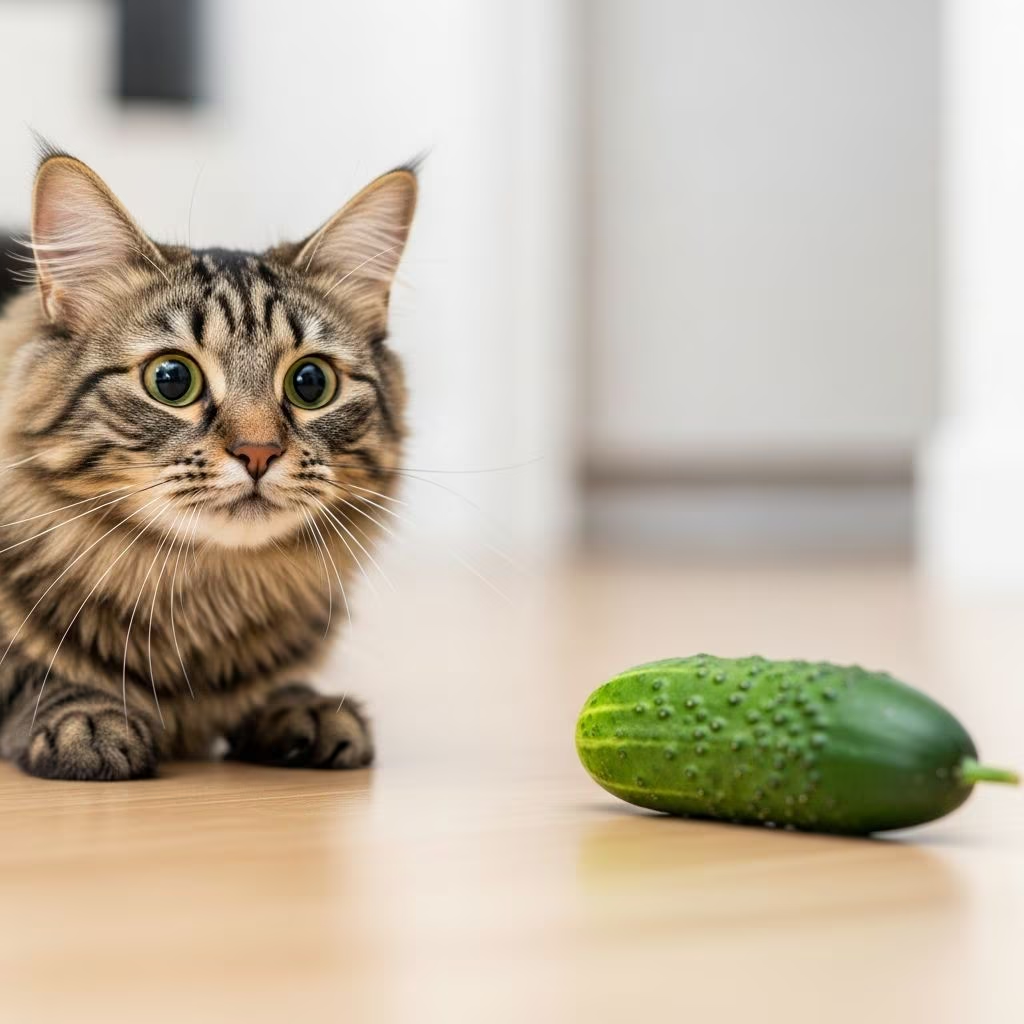
Viral videos of cats leaping away from cucumbers behind their food bowls have captivated millions, sparking curiosity about feline fears. However, experts clarify that cats are not inherently afraid of cucumbers themselves but react due to sudden surprise in a vulnerable moment.
Table of Contents
- The Viral Phenomenon
- Why Do Cats React This Way?
- The Snake Theory Debunked
- Stress and Sudden Appearance
- Experiments Proving the Point
- Dangers of Scaring Your Cat
- Signs of Fear in Cats
- Better Ways to Engage Your Cat
- Frequently Asked Questions (FAQs)
The Viral Phenomenon: Cats vs. Cucumbers
The internet is flooded with clips showing cats calmly eating, only to explode in panic upon spotting a cucumber placed silently behind them. These videos often garner millions of views, portraying cats as hilariously “scaredy-cats.” But beneath the entertainment lies a question: why cucumbers specifically? Cat behaviorists emphasize that the vegetable is incidental; it’s the context of surprise that triggers the response.
Cats, as prey animals in the wild, maintain constant vigilance. Domestic cats retain this instinct, lowering their guard only in safe environments like mealtime. Placing an object behind them disrupts this security, eliciting a survival response. Experts like Katenna Jones, a cat behaviorist, note that cats rarely react to cucumbers in open settings, proving it’s not the cucumber but the stealthy placement.
Why Do Cats React So Dramatically?
The typical reaction involves the cat arching its back, puffing fur, leaping high, and fleeing. This is a classic fear response: defensive posturing to appear larger and deter threats. Behaviorist Dr. Pamela Perry from Cornell Feline Health Center explains it’s the “sudden appearance of a novel object” during a relaxed state that causes freak-outs, not any specific cucumber phobia.
Canadian feline expert Daniel Filion’s experiment with 20 cats showed zero fear reactions to visible cucumbers, underscoring that only a tiny minority (about 0.5%) react in viral scenarios, usually when surprised while eating. This rarity highlights selection bias in videos—only dramatic reactions go viral.
The Snake Theory: Fact or Fiction?
A popular theory posits cucumbers resemble snakes, triggering an innate fear from wild ancestors. While plausible, experts debunk it. Jones tested cats with cucumbers, carrots, and even Twix bars—most ignored them. Cats often hunt snakes without fear, as Perry notes from personal experience with her snake-hunting cat.
Purina’s analysis acknowledges the snake idea but prioritizes surprise as primary. No peer-reviewed studies confirm snake mimicry as the cause; it’s speculative. Instead, the dark, elongated shape merely makes it a conspicuous “large, dark object” in a startling position.
Stress, Surprise, and Prey Instincts
Cats feel safest eating with their back to a secure wall. Sneaking a cucumber there shatters trust, mimicking a predator ambush. Jones compares it to finding a giant spider in the shower—pure startle reflex. As prey species, cats are wired for hyper-vigilance; repeated safe meals build complacency, amplifying shock when breached.
Chronic stress from such pranks harms health. A single intense scare can imprint fear via the amygdala, leading to lasting phobias. Vets warn of generalized fears: cats may dread green objects, food bowls, or owners.
Experiments Proving It’s Not About Cucumbers
- Jones’ tests: Cats sniffed but ignored cucumbers, carrots, and candy bars when presented openly.
- Filion’s trial: 20 cats showed no fear; experiment halted as reactions were absent.
- BehaviorDogtor analysis: Only a small subset reacts; most are startled by any sudden object.
These confirm cucumbers aren’t special. Any novel item (e.g., bananas, bread) behind an unsuspecting cat could provoke similar jumps, but cucumbers trend due to availability and shape.
The Dangers: Why You Should Never Try This
Pranks erode trust, fracturing the human-cat bond. Stressed cats develop aggression, compulsive behaviors, or health issues like skin/digestive problems. Perry cautions timid cats may link fear to feeding areas or owners, fostering avoidance.
Malamed from PetMD notes repeat exposures heighten reactivity, potentially causing redirected aggression or stimulus generalization. Jones stresses, “Fear isn’t funny for the one receiving it.” Long-term, it risks idiopathic cystitis or overgrooming from cortisol spikes.
| Risk | Potential Effects | Source |
|---|---|---|
| Acute Stress | Jump, flee, puffed fur | |
| Chronic Exposure | Fear of food/owner, aggression | |
| Health Impacts | Digestive issues, skin sensitivity |
Recognizing Fear Signs in Cats
- **Piloerection:** Fur standing on end to seem bigger.
- **Arched Back:** Defensive posture.
- **Ears Back/Tail Thrash:** Aggression or flight signals.
- **Dilated Pupils:** Heightened arousal.
- **Hiding/Vocalizing:** Post-stress withdrawal.
These indicate extreme distress, not play. Monitor for lingering effects like appetite loss.
Better Ways to Engage and Enrich Your Cat
Instead of scares, provide positive stimulation:
- Interactive toys like feather wands.
- Puzzle feeders for mental exercise.
- Window perches for bird-watching.
- Safe hiding spots and vertical spaces.
- Regular play sessions mimicking hunt.
Building trust through consistency enhances welfare. Avoid pranks; opt for enrichment that respects feline instincts.
Frequently Asked Questions (FAQs)
Are cats really afraid of cucumbers?
No, cats aren’t afraid of cucumbers specifically. The reaction stems from sudden surprise behind them during vulnerable moments like eating.
Does the cucumber look like a snake to cats?
Unlikely. Experts like Dr. Perry note cats hunt snakes without fear, and tests show indifference to similar objects.
Is it harmful to scare my cat with a cucumber?
Yes, it causes stress that can lead to health issues, aggression, or broken trust with owners.
What if my cat doesn’t react?
Most won’t; only a tiny percentage do. It’s not a universal fear, just viral selection bias.
How can I tell if my cat is stressed?
Look for arched back, puffed fur, fleeing, or hiding. Chronic signs include poor appetite or overgrooming.
What should I do if my cat was scared?
Give space, offer treats in safe spots, and avoid repeats. Consult a vet if behaviors persist.
References
- Are cats really afraid of cucumbers? We asked the experts. — Popular Science. 2025. https://www.popsci.com/environment/are-cats-really-afraid-of-cucumbers-experts/
- Cat vs cucumber explained. — Cat Educator (YouTube). Accessed 2026. https://www.youtube.com/watch?v=t0MiFUJXO1E
- Cats Scared By Cucumbers: Knowing the Facts Behind the Viral Phenomenon. — BehaviorDogtor / PetMD. 2018-10-01. https://behaviordogtor.com/wp-content/uploads/2018/10/Cats-Scared-By-Cucumbers.pdf
- Cats and Cucumbers – Our Behavior Expert Talks About Why Cats Are Freaking Out. — Cornell University College of Veterinary Medicine. Accessed 2026. https://www.vet.cornell.edu/departments-centers-and-institutes/cornell-feline-health-center/about-center/fhc-updates/cats-and-cucumbers-our-behavior-expert-talks-about-why-cats-are-freaking-out
- Why Are Cats Scared of Cucumbers: The Mystery Solved. — Purina UK. 2025-03-21. https://www.purina.co.uk/articles/cats/behaviour/common-questions/why-are-cats-scared-of-cucumbers



