

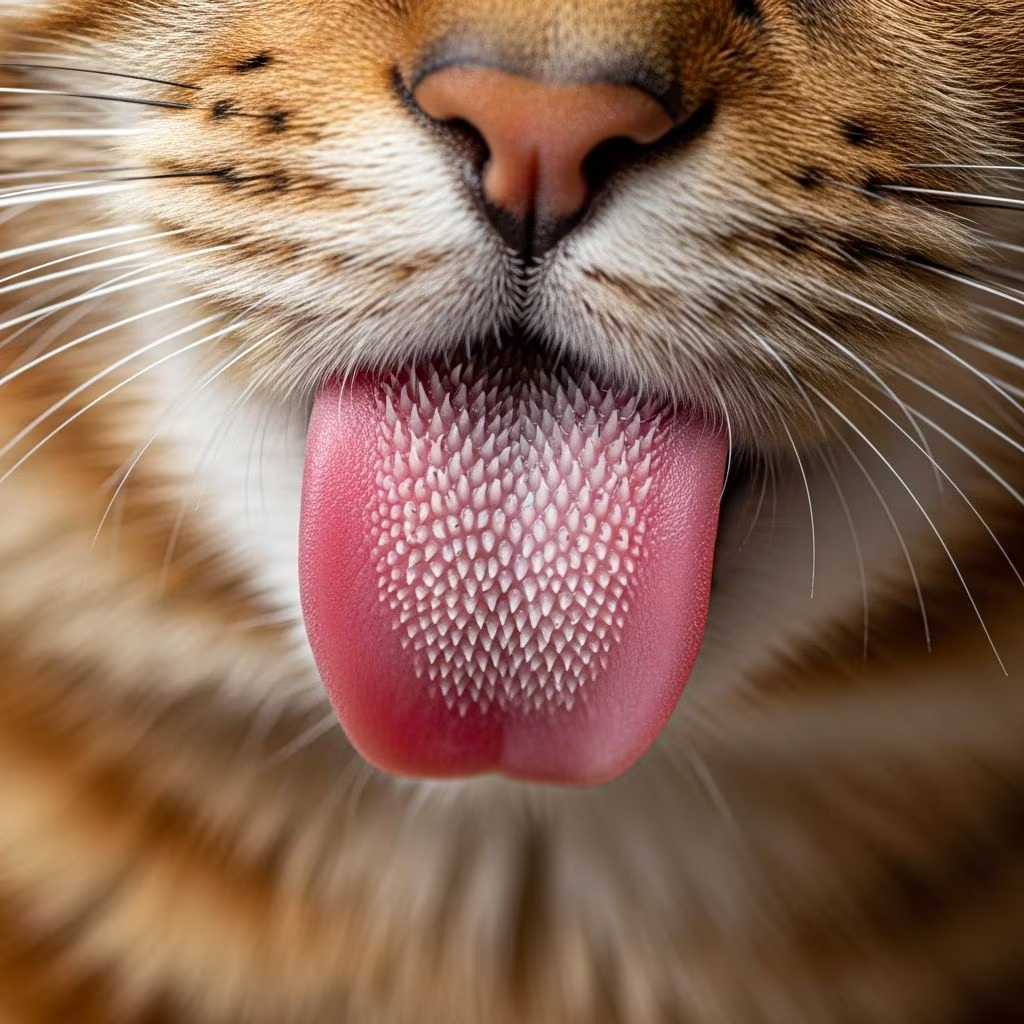
Cat tongues feel like sandpaper due to hundreds of tiny, backward-facing spines called papillae, made of keratin—the same tough protein in human nails and hair. These hook-shaped structures provide cats with essential tools for grooming, eating, drinking, and survival, evolving over millennia to make felines efficient hunters and self-maintainers.
Found across the tongue’s surface except the tip, papillae number in the hundreds, each pointing rearward like miniature claws. This unique anatomy allows cats to perform tasks with precision that smooth tongues simply can’t match. Understanding this feature reveals why cats are such meticulous groomers and adept predators.
What Makes Cat Tongues So Rough?
The roughness stems from filiform papillae, sharp, curved cones of keratin covering most of the tongue’s dorsal surface. These spines are hollow at the base, enabling flexibility, and they pivot slightly for better grip on fur or food. Veterinarians note that this structure is consistent across domestic cats, lions, tigers, and other felids, underscoring its evolutionary importance.
Keratin gives the papillae durability, resisting wear from constant use. A single lick feels abrasive because the spines scrape gently, mimicking a comb or brush. Microscopic imaging shows papillae spaced perfectly to trap debris without damaging healthy tissue. This design isn’t just for texture—it’s a multifunctional tool honed by natural selection.
Domestic cats retain this wild trait despite living indoors. Studies on feline anatomy confirm papillae density increases toward the tongue’s back, optimizing functions like meat stripping. Owners often discover this during affectionate licks, which can range from ticklish to mildly uncomfortable on bare skin.
The Functions of a Cat’s Rough Tongue
A cat’s tongue serves multiple critical roles, each leveraging the papillae’s unique texture. These functions highlight why evolution favored roughness over smoothness in felines.
Grooming
The primary use is self-grooming, where papillae act as a natural brush. Backward-facing spines catch loose fur, dirt, and parasites, pulling them away efficiently. Cats spend up to 50% of their waking hours grooming, distributing skin oils for a glossy coat and waterproofing.
Papillae detangle mats and remove undercoat, preventing hairballs. The hollow spines wick saliva, which evaporates to cool the cat—vital in hot climates. This thermoregulation supplements panting, as saliva evaporation lowers body temperature by up to 1-2 degrees per session. Oils spread evenly mask scents, aiding stealth for wild cats.
Flexibility allows papillae to pivot, navigating complex fur patterns. In multi-cat homes, mutual grooming strengthens bonds, with rough tongues providing thorough cleaning. Neglect in grooming signals stress or illness, warranting veterinary attention.
Drinking
Counterintuitively, rough tongues excel at drinking. Cats don’t lap like dogs; they touch the water surface lightly, curling their tongue backward. Papillae adhere water via surface tension, forming a liquid column sucked into the mouth without wetting whiskers or chin.
High-speed footage reveals cats drink at 4 Hz, with papillae trapping 2-3 mm of water per flick. This method minimizes contamination and conserves energy. Studies from MIT and Virginia Tech (using X-ray videography) confirm the tongue’s texture is key, as smooth models fail to replicate the column.
Eating and Hunting
Papillae shine in feeding, stripping meat from bones and carcasses. Hooks rasp flesh efficiently, maximizing nutrition from prey. Domestic cats use this for wet food or kibble, assessing texture and temperature via sensitive tips.
In the wild, this aids solitary hunters like tigers, consuming kills quickly before scavengers arrive. The tongue also cleans faces post-meal, removing blood and debris. Sensitivity detects spoilage, preventing ingestion of harmful food.
Why Do Cats Stick Their Tongues Out?
Cats occasionally protrude their tongues, known as “blepping,” a harmless behavior with several causes. It’s endearing but can indicate issues if persistent.
- Relaxation: During sleep or contentment, facial muscles slacken, letting the tongue peek out.
- Distraction: Interrupted mid-groom or meal, cats forget to retract it.
- Flehmen Response: To analyze scents, cats curl tongues to transfer pheromones to the vomeronasal organ, enhancing smell detection.
- Debris: Stuck fur or food prompts sticking out to dislodge via pawing.
- Brachycephalic Breeds: Flat-faced Persians have crowded mouths, causing protrusion and related breathing issues.
Monitor for frequency; occasional bleps are normal, but constant exposure suggests dental pain or nausea.
Cat Tongue Health: What to Watch For
Healthy tongues are pink, moist, with firm papillae. Issues manifest as:
- Swelling or redness
- Discoloration (yellow, black spots)
- Ulcers, sores, or lesions
- Excessive drooling or pawing
- Foul breath, drooling, eating difficulty
- Dry/cracked surface or reduced grooming
Common problems include stomatitis, dental disease, infections, tumors, or foreign objects. Bacteria thrive in mouths, so avoid licks on open wounds. Annual vet checks catch issues early; symptoms warrant immediate care.
Common Myths About Cat Tongues
Misconceptions abound about these raspy organs.
- Myth: Sandpaper tongues harm skin. Mild abrasion is harmless unless on wounds; bacteria pose infection risk.
- Myth: All cats tongues are identical. Size scales with breed, but structure is uniform.
- Myth: Dogs have rough tongues too. Canine tongues are smooth; pack hunters didn’t need stealth grooming.
Redirect excessive licking to mats or toys for harmony.
Frequently Asked Questions (FAQs)
Why is my cat’s tongue rough like sandpaper?
The roughness comes from keratin papillae, tiny backward spines for grooming and feeding.
Is it safe for my cat to lick me?
Generally yes on intact skin, but avoid wounds due to bacteria. Use lick mats if bothersome.
Why does my cat stick its tongue out sometimes?
Blepping occurs from relaxation, distraction, scent analysis, debris, or breed traits.
Can cat tongue problems be serious?
Yes—swelling, sores, or drooling signal infections, ulcers, or dental issues needing vet care.
Do all cats have rough tongues?
Yes, from domestics to big cats; it’s an evolutionary trait for survival functions.
How do cats drink with rough tongues?
They curl tongues to form a water column via papillae adhesion, sipping efficiently.
References
- Why Do Cats Have Rough Tongues? — Rover.com. 2023-05-15. https://www.rover.com/blog/why-are-cat-tongues-rough/
- Why do cats have rough tongues? — Cats Protection (cats.org.uk). 2024-01-10. https://www.cats.org.uk/cats-blog/why-do-cats-have-rough-tongues
- Why Are Cats’ Tongues So Rough? — Chewy.com Education. 2023-11-20. https://www.chewy.com/education/cat/health-and-wellness/why-are-cats-tongues-rough
- Cat Tongues: Everything You Wanted to Know & More — Hill’s Pet Nutrition. 2024-02-05. https://www.hillspet.com/cat-care/behavior-appearance/cat-tongues-explained
- How Cats Lap: Water Uptake by Felis domesticus — Science (AAAS). 2010-11-11. https://www.science.org/doi/10.1126/science.1195421



