

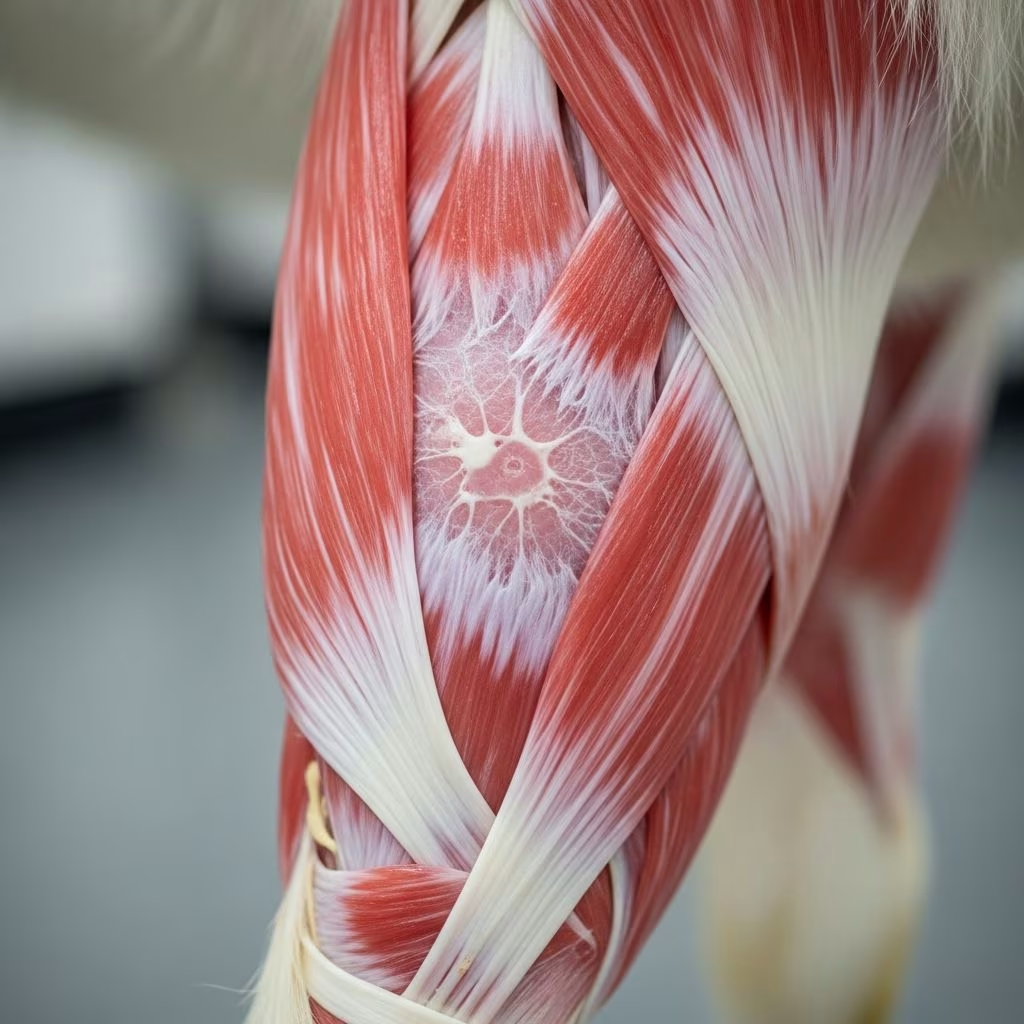
White muscle disease represents a significant nutritional challenge for goat owners, primarily stemming from deficiencies in selenium and vitamin E. This condition compromises muscle integrity, leading to weakness and potential fatality if not addressed promptly. Young goats, particularly kids, face the highest risk due to rapid growth demands and placental nutrient transfer limitations.
Root Causes of Nutritional Myopathy
The primary trigger for white muscle disease is inadequate selenium intake, often linked to soil deficiencies in certain regions. Selenium, an essential trace mineral, functions as an antioxidant alongside vitamin E to protect muscle cells from oxidative damage. Goats in selenium-poor areas absorb insufficient amounts from forage and water, exacerbating the issue during pregnancy when fetal stores build up.
Vitamin E deficiency compounds the problem, as it stabilizes cell membranes and neutralizes free radicals. Diets low in fresh greens or preserved hay diminish vitamin E levels, while stress factors like rapid growth or sudden exercise accelerate depletion. All goat breeds prove susceptible, though kids exhibit heightened vulnerability owing to elevated selenium needs.
Clinical Manifestations in Skeletal Muscles
Skeletal involvement manifests as progressive stiffness and reluctance to move. Affected goats adopt a hunched posture with firm, painful hindlimb muscles. Mild cases show subtle gait abnormalities, escalating to trembling when lifted or complete recumbency in severe instances.
Newborn kids may arrive weak, unable to stand, with hind feet occasionally flexing backward. Older kids maintain appetite initially but weaken to the point of nursing failure. Muscle palpation reveals hardness and tenderness, signaling degeneration.
Cardiac Form and Respiratory Complications
Cardiac muscle damage mimics pneumonia, featuring labored breathing, frothy or blood-tinged nasal discharge, and fever. Elevated, irregular heart and respiratory rates indicate distress. This form often coexists with skeletal symptoms, heightening mortality risk.
Sudden death strikes without warning in cardiac cases, underscoring the need for vigilance. Survivors face lasting heart impairment, hindering thriftiness.
Diagnostic Approaches for Confirmation
Veterinary assessment begins with clinical signs and history of deficient regions. Blood selenium below 0.04 ppm confirms deficiency; breeding does require over 0.5 ppm. Elevated creatine kinase (CK) and aspartate aminotransferase (AST) indicate muscle breakdown.
Necropsy reveals pale, chalky muscles with white striations from calcium buildup. Soil and forage analysis guides herd-level evaluation.
| Test | Normal Range | Deficient Indicator |
|---|---|---|
| Blood Selenium | 0.10-0.30 ppm | <0.04 ppm |
| Breeding Doe Selenium | >0.5 ppm | <0.5 ppm |
| CK/AST Levels | Normal baseline | Elevated |
Immediate Treatment Protocols
Acute skeletal cases respond to injectable selenium and vitamin E, with improvements in 24 hours. Products like Bo-Se provide selenium, though goat-specific dosing requires veterinary oversight to avoid toxicity. Limit to two doses maximum.
- Administer selenium/vitamin E injection subcutaneously or intramuscularly per label.
- Supplement oral vitamin E if injectables fall short.
- Monitor for toxicity: daily intake must not exceed 0.7 mg/head.
Cardiac treatment proves less effective, prioritizing supportive care. Response varies by severity; non-responders warrant reevaluation.
Prevention Through Dietary Management
Proactive supplementation prevents outbreaks. Provide selenium-fortified minerals (0.10-0.30 ppm total diet) in deficient soils. Pregnant does benefit from pre-kidding boosts, transferring selenium via placenta and colostrum.
Avoid injectables routinely; prefer feed additives regulated for safety. Regional soil tests dictate intensity: mild deficiencies need occasional Bo-Se, severe cases demand gels or custom minerals.
Regional Risks and Soil Influence
Selenium scarcity varies geographically, with northeastern and Pacific Northwest U.S. regions most affected. Forage from low-selenium soils perpetuates deficiency cycles. Test local soil and consult extension services for tailored advice.
Management Best Practices for Herds
Integrate monitoring: routine bloodwork on at-risk groups. Balance rations with vitamin E-rich feeds like alfalfa. Sudden exercise avoidance in growing kids minimizes triggers.
Collaborate with veterinarians for herd health plans, including differentials like enterotoxemia or arthritis.
Frequently Asked Questions
What triggers white muscle disease most often?
Selenium-deficient soils and diets low in vitamin E, especially impacting fast-growing kids from unsupplemented dams.
How quickly does treatment work?
Skeletal cases improve within 24 hours post-injection, though full recovery depends on damage extent.
Can cardiac damage be reversed?
Rarely; survivors often underperform due to permanent impairment.
Is supplementation safe year-round?
Regulated to prevent toxicity; adhere to 0.7 mg/day maximum via approved feeds.
Which goats are at greatest risk?
Newborns, kids under 4 months, and those in intensive systems with poor forage quality.
Long-Term Herd Health Strategies
Sustainable prevention hinges on soil remediation where feasible, coupled with vigilant nutrition. Track incidence rates annually to refine protocols. Educate on toxicity signs like hair loss or lameness from excess.
Expand beyond selenium: bolster overall immunity, as deficiencies impair response to infections like pneumonia.
References
- White muscle disease in sheep and goats — Michigan State University Extension. 2023. https://www.canr.msu.edu/news/white-muscle-disease-in-sheep-and-goats
- White muscle disease in sheep and goats — Sheep and Goat.com. 2022. https://www.sheepandgoat.com/wmd
- Video: White muscle disease, goat — Merck Veterinary Manual. 2024. https://www.merckvetmanual.com/multimedia/video/white-muscle-disease-goat
- Selenium Deficiency and White Muscle Disease in Goats — Goat Journal. 2023. https://goatjournal.iamcountryside.com/health/selenium-deficiency-white-muscle-disease-in-goats/
- White Muscle Disease in Goats — MSD Veterinary Manual. 2025. https://www.msdvetmanual.com/musculoskeletal-system/lameness-in-goats/white-muscle-disease-in-goats
- White Muscle Disease in Small Ruminants — Ohio State University Extension. 2018-10-23. https://u.osu.edu/sheep/2018/10/23/white-muscle-disease-in-small-ruminants/
- White Muscle Disease — Veterinary Handbook. 2024. https://www.veterinaryhandbook.com.au/Diseases.aspx?diseasenameid=188
- White Muscle Disease in Lambs and Kids FSA3157 — University of Arkansas Extension. 2023. https://www.uaex.uada.edu/publications/pdf/FSA3157.pdf



