
White-Capped Pionus: Personality, Food & Care
Complete guide to White-Capped Pionus parrots: care, diet, behavior, and training tips.
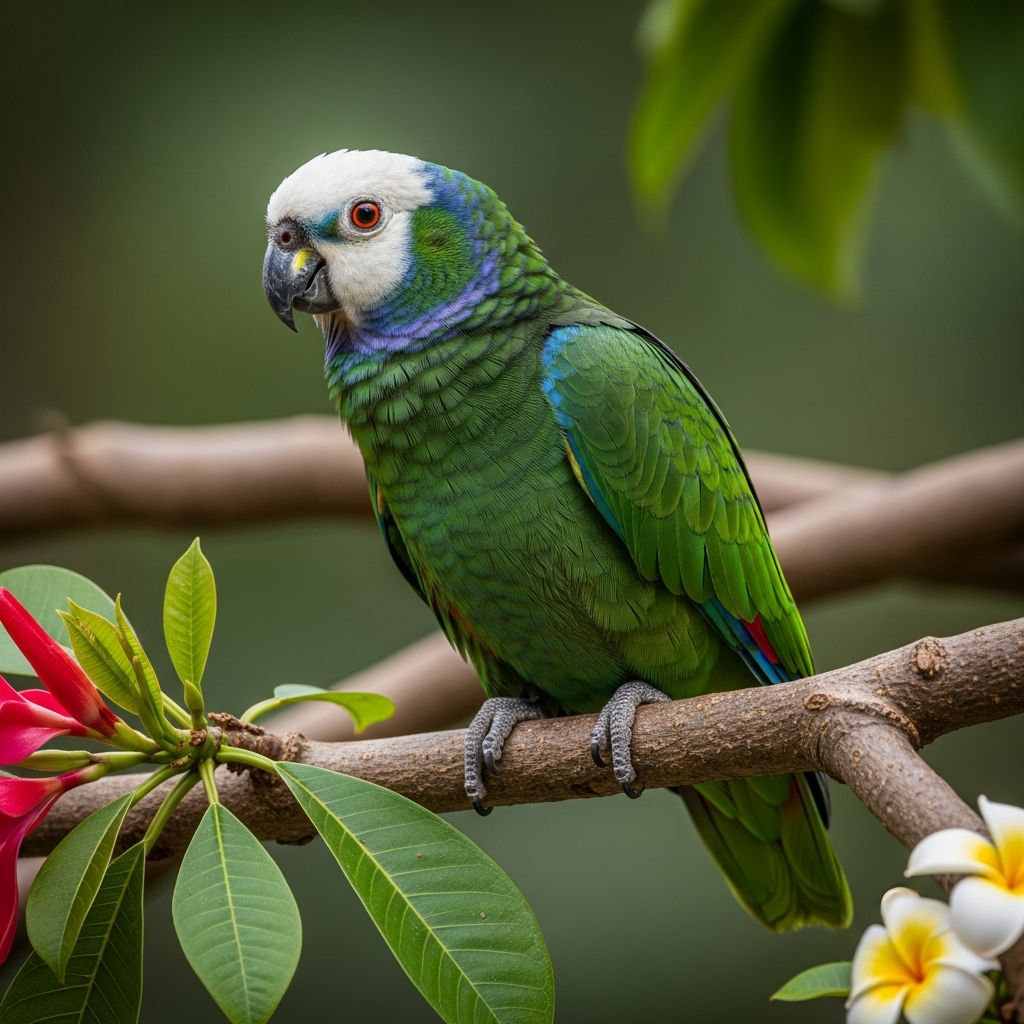
White-Capped Pionus: A Complete Guide to Personality, Food & Care
The White-Capped Pionus (Pionus senilis) represents one of the most appealing choices for bird enthusiasts seeking a medium-sized parrot companion. These charming birds combine gentle temperaments with distinctive appearances, making them increasingly popular among both novice and experienced pet owners. Unlike their larger, more vocal cousins, White-Capped Pionus parrots offer a unique blend of companionship without excessive noise, making them ideal for families living in apartments or noise-sensitive environments.
Understanding the White-Capped Pionus Species
The White-Capped Pionus belongs to the Pionus genus, a group of medium-sized parrots known for their calm demeanor and manageable size. The species name “senilis” derives from the bird’s distinctive white head markings, which resemble an elderly person’s white hair. This relatively small parrot typically measures around 9 to 11 inches in length and weighs approximately 220 grams, making it one of the smallest members of its genus.
Physical Characteristics and Appearance
White-Capped Pionus parrots possess a striking and easily recognizable appearance. Their most distinctive feature is the prominent white cap on the forehead and crown, which becomes fully developed at approximately one year of age. The head feathers are predominantly green, edged with blue, creating an attractive gradient effect. Their bodies are mostly green with an olive-brown chest edged in blue, while the upper wings display greenish-brown coloration.
The eye rings of White-Capped Pionus are bare of feathers, ranging in color from whitish-pink to orange, a characteristic common to all Pionus species. This distinctive bare eye ring, known as the periophthalmic ring, provides these parrots with a unique and expressive appearance. The beak is typically yellowish, and the lower abdomen features a splash of red that adds visual interest to their overall coloring.
Male and female White-Capped Pionus are remarkably similar in appearance, making visual sex determination extremely difficult. Males typically display brighter blue coloration and more vibrant shoulder patches than females, but these differences are subtle and not always reliable. DNA testing remains the most accurate method for determining a bird’s sex with certainty.
Natural Habitat and Geographic Distribution
White-Capped Pionus parrots are naturally found throughout Mesoamerica, with their range extending from eastern Mexico through Belize, Guatemala, Honduras, Nicaragua, and Panama, with the largest populations concentrated in Costa Rica. These birds inhabit rainforests and forest edges, preferring the tree canopy layers where they find protection from predators and access to their primary food sources.
While these parrots typically remain in lowland and foothill regions, they occasionally ascend to altitudes up to 2,300 meters in certain areas. Their habitat preference extends beyond pristine rainforests to include secondary growth and semi-open woodlands with adequate tree coverage. In some areas, they have even adapted to urban environments where sufficient vegetation exists.
Personality and Behavioral Traits
Temperament and Social Nature
White-Capped Pionus parrots are renowned for their exceptionally gentle and even-tempered nature. Unlike some larger parrot species known for aggressive or unpredictable behavior, these birds demonstrate a calm, approachable demeanor that makes them excellent companions for families. They are slightly more energetic than other Pionus subspecies, yet remain friendly and entirely manageable for properly prepared owners.
Initially, a White-Capped Pionus may appear shy when encountering unfamiliar people. However, with proper introduction and adequate time, these intelligent birds typically warm to new acquaintances and will happily perch on shoulders or accept affectionate head and neck scratches from trusted individuals. Once bonded with their human family, they demonstrate remarkable devotion and attachment.
Intelligence and Trainability
White-Capped Pionus parrots are highly intelligent birds capable of learning tricks, recognizing individual voices, and forming deep emotional bonds with their owners. Their observant nature means they constantly interact with and explore their surroundings, making them engaging and responsive companions. These parrots are highly trainable and respond well to positive reinforcement-based training methods, enjoying daily playtime and mental stimulation.
Despite their intelligence, White-Capped Pionus parrots are more independent than certain other parrot species. This independence means they do not demand constant attention but still require regular social interaction for their emotional well-being. A well-socialized White-Capped Pionus can become an outgoing and social family pet that balances independence with genuine affection.
Vocalization and Noise Levels
One of the most significant advantages of owning a White-Capped Pionus is their relatively quiet nature compared to most other medium-sized parrot species. While they do produce typical parrot vocalizations including chirps, squawks, and other sounds, these occur far less frequently and with considerably less intensity than birds like African Greys or Amazon parrots.
White-Capped Pionus typically vocalize most during dawn hours, producing soft chatter rather than piercing screams that characterize louder species. Their calls include distinctive vocalizations such as a harsh “kreeek-kreeek” or “kree-ah-kee-ah” during flight, though they can remain surprisingly silent when resting in the tree canopy. Additionally, these birds produce a distinctive wheezing or snoring sound when breathing, particularly when excited, which is completely normal for the species and not indicative of respiratory distress.
Nutritional Requirements and Diet
Natural Diet in the Wild
In their natural habitat, White-Capped Pionus parrots are adept foragers that often hang upside down to access their food sources. They feed primarily on fruits, seeds, nuts, and vegetation found throughout their forest environment. Understanding these natural dietary preferences is essential for providing proper nutrition in captivity.
Captive Diet Recommendations
A well-balanced diet for captive White-Capped Pionus should closely mirror their natural nutritional intake. High-quality commercial pellets specifically formulated for medium-sized parrots should form the foundation of their diet, supplemented with fresh fruits and vegetables daily. Safe fruits include berries, apples, oranges, and tropical fruits, while appropriate vegetables encompass leafy greens, carrots, broccoli, and peppers.
Fresh nuts and seeds should be offered in moderation due to their high fat content, though they provide essential nutrients and enrichment opportunities. Water should always be available and changed daily to maintain freshness and prevent bacterial contamination. Some owners find specialized parrot nutrition products, such as tropical fruit Nutri-Berries, provide convenient and nutritionally complete supplementation to their bird’s regular diet.
Housing, Environment & Care Requirements
Cage Size and Setup
White-Capped Pionus parrots require spacious, well-designed housing that accommodates their need for movement and mental stimulation. While their compact size means they require less space than larger parrots, the minimum recommended cage dimensions should be substantial enough to allow for proper exercise. Multiple perches of varying diameters should be provided to promote foot health and reduce pressure-related problems.
Environmental Considerations
Proper temperature regulation is essential, as these tropical birds prefer environments maintained between 65 and 80 degrees Fahrenheit. Natural lighting or full-spectrum artificial lighting supports their circadian rhythms and overall health. The cage should be positioned away from direct drafts, kitchen areas where cooking fumes occur, and rooms with extreme temperature fluctuations.
Enrichment and Mental Stimulation
White-Capped Pionus parrots are playful and active birds that require diverse enrichment opportunities to maintain psychological well-being. A variety of toys including foraging toys, puzzle feeders, climbing structures, and rotating toy selections prevent boredom and encourage natural behaviors. Daily out-of-cage time under supervision allows these birds to exercise their wings and engage with their environment more fully.
Health Considerations and Behavioral Issues
Feather Plucking and Stress
White-Capped Pionus parrots are generally not prone to feather plucking, a behavioral issue common in many captive parrots experiencing stress or discomfort. However, like all parrot species, they remain susceptible to extreme stress and boredom-related behaviors. Maintaining adequate social interaction, environmental enrichment, and consistent daily routines significantly reduces the likelihood of developing destructive behaviors.
Specialized Feather Adaptations
White-Capped Pionus possess specialized feather structure that provides superior resistance to rain and water, an adaptation particularly useful in their native humid and rainy habitats. This unique characteristic means these birds may require less frequent bathing than other species and typically remain comfortable in moist environments.
Breeding Behavior and Reproduction
In their natural habitat, White-Capped Pionus nest in tree cavities, often utilizing older or decaying trees that provide secure environments for their eggs and young. This reliance on natural tree cavities highlights the importance of old-growth forests for their breeding success. They typically lay between 3 and 5 white eggs in unlined nests, with incubation periods lasting approximately 26 days.
In captivity, breeding White-Capped Pionus requires specialized knowledge and proper nesting facilities. Breeding pairs should be carefully selected and provided with appropriate nesting boxes that simulate natural cavity conditions. Those considering breeding should consult with avian veterinarians and experienced breeders to ensure proper protocols and genetic diversity.
Social Behavior and Flock Dynamics
White-Capped Pionus are highly social creatures in both wild and captive settings. In their natural habitat, they are often observed in pairs or small flocks, with feeding flocks sometimes reaching up to 50 individuals. This cohesive group structure aids in foraging efficiency and provides protection against predators.
In captivity, White-Capped Pionus form deep bonds with their human families and should not be kept in isolation for extended periods. Many owners successfully keep multiple birds when proper introductions occur and sufficient space exists. Even single birds require regular human interaction to fulfill their social and emotional needs.
Suitability as Family Pets
White-Capped Pionus parrots make excellent family pets for appropriately prepared households. Their relatively quiet nature, gentle temperament, and manageable size make them suitable for apartment living and noise-sensitive environments. These birds adapt well to family routines and can become cherished long-term companions, potentially living 30 to 40 years in captivity with proper care.
First-time bird owners often find White-Capped Pionus particularly rewarding due to their affectionate nature, intelligence, and lower maintenance requirements compared to larger, more demanding parrot species. However, prospective owners should understand that these birds require daily interaction, proper nutrition, environmental enrichment, and access to veterinary care from avian specialists.
Frequently Asked Questions
Q: How long do White-Capped Pionus parrots typically live in captivity?
A: With proper care, nutrition, and veterinary attention, White-Capped Pionus parrots typically live 30 to 40 years or longer, making them truly lifelong companions that require long-term commitment from their owners.
Q: Are White-Capped Pionus suitable for first-time bird owners?
A: Yes, White-Capped Pionus are excellent choices for first-time bird owners due to their calm temperament, relatively quiet nature, manageable size, and lower maintenance requirements compared to larger parrot species.
Q: Do White-Capped Pionus require special veterinary care?
A: Yes, these parrots require veterinary care from avian specialists familiar with Pionus species. Regular health checkups, proper nutrition, and early intervention for any health concerns are essential for maintaining optimal health.
Q: Can White-Capped Pionus be housed with other bird species?
A: While White-Capped Pionus can sometimes coexist with other birds, careful introduction protocols must be followed. Housing multiple birds requires substantial space and careful monitoring to prevent territorial conflicts and ensure all birds receive adequate resources and attention.
Q: What is the minimum cage size for a White-Capped Pionus?
A: While specific dimensions vary based on individual recommendations, the cage should be spacious enough to allow flight and movement, with multiple perches of varying diameters. Larger accommodations generally result in healthier, more active birds.
Q: How can I sex a White-Capped Pionus accurately?
A: While males typically display brighter blue coloration and shoulder patches than females, visual determination is unreliable. DNA testing remains the most accurate and recommended method for determining a bird’s sex with certainty.
References
- What are the Characteristics of Pionus Parrots and Their Subspecies? — Windy City Parrot. 2025. https://windycityparrot.com/what-are-the-characteristics-of-pionus-parrots-and-their-subspecies/
- White-crowned Parrot (Pionus senilis) Identification — Birda. 2025. https://app.birda.org/species-guide/13122/White-crowned_Parrot
- White-Capped Pionus – Profile & Care Guide — Parrot Essentials. 2025. https://parrotessentials.co.uk/blog/white-capped-pionus-profile-care-guide
- Pionus Parrots As Pets — ThinkParrot. 2025. https://thinkparrot.com/pionus-parrots-as-pets/
- Pionus Parrot – Specialized Care for Avian & Exotic Pets — Buffalo Bird Nerd. 2025. https://www.buffalobirdnerd.com/storage/app/media/PSPPionusParrots.pdf
Similar Articles








Read full bio of Sneha Tete


