

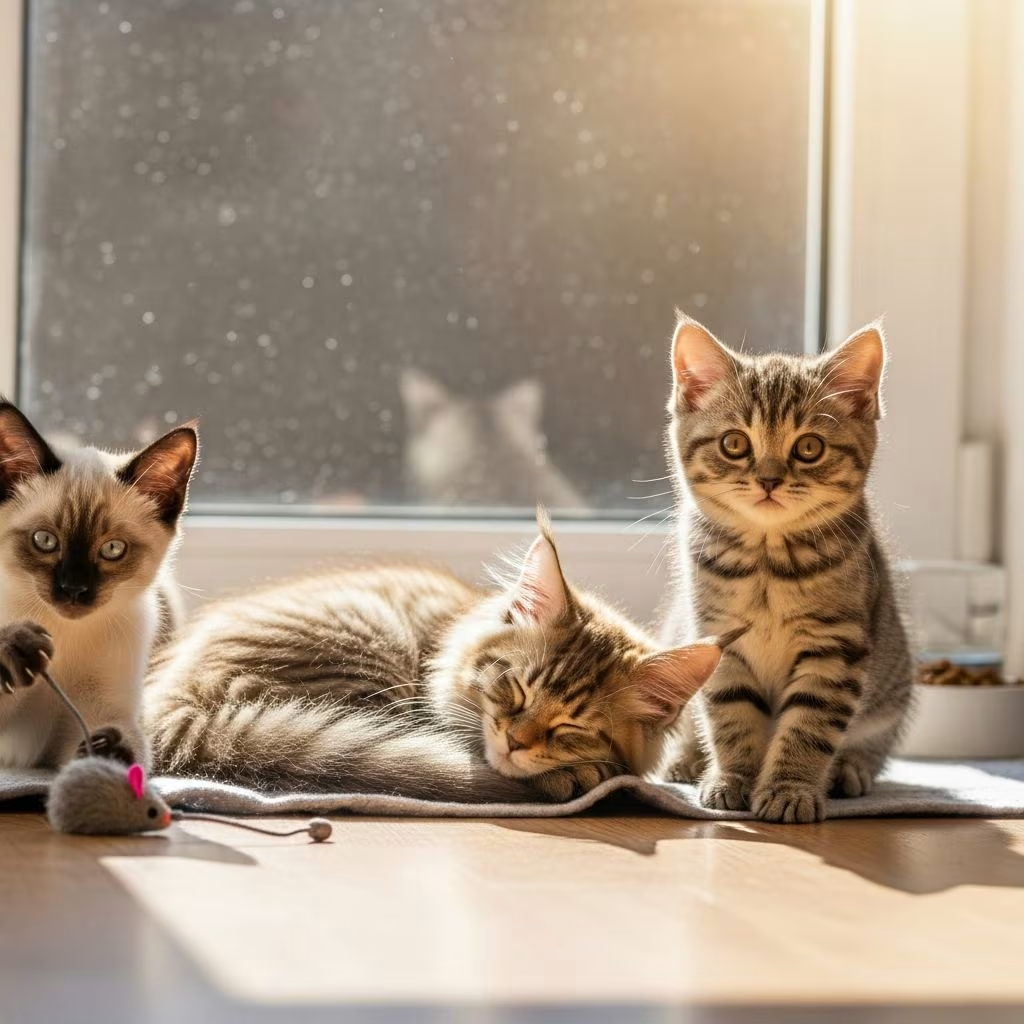
Purchasing a purebred kitten can bring immense joy, but it comes with significant risks if sourced incorrectly. From unethical breeders and kitten mills to online scams, many families face heartbreak from unhealthy or misrepresented cats. This guide outlines proven strategies to secure a thriving purebred kitten ethically and safely, prioritizing welfare, health testing, and transparency.
Top 7 Tips For Finding a Healthy, Happy Purebred Kitten
Navigating the world of purebred kittens requires diligence. Reputable sources emphasize research, in-person visits, and verification to minimize genetic issues, poor socialization, and fraud. Here’s how to proceed step-by-step.
1. Start With Breeders You Can See and Trust
The foundation of a safe purchase is a verifiable breeder. Scams abound on social media and websites with stock photos and vague responses. Confirm identity by requesting government ID, utility bills, or property details to match their claimed location—not just a first name or profile picture.
- Request live video calls showing current kittens in their actual environment, not pre-recorded or recycled images.
- Verify the setup: Kittens should be raised underfoot in a clean home with family interaction, toys, and enrichment, not isolated cages.
- Contact references: Speak to previous buyers and the breeder’s veterinarian for health history and welfare confirmation.
- Ask for proof of registration with breed clubs like The International Cat Association (TICA) or Cat Fanciers’ Association (CFA), indicating adherence to ethical standards.
Trusted breeders invest in socialization from birth, handling kittens daily to build confidence and reduce behavioral issues later.
2. Demand Full Health Documentation and Genetic Testing
Health is non-negotiable. Insist on veterinary records for the kitten and parents, including genetic tests for breed-specific conditions like hypertrophic cardiomyopathy (HCM) in Maine Coons or polycystic kidney disease (PKD) in Persians.
- Parents must have OFA, UC Davis, or equivalent screening results—never accept verbal assurances.
- Kitten paperwork: First vaccines, deworming, fecal tests, microchip registration, and a vet health certificate within 7 days of sale.
- Guarantees: Reputable sellers offer 1-2 year congenital defect warranties, covering diagnostics and treatments.
Without this, you’re gambling with conditions that could cost thousands in vet bills. The American Veterinary Medical Association stresses pre-purchase health verification to protect buyers.
3. Visit the Facility In-Person—Never Ship Blindly
Virtual tours are insufficient; insist on an in-home visit. Observe the mother (and sire if on-site): She should be friendly, well-groomed, and nursing comfortably. Kittens at 8-12 weeks should be playful, with clear eyes, clean ears, firm bodies, and no sneezing or diarrhea.
- Red flags: Overcrowding, foul odors, lethargic cats, early weaning (before 8 weeks), or reluctance to show parents/siblings.
- Interact freely: Healthy kittens engage curiously, not fearfully.
In-person meetings allow personality matching—even within breeds, traits vary widely.
4. Research the Breed Thoroughly
Not all purebreds suit every lifestyle. Maine Coons need space for their size; Siamese crave attention. Study via CFA breed profiles: grooming needs, activity levels, health predispositions, and temperament.
| Breed | Temperament | Health Concerns | Space Needs |
|---|---|---|---|
| Maine Coon | Gentle giant, dog-like | HCM, hip dysplasia | Large home/active |
| Ragdoll | Laid-back, affectionate | HCM, PKD | Indoor calm |
| Bengal | Energetic, playful | Minimal | High stimulation |
| Sphynx | Social, warm-seeking | Skin issues, HCM | Warm environment |
Match to your family—consider allergies, children, other pets.
5. Understand the True Costs Involved
Purebred kittens range $1,000-$5,000+, but budget for lifelong expenses: premium food ($50+/month), annual vetting ($300+), insurance ($20+/month), litter ($30+/month), and emergencies ($1,000+).
- Avoid lowball prices signaling mills.
- Contracts often include spay/neuter clauses or show-quality premiums.
Ethical breeders charge for quality care, not profit maximization.
6. Prepare Your Home Before Bringing Kitten Home
A smooth transition prevents stress. Kitten-proof: secure cords, hide toxins, cover outlets.
- Essentials: AAFCO-approved kitten food, stainless bowls, litter box (one per cat +1), unscented clumping litter, carrier, bed, scratchers, toys (wand, balls), brush.
- Familiarize scents: Leave a blanket at breeder’s weeks prior for mum/litter smells.
- Setup a safe room for first days with litter, food, and littermates’ blanket.
Include calming pheromones like Feliway.
7. Explore Verified Purebred Kitten Options
Start with TICA/CFA breeder directories or verified platforms linking to screened catteries. Popular ethical options:
- Maine Coon: Majestic, sociable giants.
- Sphynx: Loving, hairless cuddlers.
- British Shorthair: Calm, plush-coated.
- Scottish Fold: Sweet, folded ears (health-tested only).
- Ragdoll: Floppy, blue-eyed lovers.
- Abyssinian: Active, elegant.
- Devon Rex: Playful, wavy-coated.
- Bengal: Wild-looking athletes.
- Oriental: Sleek, vocal companions.
These connect to breeders meeting gold standards.
Red Flags: Places to Absolutely Avoid
Steer clear to prevent funding cruelty:
- Pet Stores/Markets: Source from mills pumping kittens for profit, ignoring health.
- Online Scams: “Ready now” posts, wire transfers, unverified shipping.
- Kitten Mills: Mass production in poor conditions leading to diseases.
- Avoid: No visits, no papers, sob stories, multi-breed litters yearly.
Frequently Asked Questions (FAQs)
Q: How young can I take a kitten home?
A: Minimum 8-12 weeks for weaning, socialization, and vaccines. Earlier risks developmental issues.
Q: What’s in a reputable kitten packet?
A: Health records, pedigree, food sample, toys, blanket, contract, microchip info.
Q: Can I adopt purebreds instead?
A: Yes! Shelters and breed rescues have purebreds needing homes, saving lives.
Q: How to spot a scam breeder?
A: Evasive answers, no visits/docs, pressure sales, overseas shipping.
Q: Do all purebreds have health issues?
A: Responsible breeding minimizes risks via testing; research breed stats.
By following these tips, you’ll welcome a joyful, healthy purebred kitten. Prioritize ethics for a lifetime bond.
References
- 9 Things to Do If You Want to Buy a Purebred Cat: Vet Approved — Catster. 2023-10-15. https://www.catster.com/lifestyle/buy-purebred-cat-breed/
- Essential Guide to Buying a Purebred Kitten — PurebredKitties. 2024-05-20. https://purebredkitties.com/blogs/purebred-cats-care/essential-guide-to-buying-a-purebred-kitten
- Where to Find a Healthy, Happy Purebred Kitten – Without the Risks — Catster. 2024-08-12. https://www.catster.com/lifestyle/where-to-find-a-healthy-happy-purebred-kitten-without-the-risks/
- Questions to ask breeder | Part 2 of 3 Guide to buying purebred kitten — YouTube (Cattery Channel). 2023-11-10. https://www.youtube.com/watch?v=3fIwnm8xvEg
- How to avoid scams when buying a purebred cat — TheCatSite Forum (aggregated advice). 2023-07-22. https://thecatsite.com/threads/researching-for-a-new-article-how-to-avoid-scams-when-buying-a-purebred-cat.266442/



