

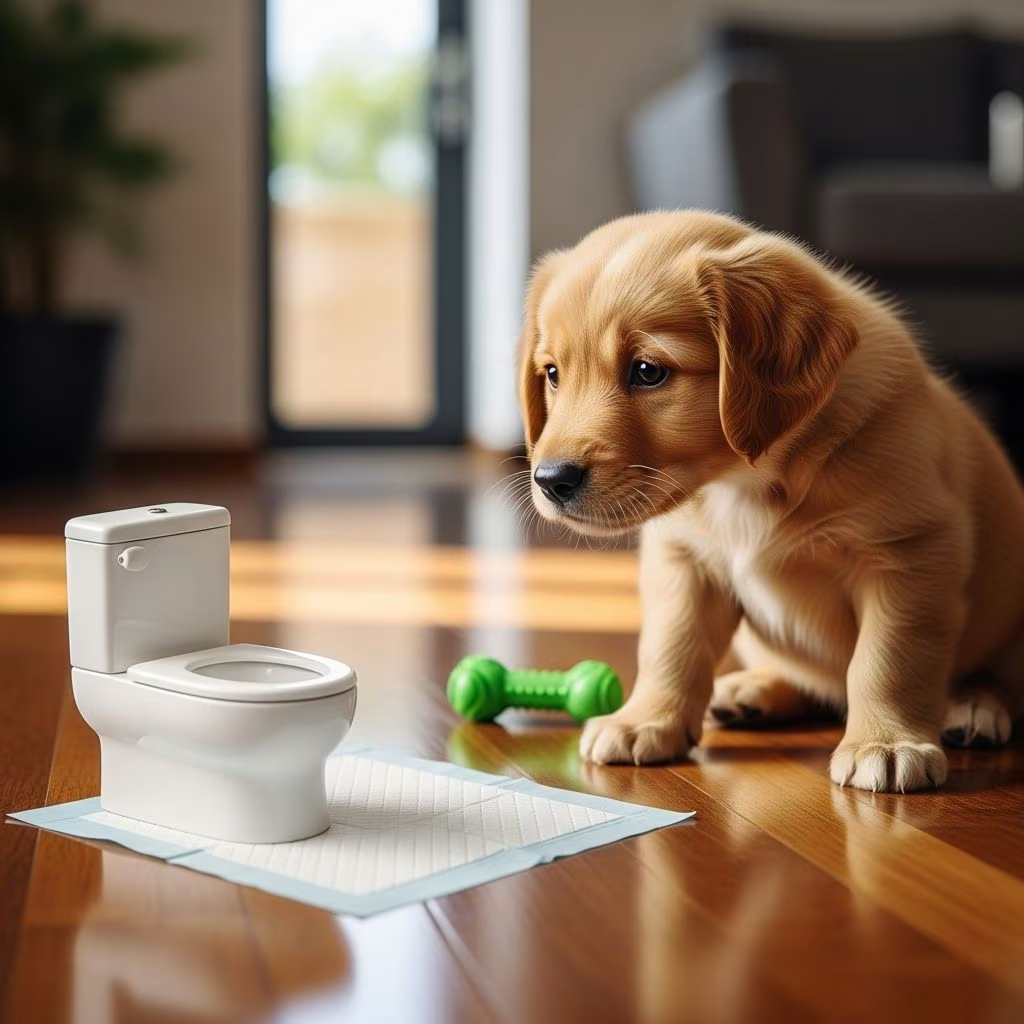
Toilet training is one of the first big responsibilities you face with a new puppy. Many families wonder exactly when they can expect their puppy to be fully toilet trained and what is realistic at each age. While every dog learns at their own pace, understanding development, timing, and proven strategies will help you stay patient and consistent while your puppy learns where and when to go.
This guide explains when puppies are ready to begin toilet training, how long the process usually takes, and what you can do at each stage to prevent accidents and build reliable bathroom habits.
When Can You Start Toilet Training a Puppy?
Puppies can begin basic toilet training as soon as they come home, usually at 8 weeks old. At this age they cannot hold their bladder for long, but you can already start building routines and teaching them that there is a right place to go.
Veterinary guidance indicates that puppies generally start to develop better bladder and bowel control between 12 and 16 weeks, and most learn consistent house training by about 4–6 months with steady practice. This does not mean no accidents at all, but it does mean far fewer surprises if you stick to a schedule and supervise closely.
Typical Readiness Signs
Your puppy is ready for focused toilet training when you notice that they:
- Can stay dry for about 1–2 hours while awake.
- Wake from naps and need to go immediately.
- Sniff, circle, or wander off right before they pee or poop.
- Are comfortable walking on a leash to a set potty spot.
These signs usually appear in the first few weeks after bringing your puppy home and become clearer by around 12 weeks.
How Long Does Puppy Toilet Training Take?
With consistent training, many puppies take 4–6 months to become reliably toilet trained. Some may learn faster, while others, particularly very small breeds or very excitable puppies, may need closer to a year to be truly consistent.
Several factors influence how long it takes:
- Age when training begins – Older puppies often have better bladder control.
- Breed and size – Smaller breeds have smaller bladders and may need more frequent breaks.
- History – Puppies from environments with poor hygiene may need more time to learn new habits.
- Owner consistency – Regular schedules and quick responses to signs greatly speed up progress.
General Puppy Bladder-Holding Guidelines
Many trainers use a simple guideline for how long a puppy can hold their bladder during the day:
- Maximum hours = puppy’s age in months + 1 (during the day, with supervision).
However, puppies should usually be given breaks before this maximum whenever possible.
| Puppy Age | Typical Daytime Break Frequency | Approximate Maximum Hold Time |
|---|---|---|
| 8–10 weeks | Every 1–2 hours | 2 hours |
| 10–12 weeks | Every 2 hours | 3 hours |
| 3–4 months | Every 2–3 hours | 3–4 hours |
| 4–6 months | Every 3–4 hours | 4–6 hours |
These are only guidelines; you may need more frequent breaks for very small, active, or young puppies.
Age-by-Age Toilet Training Expectations
Toilet training is not an overnight event. It is a gradual process where management and supervision slowly shift into habit and independence.
8–10 Weeks: Laying the Foundation
At 8–10 weeks, your goal is prevention and routine more than perfect control. Puppies at this age:
- Need to go out immediately after waking, eating, or playing.
- Often cannot hold it longer than 1–2 hours when awake.
- Should be taken to the same potty area each time to build association.
Focus on:
- Taking them out frequently, including overnight if necessary.
- Using a short, upbeat cue like “toilet” or “go potty” every time.
- Offering a small treat and praise as soon as they finish in the right place.
10–16 Weeks: Building Skills and Signals
Between 10 and 16 weeks, your puppy starts to connect the routine and may begin to show clearer signals that they need to go. You are still managing very actively at this stage.
Key priorities include:
- Keeping a predictable feeding and bathroom schedule.
- Watching for early signs: sniffing, circling, or heading to the door.
- Limiting access in the home using gates, pens, or leashes so you can supervise.
4–6 Months: Increasing Reliability
By 4–6 months, many puppies are on their way to being mostly house trained. You may still have occasional accidents, especially in new places or after exciting events, but your puppy should be:
- Going to the door or a specific area when they need to go.
- Staying dry for several hours at a time during the day.
- Making it through much of the night with few or no accidents.
Keep reinforcing good habits with praise and quick trips outside after meals, naps, and play.
Creating a Toilet Training Routine
A clear routine makes toilet training easier for both you and your puppy. Your schedule should link key daily events—sleep, food, play—with predictable bathroom breaks.
Essential Elements of a Potty Schedule
Most puppies benefit from going to their bathroom area at these times:
- Immediately after waking up (morning and after naps).
- Within 10–30 minutes after each meal or snack.
- Right after active play or training sessions.
- Before bedtime and any time they come out of a crate or pen.
Designating a Potty Area
Choose one consistent spot for your puppy to use whenever possible.
- Outdoors: a small area of grass, gravel, or yard.
- Indoors: a puppy pad or tray in a low-traffic area, especially in apartments.
Taking your dog to the same place each time helps them understand that this is the bathroom, and lingering scent cues also encourage them to go.
Using Verbal Cues and Rewards
Verbal cues help your puppy link the action to a specific word, which later helps you ask them to go before car rides or bedtime.
- Pick a short word or phrase (for example, “toilet”, “go potty”).
- Say it once or twice when your puppy is actively sniffing and about to go.
- As soon as they finish, calmly praise and offer a treat right where they went.
This combination of clear cue and immediate reward creates a strong, positive association with toileting in the correct place.
Managing Space and Supervision
Until your puppy is reliably trained, supervision and smart space management are essential to avoid accidents becoming new habits.
Limiting Access in the Home
When you cannot watch your puppy, they are more likely to sneak off and have an accident. To prevent this, use:
- Baby gates to block off rooms.
- A puppy playpen with a bed on one side and a potty pad on the other.
- A leash indoors to keep your puppy with you in one area.
These tools help you quickly spot early bathroom signals and guide your puppy to the correct spot.
Crate Use and Night-Time Management
Appropriately sized crates can be very helpful during toilet training because most dogs naturally avoid soiling their sleeping area.
- Use a crate large enough for your puppy to stand, turn around, and lie down comfortably—but not so large that one end can become a bathroom.
- Take your puppy out for a quick toilet break right before crating and immediately after you let them out.
- For young puppies, set an alarm for a night-time break or two; decrease night breaks gradually as they mature.
Crates should always be introduced positively and never used as punishment, so your puppy sees it as a safe resting place, not a confinement they fear.
Recognizing and Responding to Bathroom Signals
Every puppy has personal “tells” that they need to pee or poop. Learning these signals early lets you interrupt accidents before they happen.
Common Signs Your Puppy Needs to Go
Watch for these frequent signs:
- Sudden, intense sniffing of the floor or low objects.
- Pacing, circling, or spinning in a small area.
- Whining, restlessness, or appearing distracted.
- Heading toward the door, corner, or a previously soiled spot.
When you see one or more of these, calmly and quickly bring your puppy to the designated potty area and give your cue.
Handling Accidents the Right Way
Accidents are a normal part of toilet training. How you respond will either help your puppy learn faster or make them anxious and confused.
What to Do During an Accident
- If you catch your puppy in the act, calmly interrupt with a soft sound (like a gentle clap or “uh-uh”), then pick them up or guide them quickly to the toilet spot.
- Let them finish there, then reward if they do anything in the right place.
- Avoid yelling, rubbing their nose in the mess, or scolding after the fact; dogs do not connect delayed punishment with the earlier behavior and may just learn to fear you.
Cleaning Up Accidents
Thorough cleaning is crucial because lingering smells invite repeat accidents.
- Blot up urine with paper towels or cloth first.
- Use an enzymatic cleaner designed for pet stains to break down odor-causing molecules.
- Avoid ammonia-based products, as they can smell similar to urine to dogs and encourage re-soiling.
Indoor vs Outdoor Toilet Training (Including Apartments)
Your living situation will shape your toilet training plan. Puppies in houses with yards may go straight to outdoor training, while apartment-dwellers often rely on pads or balconies early on.
Potty Training in an Apartment
If fast outdoor access is difficult, use a structured approach:
- Choose a puppy-safe indoor potty spot such as a pee pad on a waterproof mat.
- Keep a regular routine of breaks every 2 hours, after meals, and after play.
- Reinforce correct use with treats and quiet praise immediately after your puppy uses the pad.
- Watch closely for signs and gently move your puppy to the pad if you see circling or sniffing.
Transitioning from Pads to Outdoors
When you are ready to shift from pads to outdoor toileting, do it gradually:
- Move the pad closer to the door over several days.
- Place a used pad outside at the new toilet area to transfer the scent.
- Slowly decrease pad use as your puppy reliably toilets outdoors and learns that spot.
Common Puppy Toilet Training Challenges
Even with a solid plan, you may run into setbacks. Most can be solved with small adjustments to your routine and expectations.
Puppy Pees Outside, Then Again Inside
This usually means your puppy is not fully emptying or is distracted outside.
- Stay in the toilet area for 5–10 minutes after the first pee to allow them to go again if needed.
- Keep potty time calm and boring—no play or exploration until after they finish.
- Take them back to the same spot if they begin to sniff indoors soon after returning.
Setbacks After Progress
Regression is common after changes like moving, new family members, or schedule shifts.
- Return to a stricter schedule with more frequent breaks.
- Increase supervision and use management tools again.
- Reward generously for successful toileting in the correct place to rebuild habits.
If sudden accidents appear in a previously well-trained puppy, especially with increased thirst or discomfort, consult your veterinarian to rule out medical causes such as urinary tract infections.
Frequently Asked Questions (FAQs)
Q: At what age should a puppy be fully toilet trained?
Most puppies are largely reliable by around 4–6 months with consistent training, though some may take closer to a year to be nearly accident-free.
Q: Is 6 months too old to start toilet training?
No. While it is easiest to start at 8–12 weeks, dogs of any age can learn toilet habits. Older puppies may catch on faster because they have better physical control; you still need a clear routine, supervision, and rewards.
Q: How often should I take my puppy out to pee?
Plan breaks at least every 2–3 hours for young puppies, and always after waking, eating, drinking, and playing. Many trainers use the general rule of age in months plus one as the maximum hours between breaks.
Q: Should I use puppy pads or go straight outside?
If you have fast, safe access to outdoors, going straight outside can reduce later transitions. In apartments or high-rise buildings, puppy pads offer a practical indoor option. You can always phase pads out later by gradually moving them toward the door and then outside.
Q: What if my puppy never signals they need to go?
Some puppies are subtle. Keep taking your puppy out on a tight schedule and watch closely for small changes—sniffing, slowing down, or pausing play. You can also teach a signal by encouraging your puppy to go to the door and pairing that with going outside and a reward.
References
- How to Potty Train a Puppy: From Pee Pad to Outside — Kinship. 2023-05-01. https://www.kinship.com/dog-behavior/how-to-train-puppy-to-pee-outside
- How to Potty Train a Puppy: Tips and Techniques — Kinship. 2023-04-18. https://www.kinship.com/dog-behavior/potty-train-a-puppy
- How to Potty Train a Puppy in an Apartment—Steps to Try — Kinship. 2023-06-07. https://www.kinship.com/dog-behavior/how-to-potty-train-puppy-in-apartment
- Puppy Guide: Toilet Training — Kin Vet Community. 2022-09-10. https://www.kinvet.co.uk/dogs/puppy-guide/
- House-Training Your Puppy — American Veterinary Medical Association (AVMA). 2021-03-15. https://www.avma.org/resources/pet-owners/petcare/house-training-your-puppy



