

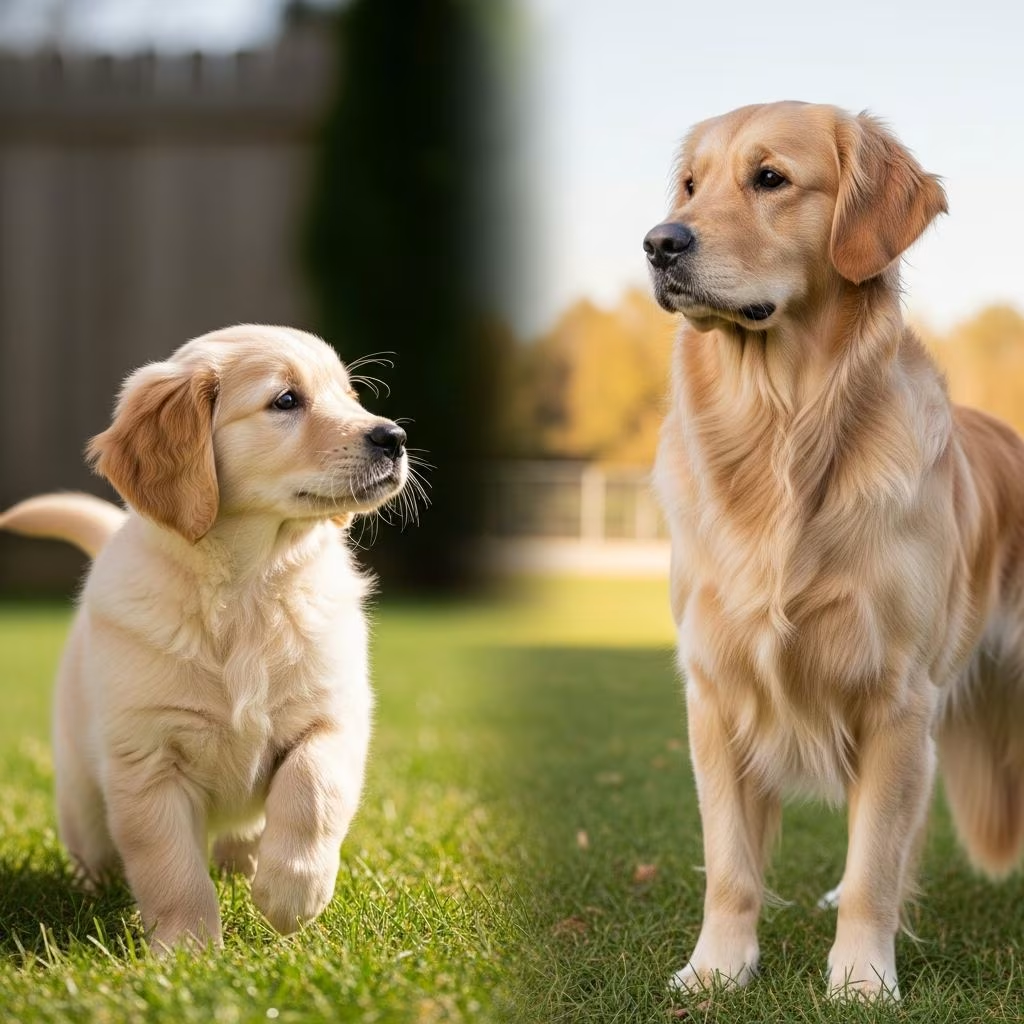
Understanding the timeline of a dog’s early life helps owners provide the right support at each phase. Puppies transition through distinct growth periods, marked by physical changes, behavioral shifts, and nutritional needs that vary by breed size. While small dogs may reach adulthood around one year, larger breeds often take up to two years or more.
Early Life: Birth to Four Weeks
The initial weeks after birth represent a critical foundation for a puppy’s health and sensory development. Newborn puppies, known as the neonatal phase from birth to about two weeks, are helpless and rely entirely on their mother for warmth, nutrition, and stimulation to eliminate waste. Their eyes remain closed, and they cannot hear, focusing solely on scent and touch to navigate toward their dam.
By two to four weeks, puppies enter the transitional stage. Eyes open around 10-14 days, allowing initial vision development, while ears begin to function, introducing sounds to their world. They start wobbling on unsteady legs, attempting to stand and walk. Baby teeth emerge, signaling the shift toward weaning from mother’s milk to soft foods. Interaction with littermates begins, laying groundwork for social skills. During this period, puppies learn bite inhibition through play, essential for future interactions with humans and other dogs.
- Sensory Milestones: Eyes open (10-14 days), ears functional (14-21 days), sense of smell strengthens.
- Motor Skills: From crawling to walking, tail wagging appears.
- Nutrition: Begin puppy mush around week 3-4, fully solid by week 6-8.
Socialization Window: Three to 14 Weeks
This phase, often called the socialization stage, is pivotal for shaping a puppy’s temperament. From three weeks to about 14 weeks, puppies become highly receptive to new experiences, people, environments, and animals. Positive exposures during this time build confidence and reduce future fear or aggression.
A primary fear period occurs around 8-12 weeks, where puppies may suddenly seem wary of familiar things. Gentle, non-forced introductions help them process these sensitivities without lasting trauma. Owners adopting at 8 weeks should prioritize varied, controlled socialization, such as short car rides, gentle handling, and meetings with vaccinated dogs and calm adults.
| Week Range | Key Focus | Care Tips |
|---|---|---|
| 3-7 Weeks | Littermate play, basic awareness | Ensure dam provides discipline; avoid separation too early. |
| 8-12 Weeks | Human bonding, first fear period | Daily novel experiences; puppy classes if vaccinated. |
| 12-14 Weeks | Expanding world, independence | Continue training basics like sit and recall. |
By 12 weeks, puppies show emerging personality traits, testing boundaries within their ‘pack,’ including family members.
Juvenile Growth: Three to Six Months
Entering the juvenile stage around three months, puppies undergo rapid physical expansion and teething. Baby teeth fall out between 3-4 months, replaced by adult dentition by 6-7 months, often causing destructive chewing. Energy surges, demanding more exercise and mental stimulation to prevent boredom-induced mischief.
Growth plates in bones are active, especially in larger breeds, making over-exercise risky for joint health. Coordination improves, allowing better play like fetch, but puppies still need supervision. Training solidifies here; consistency counters boundary-testing behaviors, such as ignoring commands or nipping.
- Physical Signs: Heightened chewing, growth spurts, improved agility.
- Behavioral Notes: Ranking attempts in household; second fear period possible at 4 months.
- Health Check: Vet visits for vaccines, deworming; monitor weight gain.
Adolescent Challenges: Six to 12 Months
Adolescence mirrors human teen years, bringing hormonal surges and rebellious streaks from six to 12 months (or longer in big breeds). Sexual maturity hits, with females entering first heat and males displaying marking or mounting. Unaltered dogs require extra management to curb instincts.
Puppies seem to ‘forget’ training, showing selective hearing and increased reactivity. Energy peaks, necessitating 1-2 hours daily exercise split into sessions. Mental games like puzzle toys prevent frustration. Neutering discussions with vets often arise here, balancing health benefits against timing for growth.
A second fear period (6-14 months) can re-emerge, causing sudden shyness. Patience and positive reinforcement rebuild confidence without force.
Path to Maturity: 12 to 24 Months
Emotional and physical maturity lags behind size, especially in medium-to-large breeds. Small breeds often stabilize by 12 months, while giants grow until 24 months. Behaviors like leg-lifting urination, mood swings, and slight energy dips signal nearing adulthood.
By 12-18 months, cognitive skills sharpen, but adolescents still crave structure. Continued training refines manners for public settings. Nutrition shifts: transition to adult food when growth slows, per vet advice, to avoid obesity or nutrient imbalances.
| Breed Size | Physical Maturity | Food Transition | Behavioral Stability |
|---|---|---|---|
| Toy/Small | 9-12 months | 9-12 months | 12 months |
| Medium | 12-15 months | 12 months | 15-18 months |
| Large/Giant | 18-24 months | 18+ months | 24 months |
Large breeds need controlled growth formulas longer to safeguard hips and elbows.
Breed Variations in Development Speed
Genetics dictate timelines: small breeds like Chihuahuas mature fastest, hitting adult size by nine months, while Great Danes may not fill out until two years. Brachycephalic types (e.g., Bulldogs) face exercise limits due to anatomy, amplifying adolescence management.
Mix breeds follow parental averages. Track via monthly weigh-ins and vet growth charts for personalized care.
Nutrition Through the Stages
Puppy formulas support rapid development with higher protein, fats, and minerals like DHA for brain health. Neonatal pups thrive on dam’s milk; wean to mush by four weeks. Juveniles need calorie-dense kibble for growth; adolescents taper to prevent excess weight.
- 0-3 Months: Milk replacer if needed; introduce soaked kibble.
- 3-12 Months: Puppy growth food; portion by weight.
- Post-Maturity: Adult formula; large breeds extend puppy diet.
Training Strategies by Age
Capitalize on each stage’s imprintability. Early socialization prevents issues; juvenile consistency builds habits; adolescent reinforcement counters regression. Use rewards, short sessions (5-10 mins), and real-life practice.
Professional classes aid ranking and impulse control.
Common Pitfalls and Pro Tips
Avoid over-exercising growing joints; punish-free methods foster trust. Monitor fear periods without coddling. Spay/neuter timing varies: early for small breeds, later for large to allow skeletal completion.
FAQs
At what age is a dog no longer a puppy?
Typically 12 months for small breeds, up to 24 months for large ones, based on physical and emotional maturity.
Why does my 8-month-old puppy act wild?
Adolescence brings hormones and testing; increase exercise and training consistency.
When to switch puppy food?
Consult vet; small breeds at 9-12 months, large at 18-24 months.
Are fear periods normal?
Yes, around 8-12 weeks and 6-14 months; expose positively without pressure.
Do all breeds develop the same?
No, size dictates pace; giants mature slowest.
References
- Puppy Development Stages & Behaviour Into Adulthood — Eukanuba. 2023. https://www.eukanuba.com/au/articles/puppy-development-stages-and-behaviour-into-adulthood
- Puppy Stages Milestones: What to Expect — Coastal Veterinary Care. 2024. https://coastalveterinarycare.vet/puppy-stages-milestones/
- The Puppy Timeline: Physical And Mental Changes — Texas A&M University College of Veterinary Medicine & Biomedical Sciences. 2023. https://vetmed.tamu.edu/news/pet-talk/puppy-timeline-part-1/
- Puppy Development Stages From Birth to 2 Years Old — Best Friends Animal Society. 2024. https://bestfriends.org/pet-care-resources/puppy-development-stages-birth-2-years-old
- Puppy Developmental Stages (Timeline) — Pooch & Mutt. 2023. https://www.poochandmutt.co.uk/blogs/puppy/developmental-stages



