

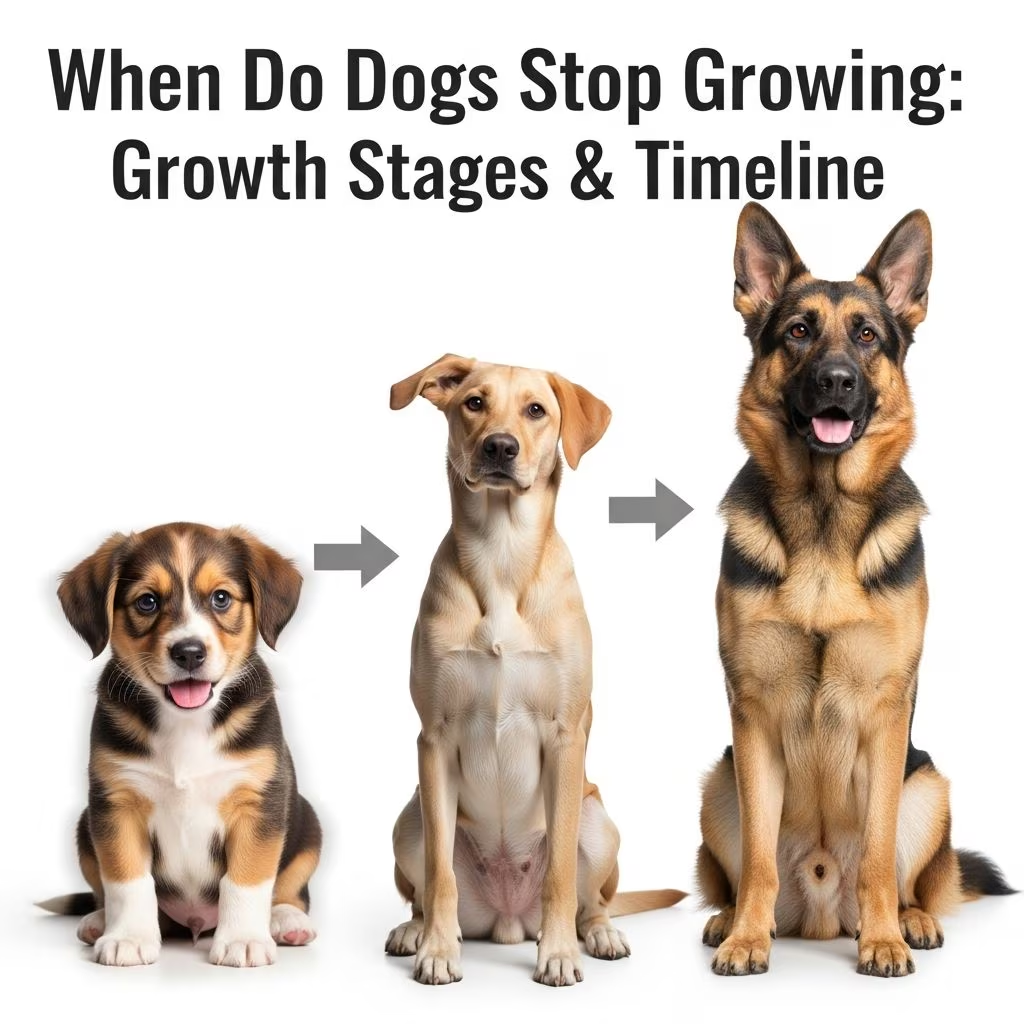
When Do Dogs Stop Growing: A Complete Guide to Puppy Development and Growth Stages
Understanding your dog’s growth timeline is essential for providing appropriate care, nutrition, and training at each developmental stage. Dogs go through several distinct phases from birth to adulthood, and the timeline varies significantly depending on breed size. While small breeds may reach their full size by 12 months, larger breeds can continue growing until 18-24 months or even longer. This comprehensive guide will walk you through each stage of puppy development and help you understand when your dog will stop growing.
The Five Major Stages of Puppy Development
Puppies progress through five distinct developmental stages, each characterized by unique physical and behavioral changes. Understanding these stages helps pet owners anticipate their puppy’s needs and provide appropriate care, training, and socialization.
Stage 1: The Neonatal Period (Birth to 2 Weeks)
The neonatal stage marks the very beginning of a puppy’s life. During this period, newborn puppies are completely dependent on their mother for survival. At birth, puppies have limited sensory abilities—only their senses of touch and taste are developed. Their eyes and ears remain closed, and their movement is restricted to a slow crawl.
Puppies in the neonatal stage cannot regulate their own body temperature and require constant warmth from their mother and littermates. They spend most of their time sleeping and eating, nursing every 1-2 hours. During this critical period, the mother’s milk provides essential nutrients, antibodies, and immune protection that help puppies develop and fight off infections.
Stage 2: The Transitional Period (2 to 4 Weeks)
Between 2 and 4 weeks of age, puppies enter the transitional stage, marked by rapid sensory development. This is when significant changes begin to occur. Puppies’ eyes start to open around this time, and by 5 weeks, their vision is well-developed. Their hearing and sense of smell also develop during this period, allowing them to interact more meaningfully with their environment and littermates.
One of the most notable developments during the transitional stage is the emergence of baby teeth, also called puppy teeth or deciduous teeth. Puppies also begin to walk, bark, growl, play with littermates, and wag their tails. Around 3-4 weeks, they become aware of their surroundings and show increasing curiosity. By the end of this stage, puppies can eliminate waste without their mother’s stimulation—a significant milestone in their development.
Around this time, puppies begin showing interest in solid foods. Pet owners should introduce soft, moistened puppy food while continuing to allow nursing. This gradual weaning process helps transition puppies from complete dependence on their mother’s milk to eating solid food.
Stage 3: The Socialization Period (3 to 12 Weeks)
The socialization period is one of the most critical stages in a puppy’s development. Spanning from approximately 3 weeks to 12 weeks of age, this period is crucial for shaping a puppy’s personality, temperament, and social skills. During this time, puppies’ senses mature, and they become increasingly aware of their surroundings.
Between 3-4 weeks, puppies begin to recognize their environment more clearly. By 5 weeks, their environmental curiosity significantly increases. This is the ideal time to introduce puppies to various people, animals, sounds, and environments. Early socialization helps prevent behavioral problems and fear-based aggression later in life.
At 6-8 weeks of age, puppies should begin vaccinations and deworming programs. This is also the appropriate time to start in-home training, including basic commands and housetraining. By 7-8 weeks, puppies become more physically coordinated and develop fully functional senses, making them ready for more structured training and basic obedience lessons.
Stage 4: The Juvenile Period (3 to 6 Months)
The juvenile stage, occurring between 3 and 6 months of age, represents a period of rapid growth and development. During this phase, puppies grow noticeably every single day. Most of the major physical changes occur during this stage, with all sense organs becoming fully developed.
One of the most significant milestones during the juvenile period is the eruption of permanent teeth. A puppy’s full set of adult teeth should be completely in place by 6-7 months of age. This process involves the baby teeth falling out to make room for larger, stronger permanent teeth.
During this stage, puppies also begin testing boundaries and pushing limitations. They learn social hierarchies through play and interactions with other dogs and people. If there are adult dogs in the household, they may help correct boundary-pushing behavior through growling or barking. Pet owners should manage these behavioral changes through consistent training and clear boundaries.
The growth rate during the juvenile period is rapid, and puppies require substantial calories and high-quality nutrition to support their development. Pet owners should continue feeding age-appropriate puppy formula to ensure proper growth.
Stage 5: The Adolescent Period (6 to 18 Months)
The adolescent stage represents the final phase of puppyhood, occurring between 6 and 18 months of age. This is often compared to the teenage years in humans. Adolescent puppies are rambunctious, energetic, and full of personality. They continue to test boundaries and may exhibit challenging behaviors as they navigate their place in the family hierarchy.
During adolescence, puppies experience sexual maturity. For male dogs, this typically occurs around 6 months, when they may begin lifting their legs to urinate. Female dogs may experience their first heat cycle around this time. Sexual maturity is an important consideration for spaying or neutering decisions. Pet owners should consult with their veterinarian about the pros and cons of these procedures.
Adolescent puppies require continued training and socialization to develop into well-behaved adult dogs. This stage is particularly important for establishing good behaviors and addressing any problematic behaviors before they become ingrained habits.
Growth Timeline by Breed Size
One of the most important factors influencing when a dog stops growing is breed size. Different breeds reach physical and emotional maturity at vastly different rates.
| Breed Size | Physical Maturity | Emotional Maturity | Examples |
| Small Breeds | 9-12 months | 12-18 months | Chihuahua, Yorkshire Terrier, Pomeranian |
| Medium Breeds | 12-15 months | 12-18 months | Beagle, Cocker Spaniel, Bulldog |
| Large Breeds | 15-18 months | 18-24 months | Golden Retriever, Labrador, German Shepherd |
| Giant Breeds | 18-24 months | 24-36 months | Great Dane, Saint Bernard, Mastiff |
Small Breed Growth Timeline
Small breed puppies, typically weighing less than 25 pounds at maturity, are the earliest to reach full adult size. Most small breeds complete their physical growth by 9-12 months of age. However, emotional and social maturity may continue developing until around 18 months. Small breeds mature faster than larger dogs, so they transition quickly through developmental stages.
Medium Breed Growth Timeline
Medium breed dogs generally reach their full physical size between 12-15 months of age. Their emotional maturity develops similarly to small breeds, typically by 18 months. During their growth period, medium breed puppies require consistent nutrition and exercise appropriate for their age to ensure proper development.
Large Breed Growth Timeline
Large breed dogs take considerably longer to reach full size than small breeds. Most large breeds continue growing until 15-18 months of age, with some still filling out until 2 years old. Emotional maturity in large breeds typically occurs between 18-24 months. Large breed puppies require special consideration during growth to prevent orthopedic problems like hip dysplasia.
Giant Breed Growth Timeline
Giant breed dogs are the slowest to mature. These dogs, typically weighing over 100 pounds at maturity, may continue growing until 18-24 months or even longer. Some giant breeds don’t reach full emotional and behavioral maturity until 2-3 years of age. During this extended growth period, giant breed puppies require carefully controlled nutrition and exercise to support healthy skeletal development and prevent joint problems.
Nutrition During Growth Stages
Proper nutrition is essential throughout all growth stages. Puppies require high-quality, nutrient-dense food formulated specifically for puppy development. The caloric and nutritional requirements change as puppies grow, and feeding guidelines should be adjusted based on the puppy’s age, size, and growth rate.
During the neonatal and early transitional periods, puppies receive all their nutrition from their mother’s milk. As they transition to solid food around 3-4 weeks, soft, moistened puppy food should be introduced. By 8-12 weeks, most puppies can eat dry puppy food, though many owners continue soaking kibble for easier digestion.
Large and giant breed puppies require specially formulated large-breed puppy food with controlled calcium and phosphorus levels. Overfeeding or providing adult dog food to large breed puppies can cause developmental orthopedic problems. Pet owners should follow feeding guidelines from their veterinarian or the food manufacturer and monitor their puppy’s body condition regularly.
Key Development Milestones
Throughout each growth stage, puppies achieve numerous developmental milestones that indicate healthy growth and development:
Birth to 2 Weeks: Eyes and ears closed, limited mobility, completely dependent on mother
2-4 Weeks: Eyes and ears open, baby teeth emerge, walking begins, can eliminate without mother’s help
4-6 Weeks: Increased awareness and curiosity, play barking and growling, learning social skills from littermates
6-8 Weeks: Vaccination and deworming begin, housetraining starts, basic obedience training appropriate, senses fully developed
3-6 Months: Rapid growth, adult teeth erupting, all sense organs fully developed, testing boundaries and learning hierarchy
6-18 Months: Sexual maturity begins, continued growth and development, energy levels remain high, behavioral changes as puppies mature
Frequently Asked Questions
Q: At what age is a dog considered fully grown?
A: The age at which a dog is fully grown depends on breed size. Small breeds typically reach full physical maturity by 12 months, medium breeds by 12-15 months, large breeds by 15-18 months, and giant breeds by 18-24 months. However, emotional maturity may continue developing beyond these timelines.
Q: How can I tell if my puppy has finished growing?
A: Your puppy has likely finished growing when they reach the typical size range for their breed and growth rate slows significantly. Your veterinarian can assess your puppy’s growth and determine if they’ve reached adult size. You can also monitor whether baby teeth have been completely replaced with permanent teeth.
Q: Does breed size really make that much difference in growth timeline?
A: Yes, breed size makes a significant difference. Small breeds mature much faster than large and giant breeds. Giant breed dogs can take twice as long to reach full physical and emotional maturity compared to small breeds, requiring different care and training approaches during growth.
Q: When should I transition my puppy to adult dog food?
A: The timing depends on your dog’s breed size. Small breeds can typically transition to adult food around 12 months, while large breeds should remain on puppy food until 18-24 months. Consult your veterinarian for specific recommendations based on your puppy’s breed and growth rate.
Q: Is it normal for puppies to have growth spurts?
A: Yes, growth spurts are completely normal during the juvenile period (3-6 months). You may notice visible daily changes as your puppy grows rapidly. This is why consistent, appropriate nutrition and veterinary care are essential during this phase.
Q: What should I do if my puppy seems to be growing too slowly or too quickly?
A: If you’re concerned about your puppy’s growth rate, consult your veterinarian. They can assess whether growth is progressing normally for your puppy’s breed and age. Abnormal growth rates can sometimes indicate underlying health issues that require attention.
Q: How does spaying or neutering affect puppy growth?
A: Spaying or neutering around 6 months (after sexual maturity begins) generally doesn’t negatively affect physical growth. However, these procedures can influence metabolism and behavior. Discuss the timing with your veterinarian to determine the best option for your individual puppy.
Q: Can I predict my puppy’s adult size?
A: Adult size depends on breed and genetics. If your puppy is a purebred, breed standards provide expected adult weight ranges. For mixed breeds or if you’re unsure, your veterinarian can make estimates based on current size, paw size, and breed characteristics. DNA testing is also available for mixed breeds.
References
- The Puppy Timeline: Physical And Mental Changes — Texas A&M School of Veterinary Medicine & Biomedical Sciences. 2025. https://vetmed.tamu.edu/news/pet-talk/puppy-timeline-part-1/
- Puppy Development Stages From Birth to 2 Years Old — Best Friends Animal Society. 2025. https://bestfriends.org/pet-care-resources/puppy-development-stages-birth-2-years-old
- A Puppy Growth Timeline: Transitions in Puppyhood — American Kennel Club. 2025. https://www.akc.org/expert-advice/puppy-information/puppy-growth-timeline-transitions-puppyhood/
- Key Milestones: Puppy Health and Care — PEDIGREE® UK. 2025. https://www.uk.pedigree.com/puppy-advice/puppy-health-and-care/key-milestones
- Puppy Developmental Stages and Behaviour — Regina Humane Society. 2025. https://reginahumanesociety.ca/programs-services/alternatives-to-admission/dog-behaviour-tips/puppy-developmental-stages-and-behaviour/



