When Do Dalmatian Puppies Get Their Spots
Discover how Dalmatian puppies develop their iconic spotted coat pattern
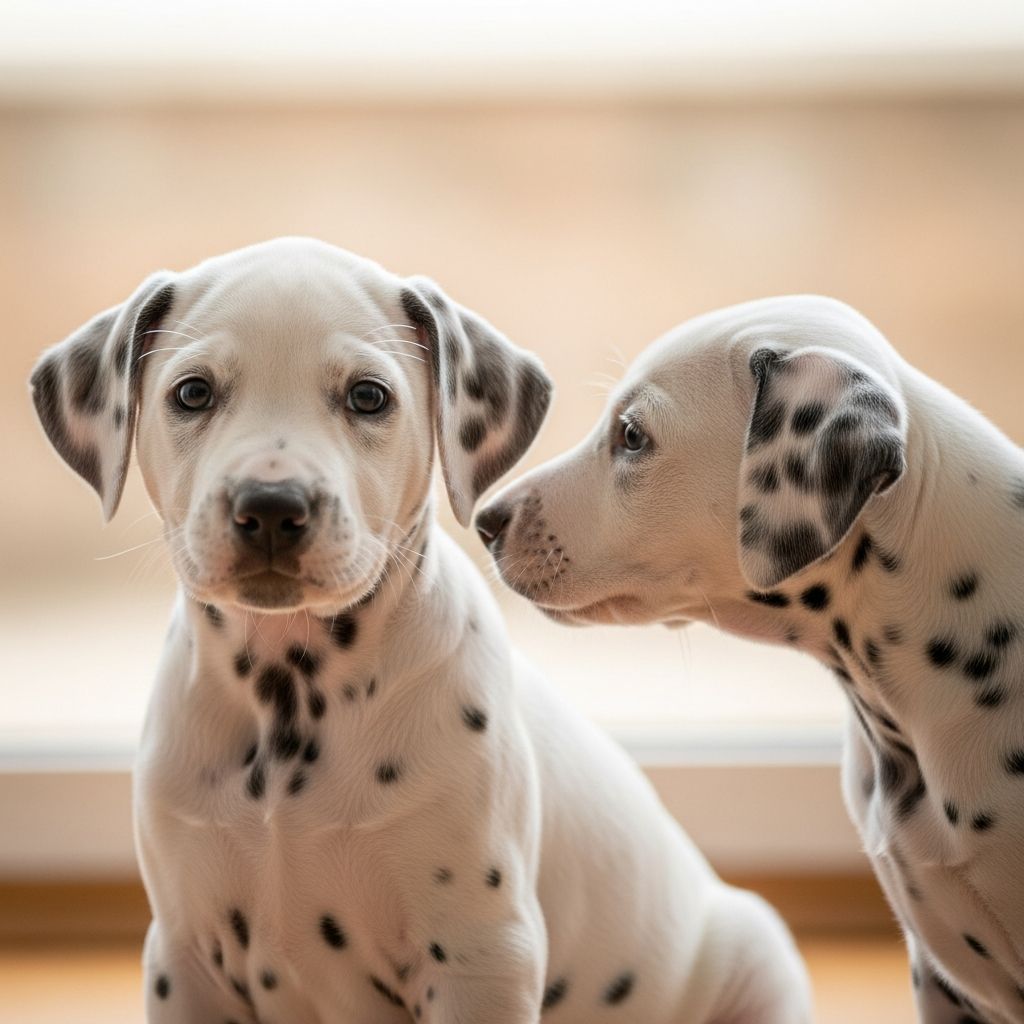
The Birth of a Spotless Pup
One of the most striking features of the Dalmatian breed is undoubtedly their distinctive coat pattern—bold black or liver-colored spots set against a pristine white background. However, many prospective Dalmatian owners are surprised to discover that newborn puppies don’t arrive into the world already sporting these characteristic markings. Instead, Dalmatian puppies are born completely white and gradually develop their iconic spots over the course of several weeks as they grow and mature. This fascinating developmental process represents one of nature’s most captivating examples of canine genetics in action.
Understanding when and how these spots emerge can help new owners set appropriate expectations and appreciate the remarkable biological processes that shape their puppies’ appearance during their earliest months of life.
Timing of Spot Development
The emergence of spots in Dalmatian puppies typically begins within the first few weeks of life and continues to develop gradually. Most puppies will display visible spotting by the time they are ready to leave their mother and join their new families, typically around 8 to 12 weeks of age. However, the developmental process doesn’t stop there—the spots continue to become more pronounced and defined as the puppy matures into adulthood.
The rate at which spots appear can vary between individual puppies. Some may show their markings earlier than others, and the number and distribution of spots may differ from littermate to littermate. This natural variation is a normal part of canine genetics and contributes to the unique individuality of each dog.
The Genetic Foundation Behind the Pattern
The distinctive spotting pattern of Dalmatians is not a simple trait controlled by a single gene. Rather, it results from the complex interaction of multiple genetic factors working in concert. The breed’s signature appearance depends on the combined effects of several different genes, each contributing to specific aspects of the coat pattern.
The extreme piebald allele works alongside the ticked allele and the nonflecked allele to produce the characteristic pigmented spots on a white background. The piebald gene is primarily responsible for creating the white base coat, while the ticking gene determines the appearance of the spots themselves. These genes interact in specific ways to create the irregular patches of pigmentation that define the breed.
Additionally, the TYRP1 gene (also known as the Brown locus) plays a crucial role in determining whether a Dalmatian’s spots will be black or liver in color. This gene controls the production of eumelanin in melanocytes, the cells responsible for producing pigment. Research has identified linkage between this genetic marker and spot color variation within the breed, confirming its importance in determining the final coat color.
Understanding Melanocytes and Pigment Development
At the cellular level, Dalmatian spot formation depends entirely on the behavior and distribution of specialized cells called melanocytes. These pigment-producing cells are responsible for creating the colored patches that define the breed’s appearance. The spots themselves consist of irregular patches of melanocyte-populated hairs against a background of melanocyte-absent white coat.
During embryonic development, melanocytes are born and migrate throughout the developing puppy’s skin and hair follicles. The pattern of this migration determines where spots will ultimately appear on the mature dog. Scientists are still working to fully understand the precise molecular and developmental mechanisms that guide this migration process, making Dalmatian spotting an ongoing area of scientific investigation.
The interaction between these pigment-producing cells and the surrounding skin and hair creates the distinctive appearance we associate with the breed. Without this interplay between melanocytes and non-pigmented areas, the characteristic spotted pattern would not emerge.
Key Factors Influencing Spot Appearance
- Genetic inheritance: Puppies inherit alleles from both parents that determine spotting patterns and colors
- Melanocyte distribution: The location and concentration of pigment-producing cells affect spot size and placement
- Age and maturation: Spots continue to develop and become more defined as puppies grow
- Individual variation: Each puppy develops a unique pattern of spots despite being from the same litter
- Environmental factors: Sun exposure may influence the intensity of spot pigmentation over time
Black Versus Liver Spots: A Genetic Question
One of the most interesting variations within the Dalmatian breed is the distinction between black spots and liver (brown) spots. These two color options are determined by variations in the TYRP1 gene, which controls how melanin is produced and processed. Research using linkage analysis has demonstrated that specific genetic markers are associated with whether a Dalmatian will develop black or liver-colored spots.
The dominant wild-type allele at the Brown locus results in black eumelanin production, while the recessive brown allele produces brown eumelanin. This genetic difference is inherited from both parents, and puppies must receive the appropriate genetic combination to display either black or liver spots. Both color variations are equally valid within breed standards, and the choice of color is entirely a matter of genetic inheritance and personal preference.
Development Timeline: What to Expect
Birth to 2 weeks: Puppies are born entirely white with no visible spotting. The earliest hints of pigmentation may begin appearing during this period, though they are typically not yet visible to the naked eye.
2 to 4 weeks: The first visible spots begin to appear, usually starting as light markings that gradually darken. Puppies at this age are still nursing and bonding with their mother.
4 to 8 weeks: Spots become increasingly prominent and darker as the puppies continue to develop. By this age, most puppies have sufficient spotting to clearly identify them as Dalmatians.
8 to 12 weeks: The spotting pattern becomes well-defined and closely resembles the adult pattern. This is typically when puppies are ready to transition to their new homes.
Beyond 12 weeks: Spots continue to develop and may become more defined and darker with continued maturation through the first year of life.
Ongoing Scientific Research into Spotting Mechanisms
Despite decades of familiarity with Dalmatians, scientists are still working to fully understand the precise mechanisms that govern spot formation. A major research initiative led by developmental biologists is investigating how the genetic instructions translate into the actual pattern of pigmented and non-pigmented areas on the coat.
This research employs both experimental approaches and mathematical modeling to understand how melanocytes are born, how they migrate during development, and what factors determine where they ultimately settle. By creating comprehensive mathematical models of mammalian pigmentation, researchers hope to gain insights not only into Dalmatian coat patterns but also into broader principles of developmental biology that apply across species.
These studies have important implications beyond dog breeding. Understanding the genetic basis of pigmentation patterns has potential applications for studying human genetics, disease susceptibility, and developmental processes that affect mammals more broadly.
Frequently Asked Questions About Dalmatian Spot Development
Are all Dalmatian puppies born completely white?
Yes, all Dalmatian puppies are born with a solid white coat. No spots are present at birth; they develop gradually over the following weeks.
When should I expect to see my Dalmatian puppy’s spots?
Most puppies begin showing visible spots between 2 and 4 weeks of age, with the pattern becoming quite clear by 8 to 12 weeks.
Will my Dalmatian puppy’s spots change color as they grow?
The spots may darken and become more defined with age, but the basic color (black or liver) is determined genetically and typically remains consistent throughout the dog’s life.
Can I predict my puppy’s final spot pattern from early puppyhood?
While the general pattern becomes visible relatively early, the final distribution and intensity of spots may continue to develop throughout the first year of life.
Do Dalmatians’ spots have any health implications?
The genes responsible for spotting patterns appear to have complex interactions with other aspects of canine genetics, and researchers are investigating potential connections to various health conditions.
The Significance of Understanding Development
Appreciating how and when Dalmatian spots develop provides valuable insight into the complexity of canine genetics and the remarkable processes that shape each puppy’s appearance. Rather than being a static feature present from birth, the spotted coat represents a dynamic developmental process guided by multiple interacting genes and cellular mechanisms.
For Dalmatian owners and breed enthusiasts, understanding this timeline helps set realistic expectations when bringing home a new puppy. It also deepens appreciation for the biological sophistication underlying one of the most visually distinctive dog breeds in the world.
References
- The color of a Dalmatian’s spots: Linkage evidence to support the TYRP1 locus — National Center for Biotechnology Information (NCBI). 2006. https://pmc.ncbi.nlm.nih.gov/articles/PMC1192828/
- Researchers to investigate how the Dalmatian got its spots — EurekAlert, University of Bath. https://www.eurekalert.org/news-releases/1046210
- How the Dalmatian got its spots — University of Bath. https://www.bath.ac.uk/announcements/how-the-dalmatian-got-its-spots/
Similar Articles








Read full bio of Sneha Tete