

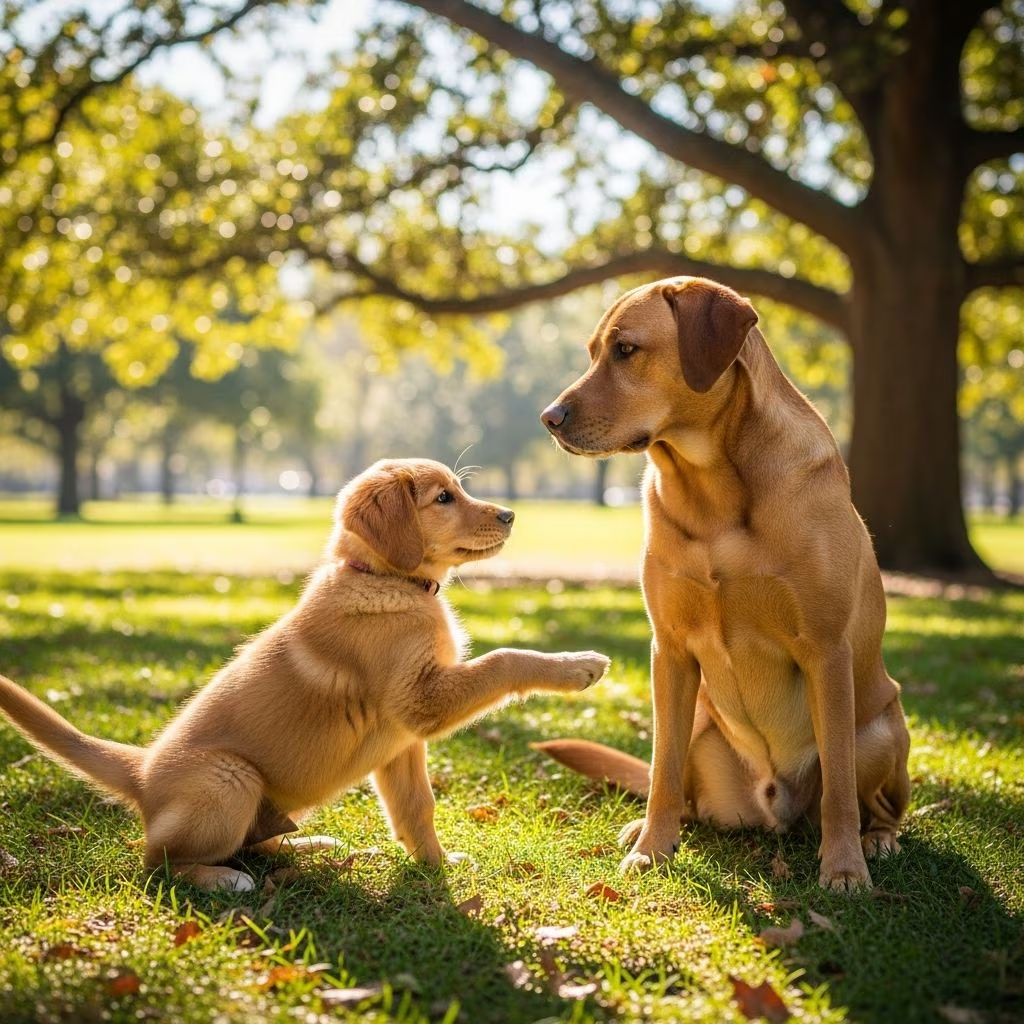
Bringing home a new puppy is exciting, but knowing when they can safely interact with other dogs is crucial for their health and development. Puppies should ideally wait until fully vaccinated—typically around 16-20 weeks—before unrestricted play with unfamiliar dogs to avoid deadly diseases like parvovirus. However, the critical socialization period from 3-12 weeks demands safe, controlled exposures to build confidence and prevent future behavioral issues.
Main Takeaways
- **Health First:** Unvaccinated puppies risk infectious diseases from contact with other dogs’ feces or saliva in shared spaces.
- **Socialization Balance:** Early positive experiences shape adult behavior; delay full vaccination but use safe methods like puppy classes.
- **Vet Guidance:** Always consult your veterinarian for personalized vaccination and socialization timelines based on breed, location, and health.
Socialization vs. Vaccinations: Which Comes First?
Puppy socialization has gained attention as experts recognize its role in preventing fear-based behaviors in adulthood. Socialization exposes puppies to diverse dogs, people, environments, and stimuli, helping them develop into confident, adaptable companions. Yet, this overlaps with the vaccination series, creating a dilemma: puppies receive initial shots at 6-8 weeks, boosters every 3-4 weeks until 16 weeks.
Waiting until fully vaccinated means missing the prime 3-12 week window where experiences have outsized impact—puppies form lasting impressions, viewing novel things as safe or scary. Poor socialization risks reactivity, anxiety, or aggression toward strangers, leashes, or stimuli. Conversely, premature exposure risks parvo, distemper, or kennel cough, which are highly contagious and often fatal in young pups with maternal antibodies waning around 12 weeks.
The consensus: Prioritize vaccinations but pursue **safe socialization** through controlled, low-risk methods. Veterinarians and trainers like Charlie DiBono emphasize broad world exposure over dog-dog play initially.
What Is the Best Age for Puppy Socialization?
The optimal socialization window spans **3-12 weeks**, peaking at 3-14 weeks per veterinary behaviorists. During this ‘fear period,’ puppies are sponges for positive associations—gentle exposures to sounds, surfaces, people, and dogs imprint trust rather than fear.
- Weeks 3-8: Home-based exposures; invite known vaccinated dogs for supervised sniffs.
- Weeks 8-12: Enroll in puppy preschool with age-matched, vet-checked pups.
- Weeks 12-16: Expand to vaccinated adult dogs; avoid dog parks.
- Post-16 Weeks: Full interactions possible after final vaccines and titer tests if needed.
Beyond 16 weeks, puppies enter a secondary fear phase; corrections are harder, underscoring urgency.
Why Socialization Is So Important for Your Puppy
Well-socialized puppies grow into dogs comfortable in varied settings, reducing issues like leash reactivity or stranger fear. Benefits include:
- Confidence Building: Positive novel exposures prevent neophobia (fear of new things).
- Behavioral Prevention: Cuts aggression, anxiety; fosters calm responses to mail carriers, kids, vacuums.
- Bonding: Shared adventures strengthen human-dog trust.
- Lifelong Ease: Travel-ready dogs join hikes, cafes without stress.
Neglect leads to isolation, higher surrender rates. Studies show early socialization yields 80-90% more resilient adults.
Safe Ways to Socialize Puppies Before Full Vaccination
You don’t need dog parks or off-leash play. Focus on **interactive** (controlled meetings) and **observational** (passive exposures) socialization.
Interactive Socialization
Curate positive dog-human meetings:
- Choose calm, vaccinated adult dogs or littermates for leashed greetings.
- Use treats/praise for calm sits during sniffs; end if puppy stresses (yawns, tucked tail).
- Enroll in AVSAB-approved puppy classes: Pups 8-16 weeks, one vaccine minimum, no dog park history. Low parvo risk (cleaned facilities, same-age litters).
Observational Socialization
Expose to world’s stimuli safely:
- Sounds: Baby cries, sirens at low volume + treats.
- Sights/Smells: Car rides, walks in strollers past dogs/people.
- Surfaces: Grates, tiles, grass—no shared dog areas.
- People: Diverse ages, hats, umbrellas; gentle handling.
Carry puppy in arms/public transport for views without ground contact. Aim for 100+ positive exposures weekly.
Puppy Classes: The Safest Socialization Option
Puppy preschools bridge the gap, offering play with peers plus training on bite inhibition, housetraining. Benefits:
| Feature | Benefit |
|---|---|
| Vet-Checked Pups | Low disease risk |
| Controlled Play | Teaches polite greetings |
| Parent Education | Body language reading |
| Novel Stimuli | Desensitizes early |
Seek classes following AVMA/AVSAB protocols: Disinfectant use, no unvaccinated adults.
Risks of Early Dog Contact and How to Mitigate
Main threats: Parvovirus (feces), distemper (respiratory). Mitigate by:
- Avoiding dog areas (parks, walks where poop lingers).
- Using private yards with known dogs.
- Titering maternal antibodies post-12 weeks.
- Core vaccines: DHPP at 6,10,14,16 weeks.
Frequently Asked Questions (FAQs)
Can my 8-week-old puppy meet my vaccinated adult dog?
Yes, if the adult is up-to-date, healthy, and low-shedding breeds preferred. Supervise leashed intros in clean yard.
Is it okay to take my puppy on walks before vaccines?
Carry or stroller only; avoid grass/dog zones. Observe from afar.
What if I miss the socialization window?
Never too late—use gradual desensitization, but early is easiest. Pro trainer helps.
How do I know if my puppy class is safe?
Require vaccines proof, waiver excluding dog park pups, use parvo-killing cleaners.
Signs my puppy is overwhelmed during socialization?
Averted gaze, lip licks, crouching, barking. Pause and retreat positively.
Long-Term Socialization Beyond Puppyhood
Continue exposures lifelong: New dogs controlled, varied outings. Reinforces early lessons for a versatile adult.
Socialization transforms skittish pups into joyful companions. With smart timing, your puppy thrives safely.
References
- Here’s When Your Puppy Can Be Around Other Dogs — Kinship. 2023. https://www.kinship.com/dog-health/when-can-puppy-meet-dogs
- There Is More Than One “Right” Way to Socialize Your Puppy — Kinship. 2023. https://www.kinship.com/dog-behavior/socialize-your-puppy
- Here’s Why You Need to Socialize Your Dog ASAP — Kinship. 2023. https://www.kinship.com/dog-behavior/how-to-socialize-a-puppy
- American Veterinary Society of Animal Behavior Position Statement on Puppy Socialization — AVSAB. 2008 (authoritative guideline). https://avsab.org/wp-content/uploads/2018/03/Puppy_Socialization_Position_Statement_download-10-3-14.pdf
- 2022 AAHA Canine Vaccination Guidelines — American Animal Hospital Association. 2022-10-12. https://www.aaha.org/resources/2022-aaha-canine-vaccination-guidelines/



