

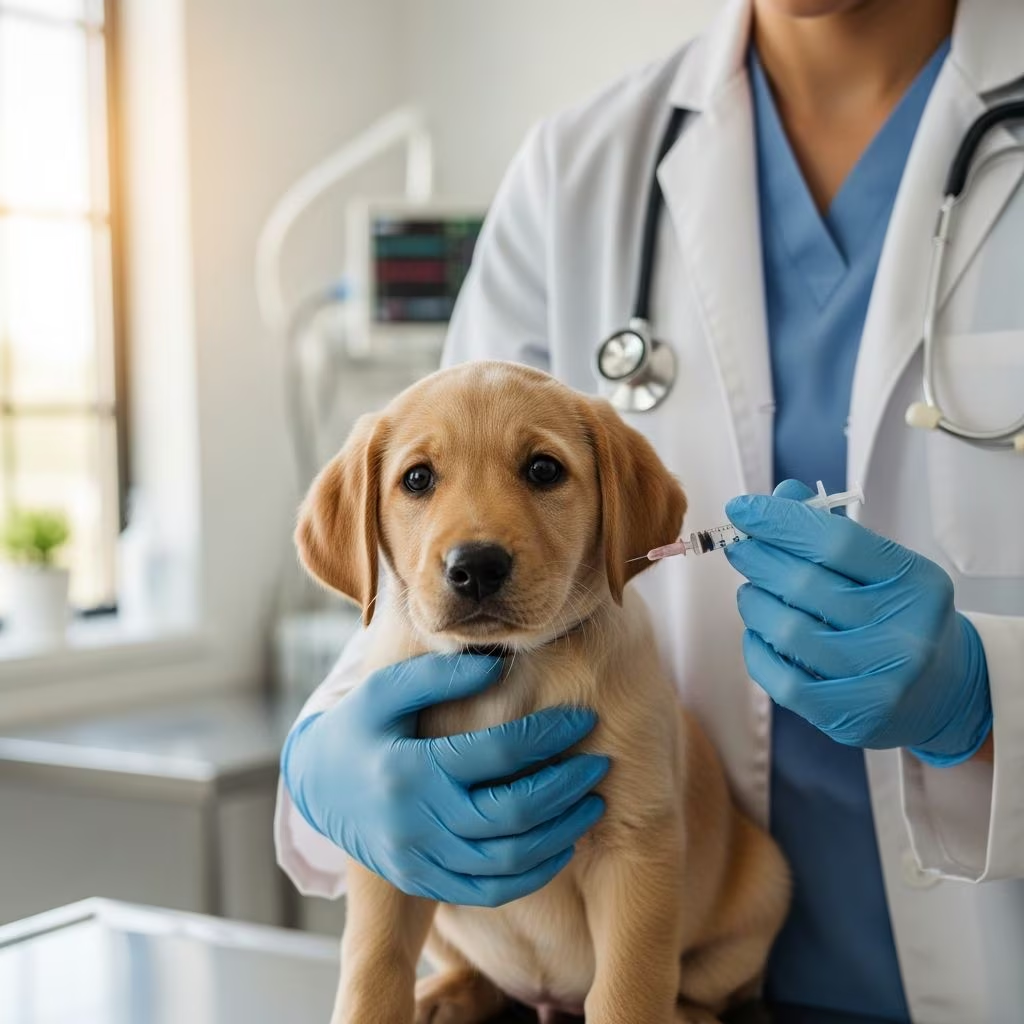
Rabies is a deadly viral disease that affects the nervous system of mammals, including dogs, and is almost always fatal once symptoms appear. Puppies can receive their first rabies vaccine starting at **12 weeks of age**, though local laws may dictate specifics, with most areas requiring vaccination by 3-6 months. This timing ensures the puppy’s immune system is mature enough to respond effectively while complying with legal mandates for public safety.
The rabies vaccine is a core vaccination, legally required in nearly all U.S. states, protecting not just your puppy but also your family and community from zoonotic transmission. Understanding the precise timing, integrated with other puppy shots, is crucial for new dog owners to prevent gaps in immunity during vulnerable early months.
Why Rabies Vaccination Is Essential for Puppies
Rabies spreads through saliva, typically via bites from infected wildlife like bats, raccoons, skunks, or foxes, which are primary reservoirs in the U.S. Unvaccinated puppies face high risk during socialization periods when exposure to parks, other dogs, or outdoors increases. The virus attacks the central nervous system, causing **hallucinations, fear of water (hydrophobia), excessive drooling, paralysis, aggression, and dehydration**—symptoms that progress rapidly to death within days.
Vaccination stimulates antibody production to neutralize the virus before it reaches the brain. It’s proven **highly effective**, with studies showing near-100% protection when administered correctly. Beyond personal protection, it fulfills legal obligations: most states mandate rabies shots for licensing, boarding, grooming, and travel, with non-compliance risking fines up to $1,000, quarantine, or euthanasia in bite incidents.
Puppies receive maternal antibodies via colostrum, offering temporary protection but waning by 6-12 weeks, coinciding with heightened exposure risks. Delaying beyond legal minimums heightens vulnerability, especially in rabies-endemic areas.
The Ideal Age for a Puppy’s First Rabies Shot
Veterinarians universally recommend the first rabies vaccine between **12 and 16 weeks (3-4 months)**, as puppies’ immune systems are sufficiently developed. Rabies vaccines are licensed for use from 12 weeks onward by manufacturers and approved by bodies like the USDA.
- 12 weeks minimum: Immune maturity threshold; earlier administration risks poor response.
- By 16 weeks: Aligns with final core vaccine boosters (DHPP) for comprehensive protection.
- Local variations: Some states require by 3 months (e.g., Texas, Pennsylvania), others by 4-6 months.
Some clinics administer as late as 20 weeks if integrating with lifestyle vaccines, but earlier is safer to minimize unvaccinated exposure periods. A pre-vaccine exam confirms health status—no fever, illness, or recent stressors.
Puppy Vaccination Schedule Including Rabies
Rabies fits into a broader **puppy vaccination schedule** starting at 6-8 weeks. Core vaccines build layered immunity against distemper, parvovirus, adenovirus, and parainfluenza (DHPP), with rabies added later.
| Puppy Age | Core Vaccines | Optional/Lifestyle Vaccines |
|---|---|---|
| 6-8 weeks | DHPP (Distemper, Parvo, etc.) | Bordetella |
| 10-12 weeks | DHPP booster | Influenza, Leptospirosis, Lyme |
| 12-16 weeks | DHPP booster + First Rabies | Bordetella, Leptospirosis per risk |
| 16-18 weeks | DHPP final booster | Influenza, Lyme |
| 12-16 months | DHPP + Rabies booster | As needed |
| Every 1-3 years | Rabies booster | Annual lifestyle vaccines |
This schedule accounts for maternal antibody interference, which can blunt responses before 16 weeks—hence the multi-dose series. Vets tailor based on lifestyle: high-risk pups (e.g., boarding, hiking) get extras like Bordetella or Lepto earlier.
Rabies Booster Schedule for Dogs
After the initial shot, boosters maintain lifelong immunity. Protocols depend on vaccine type (1-year or 3-year) and state law:
- 1-year booster: Required one year post-initial dose.
- 3-year cycle: After the 1-year booster, switch to every 3 years if permitted.
- Frequency variations: Some locales demand annual proof despite 3-year vaccines.
Carry certificates and tags always; lost records mean restarting the series. Post-exposure, boosters plus quarantine apply—even vaccinated dogs may need observation.
State Laws on Rabies Vaccination for Puppies
Rabies laws vary by state, county, and city, enforced for public health. Key elements include:
- Minimum age: 3 months (e.g., Maine, Ontario influence), 4 months (many U.S. states), up to 6 months elsewhere.
- Proof required: Certificates for licensing; tags on collars.
- Penalties: Fines, 10-day quarantine for bites (unvaccinated: 6 months), or euthanasia.
- Exemptions: Rare medical contraindications via vet certification.
Check via state agriculture departments or AVMA resources. Examples: Texas mandates by 4 months; Pennsylvania aligns with 12-16 weeks.
What to Expect During Your Puppy’s Rabies Vaccination
Visits last 15-30 minutes. Steps include:
- Exam: Full check—weight, temp, heart, lungs, gums; review history.
- Vaccine admin: Subcutaneous injection (loose skin over shoulder); quick pinch.
- Observation: 15-30 minutes for reactions.
- Certificate: Issued with expiration; attach tag.
Cost: $20-30 standalone, often bundled in wellness exams ($50-100).
Side Effects and Safety of the Rabies Vaccine
Most puppies tolerate well, but mild reactions occur in <1%:
- Common: Soreness, lethargy, mild fever (24-48 hours).
- Rare: Hives, vomiting, facial swelling—seek immediate vet care.
- Allergic: Anaphylaxis (<0.1%); epinephrine reverses.
No evidence links to chronic issues; benefits far outweigh risks given rabies fatality. Puppies with prior vaccine reactions get alternatives or titers.
Frequently Asked Questions (FAQs)
Can puppies get the rabies shot before 12 weeks?
No, vaccines are not licensed or effective before 12 weeks due to immature immunity.
Is the rabies vaccine mandatory for all dogs?
Yes, in nearly all U.S. states by law, with fines for non-compliance.
How long does a puppy’s rabies vaccine last?
Initial: 1 year; boosters every 1-3 years thereafter.
What if my puppy misses a rabies booster?
Restart series or get titer test; risk quarantine in incidents.
Can I vaccinate my puppy myself for rabies?
No, must be by licensed vet; DIY invalidates legally.
Always consult your veterinarian for personalized advice, as schedules adapt to health, location, and risks. Proper timing safeguards your puppy’s health and your peace of mind.
References
- At What Age Can Puppies Get the Rabies Vaccine? — Penny Paws. 2023. https://pennypaws.com/blog/at-what-age-can-puppies-get-the-rabies-vaccine/
- Ultimate Guide: How often do dogs need rabies vaccine? — Ellison Drive Veterinary Hospital. 2024. https://ellisondrivevet.com/blogs/ultimate-guide-how-often-do-dogs-need-rabies-vaccine-keeping-your-canine-protected
- Puppy Vaccination Schedule: When to Get Puppies Shots — Purina. 2024. https://www.purina.com/articles/dog/puppy/health/puppy-vaccination-schedule
- Rabies Vaccine for Puppies — VCA Animal Hospitals. 2024. https://vcahospitals.com/pediatric/puppy/health-wellness/rabies-vaccine
- When Can Puppies Get a Rabies Shot? — Hershey Veterinary Hospital. 2023. https://hersheyvet.com/blog/when-can-puppies-get-a-rabies-shot/
- Rabies Vaccines in Dogs and Cats: At What Age Should We Start? — Worms & Germs Blog (Univ. of Guelph). 2025-11. https://www.wormsandgermsblog.com/2025/11/articles/miscellaneous/vaccination/rabies-vaccine-in-dogs-and-cats-at-what-age-should-we-start/
- A Complete Guide to Puppy Vaccinations — American Kennel Club. 2024. https://www.akc.org/expert-advice/health/puppy-shots-complete-guide/
- Table of Rabies Vaccination Laws — Animal Legal & Historical Center (Michigan State Univ.). 2024. https://www.animallaw.info/topic/table-rabies-vaccination-laws



