

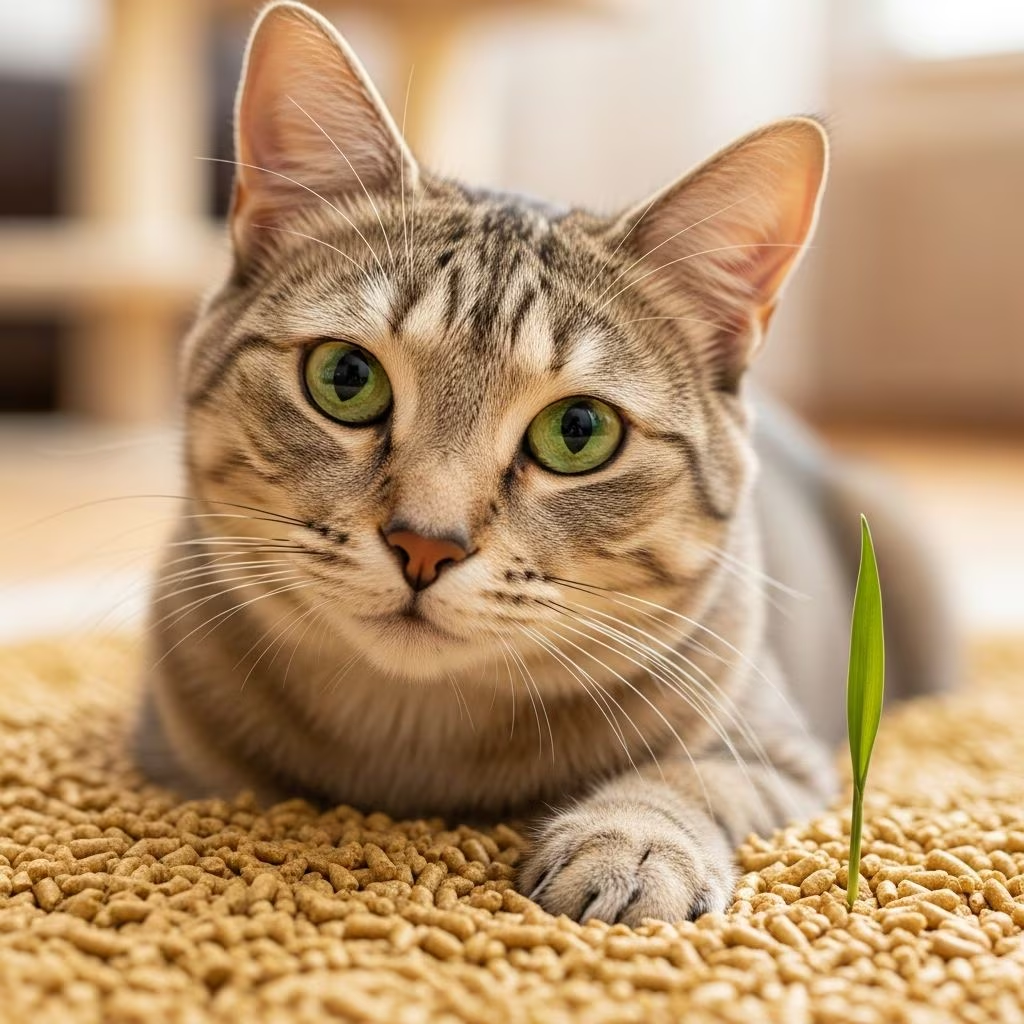
Wheat-based cat litter emerges as a leading eco-friendly option, crafted from agricultural byproducts to deliver clumping performance without the environmental drawbacks of traditional clay litters. This natural material absorbs moisture effectively, controls odors naturally, and appeals to cats with its soil-like texture.
Why Switch to Plant-Based Litters Like Wheat?
Traditional clay litters, derived from strip-mined sodium bentonite, contribute to habitat destruction and generate non-biodegradable waste. In contrast, wheat litter utilizes reclaimed grain husks, transforming waste into a renewable resource that decomposes naturally. Veterinary sources highlight its low-dust profile, reducing respiratory risks for cats and owners, while its flushable nature simplifies disposal in many households.
Key benefits include biodegradability, renewability, and chemical-free composition, making it safer for multi-pet homes and those prioritizing sustainability. Cats often adapt quickly due to the soft, paw-friendly granules.
How Wheat Cat Litter is Made and Performs
Produced from upcycled wheat crops, this litter undergoes processing to form absorbent granules that clump firmly upon contact with urine. Unlike clay, it avoids crystalline silica, a potential health hazard noted in some studies on dust inhalation. Its performance rivals commercial clumping litters: it locks in liquids, neutralizes ammonia odors via natural enzymes, and remains lightweight for easy handling.
| Litter Type | Clumping | Dust Level | Odor Control | Eco-Friendliness | Flushable |
|---|---|---|---|---|---|
| Wheat | Excellent | Low | Good | High (Biodegradable) | Yes (Many Brands) |
| Clay | Excellent | Medium-High | Excellent | Low | No |
| Corn | Good | Low | Good | High | Sometimes |
| Pine Pellets | Moderate | Low | Good (Natural Scent) | High | No |
| Paper | Poor-Moderate | Very Low | Fair | High | Yes |
This table, synthesized from veterinary and product reviews, shows wheat’s balanced profile, excelling in clumping and disposability.
Health and Safety Advantages for Cats and Homes
Wheat litter’s dust-free nature minimizes paw tracking and airborne particles, crucial for cats with asthma or allergies. Its soft texture mimics earth, encouraging instinctive digging and covering behaviors. Free from synthetic fragrances and chemicals, it lowers risks of skin irritation or toxicity from ingestion during grooming.
- Respiratory Safety: Virtually dust-free, unlike clay which can release silica particles.
- Paw Comfort: Fine granules gentle on sensitive feet, ideal for kittens or seniors.
- Low Toxicity: Natural composition avoids harmful additives found in some conventional litters.
- Odor Neutralization: Plant fibers bind smells effectively without perfumes.
Environmental Impact: A Greener Pawprint
Wheat litter reduces landfill waste as it’s compostable and septic-safe in approved quantities. Sourced from U.S. farmlands, it supports circular agriculture by repurposing byproducts that would otherwise be discarded. Compared to clay mining, which depletes resources and emits dust pollution, wheat production has a lower carbon footprint.
Brands emphasize renewability: one bushel of wheat yields enough litter for multiple cats annually, promoting sustainable farming practices.
Practical Use: Maintenance and Cost Breakdown
Fill boxes to 2-3 inches, scoop daily as clumps form solidly without crumbling. Replace fully every 1-2 weeks depending on cat count. Initial costs range $20-30 for 28-lb bags, comparable to clay when bought in bulk, with long-term savings from less frequent changes.
- Daily scooping prevents bacterial growth.
- Use enclosed boxes to minimize tracking.
- For multi-cat homes, opt for high-capacity formulas.
Transitioning Your Cat to Wheat Litter
Mix 25% wheat with current litter, increasing gradually over 7-10 days to avoid accidents. Most cats accept it readily due to its neutral scent and texture. Monitor for preferences; if resistance occurs, top with catnip or familiar soil scents.
Top Wheat Litter Brands and Features
Popular options include those using whole-grain wheat for tight clumping and flushability. Look for certifications like biodegradable or made in USA. Reviews praise their performance in odor tests and ease of use.
| Brand | Key Features | Price per lb (Approx) | Best For |
|---|---|---|---|
| Swheat Scoop | Flushable, natural, multi-cat | $1.00-1.20 | Odor control |
| World’s Best (Wheat Blend) | Clumping, low dust | $1.21 | Transitioning |
| Other Wheat Formulas | Biodegradable, unscented | $0.90-1.50 | Eco homes |
Potential Drawbacks and Solutions
Some cats may dislike the coarser feel initially; finer grinds resolve this. Flushability varies by plumbing—check local regs. It attracts moisture in humid areas, so store dry.
- Solution for Tracking: Litter mats.
- Mold Risk: Scoop promptly, ensure ventilation.
- Cost: Bulk buys lower expenses.
Comparing Wheat to Other Eco Alternatives
Versus corn: Wheat clumps harder but may track more. Pine offers scent but less clumping. Paper suits low-odor needs but absorbs less. Coconut excels in absorbency but costs more. Wheat balances all for versatility.
Frequently Asked Questions (FAQs)
Is wheat cat litter safe to flush?
Many brands are septic-safe for small amounts; verify packaging and test plumbing.
Does wheat litter control odors well?
Yes, natural absorption traps smells effectively, outperforming non-clumping options.
Can kittens use wheat litter?
Absolutely—its softness and low dust make it ideal for young cats.
How eco-friendly is wheat litter really?
Highly: biodegradable, renewable, reduces mining impacts.
Will my cat accept wheat litter?
Most do; gradual mixing ensures smooth transition.
Expert Tips for Optimal Results
Veterinarians recommend one box per cat plus one extra, placed in quiet areas. Pair with enzymatic cleaners for spots. For long-haired breeds, daily grooming prevents litter ingestion.
In multi-cat setups, wheat’s clumping shines, handling higher volumes without breakdown.
References
- Eco Friendly Cat Litter Alternatives — KM Vet. 2024-05-31. https://www.kmvet.com/site/blog/2024/05/31/cat-litter-alternatives
- Cat Litter Alternatives: What Are My Options? — Ellenton Animal Hospital. 2023-08-30. https://www.ellentonah.com/site/blog/2023/08/30/cat-litter-alternatives
- World’s Best Cat Litter: In-Depth Review (2024) — Tuft & Paw. 2024. https://www.tuftandpaw.com/blogs/cat-guides/worlds-best-cat-litter-review
- The Ultimate Guide to Types of Cat Litter — Purina US. Accessed 2026. https://www.purina.com/articles/cat/behavior/litter/types-of-cat-litter
- Choosing Litter: Part Two – Comparison of Different Types of Cat Litter — Pet Professional Guild. Accessed 2026. https://www.petprofessionalguild.com/pet-owners/pets-and-their-people/pets-and-their-people-blog/choosing-litter-part-two-comparison-of-different-types-of-cat-litter/
- Best Cat Litter Alternatives for a Cleaner Home — Petmate. Accessed 2026. https://www.petmate.com/blogs/petmate-academy/what-to-use-instead-of-cat-litter
- 11 Affordable & Eco-Friendly Cat Litter Alternatives — Cats.com. Accessed 2026. https://cats.com/eco-friendly-cat-litter-alternatives



