

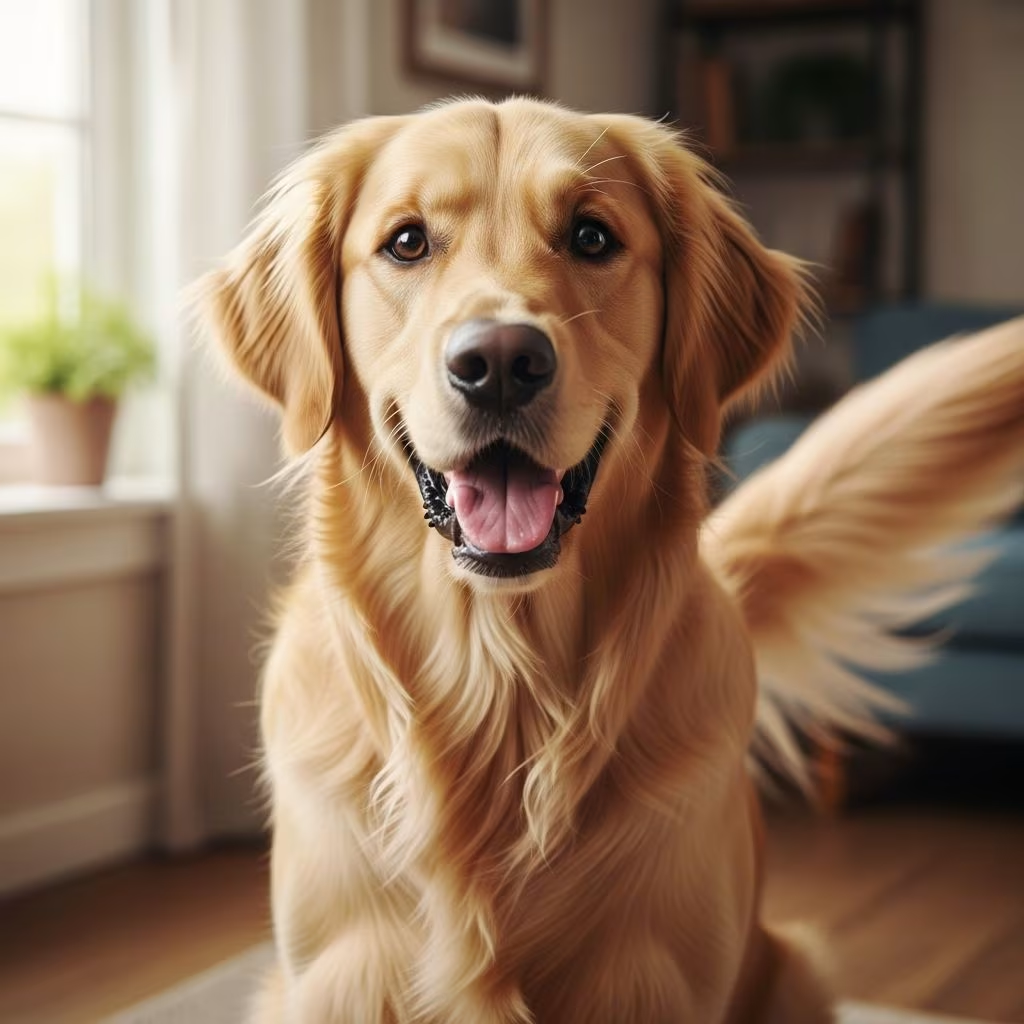
A wagging tail is one of the most recognizable dog behaviours, but it doesn’t always signal happiness. Tail wags communicate a range of emotions from joy and excitement to fear, aggression, and curiosity, depending on position, speed, and direction. Understanding these signals helps prevent misunderstandings that could lead to bites or stress.
The Myth of the Happy Tail Wag
Many assume any wagging tail means a friendly dog, but this is a dangerous misconception. A tail wag simply indicates arousal—positive or negative. For instance, a dog may wag its tail rapidly while fearful or aggressive, not just when happy. Experts emphasize reading the full body language: ears, posture, and facial expressions provide context.
Historical observations and modern studies show tail wagging evolved as a communication tool among dogs and with humans. It releases pheromones from anal sacs, enhancing signals during social interactions. Ignoring nuances can lead to mishaps, like approaching a stressed dog mistaking its wag for an invitation.
How to Read Tail Position and Speed
Dogs ‘speak’ through tail position (like words) and wag speed (like volume). Position reflects mood—relaxed, high, low—while speed shows intensity.
- Neutral position (parallel to ground): Relaxed or friendly mood, often with moderate side-to-side sweeps.
- Slightly raised: Confidence or alertness.
- High or arched over back: Agitation, dominance, or aggression; stiff movement.
- Low or tucked: Fear, submission, or anxiety.
Speed varies: slow wags signal insecurity, moderate ones friendliness, and rapid ‘flagging’ high excitement or threat. A 2022 study in iScience confirmed wags shift rightward as dogs grow comfortable with humans, indicating positive familiarity.
Different Tail Wag Meanings
Happy or Friendly Wags
The classic joyful wag features a neutral or slightly raised tail with full, loose side-to-side or circular ‘helicopter’ motions at moderate speed. This ‘circle wag’ often signals pure delight, especially upon seeing owners, though some anxious dogs mimic it—check overall body relaxation.
Examples include broad, sweeping wags when greeting familiar people or dogs, accompanied by play bows or relaxed ears.
Fearful or Submissive Wags
A tucked tail with fast, tight tip-wagging screams fear: ‘Please don’t hurt me!’ The dog may cower, showing whites of eyes or submissive urination. Approach cautiously or back off to avoid escalating stress.
Low wags below half-mast intensify with speed, paired with lowered posture. This appeasement gesture aims to pacify threats.
Aggressive or Threatening Wags
Stiff, high tails—vertical or arched—wag tightly or flag rapidly, signaling preparation for conflict. Pheromones amplify the warning. Stiffness distinguishes it from play.
Agitated dogs freeze mid-wag to negotiate space, lips tight, hackles raised. Never assume friendliness here.
Curious or Alert Wags
Horizontal tails held straight out with slow or tentative wags indicate curiosity about novel stimuli. Ears forward, body ready.
Preparedness shows in raised tails with ears up, watching intently.
Right vs Left Tail Wags: The Science
Brain lateralization explains direction: right-sided wags (left brain) link to positive emotions like happiness; left-sided (right brain) to negatives like fear.
Studies, including one from NIH’s PubMed Central, correlate this with arousal hormones. Happy dogs wag more right, showing approach motivation; fearful ones left, avoidance. A Beijing 2022 study found rightward shifts with human familiarity.
| Wag Direction | Brain Side | Emotion | Behavior |
|---|---|---|---|
| Right | Left | Positive (happy, confident) | Social engagement |
| Left | Right | Negative (fear, stress) | Avoidance, escape |
Other Tail Signals
- Flagging: Blur-fast high tail, extreme arousal—could be joy or dominance.
- Freezing: Sudden stop signals ‘back off’.
- Vibrating wag: Over-the-top excitement.
- Breeds matter: Natural high carriages (e.g., Huskies) alter baselines.
Emotional conflict causes rapid wags amid discomfort—read the full picture.
Why Context Matters: Full Body Language
Tail alone misleads; integrate ears (back for fear), eyes (whites show stress), mouth (lip-licking appeasement), and posture. A wagging but stiff dog may snap.
Practice safe reading: distance observation first. Positive: loose body, soft eyes. Negative: tension, avoidance.
Frequently Asked Questions (FAQs)
Does a wagging tail always mean a dog is friendly?
No, it signals arousal. Context determines if it’s happy or aggressive.
What does a helicopter tail wag mean?
Usually extreme joy, but check for anxiety; full circles with relaxed body confirm happiness.
Why do fearful dogs wag their tails?
Fast, low tip-wags are appeasement to de-escalate threats.
Is left wag always bad?
Typically indicates stress or fear due to right-brain activation.
How can I tell if a high tail wag is aggressive?
Stiffness, speed, hackles, and frozen posture signal threat.
Do all breeds wag the same?
No, natural carriage varies (e.g., curled tails in Pugs); learn breed norms.
Safe Interactions with Unknown Dogs
Observe from afar: rapid low wags? Avoid. Right-biased moderate wag with play signals? Cautiously approach if invited. Teach kids: no tail-chasing or sudden pets. Professional training enhances reading skills.
Misreads cause 20-30% of bites; knowledge saves lives.
References
- Why Do Dogs Wag Their Tails? — PetMD. 2023. https://www.petmd.com/dog/behavior/why-do-dogs-wag-their-tails
- Interpreting Tail Wags in Dogs — Humane Society of Missouri. 2023. https://hsmo.org/portfolio-item/interpreting-tail-wags-in-dogs/
- Dog Tail Language — Whole Dog Journal. 2023. https://www.whole-dog-journal.com/behavior/dog-tail-language/
- Interpreting Tail Wags in Dogs — VCA Animal Hospitals. 2023. https://vcahospitals.com/know-your-pet/interpreting-tail-wags-in-dogs
- Myth: A Wagging Tail Means A Happy Dog — Koinonia Dogs. 2023. https://www.koinoniadogs.com/blog/a-wagging-tail-is-a-happy-dog
- Why do dogs wag their tails? — PMC / NIH. 2023-12-21. https://pmc.ncbi.nlm.nih.gov/articles/PMC10792393/



