

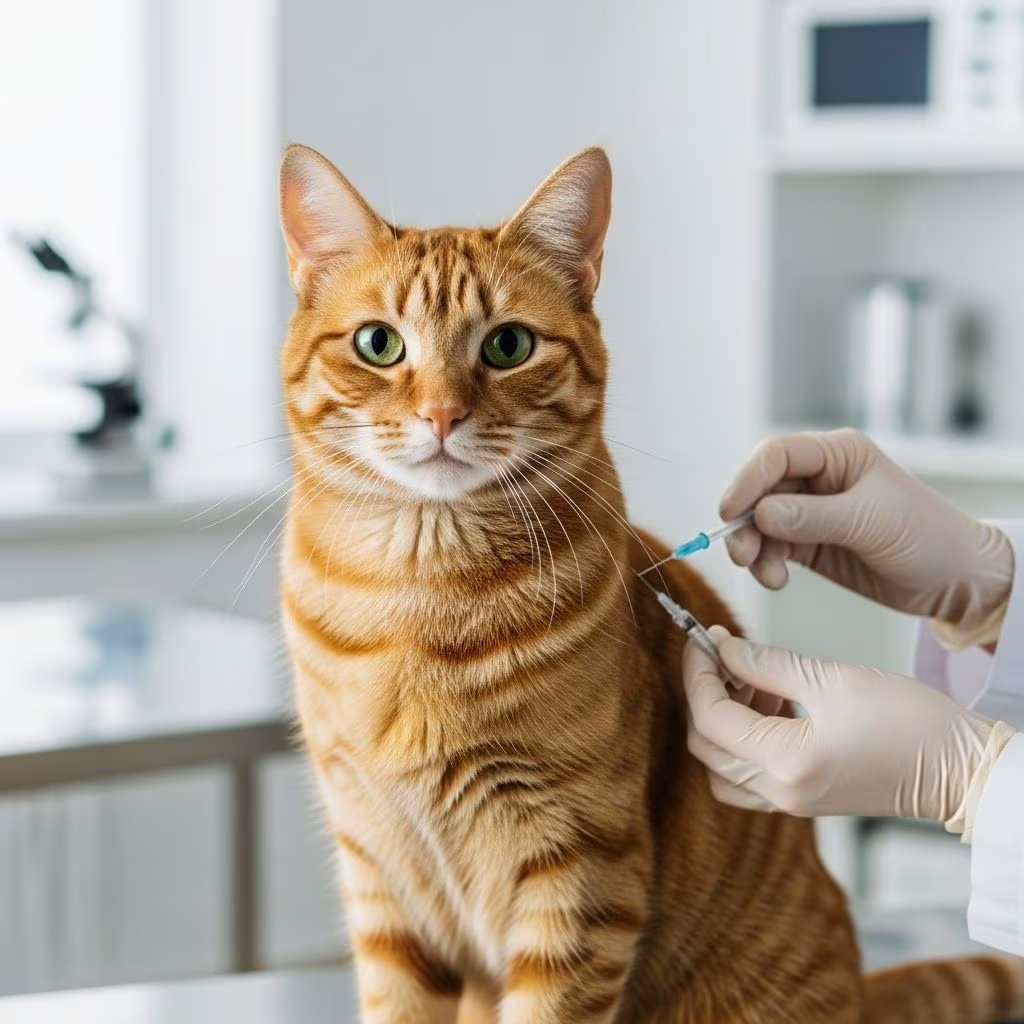
Cat vaccines are crucial for protecting felines from serious, potentially fatal diseases. Core vaccines like FVRCP and rabies are recommended for all cats, while non-core vaccines depend on lifestyle and risk factors. This guide covers everything from kitten schedules to adult boosters, helping you keep your cat healthy.
Why Vaccinate Your Cat?
Vaccinations stimulate your cat’s immune system to fight off specific viruses and bacteria. Without them, cats face risks from highly contagious diseases like panleukopenia or rabies, which can spread even indoors via contaminated surfaces or visitors. Even indoor cats benefit, as diseases don’t respect boundaries—open windows or shared spaces suffice for transmission.
Vets tailor protocols based on age, health, and exposure risk. The American Animal Hospital Association (AAHA) and World Small Animal Veterinary Association (WSAVA) emphasize core vaccines for all cats, with boosters maintaining lifelong immunity.
Core vs. Non-Core Vaccines
Core vaccines protect against widespread, severe diseases and are advised for every cat regardless of lifestyle. Non-core vaccines are for cats with higher exposure risks, like outdoor roamers or boarding frequenters.
| Vaccine Type | Examples | Recommended For |
|---|---|---|
| Core | FVRCP, Rabies | All cats |
| Non-Core | FeLV, Bordetella | High-risk cats (outdoor, multi-cat homes) |
FVRCP Vaccine: The Triple Threat Protector
The FVRCP combination vaccine guards against three core threats: Feline Viral Rhinotracheitis (FVR, caused by feline herpesvirus), Calicivirus (FCV), and Panleukopenia (FPV, or feline distemper).
- FVR: Causes severe upper respiratory infections, fever, eye ulcers, and chronic issues like sneezing or corneal scars. Highly contagious via saliva or discharge.
- FCV: Leads to mouth ulcers, limping, pneumonia, and joint pain. Over 40 strains exist, making full prevention challenging, but vaccination reduces severity.
- FPV: A parvovirus attacking the gut, bone marrow, and cerebellum. Symptoms include vomiting, bloody diarrhea, dehydration, and high mortality (up to 90% in kittens). Survivors may have lifelong neurological issues.
FVRCP is given as a series in kittens and boosted every 1-3 years in adults, with indoor cats often on a 3-year schedule.
Rabies Vaccine: Legally Required Protection
Rabies is a fatal zoonotic virus affecting the nervous system, transmissible to humans via bites. All cats over a certain age must be vaccinated per state laws—typically starting at 12-16 weeks, with boosters yearly or every 3 years depending on the vaccine type and regulations.
Even indoor cats need it due to escape risks or bat exposures. Initial dose at 12-16 weeks, booster at 1 year, then per law.
Feline Leukemia Virus (FeLV) Vaccine
FeLV is non-core but vital for at-risk cats. Spread via saliva (grooming, bites, shared bowls), it causes cancer, anemia, immune suppression, and death. Test negative before vaccinating.
Kittens get 2-3 doses starting at 8-12 weeks; adults at risk (outdoor, new cats) need annual or biennial shots. Indoor-only, low-risk cats may skip after initial series.
Other Non-Core Vaccines
- Bordetella (Feline Upper Respiratory): For boarding or catteries; protects against kennel cough-like illness. Intranasal or injectable.
- Chlamydia: Causes conjunctivitis; for multi-cat environments or breeders.
- FIP (Feline Infectious Peritonitis): Experimental; not widely recommended due to variable efficacy.
Kitten Vaccination Schedule
Kittens start vaccines at 6-8 weeks due to waning maternal antibodies. Boosters every 3-4 weeks until 16 weeks ensure immunity. Delays may require restarting the series.
| Age | Vaccines |
|---|---|
| 6-8 weeks | FVRCP (1st), FeLV (optional 1st) |
| 10-12 weeks | FVRCP (2nd), FeLV (1st or 2nd), Rabies (1st if early) |
| 14-16 weeks | FVRCP (3rd if needed), FeLV (2nd), Rabies |
| 1 year | FVRCP booster, Rabies booster, FeLV if applicable |
UC Davis recommends a 6-month booster post-16 weeks for lingering maternal antibodies. Always follow vet guidance.
Adult Cat Vaccination Schedule
Adults need boosters to sustain immunity. Indoor cats: FVRCP every 3 years, Rabies per law. Outdoor/high-risk: more frequent FVRCP (yearly), FeLV annually.
- Every 1-3 years: FVRCP (3 years indoor; 1 year outdoor/senior/kitten).
- Rabies: 1 or 3 years based on vaccine/state.
- FeLV: Yearly for at-risk adults post-initial series.
Seniors or stressed cats (boarding, travel) may need pre-event boosters 7-10 days prior.
Indoor vs. Outdoor Cat Vaccines
Indoor cats still require core vaccines—rabies is legally mandated, and FVRCP prevents household outbreaks. Risks include fleas, visitors’ pets, or emergencies.
Outdoor cats face higher threats needing FeLV, more frequent boosters. Lifestyle assessment guides non-core shots.
Vaccine Reactions and Safety
Most cats tolerate vaccines well, but mild reactions (lethargy, soreness) occur in 1-2%. Rare severe issues include anaphylaxis (swelling, vomiting)—seek emergency care.
Long-term, sarcomas (rare injection-site cancers) prompted non-adjuvanted vaccines and site rotation (legs over scruff). Discuss risks/benefits with your vet; titer testing can check immunity for some vaccines like FPV.
Talk to Your Veterinarian
Your vet customizes based on history, tests (FeLV/FIV), and location. Annual exams catch issues early. Follow WSAVA/AAHA guidelines for evidence-based care.
Frequently Asked Questions (FAQs)
Do indoor cats need vaccines?
Yes, core vaccines like FVRCP and rabies are essential even for indoor cats due to legal requirements and indirect exposure risks.
What is the core vaccine for cats?
FVRCP (feline viral rhinotracheitis, calicivirus, panleukopenia) and rabies are the core vaccines recommended for all cats.
When do kittens get their first shots?
Kittens start at 6-8 weeks with FVRCP, followed by boosters every 3-4 weeks until 16 weeks.
How often do adult cats need vaccines?
Every 1-3 years for core vaccines; frequency depends on lifestyle and local laws.
Is FeLV vaccine necessary for all cats?
No, it’s non-core; recommended for outdoor or high-risk cats after testing negative.
References
- Vaccine Schedules for Cats & Kittens — Small Door Veterinary. 2023. https://www.smalldoorvet.com/learning-center/wellness/cat-kitten-vaccine-schedules
- Cat Vaccinations: What Vaccines Do Cats Need? — PetMD. 2024. https://www.petmd.com/cat/general-health/cat-vaccinations-what-vaccines-do-cats-need
- Pet Vaccines: Schedules for Cats and Dogs — WebMD. 2024. https://www.webmd.com/pets/pet-vaccines-schedules-cats-dogs
- Vaccination Guidelines for Dogs and Cats — UC Davis School of Veterinary Medicine. 2023. https://healthtopics.vetmed.ucdavis.edu/health-topics/feline/vaccination-guidelines-dogs-and-cats
- Cat Vaccination Schedule: A Complete Guide — Dells Animal Hospital. 2024-03-20. https://www.dellsanimalhospital.net/site/blog/2024/03/20/cat-vaccination-schedule
- Vaccinations for Cats — Banfield Pet Hospital. 2024. https://www.banfield.com/Services/cat-vaccinations



