

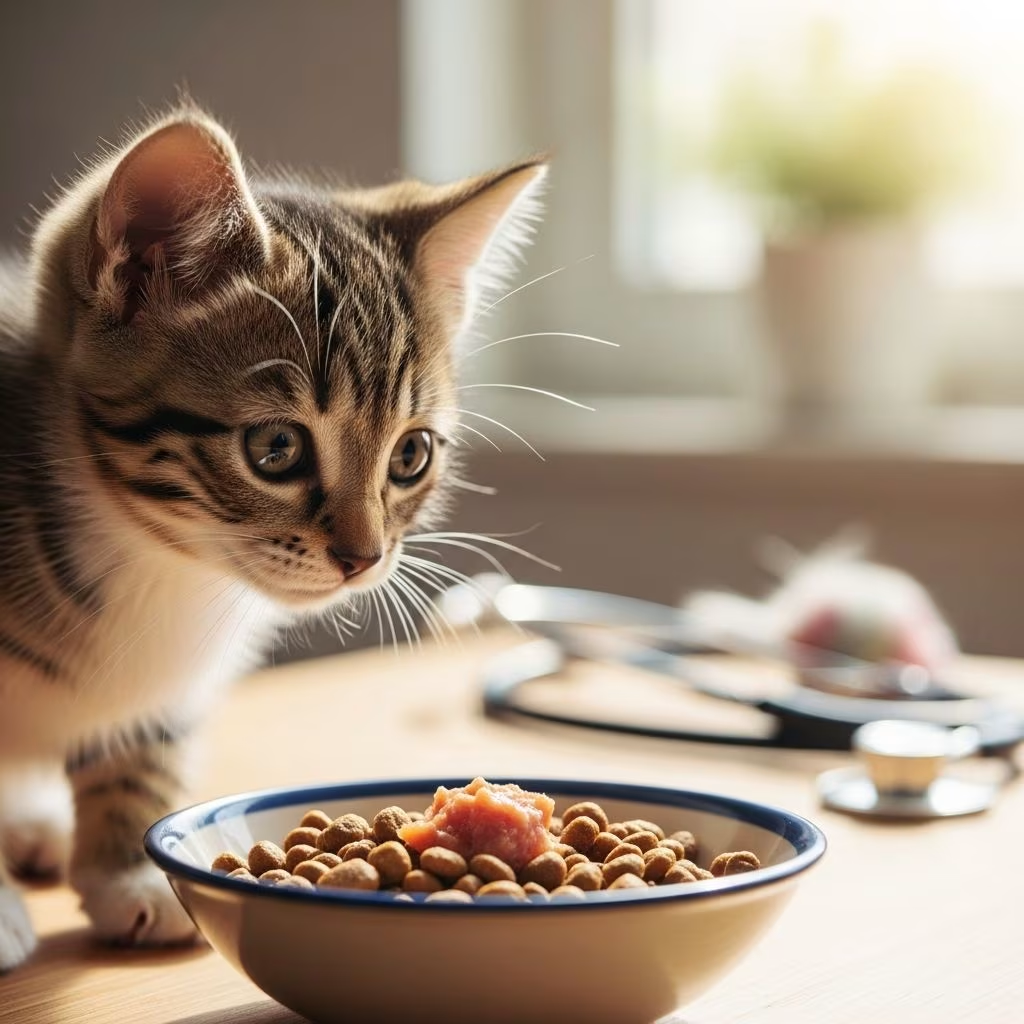
Raising a kitten requires careful attention to their rapidly changing nutritional needs. From newborns relying on mother’s milk to playful adolescents transitioning to solid foods, proper feeding ensures healthy growth, strong bones, and a robust immune system. This guide covers everything from initial milk formulas to balanced wet and dry diets, drawing on veterinary recommendations for optimal kitten care.
Kitten Feeding Stages: A Complete Overview
Kittens experience distinct growth phases, each demanding specific nutrition. Newborns need frequent, nutrient-dense milk feedings, while older kittens benefit from a mix of wet and dry foods to support teething and energy demands. Understanding these stages prevents common issues like obesity or malnutrition.
Newborn Kittens (Birth to 4 Weeks)
During the first few weeks, kittens depend entirely on their mother’s milk or a kitten milk replacer (KMR) if orphaned. Mother’s milk provides essential antibodies, colostrum for immunity, and perfect protein-fat ratios for development. If the queen is unavailable, use commercial KMR formulas approved for kittens—never cow’s milk, as it causes digestive upset.
Feed every 2-4 hours, mimicking nursing. For bottle-feeding, prepare formula by mixing powder with warm water (typically 2:1 ratio), ensuring it’s lump-free and warmed to body temperature. A feeding chart helps gauge amounts:
| Age | Weight | Amount per Feeding | Frequency |
|---|---|---|---|
| 0–1 week | 50–150 grams | 2–6 ml | Every 1–2 hours |
| 1–2 weeks | 150–250 grams | 6–10 ml | Every 2–3 hours |
| 2–3 weeks | 250–350 grams | 10–14 ml | Every 3–4 hours |
| 3–4 weeks | 350–450 grams | 14–18 ml | Every 4 hours |
Stimulate urination/defecation by gently rubbing the genital area with a warm cloth after feeds.
Weaning Kittens (4–8 Weeks)
Weaning begins around 4 weeks as kittens show interest in solid food. This transition typically completes by 6-8 weeks. Start by mixing KMR with wet kitten food to create a gruel—soft, warm, and appealing. Offer in a shallow dish; the mother may demonstrate eating.
- Introduce teaspoon-sized portions of wet food mixed with formula.
- Gradually reduce formula, increasing solid food over 1-2 weeks.
- At 6-8 weeks, incorporate softened dry kibble; provide up to 5 oz wet food daily.
Feral queens wean at 6-8 weeks, but domestic kittens may stay with mom longer. High-quality wet kitten food, AAFCO-approved, meets elevated calorie needs (up to 6 small meals daily).
Young Kittens (8 Weeks to 5 Months)
By 8 weeks, kittens weigh 1.5-5.75 pounds and can handle wet, dry, or combo diets. Offer 1/3-1 cup dry or 3-5 servings of 3-oz wet food every 6-8 hours. Teeth are developing, so wet food eases chewing.
Key nutrients include DHA for brain/eye health, high protein for muscle growth, and calcium for bones. Always provide fresh water.
Adolescent Kittens (6 Months to 1 Year)
Now 5.75-12 pounds, feed 2/3-1¼ cups dry or 1/4-1/2 can wet per pound body weight, twice daily. Transition to adult food around 1 year, but maintain kitten formula until then for growth.
Kitten Feeding Chart by Age
Use this vet-approved chart as a starting point; adjust based on packaging, weight gain, and vet advice.
| Age | Approx. Weight | What to Feed | How Much | Frequency |
|---|---|---|---|---|
| Newborn-3 weeks | 3 oz-1 lb | Mother’s milk/KMR | 2-15 ml | Every 2-4 hrs |
| 4-5 weeks | 1-1.8 lbs | Milk/formula + wet | 18-22 ml formula | Every 6-8 hrs |
| 6-8 weeks | 1.8-2.6 lbs | Wet primary, dry intro | 1/4-1/3 cup dry; 5 oz wet/day | Every 6 hrs |
| 8 weeks-5 months | 1.5-5.75 lbs | Wet/dry/combo | 1/3-1 cup dry; 3-5x 3-oz wet | Every 6-8 hrs |
| 6 months-1 year | 5.75-12 lbs | Wet/dry/combo | 2/3-1¼ cups dry; 1/4-1/2 can/lb | 2x daily |
Types of Kitten Food: Wet vs. Dry vs. Combo
Wet Food
Ideal for hydration (78% moisture), palatability, and small teeth. Choose AAFCO kitten-labeled for complete nutrition. Soft texture suits weaning.
Dry Food (Kibble)
Convenient, dental benefits, but lower moisture—pair with water. Soften for young kittens. Free-feeding possible only with dry.
Combination Feeding
Best of both: wet meals for monitoring intake, dry for grazing. Balances hydration, dental health, and convenience.
Feeding Methods for Kittens
Free-Feeding
Dry food available all day. Suits natural grazing (8-10 meals/day). Measure daily total to avoid overfeeding.
Meal Feeding
Scheduled portions of wet/dry. Monitors appetite, prevents obesity. Ideal for multi-pet homes.
Combination Feeding
Two wet meals + free dry. Tracks health via wet consumption while allowing self-regulation.
How to Introduce Solid Food and Wean Kittens
Start at 4 weeks: Mix wet food with warm KMR into gruel. Offer finger/lick first, then dish. Mom encourages. Reduce formula gradually; fully weaned by 8 weeks.
- Warm food to encourage eating (microwave 5-sec bursts).
- Small amounts to avoid overwhelm.
- Monitor stool for tolerance.
Syringe and Bottle Feeding Techniques
Bottle Feeding
- Prepare KMR: 2:1 water:powder, warm, store 24 hrs refrigerated.
- Hold kitten upright, slow drip.
- Burp gently; stimulate elimination.
Syringe Feeding
- Mix pureed wet food/water or KMR.
- Insert syringe side-of-mouth, slow squeezes allowing swallows.
- Weigh daily; follow vet portions.
Switching Kitten Foods Safely
Gradual 7-10 day transition: 25% new + 75% old, increasing new food daily. Prevents diarrhea. Cats are picky—mix flavors if needed.
Nutrition Essentials for Kittens
Kittens need 2-3x adult calories/lb. Prioritize protein (30%+), fats (20%+ DHA), taurine, vitamins. AAFCO kitten statement ensures balance.
Common Mistakes and Pro Tips
- Avoid cow’s milk: Lactose intolerance.
- Monitor weight weekly.
- Fresh water always.
- Consult vet for orphans/underweight kittens.
Frequently Asked Questions (FAQs)
What should I feed newborn kittens without a mother?
Use KMR formula every 2-4 hours via bottle or syringe.
When can kittens eat dry food?
Introduce softened at 6-8 weeks; fully by 8 weeks.
How often to feed 8-week-old kittens?
Every 6 hours, 4-5 meals of wet/dry mix.
Is wet food better than dry for kittens?
Wet aids hydration and chewing; combo ideal.
Can I free-feed wet food?
No—spoils quickly. Use for meals only.
References
- How Much Should You Feed a Kitten? Vet-Approved Chart — Catster. 2023. https://www.catster.com/nutrition/how-much-to-feed-kittens/
- When Can Kittens Eat Solid Food? Vet-Approved Facts & FAQ — Catster. 2023. https://www.catster.com/cat-health-care/when-can-kittens-eat-solid-food/
- How to Syringe Feed a Kitten: 5 Vet-Approved Steps & Safety Guide — Catster. 2023. https://www.catster.com/cat-health-care/how-to-syringe-feed-a-kitten/
- Weaning Kittens: Vet-Reviewed Guide for How & When to Do It — Catster. 2023. https://www.catster.com/cat-health-care/weaning-kittens-how-and-when/
- What to Feed a Kitten: Vet-Verified Guide For Each Stage — Catster. 2023. https://www.catster.com/cat-health-care/what-to-feed-kittens/
- How to Bottle Feed a Kitten: Vet-Approved Tips & Feeding Chart — Catster. 2023. https://www.catster.com/cat-health-care/how-to-bottle-feed-a-kitten/
- Kitten Nutrition: Vet-Approved Guide, Science, Health Tips & FAQ — Catster. 2023. https://www.catster.com/nutrition/kitten-nutrition/



