Spaying Your Dog: What To Expect, Recovery, And Risks
Complete guide to dog spaying: preparation, procedure, recovery, and long-term health considerations.
What to Expect When You Spay Your Dog
Spaying is one of the most common surgical procedures performed on female dogs. Whether you’re a first-time pet owner or an experienced dog parent, understanding what to expect before, during, and after spaying can help you prepare your dog for this important procedure and ensure proper care during the recovery period. This comprehensive guide will walk you through every aspect of the spaying process, from pre-operative preparation to post-operative recovery and long-term health considerations.
Understanding the Spaying Procedure
Spaying, also known as ovariohysterectomy or OVE, is a surgical procedure in which a veterinarian removes the ovaries and uterus from a female dog. This permanent form of contraception eliminates the dog’s ability to reproduce and prevents the heat cycle. Unlike neutering in males, which is a less invasive procedure, spaying is generally a more involved operation because the reproductive organs being removed are internal. The procedure is performed while your dog is under general anesthesia, ensuring she doesn’t experience pain during surgery.
The specific surgical technique may vary depending on your veterinarian’s preference and your dog’s individual circumstances. Some veterinarians perform an ovariohysterectomy, removing both the ovaries and uterus through an incision in the abdomen. Others may perform an ovariectomy, removing only the ovaries. Your veterinarian will discuss which approach is best for your dog.
Pre-Operative Preparation and Planning
Proper preparation before spaying is essential to ensure the surgery goes smoothly and your dog recovers well. Here are the key steps to take before your dog’s spaying appointment:
Scheduling and Timing
Most veterinarians recommend spaying female dogs after they reach adolescence but before their first heat cycle, typically between 6 months and 2 years of age. However, recent research suggests that the ideal age for spaying varies by breed and individual health factors. Discuss the best timing with your veterinarian, as they can assess your dog’s breed, size, and overall health to determine the optimal age for the procedure.
Pre-Operative Bloodwork
Your veterinarian will likely recommend blood tests before surgery to ensure your dog is healthy enough for anesthesia. These tests evaluate liver and kidney function, which is crucial since these organs process anesthetic drugs. Pre-operative bloodwork can identify underlying health issues that might complicate surgery or anesthesia.
Fasting Requirements
You’ll receive specific instructions about fasting before surgery. Typically, dogs should not eat for 8 to 12 hours before the procedure and should not have water for 2 to 4 hours prior. Fasting prevents vomiting during anesthesia, which could lead to aspiration pneumonia. Follow these instructions carefully, as they’re critical for your dog’s safety during surgery.
Medication Review
Inform your veterinarian about any medications or supplements your dog is currently taking. Some medications may need to be adjusted or discontinued before surgery. This conversation ensures that nothing interferes with the anesthesia or the surgical procedure itself.
Pre-Surgery Checklist
Before bringing your dog in for surgery, ensure you have:
- Arranged transportation to and from the veterinary clinic
- Prepared a comfortable recovery space at home
- Purchased any recommended post-operative supplies, such as an Elizabethan collar (e-collar)
- Taken recent photos of the surgical site for reference
- Written down any questions or concerns for your veterinarian
The Day of Surgery
On the day of your dog’s spaying procedure, arrive at your veterinary clinic at the scheduled time. Your veterinarian will perform a final physical examination to ensure your dog is ready for surgery. You’ll sign consent forms and discuss any last-minute concerns with the veterinary team.
Your veterinarian will explain the anesthesia protocol, which typically includes pre-anesthetic medications to relax your dog, followed by IV fluids and general anesthesia. These measures help ensure your dog remains comfortable and safe throughout the procedure.
The surgical team will monitor your dog’s vital signs continuously during surgery, including heart rate, blood pressure, oxygen saturation, and body temperature. Modern veterinary practices use sophisticated monitoring equipment to ensure your dog’s safety.
The spaying procedure itself typically takes 30 to 60 minutes, depending on your dog’s size, age, and individual anatomy. During this time, your veterinarian will make a small incision in the abdomen to access the reproductive organs. The ovaries and uterus are carefully removed, and the incision is closed with sutures or surgical adhesive.
Immediate Post-Operative Period
After surgery, your dog will be moved to a recovery area where she’ll gradually wake from anesthesia under close supervision. The veterinary staff will monitor her breathing, heart rate, and body temperature as she regains consciousness. Some dogs may be groggy, disoriented, or nauseous as the anesthesia wears off—this is completely normal.
Once your veterinarian determines your dog is stable and has recovered sufficiently, you’ll be able to take her home. You’ll receive detailed post-operative instructions and pain medication. Your veterinarian will explain how to administer medications, recognize signs of complications, and provide the care your dog needs during the critical recovery period.
Post-Operative Recovery Care at Home
The first two weeks following spaying are crucial for proper healing. Here’s what you need to do to support your dog’s recovery:
Activity Restriction
Limit your dog’s physical activity for at least 7 to 14 days after surgery. Restrict play, jumping, and running, as excessive activity can cause the incision to open or lead to internal bleeding. Keep your dog calm with short, leashed walks for bathroom breaks only. Consider crate training or confining your dog to a small area to minimize activity.
Incision Care
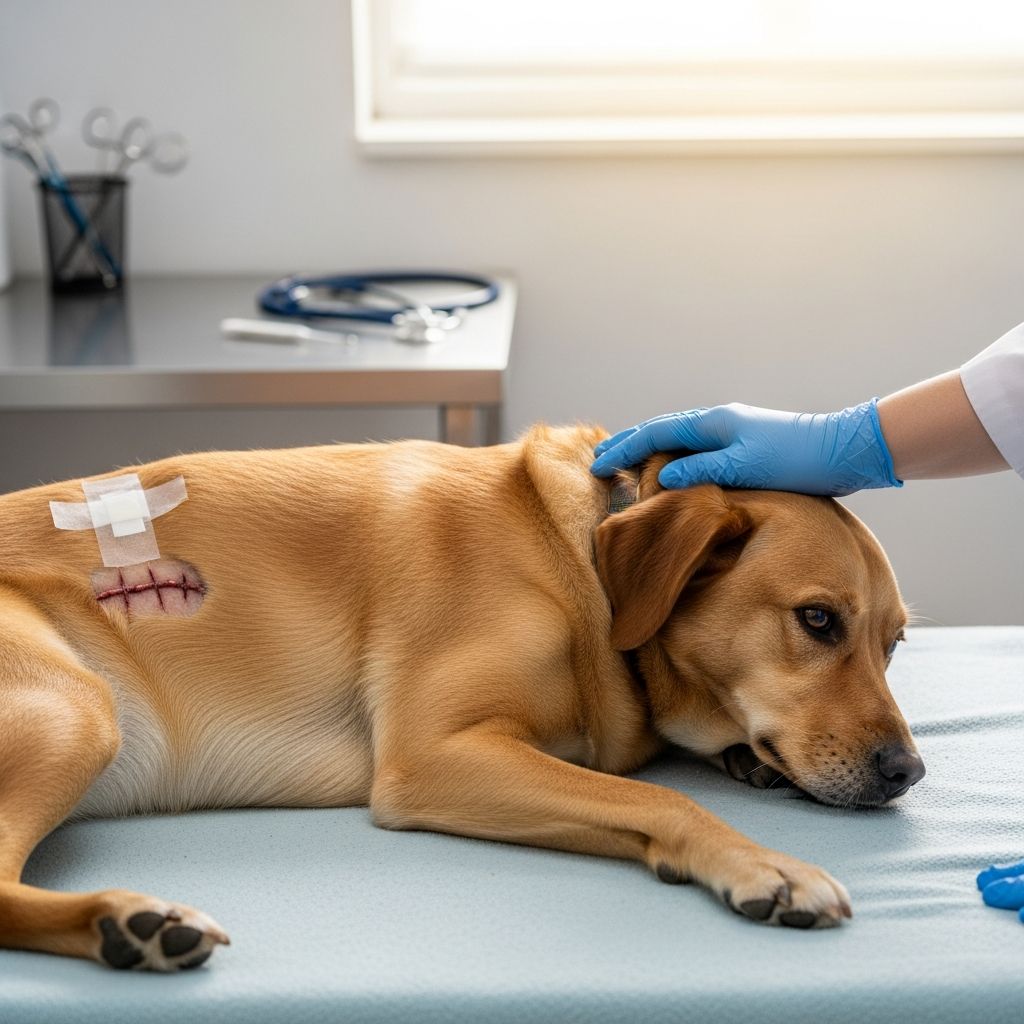
Check the surgical incision daily for signs of problems. The incision may appear slightly red or swollen immediately after surgery, but excessive redness, swelling, discharge, or opening requires immediate veterinary attention. Keep the area clean and dry. If your veterinarian used dissolving sutures, they’ll disappear on their own within 10 to 14 days. If non-dissolving sutures were used, they’ll need to be removed at a follow-up appointment, typically 10 to 14 days after surgery.
Elizabethan Collar (E-Collar)
Your veterinarian will likely send your dog home wearing an e-collar to prevent her from licking or biting the incision. This is essential, as excessive licking can cause infection or open the surgical site. Your dog may seem uncomfortable or frustrated with the collar, but it’s necessary for proper healing. Make sure it fits correctly and remains on whenever your dog is unsupervised.
Pain Management
Your veterinarian will prescribe pain medication to keep your dog comfortable during recovery. Administer medications exactly as directed. Don’t assume your dog is pain-free just because she’s acting normally; dogs often hide discomfort. Proper pain management promotes faster healing and a smoother recovery.
Diet and Nutrition
Your dog may not want to eat immediately after surgery due to nausea from anesthesia. Offer small amounts of bland food and water when she arrives home. If your dog vomits, wait a few hours before offering food again. Within 24 to 48 hours, she should return to her normal diet. Ensure she stays hydrated, but monitor water intake to prevent excessive drinking, which can cause vomiting.
Monitoring for Complications
While serious complications are rare, they can occur. Contact your veterinarian immediately if you notice:
- Excessive bleeding or discharge from the incision
- The incision opening or gaping
- Redness, swelling, or warmth around the incision
- Pus or foul-smelling discharge
- Persistent vomiting or inability to keep food down
- Lethargy lasting more than 48 hours after surgery
- Difficulty urinating or defecating
- Severe pain or distress
- Signs of infection, such as fever
Long-Term Health Considerations After Spaying
While spaying provides significant health benefits, it’s important to understand both the advantages and potential risks associated with the procedure, which can vary based on the age at which spaying is performed.
Benefits of Spaying
Spaying eliminates the risk of pyometra, a life-threatening infection of the uterus that affects approximately 23% of intact female dogs and kills about 1% of affected dogs. When spayed before 2.5 years of age, spaying greatly reduces the risk of mammary tumors, the most common malignant tumors in female dogs. Additionally, spaying removes the very small risk of uterine, cervical, and ovarian tumors and reduces the risk of perianal fistulas.
Research also shows that spayed dogs live approximately 23% longer than intact dogs, and neutered dogs live about 18% longer, though this may reflect the overall health benefits of responsible pet ownership that typically accompanies spaying decisions.
Potential Health Risks and Age Considerations
Recent research has identified potential health risks associated with early spaying, particularly concerning certain cancers and orthopedic conditions. Early spaying—defined as before 1 year of age—significantly increases the risk of osteosarcoma (bone cancer), particularly in larger breeds. For example, Rottweilers spayed before one year of age are 3.1 times more likely to develop osteosarcoma than intact dogs, resulting in a 25.1% lifetime risk for females spayed early.
Additionally, spaying before 1 year of age increases the risk of splenic hemangiosarcoma by 2.2 times and cardiac hemangiosarcoma by more than 5 times. Early spaying is also associated with increased risk of urinary incontinence in some dogs, particularly when spayed between 6 and 11 months of age.
Spayed and neutered dogs are also more likely to become overweight or obese than intact dogs, with some studies showing a twofold increased risk of obesity in spayed females compared to intact females. This increased obesity risk requires careful attention to diet and exercise throughout your dog’s life.
Current Spaying Guidelines
Given these considerations, current veterinary research suggests that for many dog breeds, delaying spaying until after 1 year of age or even until after the first heat cycle may reduce the risk of certain cancers and orthopedic problems while still providing the major benefits of spaying, particularly mammary cancer prevention. For most breeds, the protective effect of spaying on mammary neoplasia far outweighs the potential risks associated with other conditions. However, these guidelines can vary significantly by breed, size, and individual health factors.
Your veterinarian can assess your specific dog’s breed, size, health status, and risk factors to determine the optimal age for spaying. This individualized approach ensures that your dog receives the benefits of spaying while minimizing potential risks.
Behavior and Lifestyle Changes After Spaying
Spaying can influence your dog’s behavior and lifestyle. Spaying and neutering can smooth out fluctuations in behavior, making dogs more consistent and pleasant. Female dogs will no longer go into heat, eliminating the behavioral changes and physical signs associated with the estrous cycle, such as marking behavior and vaginal bleeding.
However, spaying does not dramatically change your dog’s fundamental personality or prevent behavioral problems that are not related to reproduction. Training and socialization remain essential components of responsible dog ownership.
Frequently Asked Questions About Dog Spaying
Q: What is the best age to spay my dog?
A: The optimal age for spaying varies by breed and individual health factors. While traditionally performed around 6 months of age, recent research suggests that delaying spaying until after 1 year of age or after the first heat cycle may reduce risks of certain cancers in some breeds. Consult with your veterinarian to determine the best timing for your dog.
Q: How long is the recovery period after spaying?
A: Most dogs recover within 2 weeks after spaying. However, complete internal healing takes 6 weeks. Restrict your dog’s activity for at least 7 to 14 days after surgery, and avoid jumping or running during this period.
Q: Will my dog’s personality change after spaying?
A: Spaying may make your dog calmer and reduce heat-cycle-related behaviors, but it won’t dramatically change her fundamental personality. Training and socialization remain important.
Q: What should I feed my dog after spaying?
A: Offer small amounts of bland food initially. Your dog should return to her normal diet within 24 to 48 hours. Be prepared for potential nausea from anesthesia.
Q: Is it normal for my dog to be lethargic after surgery?
A: Some lethargy is normal for 24 to 48 hours after surgery due to anesthesia. However, contact your veterinarian if lethargy persists beyond this period.
Q: Can complications occur after spaying?
A: While serious complications are rare, they can include infection, bleeding, and incomplete incision healing. Contact your veterinarian immediately if you notice signs of complications.
Q: Will spaying cause my dog to gain weight?
A: Spayed dogs have a higher risk of obesity due to metabolic changes. Maintain a healthy diet, provide regular exercise, and monitor your dog’s weight to prevent excessive weight gain.
References
- Assisting Decision-Making on Age of Neutering for 35 Breeds of Dogs — Frontiers in Veterinary Science. 2020. https://www.frontiersin.org/journals/veterinary-science/articles/10.3389/fvets.2020.00388/full
- Health Risks Associated with Spay/Neuter in Dogs — Dogs Naturally Magazine. https://www.dogsnaturallymagazine.com/long-term-health-risks-benefits-spay-neuter-dogs/
- Deconstructing the spay/neuter debate — HumanePro. https://humanepro.org/magazine/articles/deconstructing-spayneuter-debate
- Spaying or Neutering Your Pet — Vetstreet. https://www.vetstreet.com/care/spaying-or-neutering-your-pet
- 5 Dog and Cat Spay and Neuter Myths Debunked — Vetstreet. https://www.vetstreet.com/our-pet-experts/5-common-spay-and-neuter-myths-debunked
Similar Articles




Read full bio of medha deb