

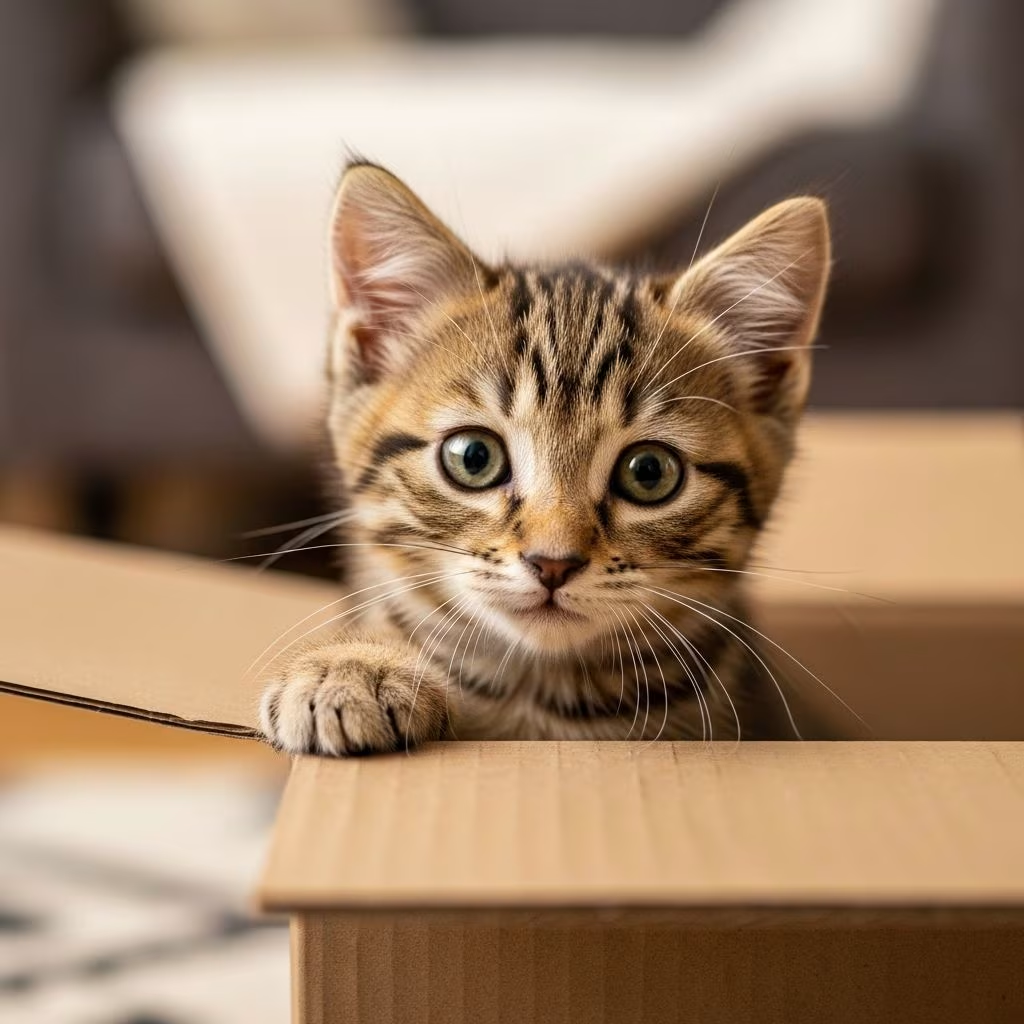
Finding a stray kitten can tug at your heartstrings, but acting thoughtfully is crucial for its survival. Stray kittens often face dehydration, fleas, malnutrition, and diseases, requiring prompt, informed care. This guide outlines every step from discovery to adoption, drawing on best practices for temporary fostering and long-term welfare.
Assessing the Situation
Before intervening, observe the kitten’s environment and condition. Determine if it’s truly stray or part of a feral colony with its mother. Kittens under 4 weeks old are most vulnerable without maternal care, as they cannot regulate body temperature or eliminate waste independently.
- Check for the mother cat nearby; she may be hunting and return soon. Monitor from a distance for 12-24 hours without disturbing.
- Evaluate age: Eyes open at 7-10 days, ears at 2 weeks, walking steadily by 3 weeks, weaning around 4-5 weeks.
- Look for danger: Immediate rescue if exposed to traffic, predators, extreme weather, or showing signs of distress like crying, lethargy, or fleas.
If the mother is present and the kittens appear healthy, provide supplemental food and water nearby to support her nursing. Avoid touching to prevent stress-induced abandonment.
Initial Rescue and Safety
Gently capture the kitten using a towel or blanket to minimize stress and scratches. Place it in a secure carrier lined with soft towels. Transport immediately to a warm, quiet indoor space away from other pets and children.
Prioritize the “WARM, CLEAN, WELL HYDRATED, NORMAL STOOLS AND URINE” principles, especially for neonates. Hypothermia is a leading killer; never use direct heating pads due to burn risks.
Providing Warmth and Bedding
Kittens under 3-4 weeks cannot thermoregulate. Maintain an ambient temperature of 85-90°F (29-32°C) initially, reducing gradually.
- Use a pet-safe heating pad (e.g., Snugglesafe) wrapped in 2-3 towel layers, or warm water bottles/hot towels rotated every few hours.
- House in a covered carrier with space to move away from heat; change bedding daily or as soiled.
- Avoid drafts; cover carrier with a blanket but ensure ventilation.
Monitor for overheating: Panting or avoidance of heat source means adjust immediately.
Feeding Stray Kittens
Never use cow’s milk; it causes diarrhea. Use Kitten Milk Replacer (KMR) formula only. Feeding frequency and amount depend on age:
| Age | Formula Amount per Feeding | Frequency | Notes |
|---|---|---|---|
| 0-1 week | 2-4 mL | Every 2 hours (including nights) | Bottle or syringe; stimulate elimination after |
| 2-3 weeks | 5-10 mL | Every 2-3 hours | Introduce soft weaning food at 3 weeks |
| 4-5 weeks | 10-15 mL or wet food | Every 4-6 hours | Begin weaning; mix formula with wet kitten food |
| 6+ weeks | Free-feed wet/dry kitten food | 3-4 meals/day | Provide fresh water; transition fully |
Warm formula to body temperature. Burp kittens by patting gently. Overfeeding leads to aspiration pneumonia; err on less.
Elimination Stimulation and Litter Training
Under 3-4 weeks, mother cats lick to stimulate urination/defecation. You must replicate this.
- After each feeding, gently rub genitals/anus with warm, damp cotton ball in circular motion until waste passes (5-10 seconds per kitten).
- Clean messes promptly to prevent infections.
- At 3 weeks, introduce low-sided litter box with non-clumping litter; demonstrate by guiding paw.
- By 4 weeks, most self-eliminate; continue stimulation if needed.
Normal stool is yellow/mustard, firm; urine clear/pale. Constipation or diarrhea signals vet emergency.
Cleaning and Flea Control
Keep kittens immaculate to prevent chilling and infections. Wipe with barely damp warm cloth after feedings, mimicking momcat licks.
- For soiled areas, spot-clean; full baths only if heavily mucked (lukewarm water, mild dish soap like Dawn).
- Flea comb daily; fleas kill tiny kittens via anemia. Use kitten-safe flea products post-vet approval (never on <4 weeks without guidance).
- Dry thoroughly with towel/low blow dryer; return to warm bed.
Avoid over-bathing; focus on hygiene through frequent wipe-downs.
Medical Care and Veterinary Visit
Schedule a vet exam within 24 hours. Expect deworming, flea treatment, vaccines (starting 4-6 weeks), and health screening.
- Daily weight checks: Should gain 10-15g/day. Dehydration test: Pinch skin; slow tenting means fluids needed.
- Watch for emergencies: Lethargy, not eating, bloody stool, respiratory distress—rush to vet.
- Spay/neuter at 8 weeks/2lbs; first vaccines at 6-8 weeks.
Vets assess for Fading Kitten Syndrome, a vague decline often from hypothermia/malnutrition.
Socialization and Handling
Socialization window peaks 2-7 weeks. Feral strays need gradual taming.
- Start slow: Talk softly, feed by hand/spoon to build trust.
- Handle 15-20 min sessions multiple times daily; wrap in towel for lap time.
- Play with toys for motor skills; expose to household sounds (radio/TV low volume).
- By 5 weeks, they’re playful; continue cuddling for bonding.
Socialized kittens make ideal pets; unsocialized may suit barns via TNR.
Developmental Milestones
Track progress to ensure healthy growth.
- 1-2 weeks: Eyes/ears open, rooting reflex.
- 3 weeks: Standing, purring, hissing.
- 4 weeks: Vaccinations ready, weaning begins.
- 6 weeks: Running, climbing, spay/neuter eligible, full mischief mode.
- 8 weeks: Adoption-ready, socialized.
Fostering vs. Adoption
Temporary fostering stabilizes for adoption. If mother present, TNR her and foster kittens indoors until 8 weeks.
- Prepare space: Carrier, formula, litter, scratchers.
- Network with rescues for overflow; many need fosters.
- Adopt at 8-12 weeks post-vet clearance; screen homes for no-declaw policies.
Returning socialized kittens outdoors risks poor survival; prioritize homes.
Frequently Asked Questions (FAQs)
Can I give a stray kitten cow’s milk?
No, it causes severe diarrhea. Use KMR formula exclusively.
How do I know if a kitten is orphaned?
Observe 12-24 hours; no mother return, especially if <5 weeks, means rescue.
When should I take a stray kitten to the vet?
Immediately, within 24 hours, for comprehensive check.
Can I bathe a newborn kitten?
Only spot-clean with damp cloth; full baths risk chilling.
At what age can kittens be adopted?
Minimum 8 weeks, post-spay/neuter and vaccines.
References
- How to Care for Street Kittens Temporarily — WoofDoctor on Wheels. 2023. https://www.woofdoctor.vet/stray-kitten-care/
- Kitten Care — Stray Cat Alliance. 2024. https://straycatalliance.org/resources/kitten-care/
- Kitten Care Handbook — Feral Fixers. 2022. https://www.feralfixers.org/FF_Data/KittenCareHandbook.pdf
- Bottle-Feeding Kittens: A Comprehensive Guide — Best Friends Animal Society. 2025-01-10. https://bestfriends.org/pet-care-resources/bottle-feeding-kittens-comprehensive-guide
- What to Do if You Find Kittens Outdoors — Alley Cat Allies. 2024. https://www.alleycat.org/community-cat-care/finding-kittens-outdoors/
- About Feral Kittens — Feral Cat Coalition of Oregon. 2023. https://feralcats.com/kittens



