

What Size Crate Does My Dog Need? How to Measure
Choosing the right dog crate is one of the most important decisions you’ll make for your pet’s comfort and safety. A properly sized crate provides your dog with a secure space for rest, training, and travel. However, many pet owners struggle with determining the correct crate size for their furry companions. The key to finding the perfect fit lies in understanding how to measure your dog accurately and matching those measurements to appropriate crate dimensions.
Why Crate Size Matters
The size of your dog’s crate significantly impacts their comfort, safety, and the effectiveness of crate training. A crate that’s too small restricts your dog’s movement and can cause anxiety and physical discomfort. Conversely, a crate that’s too large defeats the purpose of providing a den-like space and may encourage your dog to use one corner as a bathroom while sleeping in another area. The ideal crate allows your dog to stand up, turn around, and lie down comfortably without excessive extra space.
Proper crate sizing also plays a crucial role during travel. Whether you’re flying with your pet or taking a road trip, airlines and transportation guidelines have specific crate dimension requirements. Using the correct size ensures compliance with travel regulations while maintaining your dog’s comfort and security.
How to Measure Your Dog for a Crate
Before you start shopping for a crate, you need three key measurements: length, height, and width. Taking accurate measurements is essential for finding the perfect fit.
Measuring Length
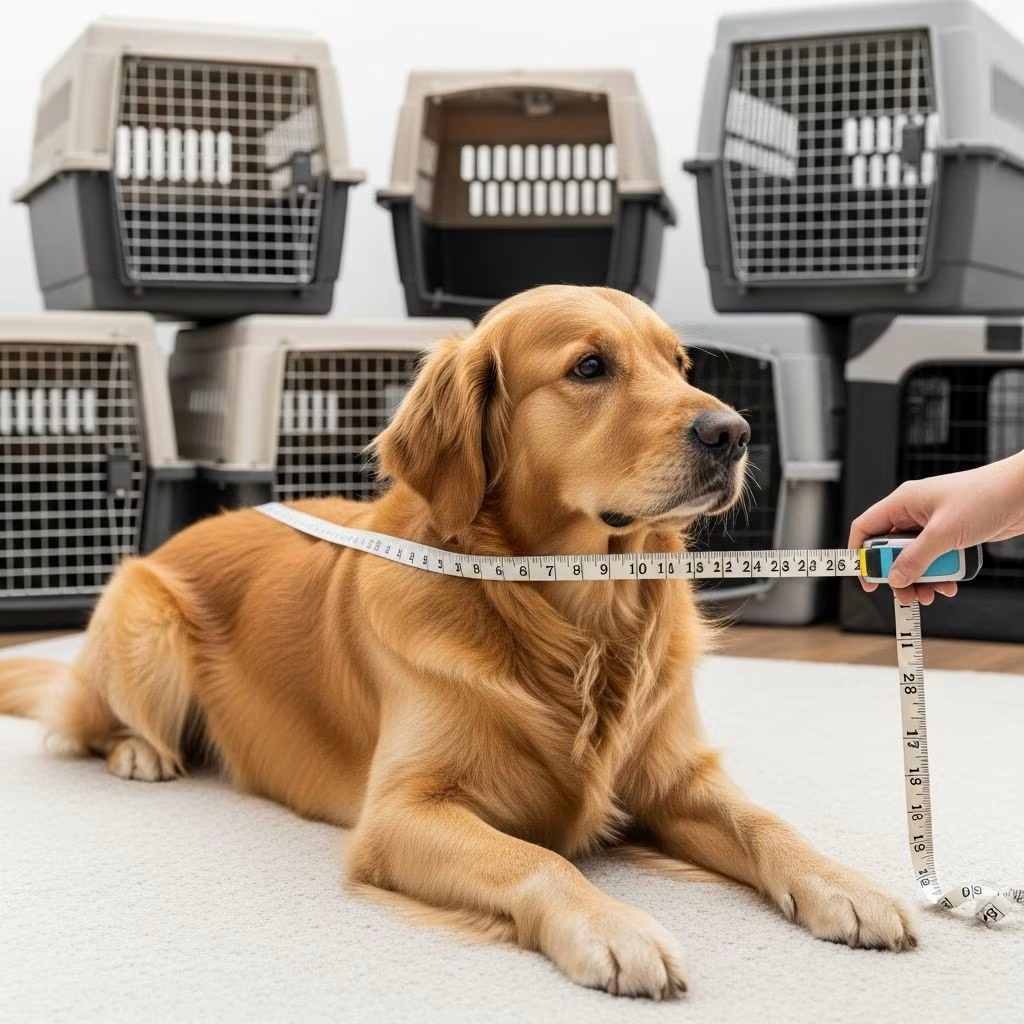
To measure your dog’s length, have them stand in a natural position and measure from the tip of their nose to the base of their tail. Do not include the tail itself in this measurement, as this can skew your results. Use a soft measuring tape or a piece of string that you can measure afterward. For a more accurate measurement, consider measuring while your dog is standing on a flat surface. Once you have the base measurement, add 2 to 4 inches depending on your dog’s size. Smaller breeds typically need 2 inches of additional space, while larger breeds may require up to 4 inches or more.
Measuring Height
Height measurement is just as critical as length. Have your dog stand naturally and measure from the floor to the top of their head or the tips of their ears if they’re held erect. Some dogs have naturally tall ear carriage that extends their overall height, so be sure to include this in your measurement. Once you have this number, add 2 to 4 inches to ensure your dog can sit up comfortably without their head touching the crate’s ceiling. This extra space is essential for your dog’s physical comfort and psychological well-being.
Measuring Width
Width measurement is sometimes overlooked but remains important for overall comfort. Measure across the widest part of your dog’s body, typically at the shoulders. This measurement helps ensure your dog has enough lateral space to turn around comfortably. Add a couple of inches to this measurement as well. If you plan to include a dog bed or crate pad, factor in the thickness of these items, as they reduce the available internal space.
Additional Considerations
If your dog is still growing, add extra inches to account for their adult size. For puppies, research your dog’s breed to estimate their full-grown dimensions. If you plan to add bedding, padding, or a crate divider, measure these items and add their dimensions to your calculations. For dogs with flat, brachycephalic faces (like Bulldogs or Pugs), consider adding an additional 10 percent to all dimensions to provide extra ventilation and comfort.
Dog Crate Size Chart by Breed Size
Different dog breeds have vastly different sizes, so it’s helpful to understand which crate sizes work best for various weight and height ranges.
Small Dog Crates
Small dog crates are designed for breeds ranging from 6 to 18 inches in height and weighing 1 to 30 pounds. These crates typically have interior dimensions of around 25 inches long by 18.5 inches high by 17.4 inches wide. Ideal breeds for small crates include Boston Terriers (15-17 inches, 16-24 lbs), Italian Greyhounds (13-15 inches, 7-14 lbs), Jack Russell Terriers (9.8-15 inches, 14-18 lbs), and Miniature Poodles (11-15 inches, 10-13 lbs). Shih Tzus and Maltese dogs also fit well in small crates. When selecting a small crate, remember that these smaller dogs still need adequate space to stretch and move comfortably.
Medium Dog Crates
Medium crates accommodate dogs ranging from 18 to 22 inches in height and weighing 30 to 50 pounds. These crates typically measure around 31.9 inches long by 21.6 inches high by 20.4 inches wide. Breeds that fit well in medium crates include American Cocker Spaniels (15-16 inches, 25-30 lbs), English Bulldogs (12-16 inches, 40-51 lbs), English Cocker Spaniels (15-16 inches, 29-32 lbs), Mini Goldendoodles (13-20 inches, 15-35 lbs), and Shiba Inus (13-17 inches, 15-24 lbs). Medium crates provide an excellent balance between comfort and maintaining the den-like quality that dogs appreciate.
Intermediate Dog Crates
Intermediate crates are sized for dogs ranging from 23 to 25 inches in height and weighing 50 to 70 pounds. These crates have interior dimensions of approximately 39 inches long by 28 inches high by 25 inches wide. Dogs suitable for intermediate crates include Standard Schnauzers (18-20 inches, 31-44 lbs) and Australian Shepherds (19-22 inches, 47-58 lbs). These crates provide substantial space for larger but not giant breeds, making them perfect for active dogs that need room to move.
Large Dog Crates
Large crates are designed for dogs ranging from 22 to 25 inches in height and weighing 50 to 90 pounds. These crates typically offer interior dimensions of around 42.5 inches long by 30 inches high by 32 inches wide for the largest options. Breeds requiring large crates include German Shepherds, Golden Retrievers, Labrador Retrievers, and other substantial breeds. Large crates provide the necessary space for these bigger dogs while still maintaining the security and comfort a proper crate should offer.
Crate Types and Their Sizing Differences
Different crate materials and designs can affect how you measure and what dimensions you need. Wire crates, plastic airline crates, soft-sided carriers, and collapsible crates all have their own advantages and sizing considerations. Wire crates typically offer good ventilation and visibility, while plastic crates provide a more den-like environment. Collapsible crates are convenient for travel but should still meet all size requirements. Regardless of crate type, the fundamental measurements for your dog remain the same.
Using Your Measurements to Choose a Crate
Once you have your dog’s measurements, compare them to crate specifications provided by manufacturers. Look for a crate where your dog’s length measurement plus 2-4 inches fits within the crate’s length, and their height measurement plus 2-4 inches fits within the crate’s height. Remember that these are guidelines for comfort, and the exact additional space needed may vary based on your individual dog’s personality and preferences. Some dogs are happy with minimal extra space, while others prefer more room.
Sizing for Puppies and Growing Dogs
Puppies present a unique challenge since they’ll grow into their adult size. When selecting a crate for a puppy, you have several options. You can purchase a smaller crate for their current size and upgrade as they grow, or you can buy a crate sized for their adult weight and use dividers to reduce the internal space. Dividers are removable panels that adjust the crate’s usable space, allowing your puppy to grow into the crate without compromising the den-like environment that encourages proper house training. As your puppy grows, you can gradually remove dividers until they have access to the full crate space.
Special Considerations for Specific Situations
Different situations may require slight adjustments to standard sizing guidelines. For dogs with thick coats or those using heavy bedding, you might need a slightly larger crate to ensure comfort. Senior dogs may benefit from easier entry points, so you might consider a crate with a lower profile. If you frequently travel by air, ensure your crate meets IATA (International Air Transport Association) regulations, which have specific minimum and maximum dimensions for different crate types. Brachycephalic breeds need enhanced ventilation, so choosing a crate with maximum air circulation is important.
Common Sizing Mistakes to Avoid
Many pet owners make common errors when sizing crates. The most frequent mistake is choosing a crate that’s too large, which can undermine house training efforts. Another mistake is failing to account for bedding thickness, which reduces available internal space. Some owners choose crates based on weight capacity alone without considering the dog’s length and height, resulting in an uncomfortable fit. Additionally, not accounting for ear height in breeds with tall ear carriage can result in a crate that’s too short. Finally, some owners purchase crates without considering their dog’s growth, especially with puppies, leading to inadequate space as the dog matures.
Crate Measurement Standards for Travel
If you’re planning to travel by air with your dog, additional standards apply. Airlines typically require specific crate dimensions based on IATA Type classifications. These range from Type 0 for small dogs (17″ long by 12″ wide by 13″ tall) to Type 700 for giant breeds (42.5″ long by 30″ wide by 32″ tall). Snub-nosed breeds require a minimum of 10% additional dimensions in all areas due to their breathing requirements. Before booking a flight, verify your specific airline’s crate requirements, as individual airlines may have their own specifications that differ from IATA standards.
Tips for Getting Accurate Measurements
To ensure accurate measurements, measure your dog when they’re relaxed and standing naturally. Avoid measuring when your dog is stretching or in an unnatural position, as this can skew results. Use a soft measuring tape or string for accuracy, and have someone help hold your dog still if needed. Measure at least twice to verify consistency. If your dog is particularly squirmy, try measuring after exercise when they’re calmer. Take photos of your dog in measuring position as a reference. Consider measuring during different times of day to account for any variations, and always use the larger measurement if there’s any discrepancy.
Frequently Asked Questions
Q: What if my dog is between two crate sizes?
A: When your dog falls between two sizes, choose the larger crate. It’s better to have slightly more space than to restrict your dog’s movement, and you can use a divider or additional bedding to make the space feel more den-like.
Q: Can I use bedding to reduce crate size?
A: While bedding adds thickness to the crate floor, it shouldn’t be used as a primary sizing adjustment. However, it does reduce available height and length slightly, so factor it into your measurements.
Q: How often should I remeasure my puppy?
A: For rapidly growing puppies, remeasure every 4-6 weeks. Most puppies reach their adult size between 12-18 months, depending on breed. Larger breeds may continue growing until 2 years old.
Q: Is a wire crate the same size as a plastic crate?
A: Wire and plastic crates with the same internal dimensions are equivalent in size. However, always verify the actual interior dimensions rather than relying on size labels, as these can vary between manufacturers.
Q: What’s the difference between crate length and crate size?
A: Crate length is just one dimension. Crate size refers to the overall interior dimensions including length, width, and height, along with the total volume and weight capacity of the crate.
Q: Can my dog grow into a larger crate later?
A: Yes, using a divider system allows your puppy to grow into a larger crate. Dividers can be gradually removed as your dog reaches adult size, making this an economical option for growing dogs.
References
- Dog Crate Sizing Guide — Diggs Pet. 2024. https://www.diggs.pet/blogs/posts/dog-crate-sizing-guide
- How to Choose the Best Crate for Your Dog — American Kennel Club (AKC). 2024. https://www.akc.org/expert-advice/lifestyle/choose-best-crate-dog/
- How To Choose the Perfect Size For Your Dog or Puppy — Impact Dog Crates. 2024. https://www.impactdogcrates.com/blogs/news/dog-crate-sizing-guide
- Pet Cargo Crates – How to Measure Your Dog or Cat — Pet Travel Store. 2024. https://www.pettravelstore.com/pet-cargo-crates-how-to-measure-your-dog/
- Kennel Guidelines – Pets & Animals — American Airlines Cargo. 2024. https://www.aacargo.com/learn/animals-kennel-guidelines.html
- TNC Custom Dog Crates – Sizing Guide — TNC Crates. 2024. https://tnccrates.com/pages/sizing-information



