

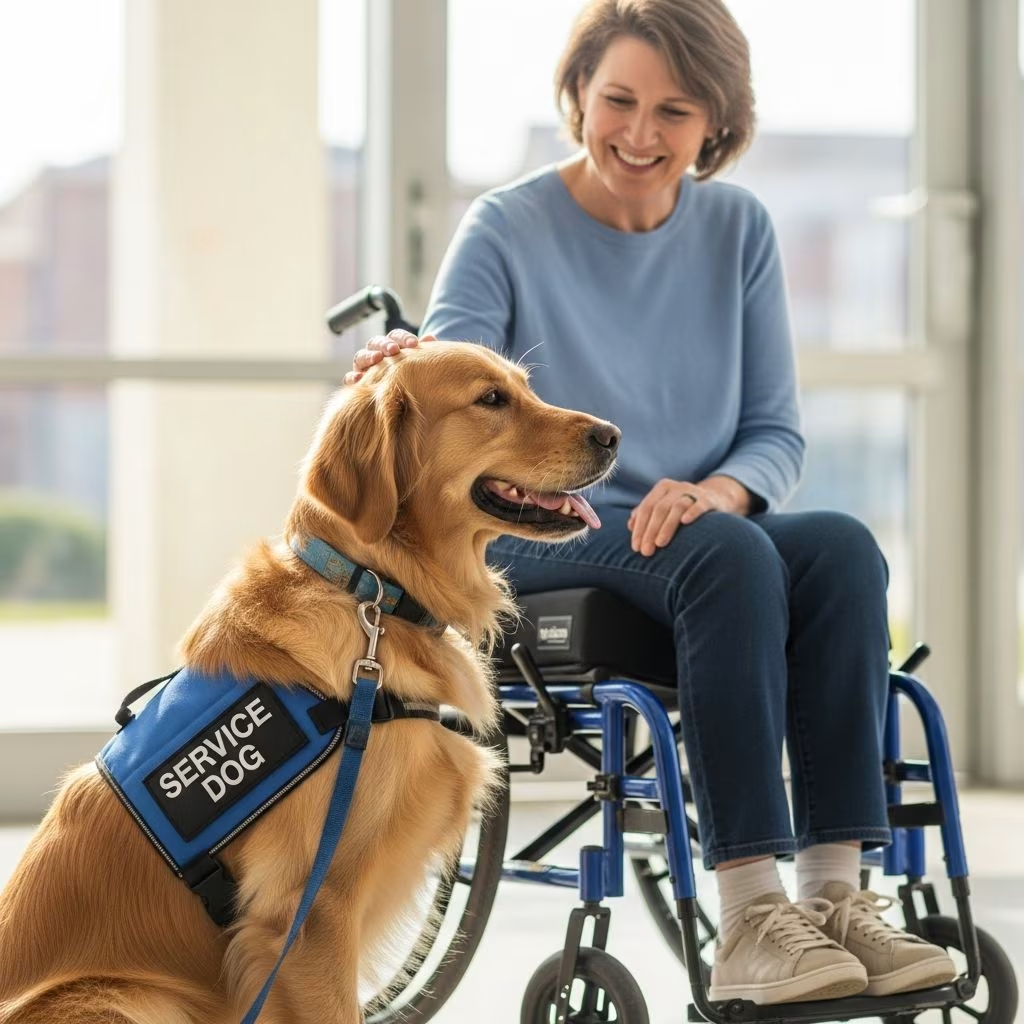
Service dogs play a crucial role in enhancing the independence and quality of life for people with disabilities. Under the Americans with Disabilities Act (ADA), these animals are granted access to public spaces where pets are typically not allowed. However, curiosity from the public and business staff often leads to inappropriate questions or demands that violate federal law. This comprehensive guide outlines the two specific questions you are legally permitted to ask, explains why other inquiries are prohibited, debunks common myths, and provides etiquette tips for respectful interactions.
Understanding Service Dogs Under the ADA
A service dog is defined by the ADA as a dog individually trained to perform specific tasks or work directly related to a person’s disability. This narrow definition, effective since March 15, 2011, recognizes only dogs (not miniature horses in most cases under Titles II and III) as service animals. Examples of tasks include guiding the blind, alerting the deaf, pulling wheelchairs, detecting seizures, reminding individuals to take medication, or interrupting anxiety attacks in those with PTSD.
Importantly, service dogs are working animals, not pets. Dogs providing mere emotional support or comfort do not qualify. This distinction ensures that only legitimately trained animals receive public access rights. Businesses, restaurants, stores, and other public accommodations must allow service dogs in all areas open to the public, including self-service food lines and hotel rooms.
The Two Questions You Can Legally Ask
The ADA strictly limits inquiries to verify if a dog is a service animal. Staff or the public may ask only these two questions when the dog’s role is not obvious (e.g., not guiding a blind person or pulling a wheelchair):
- Is the dog a service animal required because of a disability?
- What work or task has the dog been trained to perform?
These questions must be asked calmly and directly. You cannot ask about the nature of the disability, demand medical documentation, require the dog to demonstrate its task, or request certification papers. If the handler answers affirmatively and describes a relevant task, access must be granted.
For instance, a valid response might be: “Yes, it’s a service dog for my PTSD, and it’s trained to create space during panic attacks.” At that point, further probing is illegal.
Prohibited Questions and Actions
Many well-meaning people cross legal boundaries out of curiosity or skepticism. Here are common prohibited inquiries and demands:
- Asking “What’s your disability?” or probing health details.
- Requiring proof of training, certification, or ID cards.
- Demanding the dog perform its task on command.
- Insisting on a vest, harness, or special tag (ADA does not require these).
- Separating the dog from the handler or charging pet fees.
Online “certification” services selling vests and badges for a fee do not confer ADA rights; the Department of Justice explicitly states these are meaningless. Businesses violating these rules risk lawsuits and fines.
Service Dog Training and Certification Myths
No professional training is required under the ADA—handlers can train their own dogs. Service dogs in training do not qualify for public access rights federally, though some states allow it. All breeds are permitted; no restrictions on size, breed, or appearance, even in breed-ban areas (breed-specific laws typically do not override ADA).
Service dogs must comply with local laws like vaccination, licensing, and leash requirements, but cannot be mandatorily registered as “service animals”. Handlers bear full responsibility for care, feeding, cleanup, and behavior.
When Can a Service Dog Be Removed?
Service dogs have behavioral expectations. Exclusion is allowed only if:
- The dog is out of control (e.g., excessive barking, growling, jumping) and the handler does not correct it effectively.
- The dog is not housebroken (unclean).
In such cases, offer alternative access (e.g., services without the dog). Never abandon the handler—ensure safety first. Hotels cannot allow unattended service dogs in rooms; constant handler control is required.
Multiple Service Dogs
Handlers may have more than one if needed (e.g., one for mobility, one for seizures). Ask the two questions for each. Accommodation depends on space; in tight areas like crowded restaurants, one may need to stay outside.
Service Dogs in Specific Settings
| Setting | Access Rules | Notes |
|---|---|---|
| Restaurants/Salad Bars | Full access, including self-service | No exclusion from food prep areas in shelters/dorms |
| Hotels | Allowed in rooms, no pet fees | Must be supervised at all times |
| Stores/Offices | All public areas | No demos required |
| Airlines (ACAA) | Broader rules apply | Emotional support differs |
Public Etiquette: Respecting Service Dog Teams
Beyond legal questions, etiquette fosters positive interactions. Service dogs wear vests or ignore commands to stay focused—never distract them with pets or food. Common public queries like “Can I pet it?” or “What’s it for?” can overwhelm handlers. Polite responses educate: “Service dogs assist with disabilities like alerting to seizures or mobility aid—please don’t pet to keep focus.”
If access is challenged, stay calm, know your rights, and contact authorities if needed. Educating politely turns skeptics into advocates.
Frequently Asked Questions (FAQs)
Can any dog be a service dog?
No, it must be trained for disability-related tasks, not just emotional support.
Do service dogs need vests?
No, ADA does not require identification.
Who cares for the service dog?
The handler is fully responsible.
Can businesses charge for service dogs?
No pet fees or deposits allowed.
Are miniature horses service animals?
Yes, under specific conditions for Titles II/III.
What if the dog seems aggressive?
If out of control and not corrected, removal is permitted.
State and Local Variations
Some states expand definitions (e.g., trainer access), but ADA sets federal minimums. Check state attorney general offices for local rules. Fair Housing Act and Air Carrier Access Act have broader “assistance animal” definitions.
Service dogs empower independence, but misconceptions persist. By sticking to the two ADA questions, respecting privacy, and following etiquette, we create inclusive spaces. Businesses training staff on these rules avoid liability while supporting disability rights.
References
- ADA Requirements: Service Animals — U.S. Department of Justice. 2010-12-28. https://www.ada.gov/resources/service-animals-2010-requirements/
- Frequently Asked Questions about Service Animals and the ADA — U.S. Department of Justice. 2023-07-12. https://www.ada.gov/resources/service-animals-faqs/
- Service Animal Information — New Mexico Governor’s Commission on Disability. 2024-01-15. https://www.gcd.nm.gov/technical-assistance/service-animals/
- How can I tell if an animal is really a service animal and not just a pet? — ADA National Network. 2022-05-10. https://adata.org/faq/how-can-i-tell-if-animal-really-service-animal-and-not-just-pet
- Interacting with the General Public — Psychiatric Service Dog Partners. 2023-11-05. https://www.psychdogpartners.org/resources/lifestyle/interacting-general-public



