

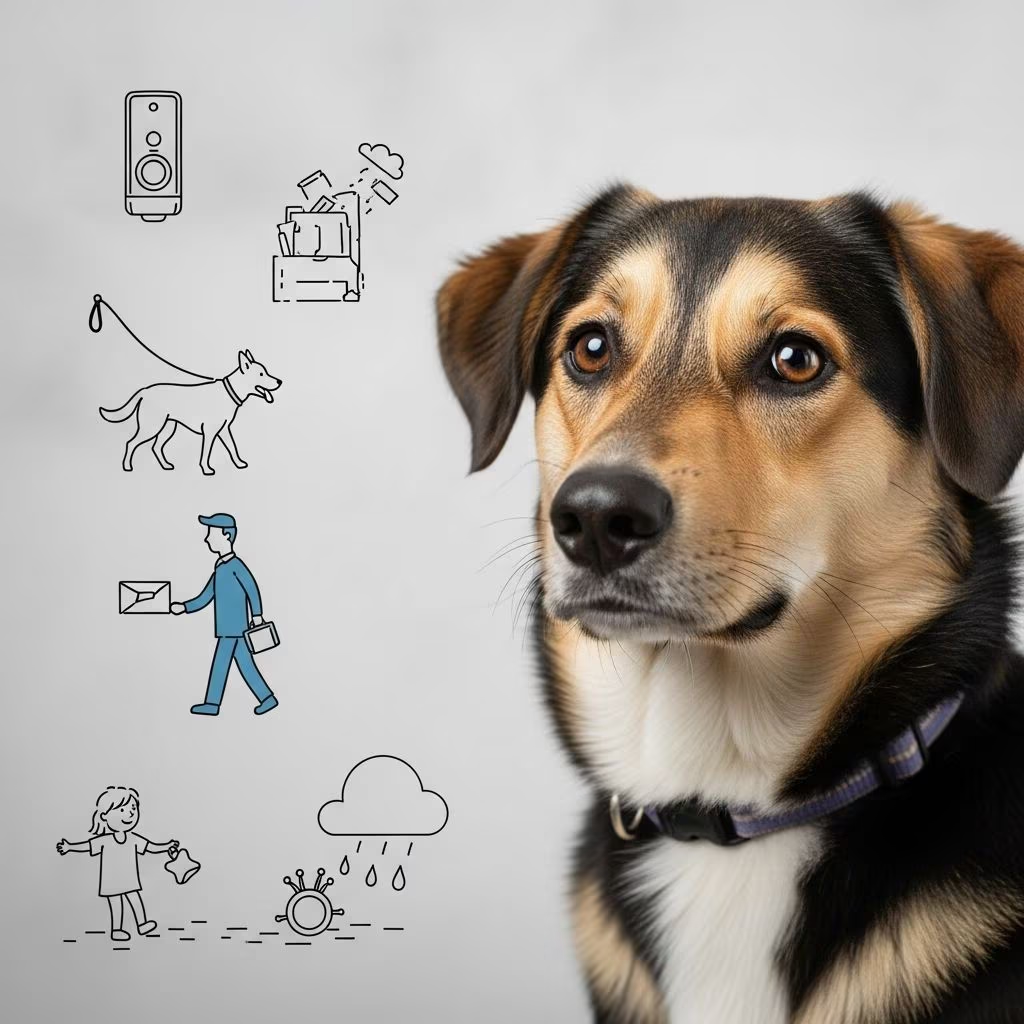
Trigger stacking in dogs refers to the accumulation of multiple stressors or arousing events in quick succession, pushing a dog’s stress levels beyond their coping threshold and leading to exaggerated reactions like barking, lunging, or shutdown.
This phenomenon explains why dogs may seem unpredictable, reacting intensely to minor stimuli after enduring several triggers without sufficient recovery time. Stress hormones such as cortisol and adrenaline build up, impairing the dog’s ability to self-regulate or respond to training cues.
What is “trigger stacking”?
Trigger stacking happens when a dog encounters one stressful or exciting event, and before their arousal or stress levels return to baseline—typically within 20 minutes to several days depending on the dog and trigger severity—another stressor occurs. Each subsequent trigger adds to the previous stress load, stacking like layers until the dog surpasses their individual threshold.
For instance, a dog might handle a single barking neighbor dog calmly, but if preceded by loud construction noise, a disrupted morning routine, and an unexpected visitor, the same neighbor dog could provoke lunging or growling. This buildup affects even well-adjusted dogs, as routine disruptions release cortisol, heightening fight-or-flight responses.
Triggers vary widely and can be visual (e.g., fast-moving bikes), auditory (e.g., jingling tags or fireworks), olfactory (e.g., unfamiliar scents), or tactile (e.g., unexpected petting). Positive excitement, like anticipation for a toy, can also contribute if it creates high arousal that hinders focus.
What are signs your dog is experiencing trigger stacking?
Dogs exhibit a range of stress signals during trigger stacking, from subtle calming attempts to overt distress. Early indicators include hypervigilance, such as darting eyes, perked ears, and constant environmental scanning.
Subtle self-soothing behaviors signal rising stress: excessive yawning, lip licking, ground sniffing, full-body shakes, or head turning away. More pronounced signs encompass panting, drooling, whining, tense body posture, tucked or stiff tail, dilated pupils, and reduced or erratic movement.
- Heightened awareness of triggers
- Inability to focus on owner, treats, or toys
- Excessive yawning or lip licking
- Panting, drooling, or shaking
- Stiffening, growling, snapping, or backing away
- Whining, barking, lunging, or shutdown
Recognizing these escalating signs allows intervention before full overload, preventing reactive outbursts.
How does trigger stacking work? (With diagram explanation)
Trigger stacking builds cumulatively: each trigger elevates stress hormones, and without decompression, the next adds atop the last, akin to stacking blocks until collapse. A dog’s coping threshold is personal, influenced by factors like age, health, past experiences, and genetics.
Visualize a baseline stress level at zero. A minor trigger (e.g., new environment) raises it to 20%. Recovery might take hours, but a second trigger (e.g., unfamiliar people) adds 30%, totaling 50%. A third (e.g., joint pain flare-up) pushes to 80%. The final straw—a passing dog at 25%—tips over 100%, eliciting aggression or fear.
This diagram concept illustrates why a “usually fine” dog snaps: prior unseen stressors accumulated invisibly. Recovery times vary; mild triggers may reset in 20-30 minutes, severe ones linger days.
Trigger stacking examples
Real-world scenarios highlight trigger stacking’s subtlety. Consider a newly adopted dog: baseline joint pain (20%), new home stress (40%), unfamiliar family (15%), totaling 75%. A child’s quick approach (30%) overflows, causing a snap—despite the dog being “kid-friendly” otherwise.
On walks: Morning garbage truck roar (25%), three leashed dogs barking (15% each, totaling 45%), then a jogger (30%)—the stack hits 100%, prompting lunging at a leaf. Home life: Fireworks (40%), guests arriving (30%), vet visit recall (20%)—a family member’s hug triggers growling.
Even positive stacks occur: Toy anticipation hype (30%), playdate with excited dog (40%)—a thrown ball elicits nipping from overstimulation.
Why do dogs get ‘over threshold’?
Going “over threshold” means stress exceeds coping capacity, flooding the rational brain (prefrontal cortex equivalent) while activating the amygdala-driven survival mode. Dogs lose impulse control, focus, and cue responsiveness, defaulting to instinctive reactions like flight, freeze, or fight.
Cortisol surges impair learning; training fails as the dog can’t process rewards or commands. Thresholds lower with fatigue, illness, or repeated exposure without breaks, making sensitive dogs prone. Prevention maintains sub-threshold states for emotional regulation.
How can you manage and prevent trigger stacking?
Proactive management keeps dogs below threshold. Core strategies:
- Trigger identification: Log reactions to pinpoint stressors (e.g., sounds, movements).
- Recovery time: Space exposures; wait 30+ minutes post-trigger before new ones.
- Enrichment and routine: Daily exercise, puzzle toys, and predictability buffer stress.
- Calming interventions: During signs, remove from stimuli, offer quiet space, use counter-conditioning with high-value treats below threshold.
- Body language monitoring: Halt activities at early signals like yawning.
For walks, choose quiet routes/times, use visual barriers (e.g., cars), and maintain distance from known triggers. Professional help from certified trainers or behaviorists aids complex cases.
| Scenario | Prevention Strategy |
|---|---|
| Busy walks | Early morning routes, long lines for control |
| Home visitors | Pre-exercise dog, crate with toys |
| High arousal play | Short sessions with breaks |
Frequently Asked Questions (FAQs)
Q: How long does it take for a dog’s stress to reset after a trigger?
A: It varies from 20-30 minutes for mild triggers to several days for severe ones, depending on the dog.
Q: Can trigger stacking cause aggression in friendly dogs?
A: Yes, accumulated stress can push even sociable dogs over threshold, leading to snaps or growls.
Q: Is trigger stacking only negative stress?
A: No, excitement like toy play can stack too, causing overstimulation.
Q: What if my dog shows frequent stacking signs?
A: Consult a veterinary behaviorist; rule out medical issues and implement management plans.
Q: Can training fix trigger stacking?
A: Training helps below threshold; above it, focus on prevention and desensitization.
References
- Trigger Stacking in Dogs & Anxiety Overload — Outward Hound. 2023. https://outwardhound.com/furtropolis/dogs/trigger-stacking
- Trigger Stacking and Coping Thresholds — Forever Hounds Trust. 2023. https://foreverhoundstrust.org/trigger-stacking-and-coping-thresholds/
- Understanding Trigger Stacking in Dogs — The Training of Dogs. 2023. https://www.thetrainingofdogs.com/post/understanding-trigger-stacking-in-dogs
- What Is “Trigger Stacking,” and How Can We Make Sure Dogs Avoid It? — Kinship. 2023. https://www.kinship.com/dog-behavior/what-is-trigger-stacking-dogs
- Trigger Stacking [PDF] — HSPPR. 2023. https://www.hsppr.org/wp-content/uploads/Trigger-Stacking.pdf
- Trigger Stacking in Dogs Explained — Bella+Duke. 2023. https://www.bellaandduke.com/dogs/expert-advice/dog-behaviour/trigger-stacking-in-dogs/
- What is Trigger Stacking? How to Handle an Overly Stressed Dog — American Kennel Club (AKC). 2023-10-12. https://www.akc.org/expert-advice/training/how-to-avoid-trigger-stacking-in-dogs/



