

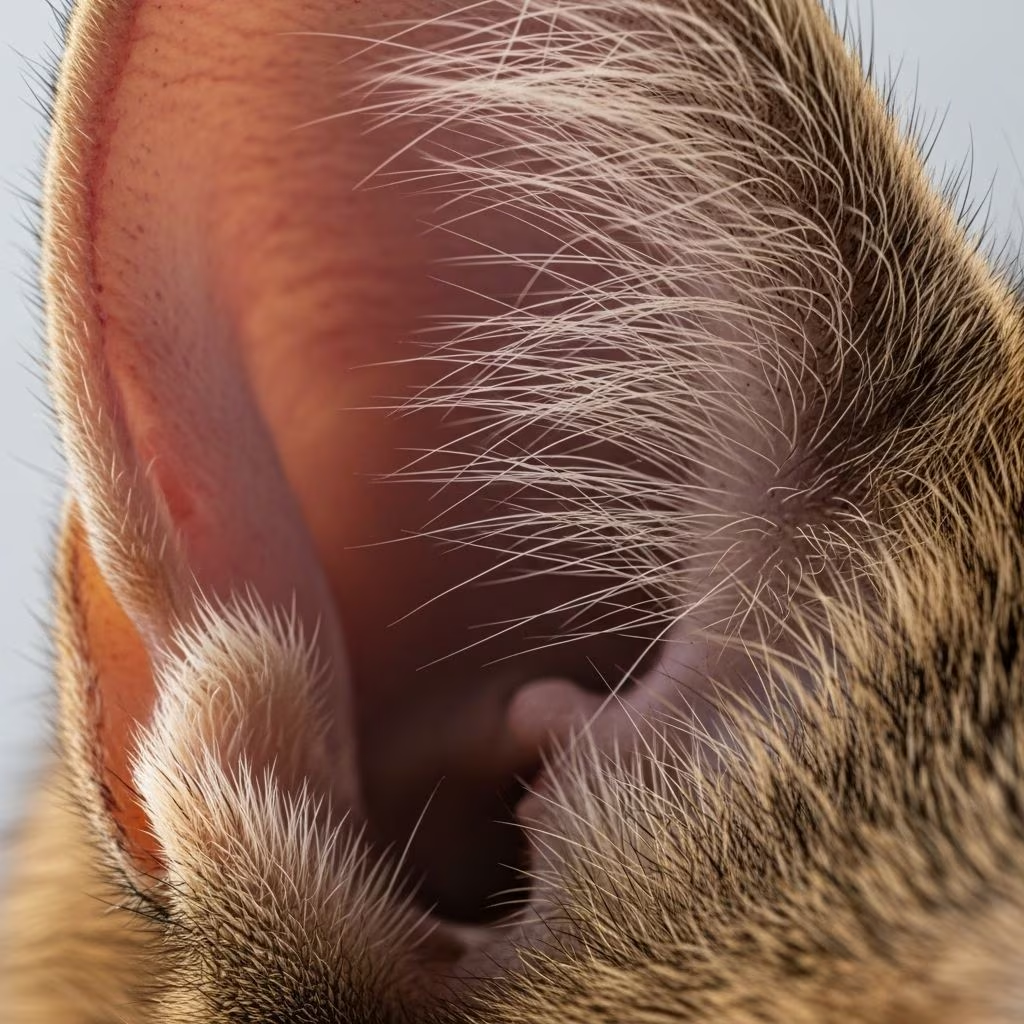
What Is the Fuzz Inside Cat Ears?
Have you ever wondered about that soft, fuzzy hair inside your cat’s ears? It’s more than just adorable fluff—it’s a sophisticated biological feature with important functions. The fuzz inside cat ears is called ear furnishings, and it plays a vital role in protecting your cat’s hearing and maintaining ear health. In certain breeds, you might also notice longer hairs on the tips of the ears, known as ear tufts or Lynx tips. Understanding what these features are and why cats have them can give you greater insight into your feline companion’s remarkable anatomy.
Understanding Cat Ear Anatomy
To fully appreciate the fuzz inside your cat’s ears, it’s helpful to understand the basic structure of feline ears. A cat’s ear consists of three main parts: the outer ear, the middle ear, and the inner ear. The outer ear includes the pinna (the visible part made of cartilage and covered by skin and fur) and the ear canal. What makes cat ears particularly special is their exceptional mobility—cats have 32 muscles controlling their outer ears, compared to just six in humans. This allows cats to rotate their ears a full 180 degrees, making them incredibly effective sound detectors.
The ear canal in cats is notably deeper and more tapered than in humans, creating a superior funnel that carries sound to the eardrum more efficiently. This anatomical advantage makes cats exceptional hunters and listeners, but it also means their ear canals need protection from debris and contaminants. This is where ear furnishings become essential.
What Are Ear Furnishings?
Ear furnishings are the fine, soft hairs located inside the ear canal and on the inner surfaces of the pinna. These specialized hairs are far more than cosmetic features—they serve multiple critical functions for your cat’s health and sensory abilities. The term “furnishings” refers to these hairs because they essentially furnish or equip the ear with protective capabilities.
These hairs are particularly visible in certain cat breeds and more prominent in older cats, though all cats have some degree of ear furnishings. They create a protective barrier that helps prevent debris, dust particles, mites, and other foreign materials from reaching the sensitive ear canal and eardrum. In a cat’s environment, this protection is invaluable.
The Protective Function of Ear Furnishings
The primary role of ear furnishings is to act as a natural filter and protective barrier. The ear canal is a sensitive area, and the buildup of dirt, wax, and other debris can lead to inflammation and secondary infections. While cats are meticulous self-groomers, they cannot effectively clean the inside of their ears with their paws or tongue. Ear furnishings solve this problem by trapping debris particles before they can travel deep into the ear canal.
Once debris becomes trapped in the ear furnishings, your cat’s natural grooming habits help remove it. When cats groom themselves and swipe at their ears, the trapped particles are dislodged and removed from the ear area. This natural cleaning process is remarkably efficient and helps maintain optimal ear health without requiring human intervention.
Additionally, ear furnishings provide a barrier against parasites and mites that might otherwise infiltrate the ear canal. By creating a physical obstacle, these hairs significantly reduce the risk of ear infections and mite infestations, which are common concerns in feline health. This protective function is particularly important because ear infections can cause significant discomfort and, if left untreated, can lead to more serious health complications.
The Sensory Function of Ear Furnishings
Beyond protection, ear furnishings contribute directly to your cat’s remarkable auditory abilities. These specialized hairs contain sensory receptors that help detect sound vibrations. They essentially enhance the cat’s acute hearing by acting as additional sensory organs. This sensory function allows cats to detect frequencies and sounds that are completely inaudible to humans, contributing to their legendary hunting prowess and their ability to pinpoint the location of prey or other sounds with extraordinary precision.
The relationship between ear furnishings and auditory performance underscores how every aspect of cat anatomy is optimized for efficiency and sensory excellence. Cats rely on their exceptional hearing for survival in the wild, and ear furnishings play a role in maintaining this advantage even in domestic settings.
Ear Tufts: The Distinctive Lynx Tips
In addition to ear furnishings, certain cat breeds feature longer, more prominent hairs on the tips of their ears, known as ear tufts or Lynx tips. These distinctive hairs give cats an especially wild appearance, often resembling the lynx or other wild feline species. While they might seem purely aesthetic, ear tufts serve functional purposes similar to ear furnishings.
Ear tufts are positioned on the tips of the ears and function to enhance hearing by filtering sounds downward into the ear canal. They work in conjunction with the pinna’s shape to direct sound waves more efficiently toward the eardrum. Like ear furnishings, ear tufts also help trap debris and maintain ear cleanliness, reducing the risk of infections and other ear health issues.
Not all cats have prominent ear tufts—they are particularly characteristic of certain breeds such as Maine Coons, Norwegian Forest Cats, and some Asian breeds. However, many domestic cats have at least some degree of ear tufts, which gradually become more pronounced as the cat ages.
Natural Ear Wax and Self-Cleaning Mechanisms
An important aspect of ear furnishings’ protective function involves the natural wax produced in the ear canal. This wax is not a sign of poor hygiene but rather a beneficial biological product. Ear wax is produced specifically to trap dust and pathogens that might otherwise reach the sensitive eardrum. Mammalian ear canals, including those of cats, contain specialized cells with hairs that automatically move these contaminants away from the eardrum and toward the outer ear.
This self-cleaning mechanism is one of nature’s most efficient designs. Rather than requiring owners to clean their cat’s ears, the ears maintain themselves through this natural process. In fact, veterinarians generally recommend against cleaning a cat’s ear canals unless specifically instructed to do so, as this can disrupt the natural cleaning process.
Special Features: Henry’s Pocket
While discussing the fuzz and special structures in cat ears, it’s worth mentioning another distinctive feature called Henry’s Pocket, also known as the cutaneous marginal pouch. This is a thin flap of skin on the outside of the ear that is particularly obvious in cats, though bats, weasels, and some dogs also have it. The exact function of Henry’s Pocket remains somewhat mysterious, though some researchers theorize it may help detect higher-pitched sounds. Regardless of its function, this area is a common location where mites and parasites like to gather, so veterinarians routinely check it during physical examinations.
Cat Ear Development in Kittens
Interestingly, kittens are born without functioning ear canals. The ear canal is closed at birth and cannot transmit sound from the outer ear to the eardrum, meaning that newborn kittens cannot hear anything at all. This protective mechanism likely serves to shield kittens during the birthing process. Once the ear canal opens, which typically occurs by one week of age, the kitten’s sensory systems begin to mature, and they gradually develop the ability to hear progressively quieter sounds.
As kittens grow, their ear furnishings and ear tufts gradually develop and become more prominent. By adulthood, these features are fully functional protective and sensory tools.
Breed Variations in Ear Furnishings
Different cat breeds exhibit varying degrees of ear furnishings and ear tufts. Some breeds, particularly those developed in cold climates like the Maine Coon and Norwegian Forest Cat, tend to have more pronounced ear furnishings and tufts. These breeds were naturally selected for thicker ear hair as an adaptation to harsh winter conditions. Other breeds may have minimal ear furnishings, though all healthy cats have at least some degree of these protective hairs.
The prominence of ear furnishings can also vary significantly based on individual genetics and age. Many cat owners notice that their cats’ ear furnishings become more noticeable as they age, adding to the distinguished appearance of senior felines.
Maintaining Your Cat’s Ear Health
Understanding the role of ear furnishings and ear tufts helps cat owners appreciate why these features should not be trimmed or removed. These hairs are essential for your cat’s health and comfort. Regular veterinary check-ups will include inspection of the ears to ensure they are healthy and free from infection or parasites. Your veterinarian will use an otoscope to examine the ear canal and eardrum, checking for any signs of inflammation, injury, swelling, or excessive ear wax buildup.
If your cat shows signs of ear problems—such as excessive scratching, head shaking, discharge, or odor—contact your veterinarian promptly. However, in most cases, healthy ears require no special cleaning or maintenance beyond your cat’s natural grooming efforts.
Why Do Cats Have So Much Fuzz in Their Ears?
The extensive fuzz inside cat ears is an evolutionary adaptation that serves multiple critical functions. Over millions of years of evolution, cats developed these specialized hairs to enhance their survival abilities. The fuzz protects the delicate hearing apparatus while simultaneously enhancing auditory performance—a dual-purpose design that exemplifies nature’s efficiency. Whether your cat is a sleek shorthair or a luxuriantly fluffy longhair, the fuzz in their ears represents millions of years of evolutionary refinement.
Frequently Asked Questions
Q: Should I clean the fuzz out of my cat’s ears?
A: No, unless specifically directed by your veterinarian. The fuzz and natural wax in cat ears serve important protective and cleaning functions. Regular grooming habits will naturally remove excess debris.
Q: Why do some cats have more ear fuzz than others?
A: Breed genetics, age, and individual variation determine the prominence of ear furnishings. Breeds like Maine Coons naturally have thicker ear hair as a cold-weather adaptation.
Q: Are ear tufts a sign of a specific breed?
A: While particularly prominent in certain breeds like Maine Coons and Norwegian Forest Cats, many domestic cats develop some ear tufts as they mature.
Q: Can ear furnishings prevent all ear infections?
A: While ear furnishings provide significant protection against debris and parasites, they don’t guarantee immunity from all ear problems. Regular veterinary check-ups remain important for maintaining ear health.
Q: What should I do if I notice my cat scratching their ears excessively?
A: Excessive ear scratching can indicate ear mites, infection, or other health issues. Schedule a veterinary examination to determine the cause and appropriate treatment.
References
- Ear Structure and Function in Cats — MSD Veterinary Manual. 2024. https://www.msdvetmanual.com/cat-owners/ear-disorders-of-cats/ear-structure-and-function-in-cats
- Ear Structure and Function in Cats — Merck Veterinary Manual. 2024. https://www.merckvetmanual.com/cat-owners/ear-disorders-of-cats/ear-structure-and-function-in-cats
- 7 Cat Ear Facts — PetMD. 2024. https://www.petmd.com/cat/general-health/cat-ear-facts
- What are Those Special Hairs in Your Cat’s Ears? — Cat Behavior Associates. 2024. https://catbehaviorassociates.com/what-are-those-special-hairs-in-your-cats-ears/



