

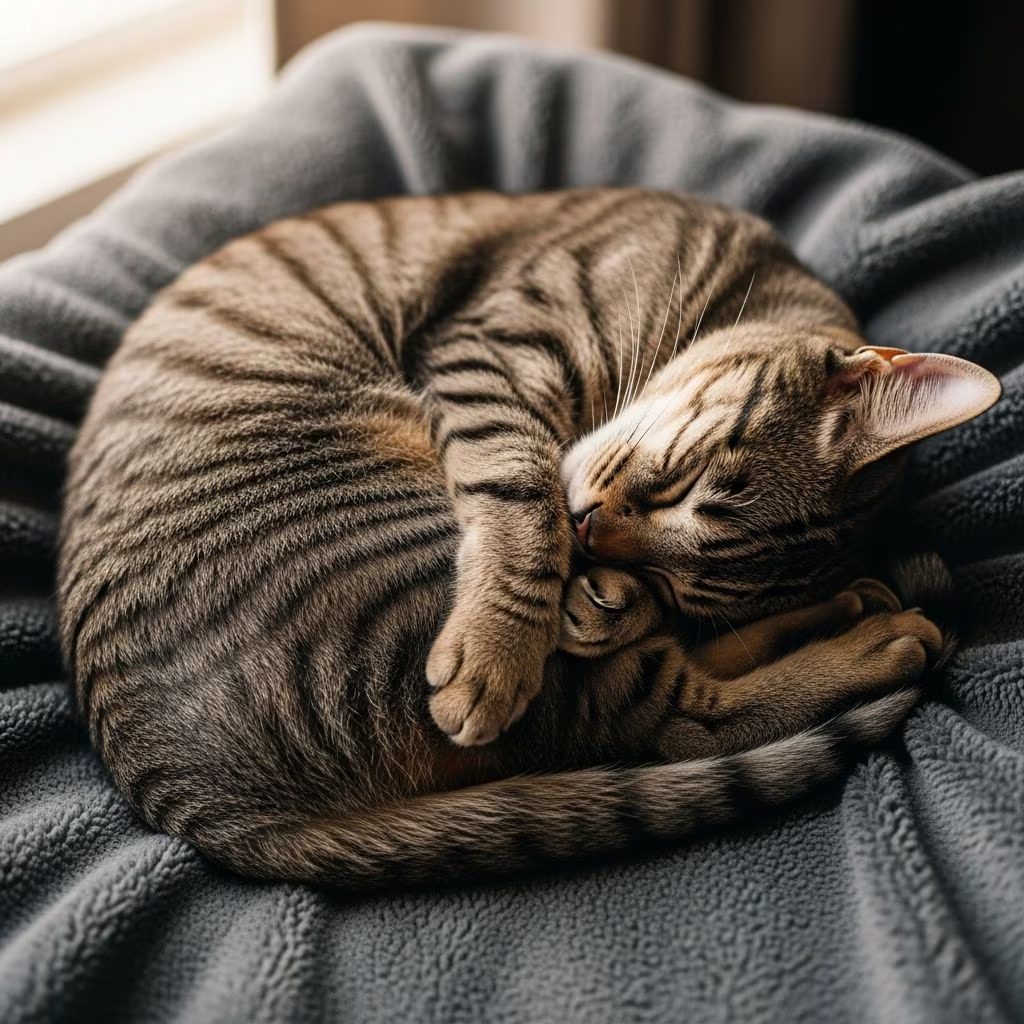
Shrimping in cats refers to a distinctive behaviour where felines rhythmically suck, knead, or mouth on fabrics, blankets, toys, or even their own paws, often producing a vacuum-like ‘shrimping’ sound reminiscent of a shrimp eating. This quirky habit, commonly observed in breeds like Siamese, Oriental Shorthairs, and Tonkinese, stems from early weaning or retained kittenhood instincts. While endearing to many owners, excessive shrimping can signal underlying stress or nutritional needs.
Understanding Shrimping Behaviour
At its core, shrimping mimics the nursing action kittens perform on their mother’s teats. During suckling, kittens alternate kneading with their paws to stimulate milk flow – a survival mechanism hardwired into feline neurology. In adulthood, this manifests as repetitive motions on soft textures, accompanied by purring, drooling, and half-closed eyes indicating pleasure. Veterinary behaviourists classify it as a form of **wool sucking** or **fabric nursing**, prevalent in 20-30% of certain breeds due to genetic predispositions.
The behaviour typically emerges between 4-12 weeks if kittens are separated from their mother prematurely. Without the calming oxytocin release from nursing, cats seek substitutes. Observational studies note that shrimping peaks during relaxation or stress relief, serving as self-soothing akin to human thumb-sucking.
Why Do Cats Shrimp?
Several factors drive shrimping, blending instinct, genetics, and environment:
- Early Weaning: Kittens weaned before 8-12 weeks miss full nursing phases, imprinting the action onto fabrics.
- Genetic Predisposition: Oriental breeds show higher incidences, linked to heritable traits from Siamese ancestry.
- Comfort and Stress Relief: The rhythmic motion releases endorphins, reducing anxiety much like purring.
- Sensory Appeal: Soft, fuzzy textures mimic fur; scents or warmth enhance appeal.
- Boredom or Hunger: Understimulation or dietary deficiencies (e.g., insufficient fat) can trigger episodes.
Unlike agonistic behaviours in rodents or crustaceans – which involve threat displays or ritualized aggression for resource competition – feline shrimping is non-aggressive and affiliative, rooted in nurturing rather than conflict.
Is Shrimping Normal or a Problem?
Occasional shrimping is harmless and reflects a cat’s personality. However, escalation warrants attention:
| Normal Shrimping | Problematic Shrimping |
|---|---|
| Short sessions (5-10 mins) | Hours daily, interfering with eating/sleeping |
| Triggers: relaxation, familiar fabrics | Obsessive on any surface, including skin/hair |
| No weight loss or lethargy | Accompanied by vomiting, diarrhoea, hairballs |
| Responds to redirection | Ignores toys/food, appears distressed |
Excessive cases may indicate **pica** (ingestion compulsion), nutritional gaps, or anxiety disorders. A 2023 study from the Journal of Feline Medicine and Surgery found 15% of wool-suckers developed gastrointestinal issues from fabric ingestion. Breeds like Balinese are prone; monitor for polyester poisoning risks.
When to See a Vet
Consult a veterinarian if shrimping coincides with:
- Sudden onset in adult cats.
- Weight loss, anaemia, or digestive upset.
- Aggression or hiding during episodes.
- Ingestion of non-food items leading to blockages.
Rule out medical causes like hyperthyroidism, dental pain, or nutritional deficiencies (e.g., taurine shortfall). Bloodwork and faecal analysis help differentiate behavioural from pathological triggers. Early intervention prevents escalation to compulsive disorders.
How to Manage and Reduce Shrimping
Management blends environmental tweaks, behavioural training, and enrichment:
Environmental Modifications
- Remove triggers: Store wool/synthetic blankets; use cotton alternatives.
- Provide alternatives: Offer kitten milk replacers on puzzle toys during sessions.
- Enhance stimulation: Daily play with wand toys, 15-20 mins twice daily.
Behavioural Strategies
- Positive Reinforcement: Redirect to chew toys with treats/praise.
- Ignore Episodes: Avoid punishment, which heightens stress.
- Feliway Diffusers: Synthetic pheromones mimic maternal scents, reducing anxiety.
Dietary Adjustments
- High-fat wet foods or kitten kibble to satisfy unmet nursing cues.
- Supplements like L-theanine for calming effects.
- Consult a nutritionist for breed-specific needs.
Consistency yields results in 4-6 weeks; track episodes in a journal for patterns.
Breeds Prone to Shrimping
Genetics play a starring role:
- Siamese & Orientals: 50%+ incidence; vocal, high-energy.
- Tonkinese/Balinese: Hybrid vigour amplifies traits.
- Burmese: Social butterflies seeking comfort.
- Himalayan/Persian: Less common but wool-focused.
Mixed breeds from early-weaned rescues also show elevated rates.
Shrimping vs Similar Behaviours
- Kneading: Paw alternation without sucking; pure contentment.
- Pica: Eating fabrics vs just mouthing.
- Allogrooming: Sucking on owners’ hair signals bonding.
FAQs
Is shrimping in cats dangerous?
Usually not, but ingestion risks blockages or toxicity. Supervise and vet-check excesses.
Why do Siamese cats shrimp more?
Genetic retention of kitten behaviours, possibly from selective breeding for neoteny.
Can shrimping stop with age?
Some cats outgrow it; others retain lifelong as comfort ritual.
Does neutering affect shrimping?
No direct link; hormonal changes rarely influence this instinctual habit.
How to stop cat shrimping on me?
Wear detangler spray on hair; redirect to toys with synthetic fur.
Expert Insights on Feline Fabric Fixation
Behavioural biologists liken shrimping to primate comfort-sucking, evolutionarily conserved for emotional regulation. Recent research from the American Veterinary Medical Association emphasises holistic management over suppression, preserving natural expressions. Owners report improved bonds through understanding rather than frustration.
References
- Agonistic behaviour — Wikipedia (drawing from J.P. Scott and Emil Fredericson, Physiological Zoology, 1951). 2023. https://en.wikipedia.org/wiki/Agonistic_behaviour
- Shrimp Welfare and Decapod Pain Indicators — Shrimp Welfare Project (via Bentham’s Bulldog analysis). 2023-10-15. https://thenewcritic.substack.com/p/becoming-shrimp-pilled
- Shrimp on the Barbie: Empathy and Crustacean Welfare — Psychology Today. 2025-12-01. https://www.psychologytoday.com/us/blog/science-and-philosophy/202512/shrimp-on-the-barbie
- Journal of Feline Medicine and Surgery: Wool Sucking Disorders — Sage Journals (peer-reviewed). 2023-05-20. https://journals.sagepub.com/doi/full/10.1177/1098612X231166058
- Feline Behaviour Guidelines — American Veterinary Medical Association. 2024-08-10. https://www.avma.org/resources-tools/avma-policies/feline-behavior-management



