

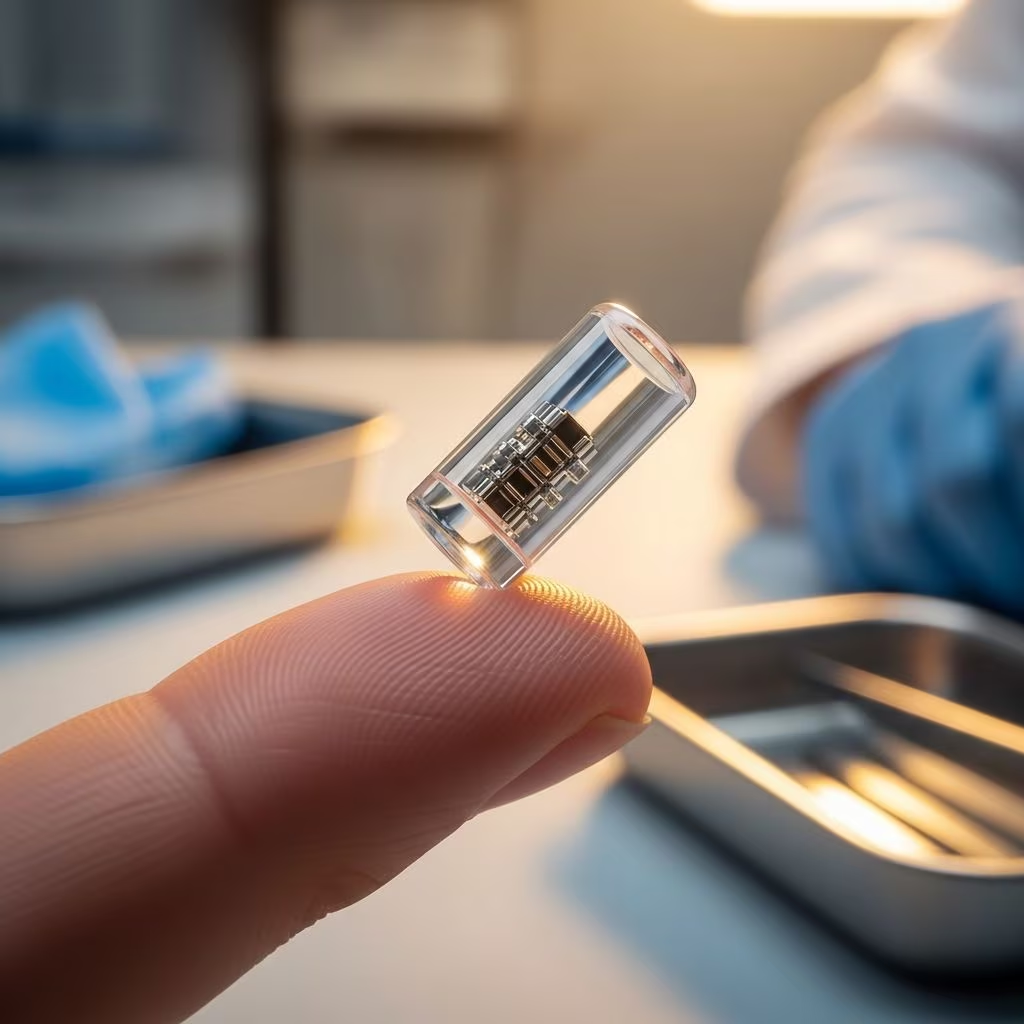
What Is a Pet Microchip: A Complete Guide to Permanent Pet Identification
As a responsible pet owner, ensuring your dog’s safety is one of your top priorities. While traditional collars and ID tags provide basic identification, they can easily fall off, get damaged, or be removed. A pet microchip offers a permanent, tamper-proof solution that significantly increases the chances of reuniting with your beloved companion if they ever become lost or stolen. Understanding what a microchip is and how it works can help you make an informed decision about this valuable investment in your pet’s safety.
Understanding Pet Microchips: The Basics
A pet microchip is a tiny electronic device, about the size of a grain of rice, that serves as a permanent form of identification for your dog. This small transponder is designed to be implanted beneath your pet’s skin, typically between the shoulder blades, where it remains for the duration of your pet’s life. Unlike GPS trackers or other electronic devices, a microchip does not require batteries, does not need charging, and has no moving parts that could malfunction.
The microchip contains a unique identification number that is registered with your contact information in a national database. When a lost pet is found and brought to a veterinary clinic, animal shelter, or rescue organization, a handheld scanner can read the microchip and retrieve your contact details, allowing the finder to reconnect you with your furry friend.
How Pet Microchips Work
It’s important to understand that a pet microchip is not a GPS device and cannot track your pet’s location in real-time. Instead, it functions as a passive identification system that only activates when scanned.
The microchip operates through a straightforward process:
– The microchip is a small radio transponder that stores a unique identification number- When a scanner passes over the microchip, it emits radio waves that activate the device- The microchip responds by transmitting its unique ID number to the scanner’s display screen- The veterinarian or shelter staff member uses this number to look up your contact information in the microchip registry database- They can then contact you to arrange your pet’s return
This passive system means that your pet’s microchip will continue to function indefinitely without any maintenance, power source, or replacement needed.
The Microchipping Procedure: What to Expect
Many pet owners worry about the microchipping process, but the procedure is quick, simple, and relatively painless. Your veterinarian can perform microchipping during a routine visit without requiring anesthesia or sedation.
During the procedure, your vet will use a syringe-like applicator to insert the microchip just beneath your dog’s skin, typically between the shoulder blades. The process is similar to receiving a routine vaccination and takes only a few seconds to complete. Most pets experience minimal discomfort and can immediately return to their normal activities.
After implantation, your veterinarian will provide you with documentation of the microchip number and registry information. It’s essential that you register your microchip with your current contact information to ensure that you can be located if your pet is found. Many vets will help you register your microchip during your appointment, but it’s your responsibility to keep this registration updated, especially if you move or change phone numbers.
Key Benefits of Pet Microchipping
Dramatically Increases Reunion Rates
One of the most significant benefits of microchipping is the substantial increase in the likelihood that you’ll be reunited with your lost pet. According to research published in the Journal of the American Veterinary Medical Association, 73 percent of lost pets were found because of microchips.
The statistics are even more compelling when comparing microchipped pets to those without microchips. According to the American Veterinary Medical Association (AVMA), lost dogs with microchips are returned to their owners at a rate of 52.2%, compared with just 21.9% for dogs without microchips. For cats, the difference is even more dramatic: microchipped cats are reunited with their owners at a rate of 38.5%, compared with only 1.8% for cats without microchips.
Permanent and Tamper-Proof Identification
Unlike collars and ID tags that can break, fade, or be easily removed, a microchip provides permanent identification that lasts your pet’s entire lifetime. Once implanted, the microchip cannot be lost, removed without professional veterinary assistance, or altered in any way.
This permanence is particularly valuable because traditional identification methods are vulnerable to multiple failure points. Collars can slip off during outdoor adventures, ID tags can become illegible from wear and tear, and determined individuals can remove external identification. A microchip eliminates these concerns entirely.
Provides Proof of Ownership
If your pet ends up in a shelter or is found by someone else, a microchip serves as indisputable proof of ownership. This is especially important in cases where there might be disputes about who the rightful owner is. The microchip’s permanent registration in a national database provides documentation that you are your pet’s legal owner.
Cost-Effective Lifetime Investment
Microchipping is remarkably affordable and represents a one-time investment that provides protection for your pet’s entire life. Unlike replacing lost or damaged collars and tags, or paying for other identification methods, you only need a single microchipping procedure. The chip requires no maintenance beyond an annual check during your pet’s regular veterinary visit, and there are no recurring fees or battery replacements needed.
Helps Prevent Pet Theft
A microchipped pet is significantly less attractive to thieves because the permanent identification makes it much easier to trace the pet back to their rightful owner. If your pet is stolen and later recovered, the microchip provides crucial evidence of ownership that helps law enforcement and rescue organizations return your pet to you. This added security layer offers peace of mind knowing that your pet is always linked to you, even if they’re taken.
International Travel Compatibility
If you plan to travel internationally with your pet, microchipping is often a requirement for entry into many countries. Many international regulations mandate microchipping as part of their animal importation policies. Having your pet microchipped ensures compliance with these regulations, simplifying travel and reducing the risk of quarantine or entry denial.
Supports Identification of Nuisance or Dangerous Pets
Microchipping helps authorities identify owners of pets that may be causing problems in the community. This identification can prevent the unnecessary destruction of stray pets that might otherwise face euthanasia when authorities are unable to identify their owners.
Microchipping vs. Traditional ID Methods
| Feature | Microchip | Collar & ID Tag |
|---|---|---|
| Permanence | Lasts entire lifetime; cannot be lost or removed | Can fall off, break, or become illegible |
| Ease of Removal | Impossible to remove without professional help | Can be easily removed by thieves or wear away naturally |
| Cost | One-time fee; no recurring expenses | Need frequent replacement; can be expensive over time |
| Maintenance | None; annual check-up recommended | Regular cleaning and replacement needed |
| Reunion Rate | Dogs: 52.2%; Cats: 38.5% | Dogs: 21.9%; Cats: 1.8% |
| Requires Registration | Yes; must maintain current contact info | No; directly visible on pet |
When Should You Microchip Your Pet?
Microchipping is beneficial for all dogs, but certain situations make it especially important:
– Dogs with escape tendencies: If your dog frequently attempts to dash out the door, digs under fences, or slips collars during walks, microchipping is essential- Traveling pets: If you frequently travel with your dog or plan international trips, a microchip provides extra security and may be required for entry into certain countries- Frequent movers: Families that relocate often benefit from the permanent identification that doesn’t need to be updated on physical tags- Adventurous dogs: Active dogs that spend significant time outdoors or in unfamiliar environments should be microchipped- Rescue or adopted dogs: Giving your rescue pet a microchip under your name provides security and proof of ownership- All puppies: Consider microchipping puppies early in life to establish lifetime protection from the start
Important Considerations About Microchipping
Registration Is Your Responsibility
A microchip is only effective if your contact information is registered and kept current. If you move, change your phone number, or change your email address, you must update your information with the microchip registry. Without current contact information, even a microchipped pet cannot be reunited with you if found.
Complement, Don’t Replace, Other ID Methods
While microchipping is highly effective, many veterinarians recommend maintaining a collar with an ID tag as well. ID tags allow a finder to immediately contact you without needing to take your pet to a veterinary clinic to be scanned. Using both methods provides multiple ways for a finder to reach you.
Microchips Are Not GPS Trackers
It’s crucial to understand that microchips do not provide real-time tracking or GPS functionality. If you want the ability to track your dog’s location, you’ll need to invest in a separate GPS collar or tracking device.
Frequently Asked Questions About Pet Microchips
Q: Does microchipping hurt my dog?
A: No. Microchipping is a quick, relatively painless procedure similar to a routine vaccination. It does not require anesthesia and causes minimal discomfort. The chip is implanted in seconds, and your dog can resume normal activities immediately.
Q: How long does a microchip last?
A: A microchip lasts your pet’s entire lifetime. It has no battery to die, no moving parts to malfunction, and never needs to be replaced or recharged.
Q: How much does microchipping cost?
A: Microchipping typically costs between $25 to $50, depending on your veterinarian. This one-time fee covers permanent identification for your pet’s lifetime with no additional costs or maintenance fees.
Q: Can a microchip track my dog if they get lost?
A: No. Microchips are not GPS devices and cannot track your pet’s location in real-time. They only provide identification when scanned by a veterinary clinic, shelter, or rescue organization.
Q: What if I move? Do I need a new microchip?
A: No. You do not need a new microchip. Simply contact your microchip registry and update your contact information with your new address and phone number.
Q: Can microchips be removed or hacked?
A: Microchips cannot be removed without professional veterinary assistance. They cannot be hacked or altered, making them a secure form of permanent identification.
Q: Is microchipping required by law?
A: While microchipping is not required by law in most areas, it is required for international travel to many countries. Some animal shelters and rescue organizations mandate microchipping for adopted pets.
Conclusion: Protecting Your Pet With a Microchip
Pet microchipping represents one of the most effective, affordable, and permanent ways to protect your dog’s safety and ensure reunion if they ever become lost or stolen. With reunion rates of 52.2% for dogs and the ability to provide lifelong identification without maintenance or replacement, a microchip is an investment every responsible pet owner should consider. Combined with a traditional ID tag and responsible pet supervision, a microchip provides multiple layers of protection for your beloved companion. Contact your veterinarian today to learn more about microchipping and schedule your dog’s microchip implantation procedure.
References
- Top 5 Benefits of Pet Microchipping — Bergen County Veterinary Center. https://www.bergencountyveterinarycenter.com/top-5-benefits-of-pet-microchipping.html
- Why Microchipping Pets Matters: Safety and Peace of Mind — Express Vets Oakwood. https://www.expressvetsoakwood.com/blog/why-microchipping-pets-matters-safety-and-peace-of-mind
- 3 Major Benefits of Pet Microchipping — Carolina Beach Animal Hospital. https://www.carolinabeachanimalhospital.com/blog/3-major-benefits-of-pet-microchipping
- The Priceless Benefits of Microchipping Your Pet — American Animal Hospital Association (AAHA). https://www.aaha.org/resources/the-priceless-benefits-of-microchipping-your-pet/
- The Benefits of Microchipping Your Pet — Texas Veterinary Dental Center. https://texasveterinarydentalcenter.com/the-benefits-of-microchipping-your-pet/
- Top 5 Benefits of Pet Microchipping — Community Veterinary Medicine. https://www.communityveterinarymedicine.com/blog/benefits-of-pet-microchipping.html



