

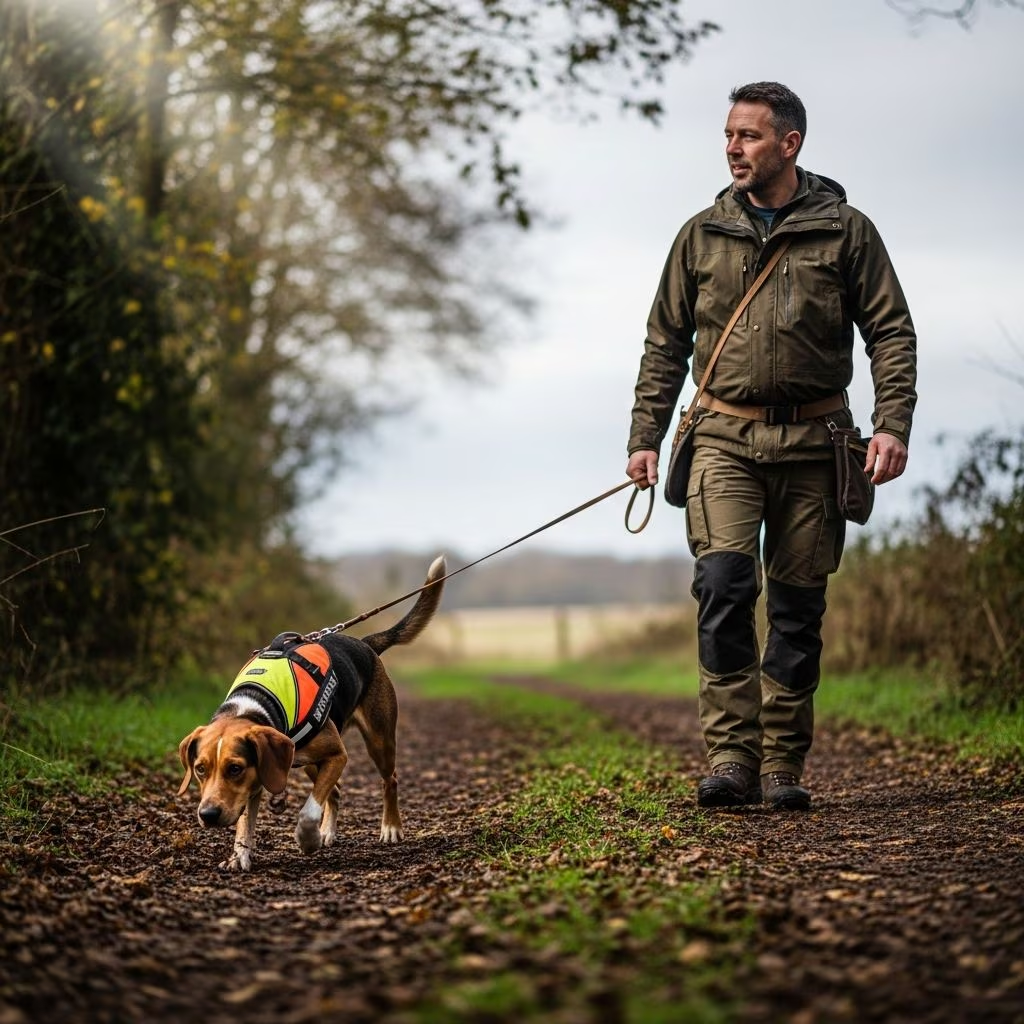
What is Mantrailing?
Mantrailing is a dog-led, non-competitive sport in which dogs are trained to follow a specific human scent trail to locate a person. The term originates from English, combining ‘man’ (human) and ‘trailing’ (to pursue). Unlike many traditional dog sports where handlers lead and direct their dogs, mantrailing reverses this dynamic entirely—the dog takes the lead, makes independent decisions, and the handler follows, observing and supporting their canine partner’s natural instincts.
The sport is based on search and rescue operations, where dogs use their extraordinary olfactory abilities to track individuals across varied terrain. Dogs follow a mixture of ground scent and air scent as they work to locate the trail layer. What distinguishes mantrailing from other scent-work activities is its emphasis on allowing dogs to follow their nose independently, without human direction or interference.
Mantrailing is suitable for all dog breeds and ages, making it an inclusive activity that celebrates canine instinct and capability. Whether your dog is a working breed, a companion animal, or a rescue dog, mantrailing offers a structured yet liberating outlet for their natural abilities.
The Difference Between Mantrailing and Tracking
While often confused, mantrailing and tracking are distinct disciplines. Tracking focuses specifically on scent particles deposited on the ground surface, whereas mantrailing involves following a combination of ground scent and air scent as the dog works to follow the trail layer’s path. In tracking, the dog may be more tightly directed by the handler, whereas in mantrailing, the dog’s autonomy and decision-making are paramount.
How Mantrailing Works
The basic premise of mantrailing is straightforward: a trail layer (the person being found) walks a predetermined route, leaving behind their unique scent signature. The dog, guided only by their handler on a lead, must use their nose to detect this scent trail and follow it to locate the trail layer. The handler’s role is not to teach or direct, but to follow their dog’s lead, read their body language, and provide calm, supportive encouragement.
The process begins with what is called an “Intensity Start,” where the dog gets excited by the trail layer before they depart to lay the trail. This creates an initial connection to the person the dog is seeking. Once the trail layer has left and enough time has passed, the handler and dog begin their search, with the dog leading the way across the landscape.
Mantrailing requires handlers to develop a new skill set—not teaching their dog, but rather reading their dog’s responses and trusting in the dog’s capabilities. As one expert notes, “The skill in mantrailing is in teaching the human end of the lead to read their dog’s body language and emotional markers. And to resist the urge to try to ‘teach’ their dog anything—this is a dog doing dog things—and we’re being led by them.”
Why Mantrailing is Beneficial for Dogs
Mantrailing offers numerous psychological and physical benefits for canine participants:
- Tapping into Natural Instincts: All dogs are descended from hunters. Mantrailing allows them to engage their ancestral hunting and scavenging behaviors in a safe, structured environment. Dogs access innate abilities that modern domestic life often suppresses.
- Building Confidence and Independence: Dogs become more optimistic and confident as a result of mantrailing. By making independent decisions and succeeding on the trail, dogs develop self-assurance that often carries over into other areas of their lives.
- Mental Stimulation: Mantrailing provides exceptional mental engagement. The dog must concentrate, problem-solve, and persist—activities that tire the mind as effectively as physical exercise tires the body.
- Safe Self-Expression: Much traditional dog training involves teaching dogs to stop behaviors or conform to human expectations. Mantrailing, by contrast, allows dogs to choose what to do within a safe environment, giving them agency.
- Strengthening the Handler-Dog Bond: As handlers learn to observe rather than direct, they develop a deeper understanding of their dog’s communication style and emotional world. This shift transforms the relationship from one of control to one of partnership.
Understanding Dog Body Language During Mantrailing
For handlers, the ability to read and interpret a dog’s body language is essential to supporting their canine partner effectively. Every movement, gesture, and posture conveys information about the dog’s confidence, focus, and emotional state.
Head and Nose Position
Head Down & Consistent Pull on the Lead: When a dog is actively tracking, their head will typically be held low, and the lead will remain taut with steady forward momentum. This is often the first reliable sign that the dog has located scent and is engaged in the trail.
Head Tilts and Quick Movements: Rapid head movements and tilting indicate the dog is picking up intermittent scent particles and attempting to pinpoint direction and concentration of scent. This behavior is normal and indicates active problem-solving.
Tail Position and Movement
A dog’s tail is a significant indicator of emotional state and concentration:
- High and Wagging: A high tail with a wag suggests excitement and confidence. The dog feels positive about the trail they are following.
- Neutral and Steady: A tail held in a neutral position, parallel to the ground, often indicates a focused and determined state, with the dog fully engaged in the task.
Ear Position
Relaxed and Backward Ears: This positioning can indicate a calm and focused state, where the dog is comfortable with their progress and confident in their direction. Ears that swivel and move indicate the dog is using all senses to locate scent.
Confidence vs. Hesitation
A confident dog will often display a purposeful stride and focused demeanor, while hesitation might show in slower movements, frequent stops, or checking back with the handler for approval or guidance. Understanding these distinctions helps handlers know when to provide encouragement versus when to allow the dog space to work through uncertainty.
Body Tension and Posture
The overall tension in a dog’s body communicates their engagement level. A dog actively working a trail will show firm, purposeful movement, while a dog losing scent or becoming confused may display looser posture or frequent pauses.
Pauses and Freezes
Short pauses can indicate that the dog is processing scent information, while longer freezes might signal confusion or the need for handler intervention. Understanding the context of these pauses is crucial—they’re not always signs of problems, but often signs of active olfactory work.
Vocalisations
While not universal, some dogs vocalise during mantrailing. Whining or barking can indicate excitement or frustration—for instance, a dog might whine when eager to continue but held back by the lead. Many skilled mantrailing dogs remain silent, conserving energy and concentrating fully on the scent.
Tracking Path and Movement Patterns
Dogs often move in a zigzag pattern to cross-check the scent trail and ensure accuracy. This is normal, purposeful behavior that demonstrates the dog’s systematic approach to following scent.
The Psychology of Mantrailing: A Mirror of Your Dog’s Inner World
Mantrailing has a profound psychological dimension that extends beyond the mechanics of scent-following. As experienced mantrailing instructors have observed, mantrailing has a way of exposing a dog’s inner world, reflecting both their confidence and insecurities, much like holding up a mirror.
In everyday life, dogs rely heavily on their handlers for guidance and structure. We control their world—when and where they walk, what they explore, and how they respond to challenges. While this structure provides comfort, it can mask insecurities and over-reliance on the human partner.
Mantrailing flips this dynamic entirely. Suddenly, the dog is in charge, expected to make decisions independently while their handler steps back and follows. For some dogs, this shift is empowering; for others, it can be unsettling at first. On the trail, there’s no hiding—every hesitation, every moment of self-doubt, and every flicker of over-reliance on their handler comes to the surface.
Common Dog Profiles in Mantrailing
The Confident Dog: Dogs that seem carefree in daily life often reveal untapped confidence and determination on the trail, surprising both themselves and their handlers.
The Handler-Dependent Dog: Dogs who rely heavily on their humans in daily life often carry this dependency onto the trail. Instead of embracing their leadership role, they constantly check back for approval or guidance, their posture often shifting between focus and hesitation.
The Overthinker: Some dogs get lost in their heads, analyzing every step and second-guessing themselves. Their body language may show indecision through slower movements, sniffing excessively, or pausing frequently to process information.
Building Confidence Through Mantrailing
What makes mantrailing transformative is that it doesn’t just highlight insecurities—it provides a framework for addressing them. As dogs learn to trust themselves on the trail, their confidence grows, often carrying over into other areas of their lives.
Key Principles for Handlers
- Let the Dog Take the Lead: Handlers often feel tempted to step in and “help,” but true growth happens when the dog is allowed to take ownership of the trail. Trusting their nose and making decisions independently builds resilience and self-assurance.
- Reflect Back Positivity: Dogs pick up on their handler’s energy. Calm, supportive encouragement helps dogs feel safe and capable, even when they’re unsure.
- Reinforce Foundations: Constantly revisit foundational skills like line handling to help you stay focused on your dog’s behaviour.
- Log Your Dog’s Behavior: Keep a record of your dog’s behavior during each session. This helps you track patterns over time and adjust your approach accordingly.
- Understand Breed Traits: Different dog breeds have different ways of handling scent. For example, sighthounds like lurchers may find mantrailing too slow compared to their preferred visual chase activities, so reward structures may need adjustment.
Who Should Practice Mantrailing?
Mantrailing is inclusive and accessible to a wide range of dogs and handlers:
- Dogs of all breeds and ages can participate
- Dogs with behavioral challenges may benefit from the confidence-building aspects of the sport
- Rescue and adopted dogs often thrive when given this outlet for natural abilities
- High-energy dogs find appropriate mental and physical stimulation
- Dogs with anxiety may gradually build confidence through successful trailing experiences
The primary exception is that some sighthounds may not enjoy mantrailing as much as other breeds, as they are visually motivated and prefer faster-paced activities.
The Transformation: From Handler-Led to Dog-Led Partnership
One of the most profound shifts that occurs through mantrailing is the transformation in the handler-dog relationship. For handlers, the experience of stepping back and learning to read their dog’s body language creates a fundamental shift in how they communicate and connect with their canine partners.
As handlers become skilled at observing rather than directing, they develop an intimate understanding of their dog’s unique communication style, emotional vulnerabilities, and strengths. This deeper awareness often improves communication in all contexts, not just on the trail.
Watching a hesitant dog grow into a confident trailblazer is one of the most rewarding aspects of mantrailing. Each trail, each choice, and each step forward represents not just progress on the trail, but a deeper transformation in the dog’s self-perception and capability.
Getting Started with Mantrailing
If you’re interested in beginning mantrailing with your dog, consider the following steps:
- Find a certified mantrailing instructor or training organization in your area
- Assess your dog’s current confidence and independence levels
- Practice foundational line handling skills to improve your ability to follow and read your dog
- Start with short, simple trails in familiar environments
- Gradually increase trail complexity, distance, and environmental difficulty
- Maintain consistent training sessions and log observations of your dog’s behavior and progress
Frequently Asked Questions About Mantrailing
Q: Is mantrailing suitable for all dog breeds?
A: Yes, mantrailing is suitable for all dog breeds and ages. However, some sighthounds like lurchers may prefer faster-paced activities, so reward structures and expectations may need adjustment to keep them engaged.
Q: What is the difference between mantrailing and tracking?
A: Tracking focuses specifically on scent on the ground, while mantrailing involves following a mixture of ground scent and air scent. Additionally, mantrailing emphasizes dog independence and decision-making, whereas tracking may involve more handler direction.
Q: Can mantrailing help dogs with anxiety or behavioral issues?
A: Yes. Mantrailing can build confidence and independence in dogs, which often helps reduce anxiety-related behaviors. The sport provides a safe outlet for natural instincts and helps dogs develop trust in themselves.
Q: How do I know if my dog is actually on the scent trail?
A: Signs include a head held low, a consistent pull on the lead, focused body language, and purposeful forward movement. Head tilts and quick movements indicate the dog is actively picking up scent particles.
Q: What should I do if my dog seems confused or hesitant on the trail?
A: Provide calm, supportive encouragement without taking over the decision-making. Allow your dog time to problem-solve. Short pauses indicate processing, not necessarily confusion. Trust your dog’s abilities while remaining attentive to their needs.
Q: Is mantrailing competitive?
A: No, mantrailing is fundamentally a non-competitive sport. It focuses on the individual dog-handler partnership and the dog’s development rather than competition or ranking against other teams.
References
- Mantrailing: A Mirror Reflecting Your Dog’s Insecurities — Lothian Dog Training. 2024. https://www.lothiandogtraining.co.uk/post/mantrailing-a-mirror-reflecting-your-dog-s-insecurities
- Mantrailing: Everything You Need to Know About This Dog Led Sport — Tug-E-Nuff. 2024. https://us.tug-e-nuff.com/blogs/news/mantrailing
- Understanding Dog Body Language During Mantrailing — Sniffer Paws NI. 2024. https://www.snifferpawsni.co.uk/post/understanding-dog-body-language-during-mantrailing
- How to Read Your Dog’s Behaviour on the Trail While Mantrailing — Trailing K9s. 2024. https://trailingk9s.com/how-to-read-your-dogs-behaviour-on-the-trail-while-mantrailing/
- Mantrailing — K1 Hundestaffel. 2024. https://www.k1hundestaffel.de/en-ca/mantrailing



